
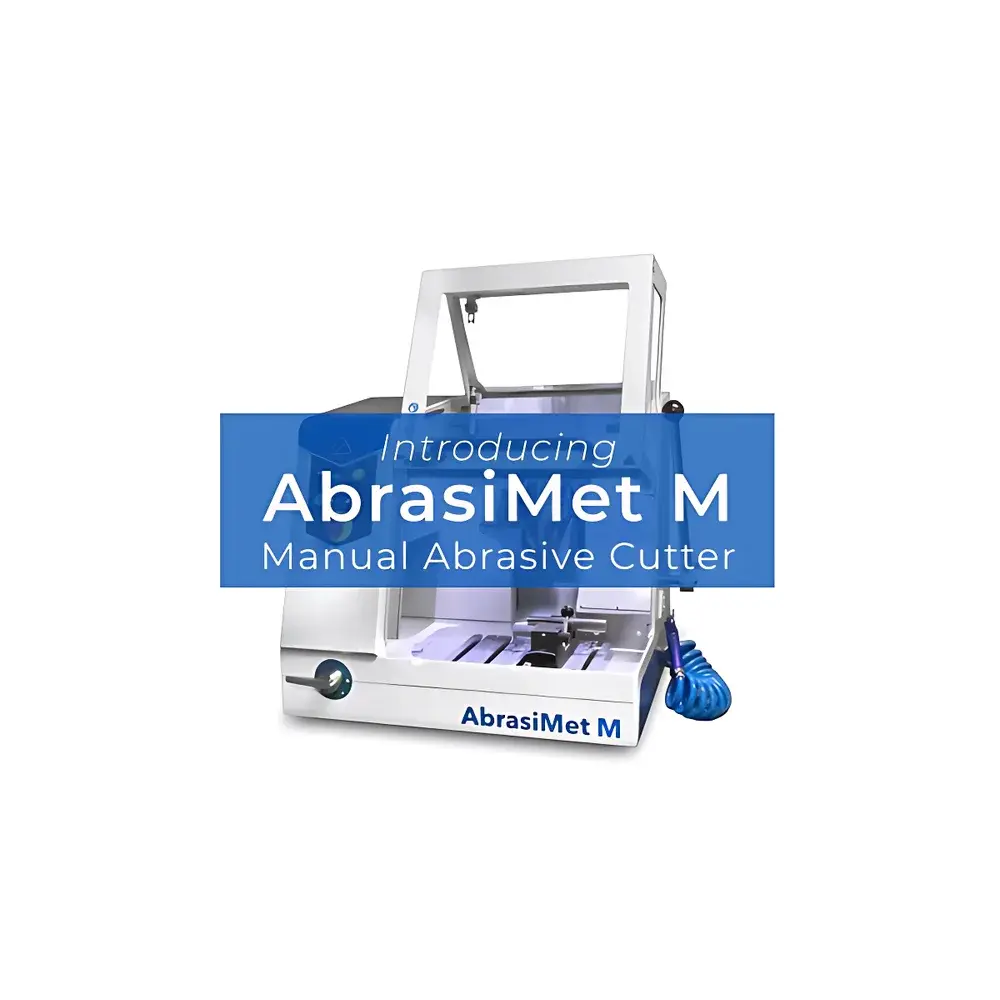
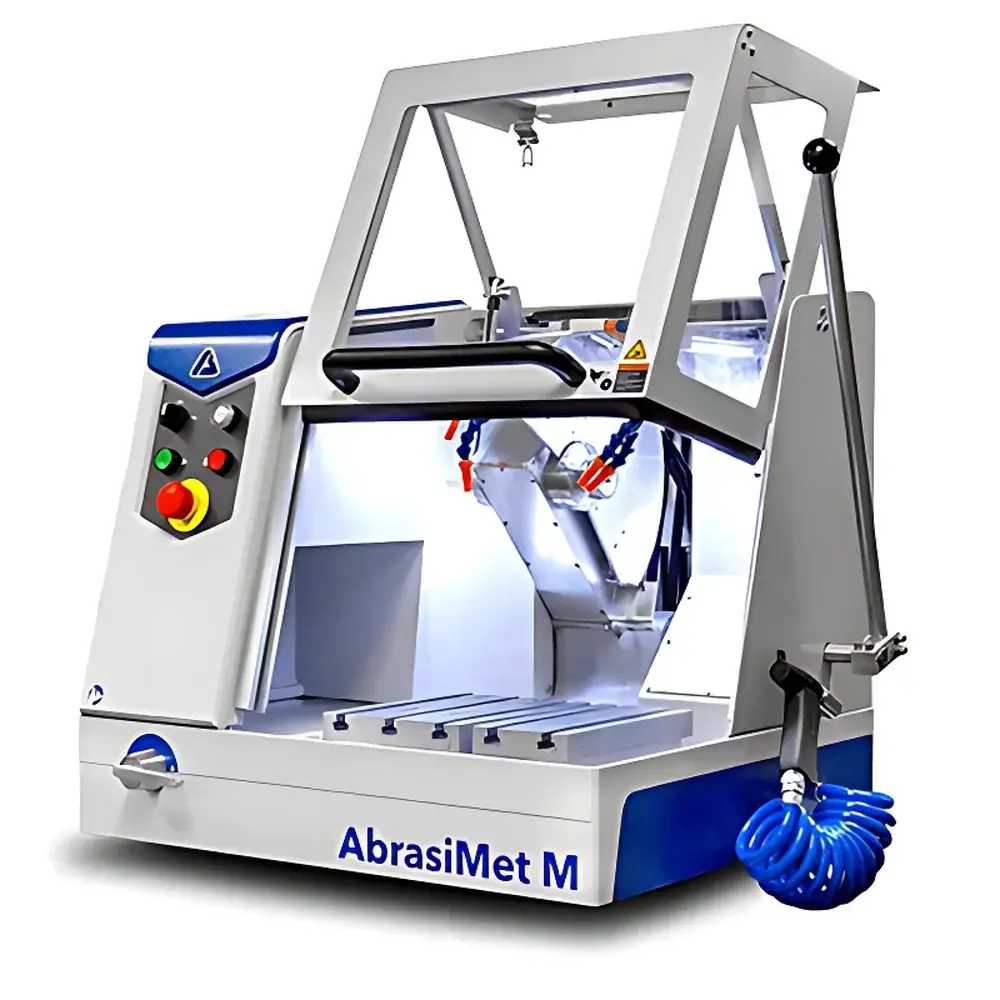
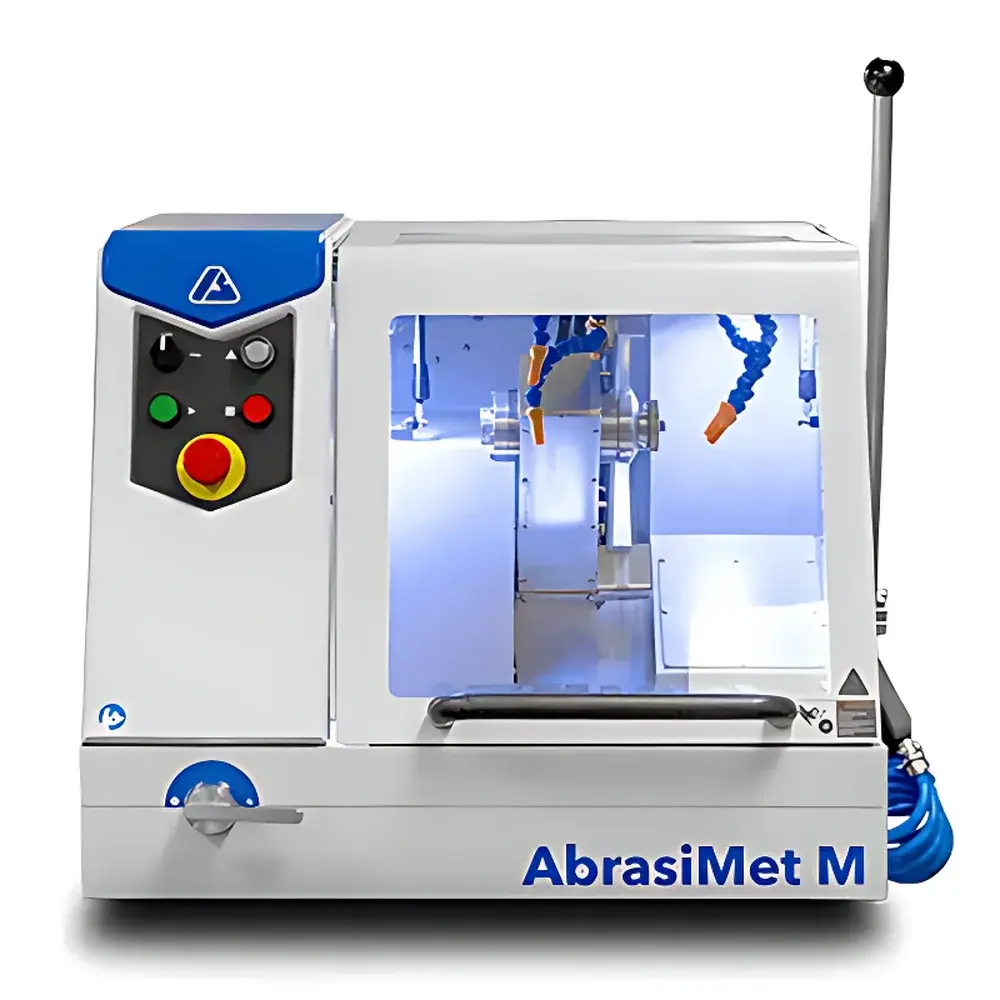
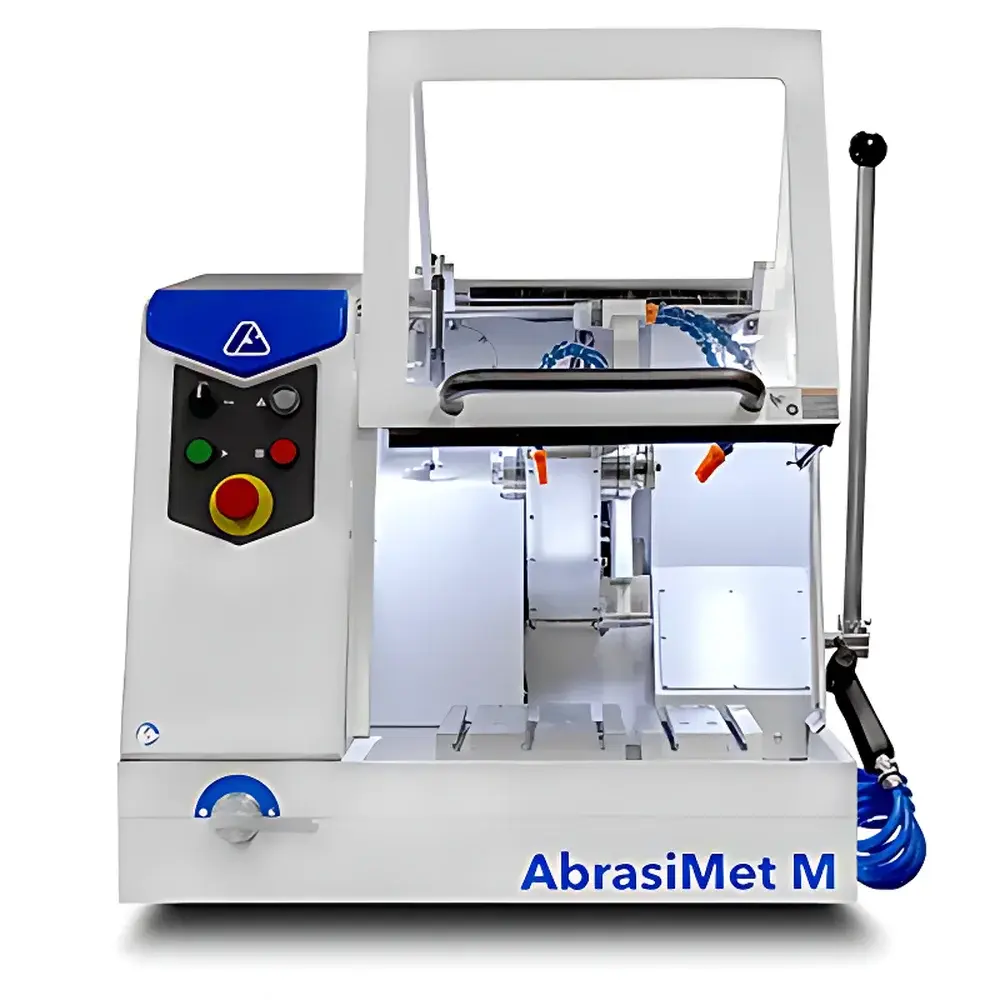
Buehler AbrasiMet M Manual Abrasive Cutting Machine
| Brand | Buehler |
|---|---|
| Origin | USA |
| Model | AbrasiMet M |
| Instrument Type | Abrasive Cutting Machine |
| Motor Power | 5.5 hp (4 kW) |
| Voltage/Frequency | 200–240 VAC or 380–460 VAC, 3-phase, 50/60 Hz |
| Cutting Wheel Diameter | 10 in (254 mm) or 12 in (305 mm) |
| Max Sample Length | 25 in (635 mm) |
| Max Cut Depth | 4.3 in (109 mm) |
| Wheel-to-Table Distance | 6.8 in (172 mm) / 5.8 in (147 mm) |
| Wheel Speed | 3000 rpm / 2600 rpm |
| Dual-Blade Cut Width Range | 0.06–1.0 in (1.52–25.4 mm) in 0.06 in (1.52 mm) increments |
| LED Illumination | 2 integrated LED light strips |
| Worktable T-Slot Dimensions | Left: 9.8 × 7.1 in (250 × 180 mm) |
| Right | 9.8 × 4.5 in (250 × 115 mm) |
| Overall Dimensions (Hood Closed) | 31.1 × 27.3 × 25.7 in (791 × 694 × 653 mm) |
| (Hood Open) | 31.1 × 27.3 × 36.2 in (791 × 694 × 919 mm) |
| Safety Features | Interlocked safety hood, emergency stop button |
| Compliance | CE-marked |
Overview
The Buehler AbrasiMet M Manual Abrasive Cutting Machine is an engineered solution for precision sample sectioning in metallurgical, quality control, and failure analysis laboratories. Designed around the principles of controlled abrasive cutting—where a rotating bonded abrasive wheel removes material via mechanical attrition under continuous coolant flow—the AbrasiMet M delivers repeatable, low-distortion cuts across ferrous and non-ferrous alloys, composites, ceramics, and hardened materials. Its rigid cast-steel T-slot base, external motor architecture, and Z-axis manual feed system collectively minimize vibration and thermal distortion during high-load cutting operations. Unlike semi-automated or fully automated cutters, the AbrasiMet M prioritizes operator control, ergonomic positioning, and rapid setup—making it especially suited for labs performing diverse, low-to-medium throughput sample preparation where flexibility and reproducibility are critical.
Key Features
- External 5.5 hp (4 kW) motor placement maximizes internal cutting chamber volume and eliminates direct exposure of the motor to coolant mist and metallic debris—extending service life and reducing maintenance frequency.
- Dual optimized rotational speeds (3000 rpm for 10-in wheels; 2600 rpm for 12-in wheels) ensure appropriate peripheral velocity for both fine-sectioning and aggressive stock removal, preserving microstructural integrity while minimizing heat-affected zones.
- Integrated dual LED light strips provide uniform, shadow-free illumination across the entire cutting zone—critical for accurate alignment of irregular or reflective specimens under wet conditions.
- Ergonomic Z-axis cutting arm with adjustable length and pivot angle enables intuitive, fatigue-reduced manual feed motion, supporting consistent downforce application across varied specimen geometries.
- Optional dual-blade configuration permits simultaneous parallel cuts at user-defined spacing (1.52–25.4 mm in 1.52 mm increments), effectively halving preparation time for standardized test coupons or replicate sections.
- Modular coolant delivery system offers two modes: direct wheel-face cooling via fixed nozzles or targeted manual冲洗 using a handheld flexible hose—allowing optimization for different wheel types (e.g., resin-bonded vs. metal-bonded) and material classes.
Sample Compatibility & Compliance
The AbrasiMet M accommodates specimens up to 635 mm in length and 109 mm in maximum cross-sectional depth. Its T-slot worktable (250 × 180 mm left section; 250 × 115 mm right section) accepts a full range of Buehler-compatible fixturing—including vise adapters, rotary chucks, custom jigs, and low-profile clamping blocks—enabling secure holding of cylindrical, irregular, or thin-sectioned samples without slippage or deflection. All structural castings utilize corrosion-resistant steel with machined T-slots conforming to ISO 2768-mK general tolerances. The unit complies with CE Machinery Directive 2006/42/EC and incorporates interlocked safety guarding with positive-break circuitry, a certified emergency stop (EN 60204-1), and splash-resistant electrical enclosures rated IP54. It supports GLP-compliant documentation when integrated with Buehler’s optional digital logbook modules.
Software & Data Management
As a manually operated instrument, the AbrasiMet M does not incorporate embedded firmware or onboard data logging. However, its mechanical repeatability and standardized mounting interfaces enable seamless integration into traceable laboratory workflows. Operators may record cutting parameters—including wheel type, coolant composition, feed rate estimate, and specimen ID—in LIMS or ELN systems using Buehler’s recommended metadata templates (aligned with ASTM E3-22 and ISO 14735-1 for metallographic sample preparation). Optional accessories include barcode-scannable fixture labels and calibration-certified torque wrenches for clamping verification—supporting audit readiness under ISO/IEC 17025 and FDA 21 CFR Part 11 requirements when paired with validated electronic record systems.
Applications
The AbrasiMet M serves as a foundational tool in accredited metallurgical labs conducting ASTM E3, ISO 14735-1, and EN 10365-compliant sectioning for subsequent grinding, polishing, and microstructural evaluation. It is routinely deployed in aerospace component QA (e.g., turbine disk sampling), automotive powertrain validation (gear and bearing cross-sectioning), additive manufacturing post-build analysis (LPBF and EBM part slicing), and failure analysis of welded joints or heat-affected zones. Its robustness and ease of cleaning also make it suitable for production-integrated QC environments where daily exposure to swarf, emulsified coolants, and variable ambient temperatures demand long-term dimensional stability and minimal downtime.
FAQ
What types of abrasive wheels are compatible with the AbrasiMet M?
Standard 10-inch (254 mm) and 12-inch (305 mm) diameter wheels with ISO arbor dimensions (32 mm or 1-inch bore) and maximum thickness of 10 mm are supported. Buehler recommends resin-bonded aluminum oxide or silicon carbide wheels for general-purpose metals, and diamond-impregnated wheels for ceramics or cemented carbides.
Is the water tank filtration system reusable?
Yes—the 30-gallon (113.6 L) recirculating coolant reservoir includes a fixed stainless-steel mesh screen and an auxiliary sediment trap. Both components are cleanable with compressed air or ultrasonic treatment; no disposable filter cartridges are required.
Can the AbrasiMet M be used in a Class 1000 cleanroom environment?
While not certified for cleanroom use, its sealed motor housing, drip-proof electrical connections, and absence of internal fans or oil-lubricated gearboxes permit operation in controlled environments when equipped with HEPA-filtered coolant mist extraction and routine surface decontamination per ISO 14644-1 protocols.
Does Buehler offer application-specific training for this instrument?
Yes—Buehler provides on-site or virtual technician training covering safe operation, wheel selection criteria, coolant management, preventive maintenance schedules, and compliance documentation practices aligned with ISO/IEC 17025 and NADCAP AC7108 requirements.
What is the expected service interval for the main drive belt and bearings?
Under typical lab usage (≤ 4 hrs/day), the poly-V drive belt and sealed-for-life spindle bearings are rated for ≥ 12,000 operating hours; scheduled inspection is recommended every 2,000 hours per Buehler Maintenance Bulletin ABM-2023-01.



