
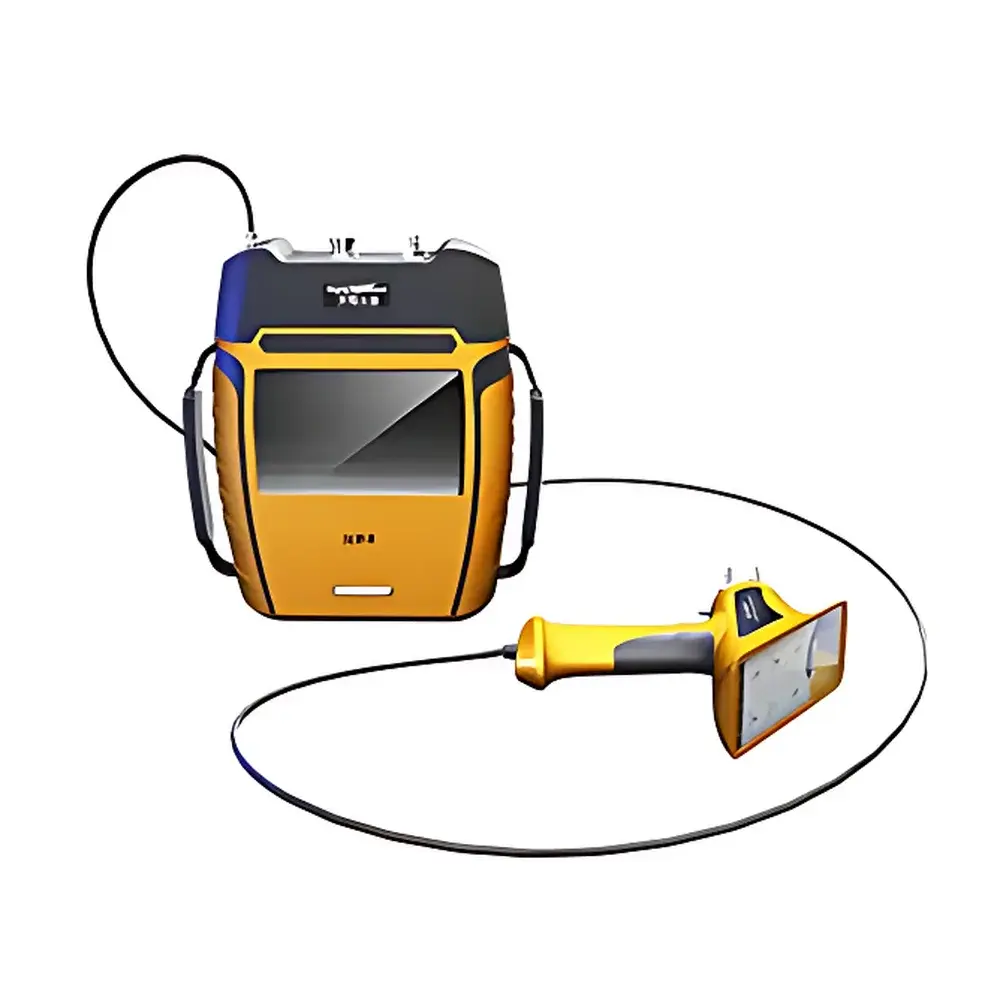
Skyray Instrument VOC-5000 Portable Total Hydrocarbon Analyzer with Dual FID & PID Detectors
| Brand | Skyray Instrument |
|---|---|
| Origin | Jiangsu, China |
| Manufacturer Type | Direct Manufacturer |
| Instrument Type | Portable Gas Analyzer |
| Configuration | TVOC Detection System |
| Detection Principle | Flame Ionization Detection (FID) + Photoionization Detection (PID) |
| FID Range | 0–50,000 ppm |
| PID Range | 0–4,000 ppm |
| FID Resolution | 0.5 ppm |
| PID Resolution | 0.1 ppm |
| FID Accuracy | ±5% of reading or ±3 ppm (whichever is greater) |
| PID Accuracy | <±5% |
| FID T90 Response Time | ≤3.5 s |
| PID T90 Response Time | <3 s |
| Zero Recovery Time | ≤4 s |
| Battery Life | ≥10 h |
| H₂ Cylinder Capacity | 100 mL @ 20 MPa |
| H₂ Runtime | >12 h (full charge) |
| Ignition System | Dual spark igniters |
| Displayed Parameters | Flame temperature, battery level, pump power, H₂ pressure |
| CPU | Octa-core Cortex-A53 (64-bit, 2.3 GHz) |
| Memory | 64 GB ROM + 4 GB RAM, expandable via 128 GB microSD |
| OS | Android 9.0 |
| Connectivity | USB Type-C, Wi-Fi 802.11 a/b/g/n, Bluetooth 4.0 |
Overview
The Skyray Instrument VOC-5000 Portable Total Hydrocarbon Analyzer is an engineered field-deployable instrument designed for real-time, quantitative detection of total hydrocarbons and volatile organic compounds (VOCs) in ambient air, industrial workspaces, and fugitive emission sources. It integrates two complementary detection technologies—Flame Ionization Detection (FID) and Photoionization Detection (PID)—within a single ruggedized, handheld platform. FID provides universal, carbon-mass-sensitive response to virtually all hydrocarbons (C₁–C₁₂+), delivering high linearity and low detection limits across wide dynamic ranges. PID complements FID by enabling selective, non-destructive detection of VOCs with ionization energies below the lamp photon energy (typically 10.6 eV), including aromatic compounds, ketones, amines, and certain inorganic species such as ammonia and hydrogen sulfide. This dual-sensor architecture ensures comprehensive coverage for regulatory compliance monitoring, LDAR (Leak Detection and Repair) programs, and emergency response applications where both broad-spectrum sensitivity and compound-class differentiation are critical.
Key Features
- Dual-detector architecture: Simultaneous, independent FID and PID measurement channels with synchronized data acquisition and time-stamped logging.
- High-performance FID subsystem: Optimized hydrogen-air flame with dual spark ignition, real-time flame temperature monitoring, and automatic zero recovery (<4 s) to ensure measurement stability during repeated on-site sampling.
- PID module with 10.6 eV UV lamp: Low-noise electronics and temperature-compensated sensor design deliver sub-ppb detection capability and rapid T90 response (<3 s) for fast-moving surveys.
- Industrial-grade embedded system: Octa-core 64-bit ARM processor running Android 9.0 OS enables responsive touchscreen operation, local data processing, and seamless integration with enterprise-grade mobile applications.
- Extended field endurance: Integrated rechargeable battery supports ≥10 h continuous operation; detachable 100 mL hydrogen cylinder rated to 20 MPa provides >12 h FID runtime under typical flow conditions.
- Robust connectivity suite: USB Type-C for firmware updates and bulk data export; IEEE 802.11 a/b/g/n Wi-Fi and Bluetooth 4.0 for wireless synchronization with cloud platforms and peripheral devices (e.g., GPS modules, thermal imagers).
Sample Compatibility & Compliance
The VOC-5000 is validated for direct analysis of undiluted ambient air, stack effluents (with optional heated sampling line), soil headspace gas (via passive or active sampling), and surface emissions from valves, flanges, pumps, and storage tanks. Its measurement performance aligns with multiple Chinese national standards governing VOC emissions control—including GB 20950–2020 (petroleum depot emissions), GB 20951–2020 (transport emissions), GB 20952–2020 (gasoline station emissions), HJ 733–2014 (fugitive emission detection methodology), and GB 37822–2019 (unorganized emission control). While not certified to ISO 16000 or ASTM D6196 for laboratory-grade speciation, its FID/PID response profiles meet the functional equivalence criteria outlined in EPA Method 21 for leak screening and US EPA OTM-32 for portable VOC quantification. The instrument’s hardware design conforms to IP54 ingress protection and meets IEC 60079-0 for non-incendive operation in potentially hazardous locations (Class I, Division 2).
Software & Data Management
The VOC-5000 operates via a purpose-built Android application supporting multi-tiered workflow management—from field technician to provincial environmental authority. Core software modules include instrument control (ignition, zero/span calibration, diagnostic self-test), project execution (geotagged photo documentation, task assignment, repair ticket generation), asset lifecycle tracking (instrument health logs, sensor lifetime counters, consumables inventory), and statistical reporting (compliance gap analysis, LDAR program KPIs, emission rate trending). All data are stored locally with SHA-256 hashing and timestamped audit trails compliant with GLP principles. Optional cloud subscription enables encrypted over-the-air synchronization between mobile endpoints and centralized environmental data platforms, supporting role-based access control (provincial/municipal/industrial tiers) and automated report generation aligned with provincial ecological monitoring requirements.
Applications
- LDAR program implementation and verification per national and provincial VOC control plans.
- Fugitive emission surveys at petrochemical refineries, chemical manufacturing plants, pharmaceutical facilities, resin production units, and fertilizer plants.
- Soil vapor intrusion assessment and landfill perimeter monitoring.
- Workplace exposure evaluation in enclosed process areas and maintenance zones.
- Rapid-response detection during VOC release incidents, including unorganized emissions from wastewater treatment ponds and open liquid surfaces.
- Performance validation of abatement systems (e.g., activated carbon beds, thermal oxidizers, biofilters) via inlet/outlet concentration differentials.
- Gasoline vapor recovery system integrity testing at service stations and bulk terminals.
FAQ
What detection principles does the VOC-5000 employ?
It utilizes Flame Ionization Detection (FID) for universal hydrocarbon quantification and Photoionization Detection (PID) for selective VOC detection based on ionization potential.
Is the instrument suitable for use in explosive atmospheres?
Yes—it meets IEC 60079-0 requirements for non-incendive equipment in Class I, Division 2 hazardous locations when operated with certified accessories and proper gas handling protocols.
Does the device support regulatory audit trails?
Yes—local data storage includes immutable timestamps, operator IDs, calibration logs, and fault codes, satisfying GLP-aligned documentation requirements for environmental inspections.
Can the VOC-5000 perform quantitative analysis without external calibration gases?
Field calibration requires certified span gases (e.g., methane for FID, isobutylene for PID); however, the instrument supports multi-point calibration routines and stores up to 10 user-defined calibration curves with expiration tracking.
How is data exported for regulatory submission?
Data can be exported in CSV or PDF format via USB or Wi-Fi; cloud-synced deployments generate auto-formatted reports compatible with provincial environmental monitoring platforms (e.g., China’s National Supervision Platform for VOC Emissions).







