
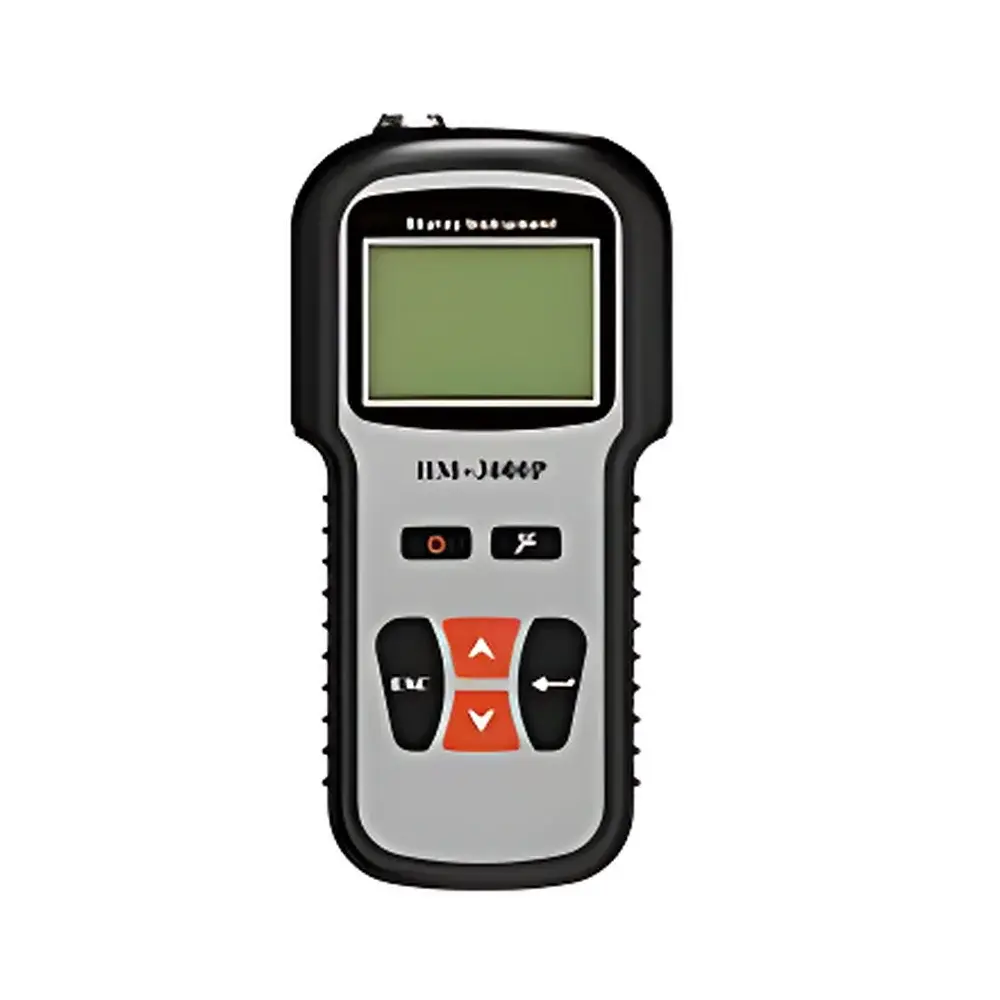
SkyRay HM3000P Portable Heavy Metals Analyzer for Water Quality
| Brand | SkyRay Instrument |
|---|---|
| Origin | Jiangsu, China |
| Manufacturer Type | OEM/ODM Manufacturer |
| Country of Origin | China |
| Model | HM3000P |
| Pricing | Available Upon Request |
| Detection Principle | Anodic Stripping Voltammetry (ASV) |
| Detection Time | <5 min (typical), as fast as 30 s |
| Detection Limits | 0.1–0.5 ppb (depending on element) |
| Upper Detection Range | 10–60 ppm |
| Electrode Type | Disposable or Reusable Screen-Printed Electrodes (SPE) / Mercury-Film Electrodes |
| Power Supply | Rechargeable Li-ion battery (≥10 h continuous operation, ≥100 assays) |
| IP Rating | IP67 |
| Display | Sunlight-readable transflective LCD |
| Data Storage | 2000 measurement records |
| Connectivity | USB 2.0, Bluetooth (optional thermal printer support) |
| Software | PC-based analytical suite with ASV method programming, polarogram visualization, calibration management, and audit-trail-enabled data export (CSV, PDF) |
| Compliance | EPA Methods 7063, 7472 |
Overview
The SkyRay HM3000P Portable Heavy Metals Analyzer is a field-deployable electrochemical instrument engineered for rapid, on-site quantification of trace heavy metal ions in aqueous matrices. It operates on the principle of Anodic Stripping Voltammetry (ASV), a well-established, reference-grade electroanalytical technique endorsed by the U.S. Environmental Protection Agency (EPA Methods 7063 and 7472) and standardized under ASTM D3559 (lead), ASTM D5673 (copper, cadmium, zinc), ISO 11969 (mercury), and ISO 16398 (multi-element ASV). Unlike atomic absorption spectroscopy (AAS) or inductively coupled plasma (ICP) systems—which require centralized lab infrastructure, high power consumption, and skilled operators—the HM3000P delivers laboratory-grade sensitivity (sub-ppb detection limits) in a rugged, handheld platform optimized for environmental emergency response, routine water quality surveillance, and decentralized compliance monitoring.
Key Features
- Rapid analysis cycle: Full quantitative measurement completed in under 5 minutes; shortest assay time ≤30 seconds per sample—enabling real-time decision-making during spill response or regulatory inspections.
- Broad elemental coverage: Simultaneous or sequential detection of Cu, Cd, Pb, Zn, Hg, As, Cr, Ni, Mn, Tl, Fe, and Co—with detection limits ranging from 0.1 ppb (Hg, Pb, Cd, As, Mn, Tl, Fe, Co) to 0.5 ppb (Zn, Cr, Ni).
- Robust electrochemical architecture: Utilizes mercury-film or screen-printed electrodes (SPE) fabricated via precision microfabrication; electrode performance is stabilized through proprietary surface modification, ensuring reproducibility across >500 measurements before recalibration.
- Field-hardened design: IP67-rated enclosure resists dust ingress and immersion up to 1 m for 30 minutes; transflective LCD remains legible under direct sunlight (≥1000 cd/m² brightness); operating temperature range: –10 °C to +50 °C.
- Extended operational autonomy: Integrated 12,000 mAh Li-ion battery supports ≥100 consecutive analyses or ≥10 hours of continuous use; battery level indicator and dual charging options (AC adapter + 12 V vehicle socket) ensure uninterrupted deployment.
- Comprehensive data handling: Onboard memory stores 2000 measurement records with timestamp, electrode ID, calibration status, and raw voltammogram metadata; USB 2.0 interface enables secure data export and firmware updates.
Sample Compatibility & Compliance
The HM3000P is validated for direct analysis of untreated or minimally pretreated aqueous samples—including drinking water, groundwater, surface water, seawater, wastewater effluents, and leachates from solid matrices (e.g., soil, sediment, food digests prepared per EPA Method 3050B or ISO 11466). Sample volume requirement is 10–20 mL; matrix effects are mitigated via built-in standard addition capability and optional internal standard correction. The system complies with regulatory frameworks governing environmental monitoring: EPA Methods 7063 (Pb, Cd, Cu, Zn) and 7472 (Hg, As); ASTM D3559-22 (Pb in water); ASTM D5673-21 (Cu, Cd, Zn); ISO 11969:2021 (Hg in water); and ISO 16398:2016 (multi-element ASV). When operated with validated protocols and documented calibration records, data generated meet GLP and GMP documentation standards; optional software modules support 21 CFR Part 11–compliant electronic signatures and audit trails.
Software & Data Management
The HM3000P is fully integrated with SkyRay’s HM-Suite v4.x PC software—a Windows-based application supporting method development, instrument control, and metrological traceability. Users can configure up to 15 programmable analysis methods—including pulse parameters (pre-concentration time, deposition potential, scan rate), calibration curves (single-point, multi-point, standard addition), and QC flagging rules. Raw polarograms are exportable for third-party electrochemical modeling (e.g., in MATLAB or Python). All data files embed digital signatures, operator ID, instrument serial number, and environmental sensor logs (temperature, humidity if external probe connected). Reports conform to ISO/IEC 17025–aligned formatting and may be exported as CSV (for LIMS integration), PDF (for regulatory submission), or XML (for automated QA/QC pipelines).
Applications
- Emergency response: Rapid assessment of heavy metal contamination following industrial accidents, pipeline breaches, or natural disasters—reducing time-to-action from days to minutes.
- Drinking water safety: On-site verification of compliance with WHO guidelines (e.g., Pb ≤10 µg/L, As ≤10 µg/L) and national standards (e.g., US EPA MCLs, EU Directive 98/83/EC).
- Wastewater compliance: Monitoring discharge permits for electroplating, metal finishing, mining, and semiconductor manufacturing facilities.
- Environmental forensics: Spatial mapping of metal plumes in aquifers or sediments using GPS-tagged field measurements.
- Multi-matrix extension: With appropriate extraction protocols (e.g., acid digestion per EPA 3050B), the HM3000P supports semi-quantitative screening of soils, sludges, biological tissues, and food products.
FAQ
Is the HM3000P compliant with U.S. EPA-approved methods?
Yes—it implements Anodic Stripping Voltammetry per EPA Methods 7063 (for Pb, Cd, Cu, Zn) and 7472 (for Hg and As), and its performance has been verified against certified reference materials (CRMs) NIST SRM 1640a and 1643e.
Can the instrument detect arsenic in its inorganic form only?
Yes—ASV selectively detects electroactive species: As(III) is directly measurable; As(V) requires pre-reduction (e.g., using KI/ascorbic acid), a protocol included in the standard operating procedure library.
What electrode maintenance is required?
Electrodes are either single-use disposable units or reusable mercury-film types requiring periodic polishing and re-plating; cleaning kits and regeneration protocols are supplied with each instrument shipment.
Does the software support multi-user access with role-based permissions?
HM-Suite v4.x includes configurable user profiles (administrator, analyst, reviewer) with password protection and activity logging—fully compatible with laboratory information management systems (LIMS) requiring audit-ready workflows.
Is method validation documentation available?
Yes—SkyRay provides IQ/OQ/PQ protocols, uncertainty budgets per ISO/IEC 17025 Annex A.1, and validation reports aligned with ICH Q2(R2) for method transfer and regulatory submissions.
Related Products







