
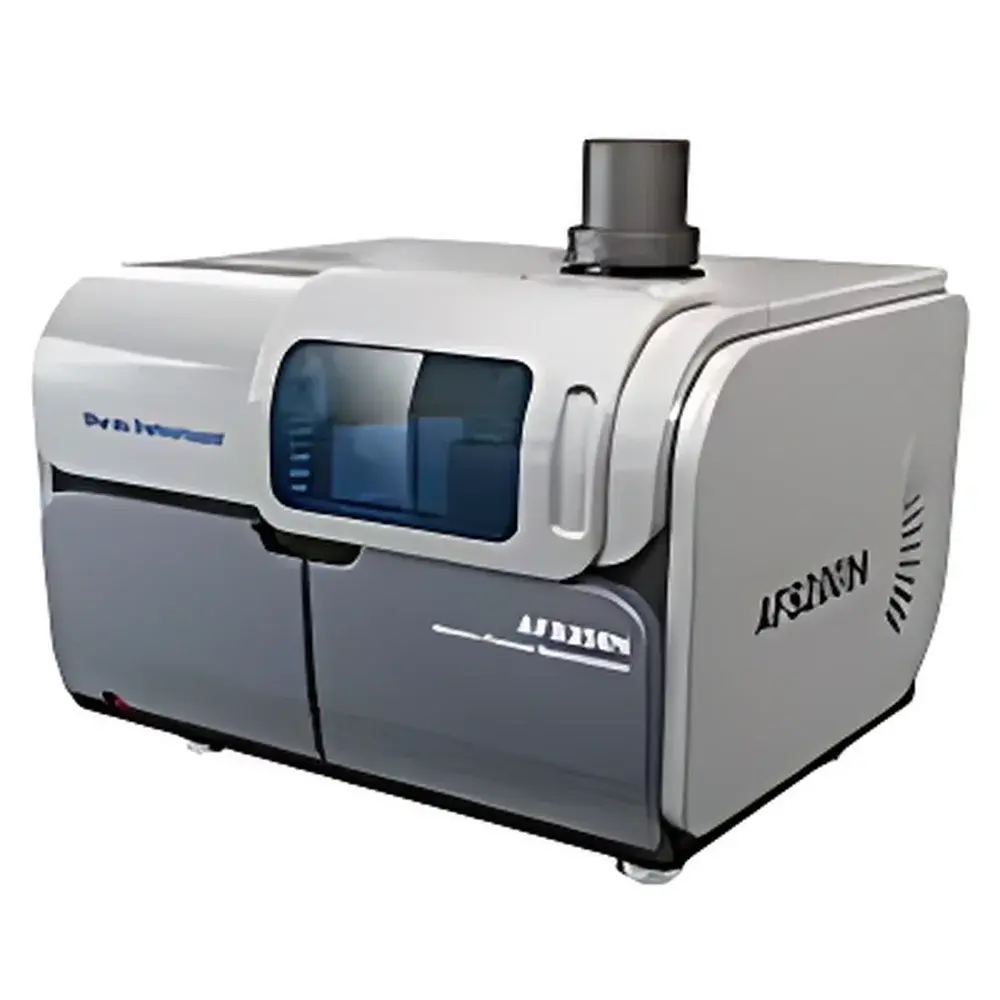
Skyray Instrument AFS200T Atomic Fluorescence Spectrometer
| Brand | Skyray Instrument |
|---|---|
| Origin | Jiangsu, China |
| Manufacturer Type | Original Equipment Manufacturer (OEM) |
| Country of Origin | China |
| Model | AFS200T |
| Pricing | Available upon Request |
Overview
The Skyray Instrument AFS200T Atomic Fluorescence Spectrometer is a high-performance, dual-channel hydride generation atomic fluorescence (HG-AFS) system engineered for trace-level elemental analysis of As, Se, Bi, Sb, Te, Pb, Sn, Ge, Cd, Zn, and Hg in liquid samples. Based on the principle of atomic fluorescence spectroscopy—where analyte atoms, generated in situ via chemical reduction (typically NaBH4), are excited by a sharp-line hollow cathode lamp and emit characteristic fluorescence photons at specific wavelengths—the AFS200T delivers exceptional sensitivity, low detection limits, and high analytical reproducibility. Its design prioritizes operational robustness, user safety, and compliance-ready data integrity, making it suitable for routine QC laboratories, environmental monitoring agencies, food safety testing centers, and pharmaceutical quality control units operating under GLP or ISO/IEC 17025 frameworks.
Key Features
- Automated Flame Monitoring: Integrated real-time flame imaging module replaces manual observation windows, enabling continuous, non-intrusive visualization of quartz tube atomizer flame status during analysis—minimizing operator intervention and external interference.
- USB 2.0 High-Speed Interface: Replaces legacy RS-232 serial communication; ensures plug-and-play compatibility with modern Windows-based PCs and supports stable, high-throughput data transfer for time-resolved signal acquisition.
- Dual-Channel Mass Flow Control (MFC): Equipped with two independent thermal mass flow controllers (±1 mL/min precision) for precise, dynamic regulation of carrier gas (Ar) and shield gas flows; includes automatic shutoff during idle periods to conserve gas and enhance lab safety.
- Integrated Waste Gas Management: Built-in exhaust capture system with activated carbon filtration conforms to OSHA and local occupational hygiene standards, reducing operator exposure to hydrogen selenide, arsine, and other toxic hydride vapors.
- Intelligent Hollow Cathode Lamps (HCLs): Patented smart HCLs store embedded EEPROM data—including element type, serial number, cumulative operating hours, and optimal current/voltage parameters—enabling automatic lamp recognition and condition-based optimization.
- Non-Dispersive Optical Architecture: Eliminates monochromator-based light loss; utilizes broadband optical filtering and optimized photomultiplier tube (PMT) geometry to maximize fluorescence photon collection efficiency and signal-to-noise ratio (SNR).
- Dual-Element Simultaneous Analysis: Supports concurrent quantification of two hydride-forming elements (e.g., As + Se) with independent signal processing paths; includes single-channel enhancement mode for ultra-trace detection where required.
- Front-Mounted Lamp Design: Improves accessibility for lamp replacement and alignment verification without disassembling optical housing or interrupting calibration stability.
- Single-Point Calibration Workflow: Enables rapid standard curve generation using only one high-concentration standard; incorporates on-board dilution protocols, rinse cycles, and carryover correction algorithms compliant with ASTM D5673 and ISO 17294-2.
- Shielded Quartz Atomizer: Features coaxial ceramic shielding around the quartz tube to suppress collisional quenching and thermal noise, enhancing fluorescence quantum yield and long-term baseline stability.
- Two-Stage Gas–Liquid Separator: Optimized membrane-assisted separation minimizes water vapor entrainment into the atomization zone, reducing spectral background and improving measurement accuracy across high-moisture matrices (e.g., biological digests, wastewater).
Sample Compatibility & Compliance
The AFS200T accepts aqueous samples prepared via acid digestion (HNO3/HCl/H2O2) or microwave-assisted digestion per EPA Method 200.8, ISO 17294-2, or GB/T 22105.2–2008. It supports direct analysis of filtered drinking water, soil extracts, food homogenates, clinical urine specimens, and pharmaceutical excipients. All firmware and software modules support audit trail logging, electronic signatures, and user-access level controls aligned with FDA 21 CFR Part 11 requirements when deployed with validated configurations. Routine performance verification follows instrument-specific QCT (Quality Control Test) procedures traceable to NIST SRM 3100 series standards.
Software & Data Management
The proprietary AFS Workstation software (v4.x) provides full Windows-native operation with bilingual (English/Chinese) UI switching. It supports automated peak identification, multi-point calibration with forced zero intercept, internal standard correction, spike recovery calculation, and customizable report templates exportable as PDF, Excel, or XML. Raw data files (.afw) retain full metadata—including lamp history, gas flow logs, dwell times, and temperature records—for retrospective review. Data backup, version-controlled method storage, and role-based permission settings facilitate laboratory-wide deployment in regulated environments.
Applications
The AFS200T is routinely applied in:
- Environmental monitoring: As, Hg, and Se speciation in surface water, groundwater, and sediment pore water (per EPA 1631E, ISO 17890)
- Food safety: Total inorganic arsenic in rice, seafood, and infant formula (aligned with EU Commission Regulation (EU) No 2023/136)
- Pharmaceutical QC: Residual catalyst metals (e.g., Pd, Pt) and toxic impurities (Cd, Pb) per ICH Q2(R2) and USP /
- Public health labs: Urinary Hg and blood Se biomonitoring per NHANES protocols
- Agricultural testing: Heavy metal screening in fertilizers, feedstuffs, and irrigation water per AOAC 999.10
- Academic research: Method development for novel hydride-generation chemistries and kinetic studies of atomization processes
FAQ
What hydride-forming elements can the AFS200T quantify?
The AFS200T is validated for As, Se, Bi, Sb, Te, Pb, Sn, Ge, Cd, Zn, and Hg using standard hydride generation chemistry.
Does the system support regulatory-compliant data archiving?
Yes—when configured with audit trail enabled and electronic signature validation, it meets core requirements of 21 CFR Part 11 and ISO/IEC 17025 Clause 7.7.
Is method transfer possible from older AFS platforms?
Method parameters (lamp current, gas flows, delay times) are backward-compatible with AFS200N/P series instruments; software allows import of legacy .mth files.
What maintenance intervals are recommended for routine operation?
Daily: rinse cycle verification and lamp warm-up check; Quarterly: PM including quartz tube inspection, MFC calibration, and PMT voltage verification per manufacturer SOP.
Can the AFS200T interface with LIMS systems?
Yes—via configurable ASCII or CSV export, ODBC connectivity, or optional HL7-compliant middleware for integration into enterprise laboratory information management systems.




