
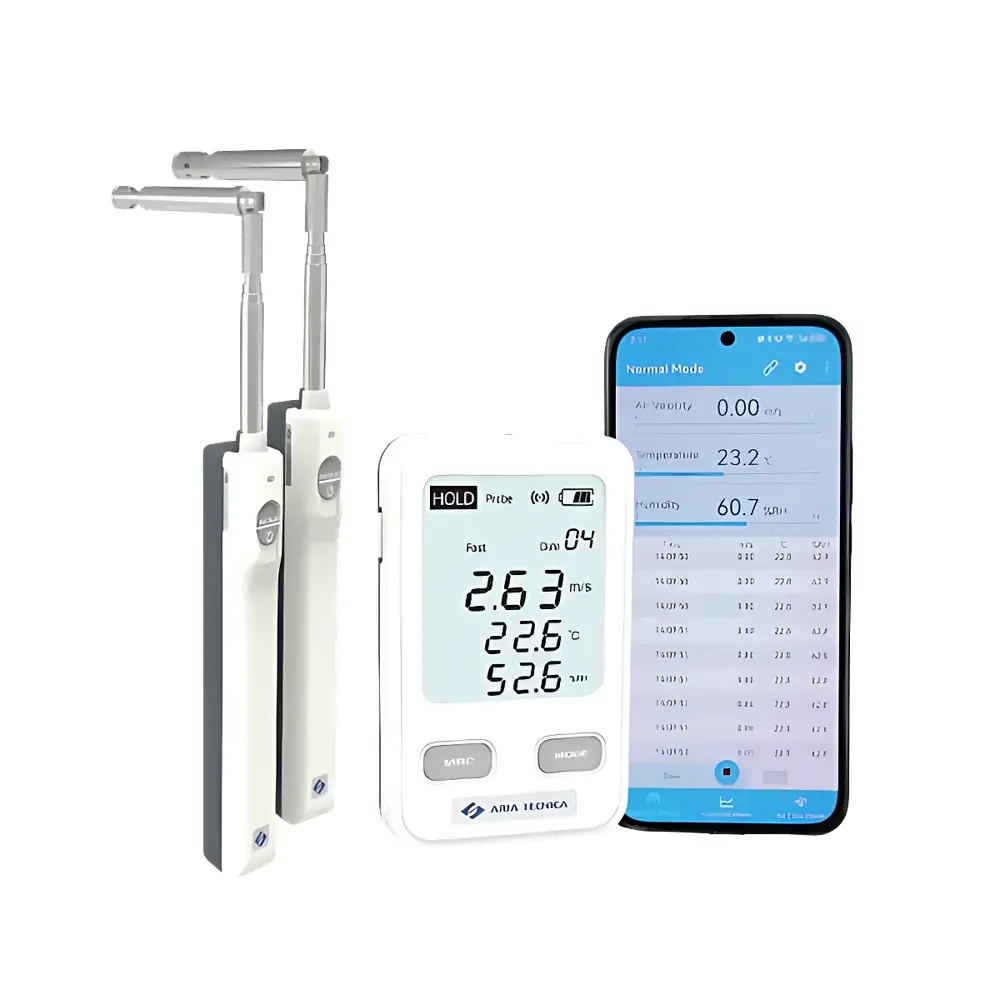
Aria AF101/AF111 Wireless Thermal Anemometer with Temperature and Relative Humidity Sensors
| Brand | Aria |
|---|---|
| Origin | Japan |
| Instrument Type | Thermal Anemometer |
| Models | AF101, AF111 |
| Wind Speed Range | 0.01–30 m/s |
| Temperature Range | −20–70 °C |
| Relative Humidity Range | 2–98 %RH |
| Wind Speed Resolution | 0.01 m/s (0.1 m/s above 10.0 m/s) |
| Accuracy | ±2 % or ±0.05 m/s (whichever is greater), ±0.5 °C, ±3 %RH |
| Operating Environment | −20–70 °C (non-condensing), 2–98 %RH |
| Response Time | 90 % in ≤1 s (wind speed 0–1 m/s), ≤60 s (RH, still air) |
| Power | 2 × AA alkaline batteries (approx. 20 h at 5 m/s, 20 °C) |
| Weight | 150 g (AF101), 175 g (AF111), incl. batteries |
| Communication | Bluetooth 4.0+, up to ~5 m line-of-sight |
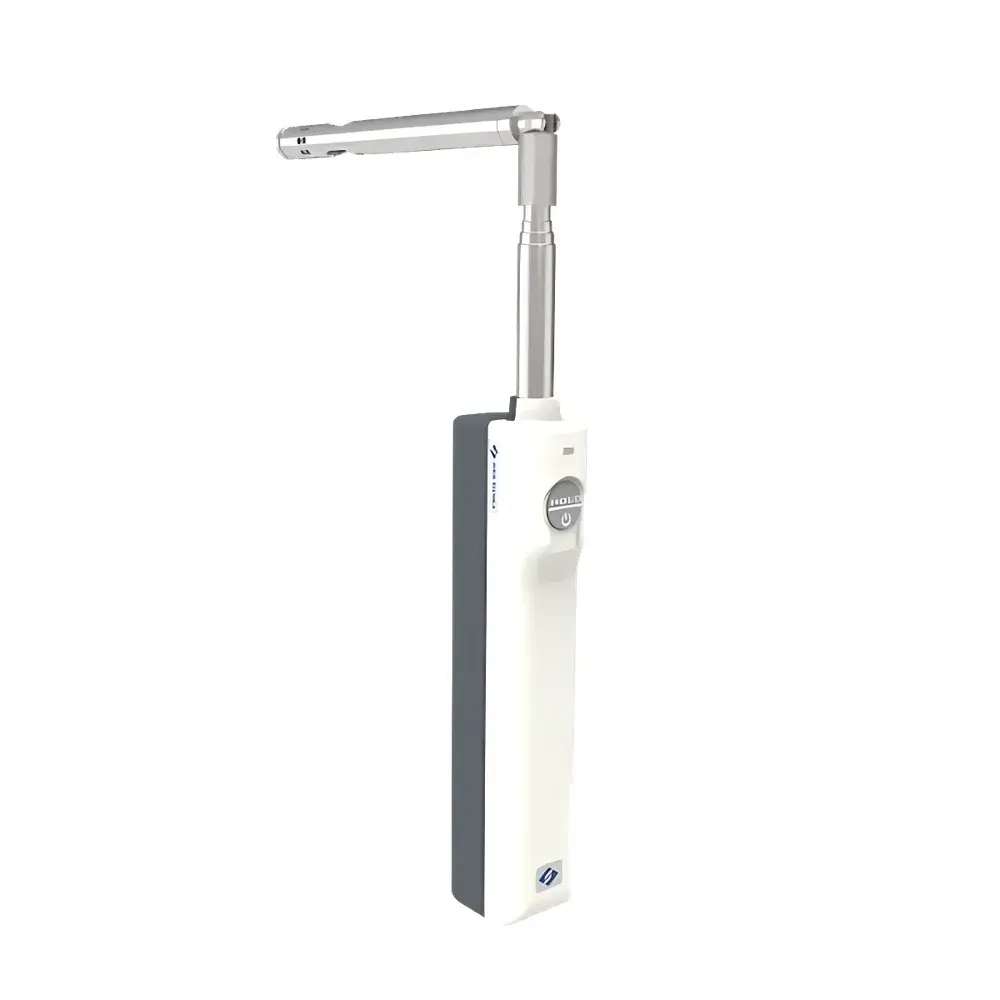
| Probe | I/L dual-mode telescopic probe with mm scale markings |
| Mounting | 1/4″-20 tripod thread (also functions as hanging lug) |
Overview
The Aria AF101 and AF111 are handheld, wireless thermal anemometers engineered for high-reproducibility environmental monitoring in laboratory, HVAC commissioning, cleanroom validation, and industrial hygiene applications. These instruments employ constant-temperature anemometry (CTA) — a well-established thermal sensing principle where a heated sensor element cools proportionally to airflow velocity — enabling precise, low-range wind speed measurement from 0.01 m/s upward. Integrated Pt1000-grade temperature sensing and capacitive relative humidity (RH) transducers provide concurrent, time-synchronized acquisition of all three parameters: air velocity, ambient temperature, and moisture content. The dual-mode telescopic probe (I-type for insertion, L-type for surface or duct measurements) ensures adaptability across diverse sampling geometries without compromising sensor alignment or thermal boundary layer integrity. Designed and manufactured in Japan, the AF101/AF111 series meets international expectations for metrological traceability, mechanical robustness, and long-term stability under variable field conditions.
Key Features
- Thermal anemometry with automatic temperature compensation across −20–50 °C (±5 % of reading), ensuring consistent wind speed accuracy despite ambient thermal drift
- Simultaneous real-time measurement of wind speed (0.01–30 m/s), temperature (−20–70 °C), and RH (2–98 %RH) with synchronized timestamping
- Bluetooth 4.0+ wireless connectivity (up to ~5 m line-of-sight) compatible with Android 5.1+ and iOS devices; no proprietary dongles required
- I/L dual-configuration telescopic probe with engraved mm-scale graduations and integrated 1/4″-20 tripod mounting thread (doubles as hanging lug)
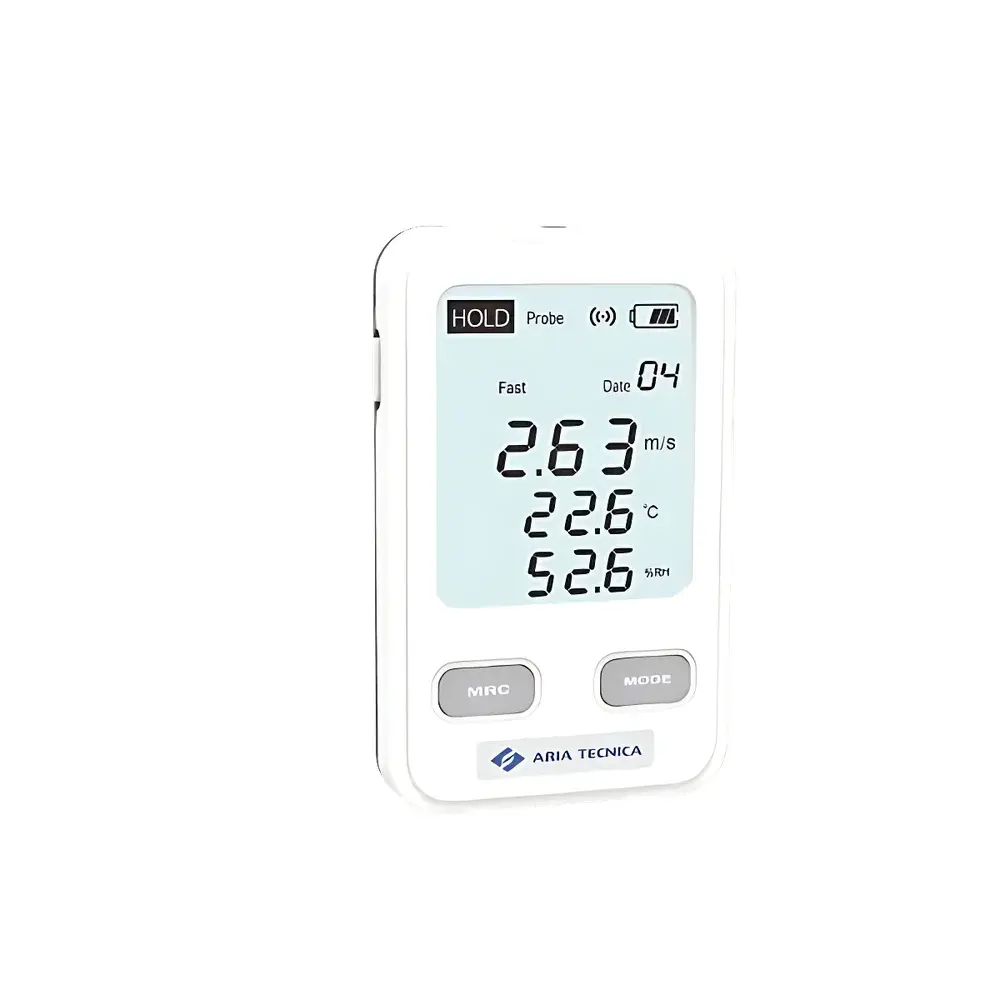
- Backlit LCD on optional AF201/AF202 display units supports data hold, min/max/avg calculation (99-value buffer), and selectable time constants (1 s or 5 s)
- Low-power architecture: ~20 hours continuous operation on two AA alkaline cells (AF101/AF111); display units extend runtime to ~50 hours
- Compliant with standard environmental test protocols requiring non-intrusive, portable, and battery-operated instrumentation
Sample Compatibility & Compliance
The AF101/AF111 are validated for use in clean, particle-free air streams — including laminar flow hoods, ISO Class 5–8 cleanrooms, HVAC supply/return ducts, and indoor air quality (IAQ) surveys. They are not rated for corrosive, explosive, or high-particulate environments. While not certified to specific ISO or ASTM standards as a complete system, the instrument’s core sensors conform to underlying metrological principles referenced in ISO 7726 (Ergonomics of the thermal environment — Instruments for measuring physical quantities), ISO 16813 (HVAC — Air velocity measurement methods), and ASHRAE Guideline 12-2020 (Managing the Risk of Legionellosis Associated with Building Water Systems). The Bluetooth communication stack complies with FCC Part 15 and CE RED Directive requirements. Data logging via the AF901/AF902 mobile application supports CSV export for downstream analysis in GLP-compliant workflows, though native audit trail or 21 CFR Part 11 electronic signature functionality is not embedded.
Software & Data Management
The free AF901 (Android) and AF902 (iOS) applications enable full remote control and visualization. Functions include real-time numeric readouts, time-series graphing (with adjustable X/Y scaling), user-defined upper/lower alarms, volumetric airflow calculation (using configurable duct cross-section input), and continuous streaming to internal device storage. All logged sessions generate timestamped CSV files containing wind speed, temperature, RH, and derived metrics — suitable for import into Excel, MATLAB, or LIMS platforms. No cloud synchronization or account registration is required; data remains local unless manually exported. The application enforces Bluetooth pairing security and displays connection status, battery level, and signal strength indicators — critical for field technicians validating measurement continuity during multi-point surveys.
Applications
- HVAC system balancing and commissioning per ASHRAE Standard 111
- Cleanroom airflow uniformity and velocity mapping (ISO 14644-3)
- Occupational health & safety assessments of local exhaust ventilation (LEV) capture velocity
- Indoor environmental quality (IEQ) audits per ANSI/ASHRAE Standard 55
- Validation of fume hood face velocities and biosafety cabinet inflow profiles
- Educational laboratory experiments in fluid dynamics and thermal comfort
- Field-based meteorological microclimate studies in controlled outdoor enclosures
FAQ
What is the minimum detectable wind speed?
The instrument resolves down to 0.01 m/s in low-flow regimes (e.g., cleanroom background air), with resolution degrading to 0.1 m/s above 10.0 m/s to maintain signal-to-noise integrity.
Can the probe be used inside ducts or grilles?
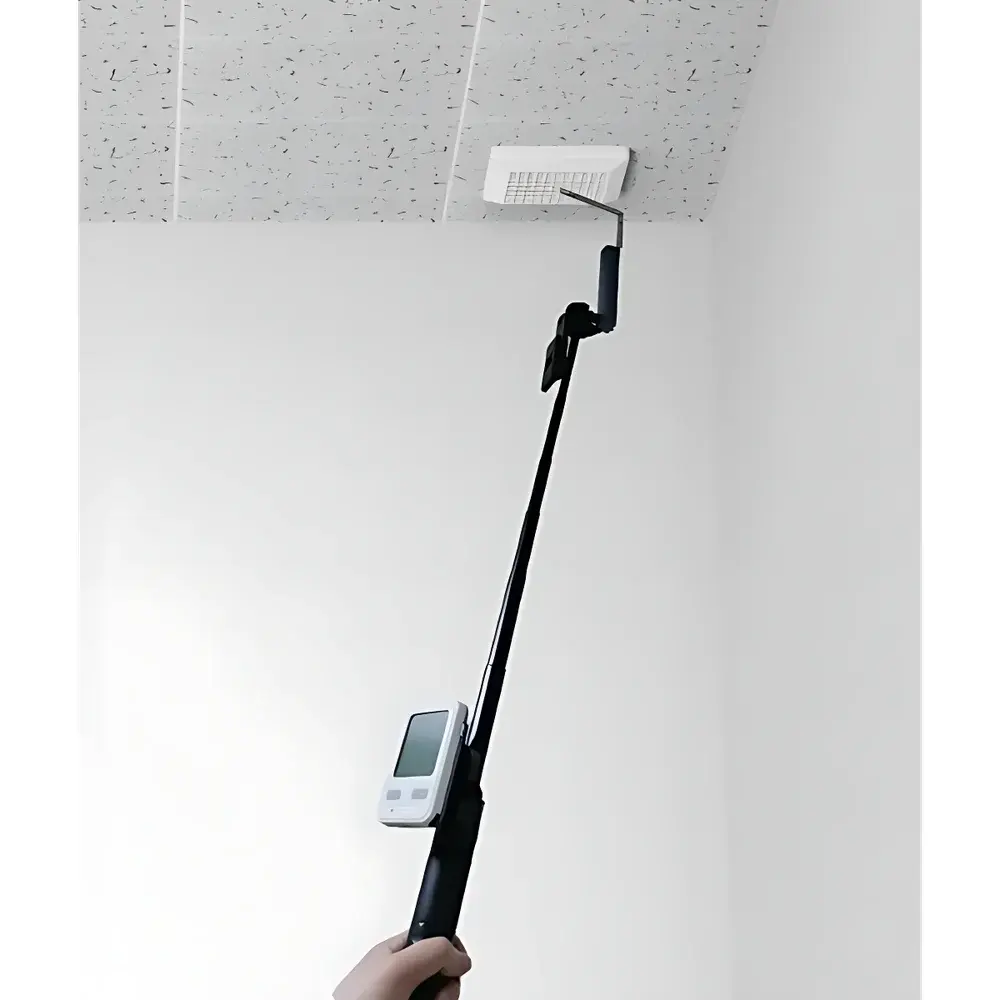
Yes — the I/L telescopic probe allows direct insertion into ductwork (I-mode) or surface-mount positioning at grilles or diffusers (L-mode), maintaining sensor orientation perpendicular to flow.
Is calibration traceable to NIST or JIS standards?
Each unit ships with a factory calibration report referencing internal reference standards; third-party accredited calibration (e.g., JCSS-certified labs in Japan or NVLAP-accredited providers in the US) is recommended annually for regulated applications.
Does the device support data logging without a smartphone?
No — standalone logging requires the optional AF201/AF202 display unit, which stores up to 99 sets of min/max/avg values but does not record time-series waveforms.
How does humidity measurement perform in condensing environments?
Operation is restricted to non-condensing conditions (−20–70 °C, 2–98 %RH); prolonged exposure to dew point conditions will impair RH sensor recovery and may cause long-term hysteresis.







