
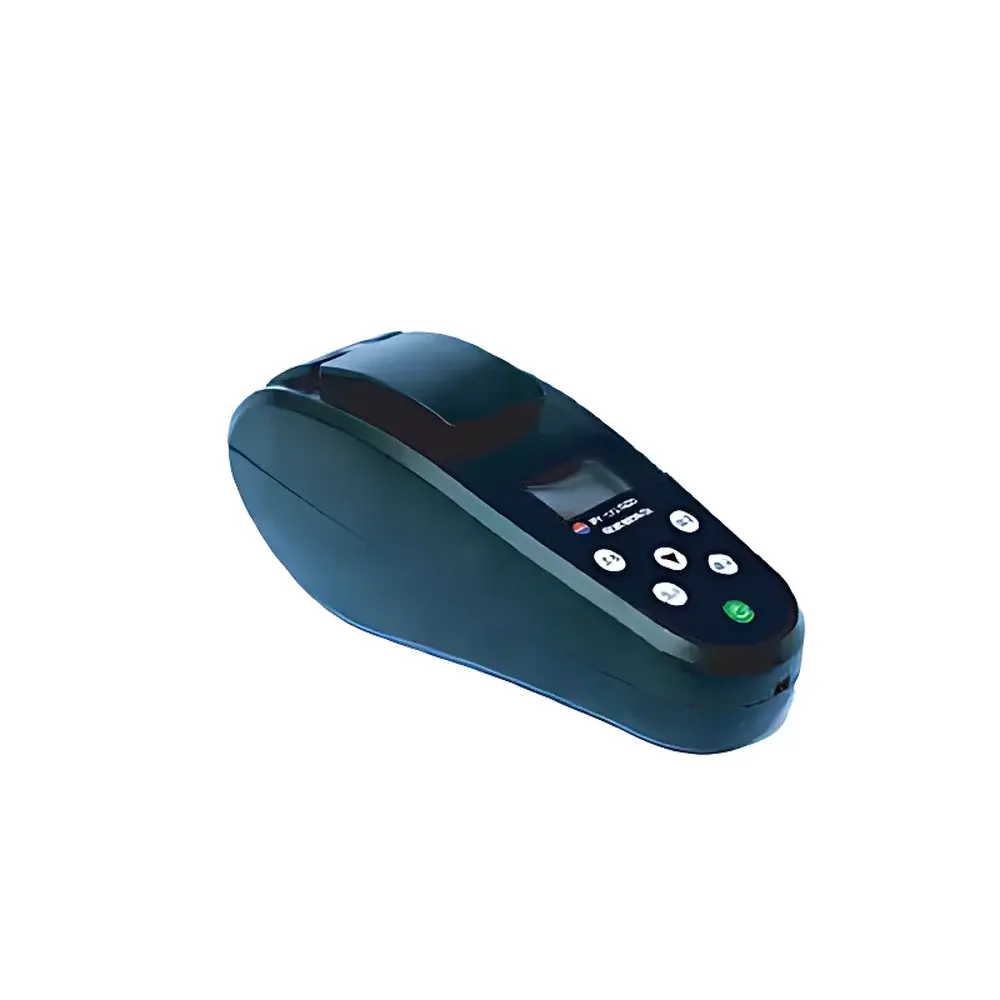
Beijing Baoyun BY-U1600 Urea Analyzer
| Brand | Beijing Baoyun / BJBY |
|---|---|
| Origin | Beijing, China |
| Manufacturer Type | Authorized Distributor |
| Country of Origin | China |
| Model | BY-U1600 |
| Pricing | Available Upon Request |
| Detection Method | Diacetyl Monoxime (DAMO) Spectrophotometric Method per GB/T 18204.29–2000 |
| Measurement Range | 0.00–6.00 mg/L |
| Resolution | 0.01 mg/L |
| Accuracy | ≤ ±3% of reading + 0.01 mg/L |
| Display | OLED with backlight |
| Operating Environment | 0–50 °C, 0–90% RH (non-condensing) |
| Light Source | Pulsed LED (≥100,000 h lifetime) |
| Power Supply | USB 5 V or 4 × AA alkaline batteries |
| Auto-Diagnostic | Battery status monitoring |
| Optical Design | Integrated LED light source / monochromator / cuvette chamber / photodetector |
| Sample Interface | Built-in flip-type light-shield cover |
| Included Accessories | Boiling unit and 50 pre-packaged urea reagent kits |
Overview
The Beijing Baoyun BY-U1600 Urea Analyzer is a compact, field-deployable photometric instrument engineered for rapid, reliable quantification of urea concentration in water samples—primarily targeting environmental monitoring, wastewater treatment, aquaculture, and drinking water quality assurance applications. It implements the diacetyl monoxime (DAMO) spectrophotometric method standardized in GB/T 18204.29–2000, a widely accepted Chinese national standard aligned with international principles of colorimetric nitrogen compound analysis. Unlike conventional spectrophotometers requiring external monochromators, optical filters, or mechanical slit mechanisms, the BY-U1600 employs a solid-state LED that functions simultaneously as both excitation source and spectral selector—eliminating alignment drift, reducing thermal noise, and enhancing long-term photometric stability. The integrated optical path—comprising the pulsed LED, sample chamber, and photodetector—is hermetically sealed and mechanically rigid, delivering high reproducibility (<3% RSD) across repeated measurements under variable ambient conditions.
Key Features
- Monolithic optical architecture: LED-based dual-function light source/monochromator eliminates moving parts, calibration drift, and alignment sensitivity—ideal for mobile or unattended operation.
- Pulsed LED illumination with >100,000-hour operational lifetime ensures consistent spectral output without degradation, minimizing recalibration frequency and maintenance overhead.
- Integrated flip-type light-shield cover prevents stray light interference during measurement—critical for low-concentration accuracy in ambient-light environments.
- OLED display with adjustable backlight enables clear readability under low-illumination field conditions while maintaining ultra-low power consumption.
- Dual-power flexibility: Operates via standard USB 5 V supply (e.g., portable power bank or lab PC) or four AA alkaline batteries—supporting >12 hours of continuous use per set.
- Onboard battery diagnostics provide real-time voltage monitoring and low-battery alert—ensuring data integrity by preventing unexpected shutdown mid-assay.
- Pre-configured assay protocol: Only requires zero-point calibration followed by addition of single-use DAMO reagent pouches—no manual dilution, pipetting, or timing adjustments needed.
Sample Compatibility & Compliance
The BY-U1600 is validated for aqueous matrices including surface water, groundwater, treated effluent, aquaculture pond water, and potable water sources. It accommodates standard 10 mm pathlength cuvettes and is compatible with both raw and filtered samples (recommended filtration ≤0.45 µm to minimize turbidity interference). All reagent kits are manufactured under controlled conditions and comply with GB/T 18204.29–2000 specifications for reagent purity, reaction kinetics, and chromophore stability. While not certified to ISO/IEC 17025 or EPA methods, its analytical performance meets routine monitoring requirements for regulatory screening in municipal and industrial environmental labs operating under China’s Ministry of Ecology and Environment (MEE) guidelines. The instrument’s design adheres to IEC 61010-1 safety standards for electrical equipment used in measurement, control, and laboratory applications.
Software & Data Management
The BY-U1600 operates as a standalone analyzer with embedded firmware—no external software installation required. All measurement parameters, calibration history, and result logs (up to 500 entries) are stored internally with timestamp and operator ID fields. Data export is supported via USB interface in CSV format for integration into LIMS or QA/QC reporting systems. The device supports user-defined calibration curves—enabling traceable adaptation to site-specific matrix effects or alternative reagent batches—while retaining factory-default GB/T 18204.29–2000 curve as primary reference. Audit trail functionality includes automatic logging of calibration events, zero-point verification, and battery status changes—supporting GLP-aligned documentation practices.
Applications
- Environmental field surveys: Rapid on-site urea assessment in rivers, lakes, and reservoirs to support nutrient loading studies and eutrophication risk evaluation.
- Wastewater treatment plant (WWTP) process control: Monitoring influent/effluent urea levels to optimize biological nitrogen removal stages (e.g., nitrification/denitrification).
- Aquaculture management: Tracking urea accumulation in recirculating aquaculture systems (RAS) to prevent ammonia toxicity and maintain optimal nitrogen cycling.
- Drinking water safety screening: Verifying absence of urea contamination from agricultural runoff or sewage infiltration in source water catchments.
- Educational laboratories: Teaching fundamental principles of enzymatic and colorimetric nitrogen analysis with minimal procedural complexity and consumable cost.
FAQ
What is the detection principle used by the BY-U1600?
It employs the diacetyl monoxime (DAMO) spectrophotometric method per GB/T 18204.29–2000, where urea reacts with DAMO under acidic heat to form a pink chromophore measured at ~520 nm.
Can the instrument be used for seawater samples?
Yes, with appropriate dilution and salinity correction—though high chloride concentrations may require matrix-matched calibration due to potential interference with DAMO kinetics.
Is the boiling unit included with the analyzer?
Yes—the integrated electric boiling module and 50 pre-measured reagent kits are supplied as standard accessories.
Does the device support multi-point calibration?
Yes—users can perform up to five-point custom calibration using NIST-traceable urea standards, with linear or quadratic curve fitting options.
How is optical alignment maintained over time?
No alignment is required—the fixed-path, solid-state optical train is factory-optimized and thermally stabilized; periodic zero-point verification suffices for routine validation.







