
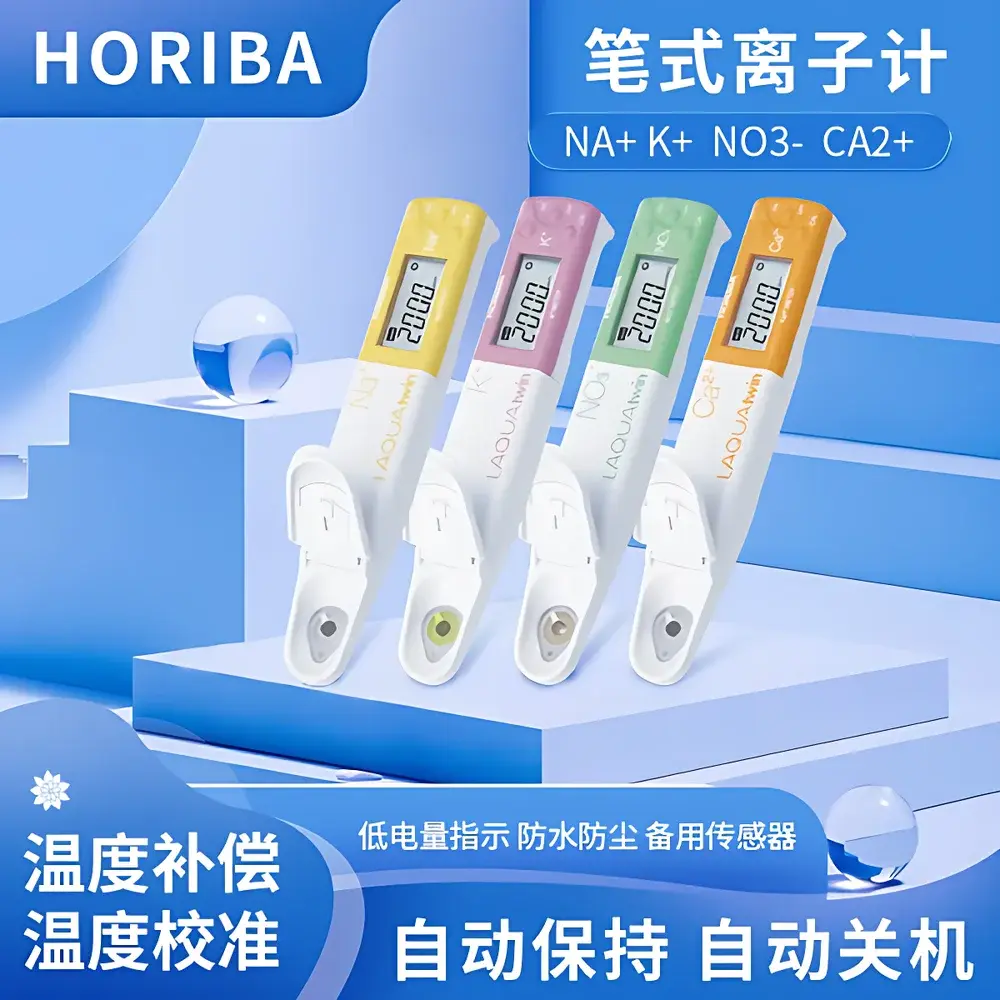
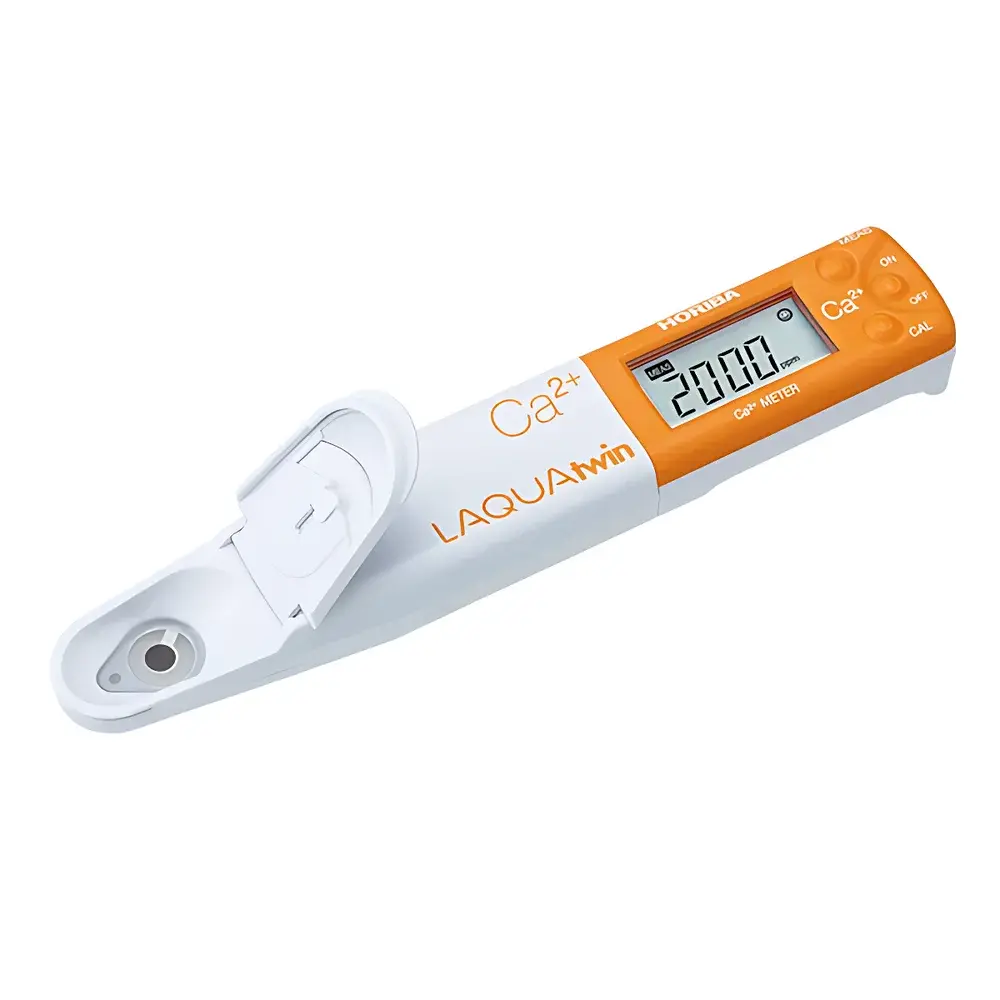
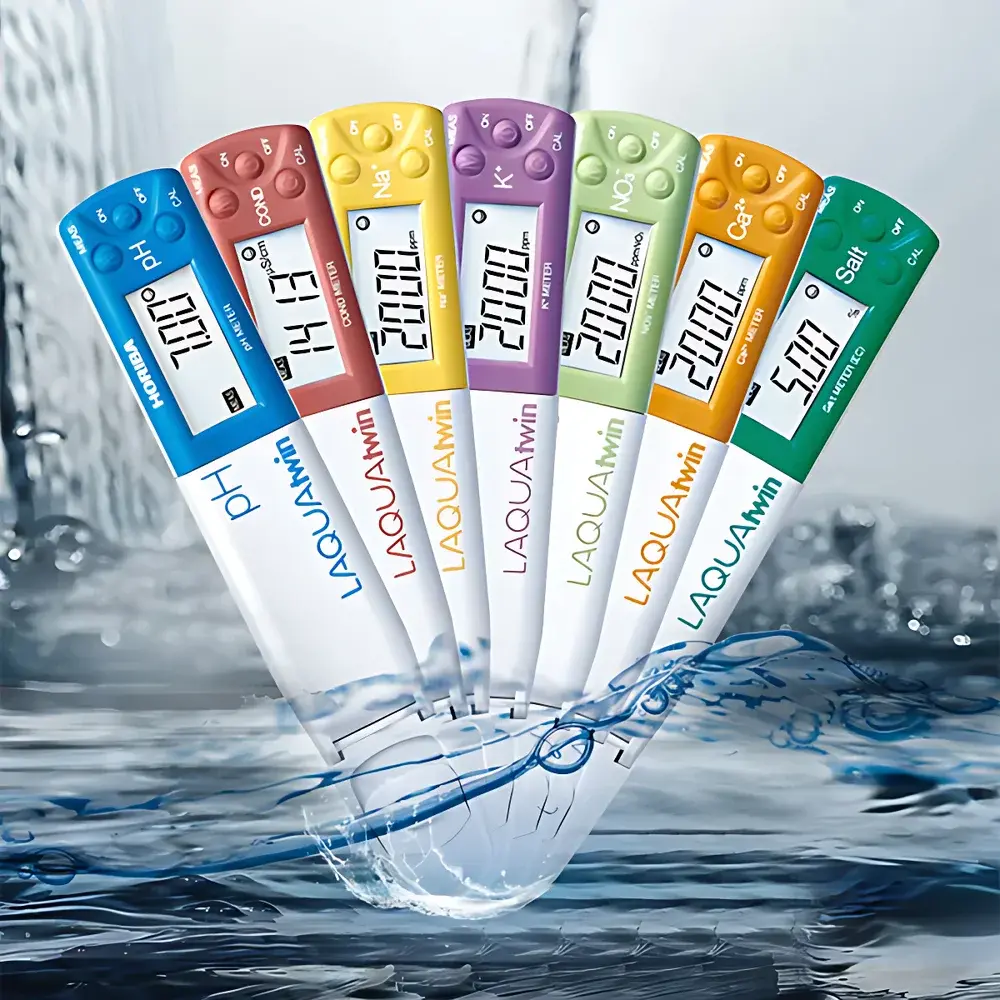
HORIBA LAQUAtwin Ca-11 Portable Calcium Ion Meter (Ca²⁺)
| Brand | HORIBA |
|---|---|
| Origin | Japan |
| Model | Ca-11 |
| Instrument Type | Portable Ion Meter |
| Measurement Range | 4–9900 ppm (mg/L) Ca²⁺ |
| Detection Limit | ±1 ppm (0–99 ppm), ±10 ppm (100–990 ppm), ±100 ppm (1000–9900 ppm) |
| Response Time | ≤5 s |
| Accuracy | ±20% of reading |
| Operating Temperature | 5–40 °C |
| Relative Humidity | ≤85% RH (non-condensing) |
| IP Rating | IP67 |
| Sensor Replaceable | Yes (approx. 1500 measurements per sensor) |
Overview
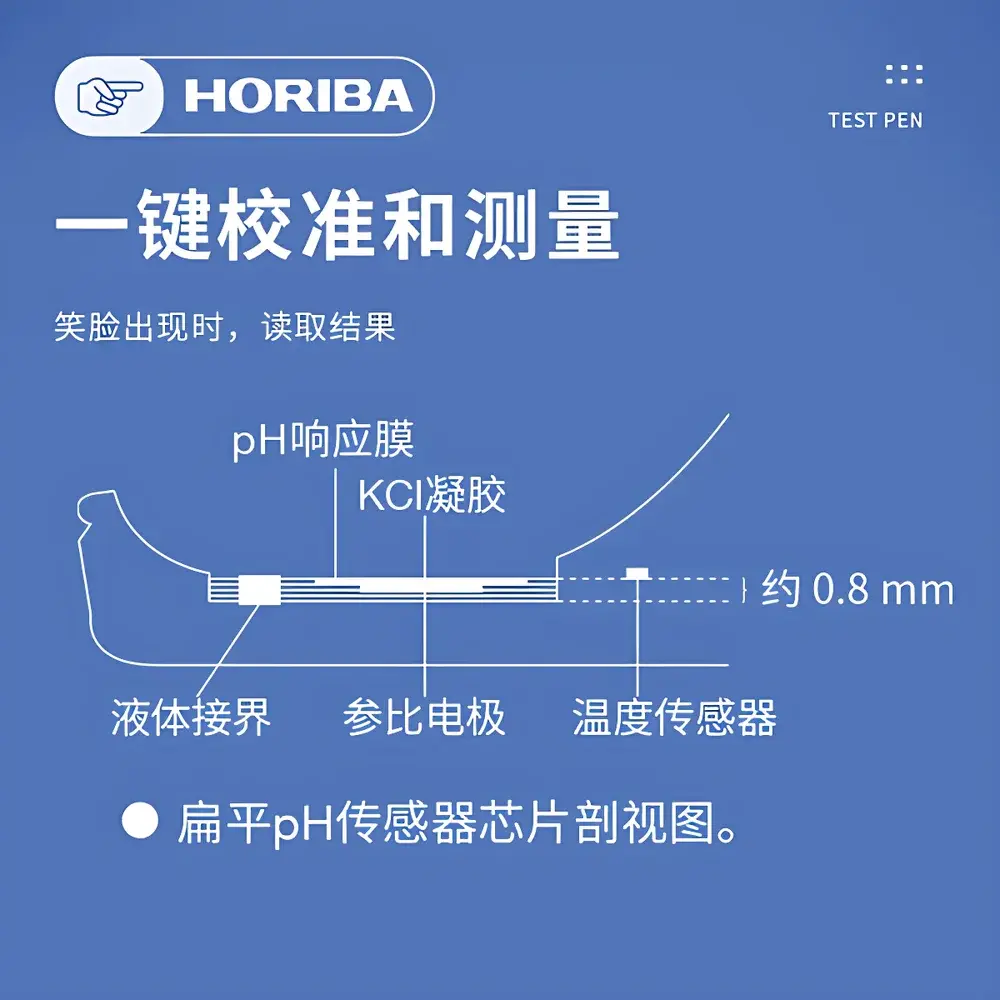
The HORIBA LAQUAtwin Ca-11 is a compact, palm-sized calcium ion (Ca²⁺) meter engineered for rapid, on-site water quality assessment using solid-contact flat-sensor ion-selective electrode (ISE) technology. Unlike conventional benchtop ISE systems requiring voluminous sample handling, calibration in beakers, and complex maintenance, the Ca-11 integrates the sensing membrane, reference element, display, and microprocessor into a single, waterproof (IP67-rated) handheld unit less than 16 cm long. Its core measurement principle relies on potentiometric detection: the Ca²⁺-selective membrane generates a Nernstian voltage response proportional to the logarithm of free calcium ion activity in aqueous solution. This enables direct quantification without dilution or pretreatment—ideal for field deployment in drinking water distribution, aquaculture, boiler feedwater monitoring, wastewater effluent screening, and agricultural runoff analysis. The device operates within a defined temperature window (5–40 °C) and humidity limit (≤85% RH, non-condensing), ensuring stable performance under typical environmental conditions encountered during outdoor sampling.
Key Features
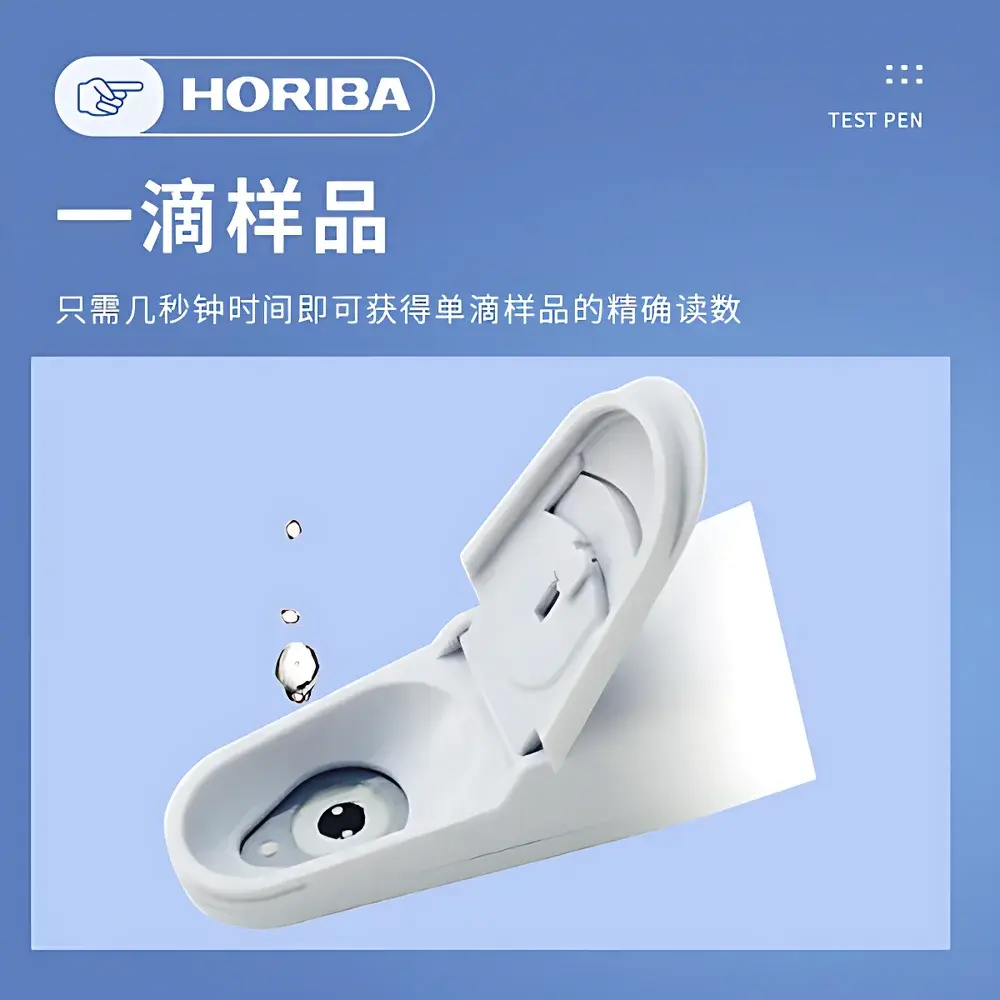
- Flat-sensor architecture: Enables direct measurement of ultra-low-volume samples (as little as 0.05 mL with HORIBA Sampling Sheet B) — no beaker, pipette, or external electrode required.
- One-button operation: Single-press calibration and measurement; visual feedback via integrated smiley icon confirms completion and readiness for reading.
- Multi-modal sampling flexibility: Supports immersion, scooping, droplet deposition, solid contact (e.g., moist food, paper, textiles), and powder rehydration protocols — all validated for Ca²⁺ detection.
- Field-serviceable design: Sensor module is user-replaceable (part number sold separately); typical service life ≈1500 measurements or until calibration fails reproducibly.
- IP67-rated enclosure: Fully dust-tight and submersible to 1 m for 30 minutes — suitable for humid, rainy, or splashed environments without protective housing.
- Integrated calibration verification: Automatic endpoint recognition during standard solution application eliminates subjective endpoint judgment and minimizes operator error.
Sample Compatibility & Compliance
The LAQUAtwin Ca-11 is validated for use with aqueous solutions, low-viscosity suspensions, hydrated solids (e.g., cheese, leaf tissue, filter paper), and rehydrated powders (e.g., dairy blends, soil extracts). It complies with general principles outlined in ISO 17025 for field-deployable testing equipment and supports GLP-aligned workflows through traceable calibration logs (when paired with optional data export accessories). While not certified to specific regulatory standards such as USP <731> or ASTM D511 for calcium, its measurement range (4–9900 ppm) covers critical thresholds referenced in WHO Guidelines for Drinking-water Quality (100 ppm Ca²⁺ upper bound for hardness-related scaling) and EPA Method 200.7 (ICP-based validation benchmark). Users are advised to perform matrix-matched calibration when analyzing high-ionic-strength or chelated samples (e.g., EDTA-treated waters) to mitigate activity coefficient effects.
Software & Data Management
The Ca-11 operates autonomously without PC connectivity; however, optional HORIBA Data Transfer Kit (sold separately) enables USB-based export of timestamped measurement records (date/time, value, unit, calibration status) to CSV files for audit-ready documentation. All internal firmware adheres to basic data integrity principles: no data overwrite, immutable calibration history storage, and automatic timestamping upon each measurement event. Though not FDA 21 CFR Part 11 compliant out-of-the-box (lacking electronic signatures and audit trail encryption), the instrument supports manual record-keeping practices compatible with ISO/IEC 17025 Clause 7.7 (result reporting) and GMP Annex 11 risk-based validation frameworks when used in conjunction with SOP-controlled procedures.
Applications
- Drinking water utilities: Rapid verification of residual calcium hardness post-softening or lime-soda treatment.
- Aquaculture facilities: Monitoring Ca²⁺ levels critical for shell formation in crustaceans and mollusks.
- Food & beverage QA/QC: Spot-checking calcium fortification in dairy alternatives, juices, and infant formulas.
- Industrial cooling towers: Screening for scale-forming potential without lab turnaround delay.
- Environmental field surveys: Assessing watershed calcium flux from limestone bedrock dissolution or agricultural runoff.
- Educational laboratories: Demonstrating ion-selective electrode fundamentals with minimal setup overhead.
FAQ
How often should the sensor be replaced?
Sensor replacement is recommended after approximately 1500 measurements or when consistent calibration failure occurs — indicated by inability to achieve stable smiley confirmation across two consecutive calibrations using fresh standards.
Can the Ca-11 measure calcium in seawater or brine?
High ionic strength matrices (>10,000 µS/cm conductivity) may cause significant activity coefficient deviation; users should apply matrix-matched calibration standards or validate against reference methods (e.g., atomic absorption spectroscopy) for quantitative accuracy.
Is temperature compensation automatic?
No — the Ca-11 does not include built-in temperature sensing; measurements must be conducted within the specified 5–40 °C operating range, and users should equilibrate samples to ambient lab/field temperature prior to analysis.
What is the shelf life of the replacement sensor?
Unopened sensors retain full functionality for 18 months when stored at room temperature (15–25 °C) in original packaging; once installed, lifespan depends on usage frequency and sample matrix aggressiveness.
Does the device require annual recalibration by an accredited lab?
No — end-user calibration with NIST-traceable Ca²⁺ standards (e.g., 100 ppm and 1000 ppm) satisfies routine verification requirements; third-party calibration is only necessary if metrological traceability to national standards is mandated by internal QA policy or regulatory submission.
Related Products







