
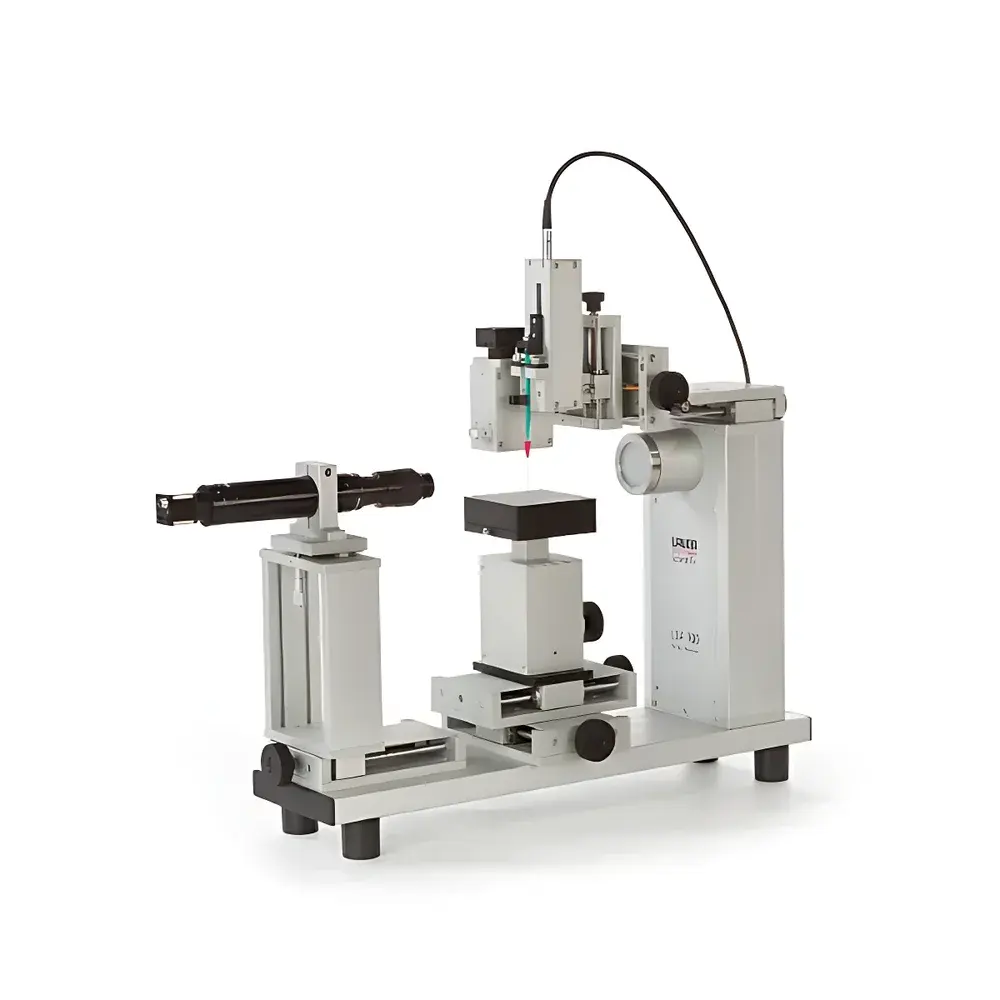
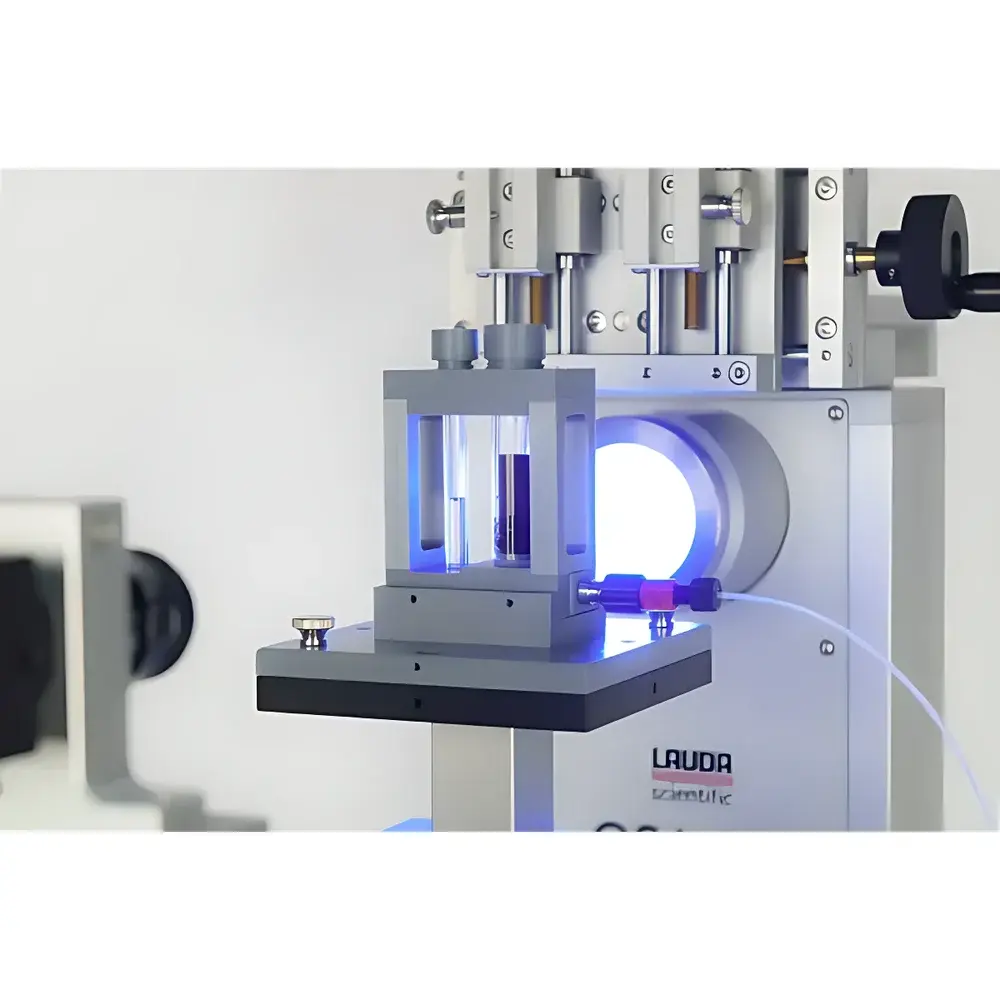
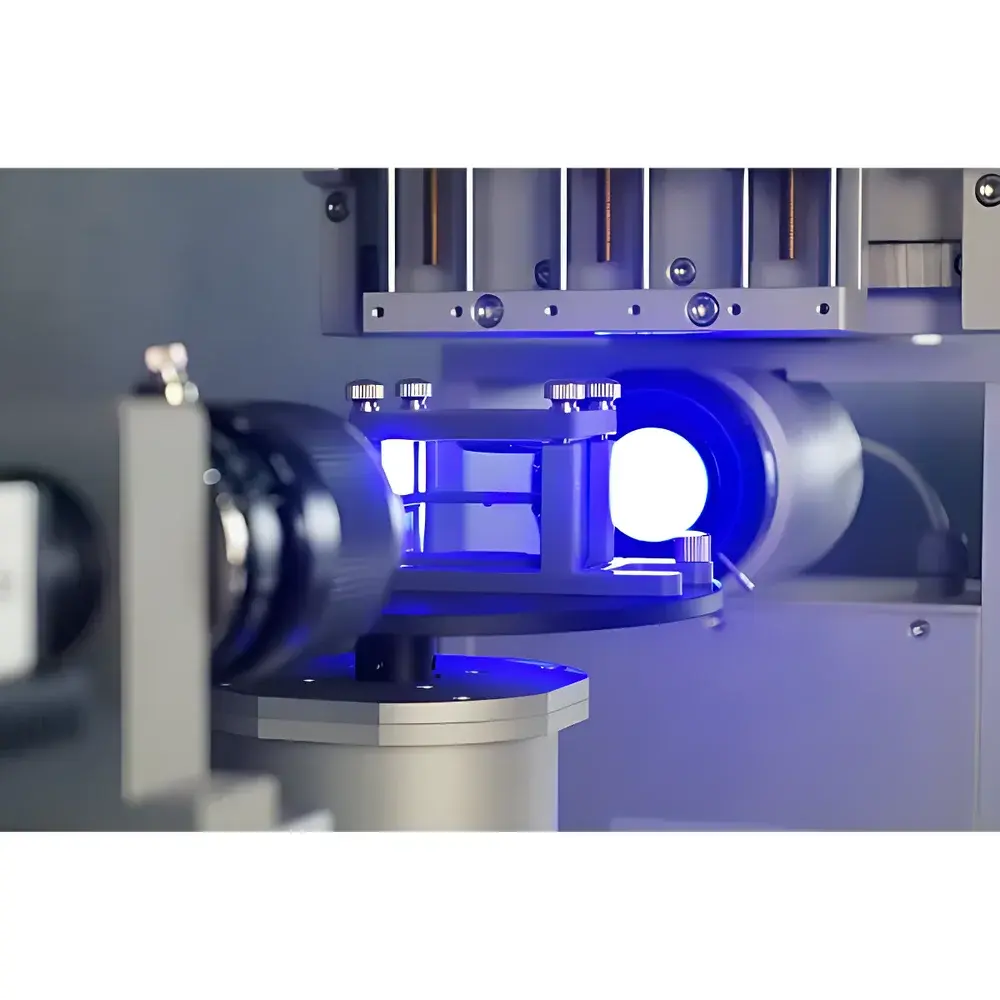
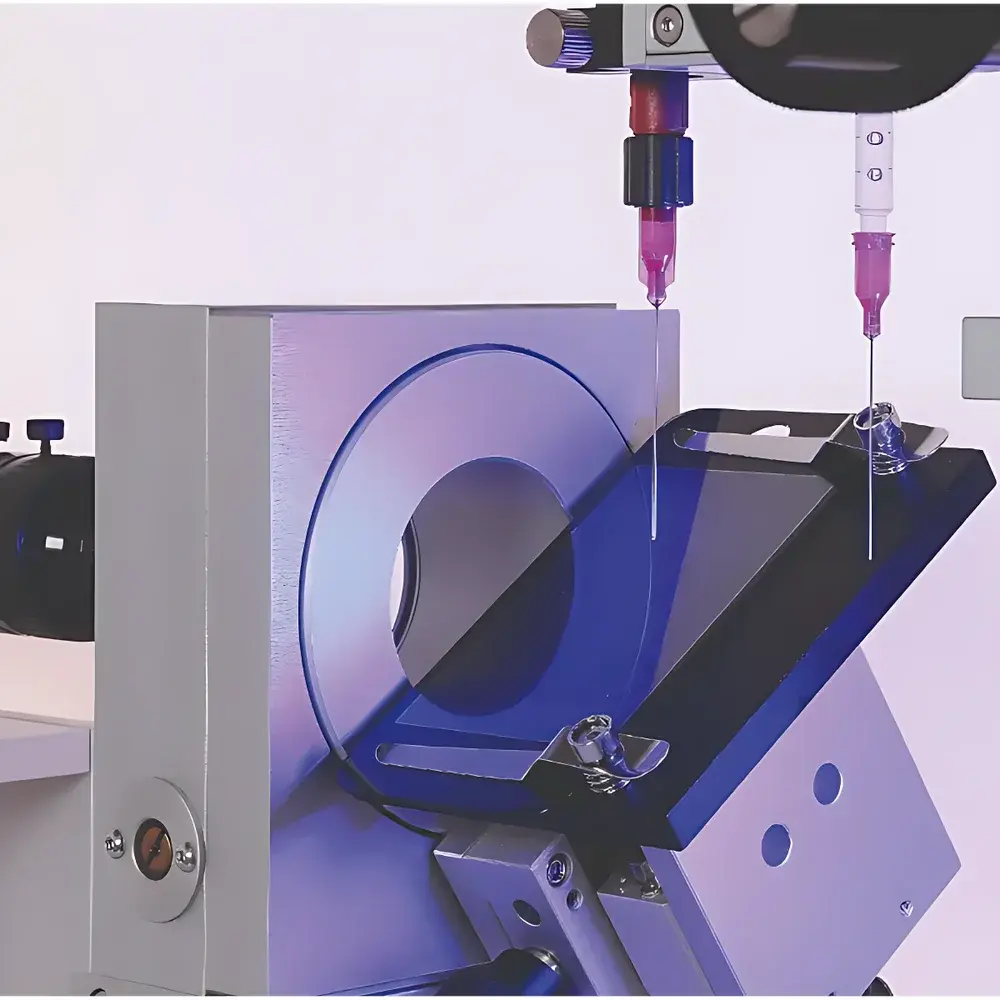
LAUDA Scientific LSA100 B Video-Based Optical Contact Angle Analyzer
| Brand | LAUDA Scientific |
|---|---|
| Origin | Germany |
| Model | LSA100 B |
| Instrument Type | Benchtop Video Optical Contact Angle Analyzer |
| Contact Angle Measurement Range | 0–180° |
| Contact Angle Accuracy | ±0.1° |
| Contact Angle Resolution | 0.01° |
| Surface/Interfacial Tension Range | 0.001–2000 mN/m |
| Surface/Interfacial Tension Resolution | 0.01 mN/m |
| Sample Stage Dimensions | 100 mm × 100 mm (fixed) |
| Maximum Sample Size | ∞ × 290 × 76 mm (L × W × H) |
| Stage Load Capacity | 12 kg |
| Optical Zoom | 6.5× Motorized Zoom Lens |
| Light Source | Monochromatic, Uniform LED Cold Light (Software & Manual Intensity Control) |
| Power Supply | 110/240 V, 50/60 Hz, 90 W |
| Instrument Dimensions | 600 × 160 × 543 mm (L × W × H) |
| Weight | 19 kg |
Overview
The LAUDA Scientific LSA100 B is a high-precision, benchtop video-based optical contact angle analyzer engineered for rigorous surface and interfacial characterization in research and quality control laboratories. It operates on the principle of sessile drop analysis using real-time high-resolution imaging, enabling quantitative determination of contact angles at the solid–liquid–vapor interface. By capturing and analyzing the silhouette of a sessile or pendant liquid droplet via a motorized 6.5× zoom lens and monochromatic LED illumination, the system delivers geometrically robust contour fitting based on Young–Laplace equation modeling. This foundational methodology supports not only static and dynamic contact angle measurements—including advancing, receding, and roll-off angles—but also extends to interfacial thermodynamic quantification such as surface free energy estimation (via Owens–Wendt, Wu, Fowkes, van Oss–Chaudhury–Good models), critical micelle concentration (CMC) determination, and interfacial rheology analysis. Designed and manufactured in Germany, the LSA100 B adheres to stringent engineering tolerances and optical calibration standards required for traceable, reproducible interfacial data generation under ISO 15989 and ASTM D7334 guidelines.
Key Features
- Motorized 6.5× zoom lens with software-controlled focus and magnification—enabling precise adaptation to diverse droplet volumes (0.1–10 µL) and sample topographies.
- Monochromatic, uniform cold LED illumination with dual-mode intensity control (manual knob + software feedback loop) to minimize thermal drift and ensure consistent contrast across substrates with varying reflectivity or transparency.
- High-stability 100 mm × 100 mm fixed sample stage with 12 kg load capacity and integrated leveling mechanism—optimized for long-term measurement repeatability and compatibility with environmental chambers (optional).
- Real-time contact angle resolution of 0.01° and accuracy of ±0.1°, validated against NIST-traceable reference standards (e.g., PTFE, silicon wafers, glass slides).
- Surface and interfacial tension measurement capability from 0.001 to 2000 mN/m at 0.01 mN/m resolution, supported by both pendant drop and Wilhelmy plate methods (with optional tensiometer module).
- Fully automated CMC titration protocol with integrated syringe pump control, peak detection algorithms, and export-ready concentration–surface tension curves compliant with ISO 1409 and ASTM D1331.
Sample Compatibility & Compliance
The LSA100 B accommodates samples up to ∞ × 290 × 76 mm (length unrestricted), making it suitable for large-area coatings, flexible films, porous membranes, and irregularly shaped industrial components. Its open-stage architecture allows integration with humidity-controlled enclosures, temperature stages (−20 °C to 120 °C), and electrochemical cells. All measurement workflows support audit-ready documentation per GLP and GMP requirements. Data integrity is reinforced through time-stamped acquisition logs, user-access controls, and optional 21 CFR Part 11-compliant software modules—including electronic signatures, change history tracking, and secure database storage. Calibration certificates are provided with each instrument, referencing DAkkS-accredited traceability where applicable.
Software & Data Management
Operating on LAUDA’s SCA20 software platform (Windows 10/11 compatible), the LSA100 B provides modular, scriptable analysis routines—including automatic baseline detection, multi-droplet statistical reporting, time-resolved absorption kinetics, and interfacial relaxation modeling. Raw image sequences, processed contours, and numerical outputs are stored in vendor-neutral HDF5 format, ensuring long-term archival integrity and third-party interoperability (e.g., MATLAB, Python pandas, OriginLab). Batch processing, customizable report templates (PDF/Excel), and API access for LIMS integration further streamline compliance-driven laboratory workflows.
Applications
- Surface energy mapping of polymer films, biomaterials, and functionalized nanocomposites.
- Quality assurance of hydrophobic/hydrophilic coatings in automotive, aerospace, and medical device manufacturing.
- Formulation development of surfactants, emulsions, and pharmaceutical suspensions via CMC and interfacial elasticity profiling.
- Wettability assessment of battery separators, fuel cell membranes, and filtration media.
- Fundamental studies of capillary rise, spontaneous imbibition, and contact line dynamics in porous media.
- Validation of plasma, corona, or UV-ozone surface treatments prior to adhesion or printing processes.
FAQ
What measurement methods does the LSA100 B support?
Static/dynamic contact angle (sessile drop), pendant drop tensiometry, Wilhelmy plate method (with optional module), CMC titration, and interfacial dilatational rheology.
Is the system compatible with environmental control accessories?
Yes—standard mounting interfaces support integration with humidity chambers (10–95% RH), temperature stages, and gas purge housings for controlled-atmosphere measurements.
Can the software generate regulatory-compliant reports?
Yes—SCA20 supports configurable electronic signatures, audit trails, and PDF reports meeting ISO/IEC 17025 and FDA 21 CFR Part 11 requirements when configured with optional validation packages.
What is the typical calibration frequency for routine use?
Initial factory calibration is performed using certified reference surfaces; users are advised to verify performance quarterly using standard contact angle references (e.g., 65° and 110° polycarbonate slides) and surface tension standards (e.g., ultrapure water, diiodomethane).
Does the system support third-party automation or scripting?
Yes—SCA20 offers COM/ActiveX interfaces and Python-compatible REST API endpoints for integration into automated test benches and digital lab infrastructure.



