
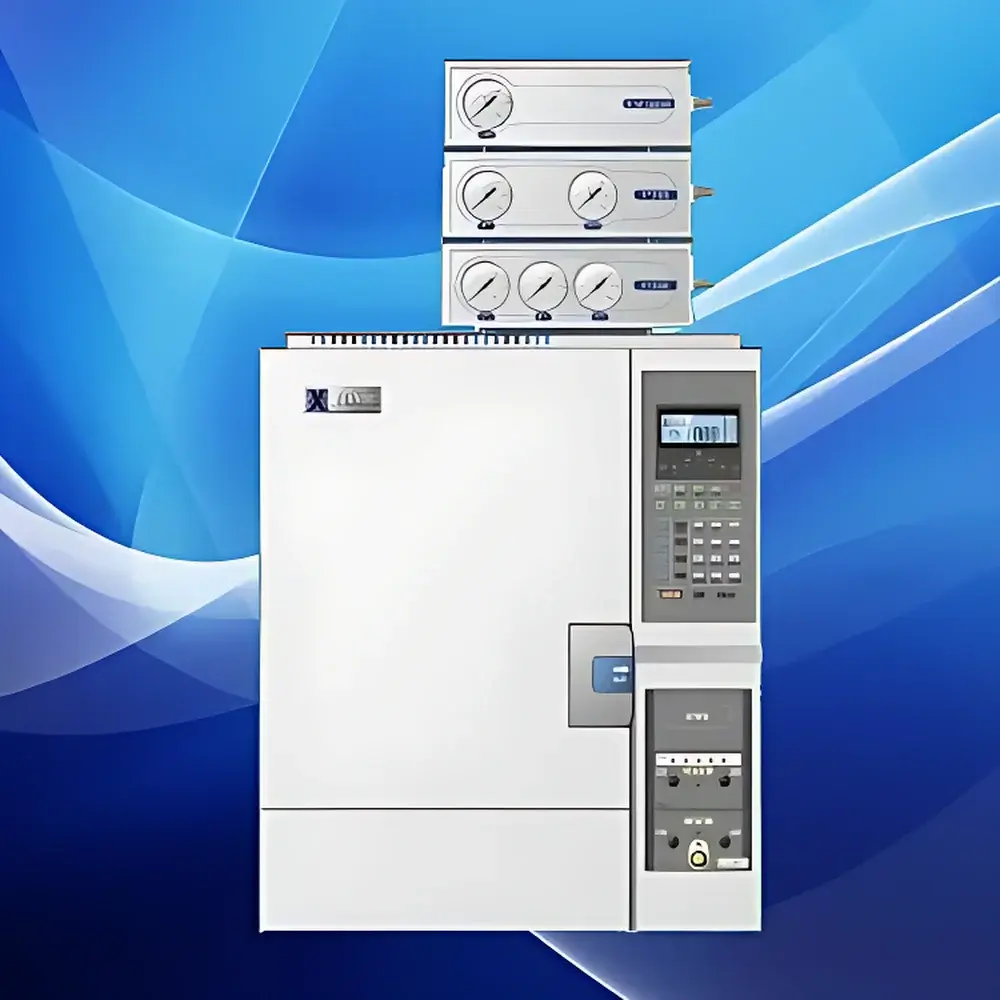
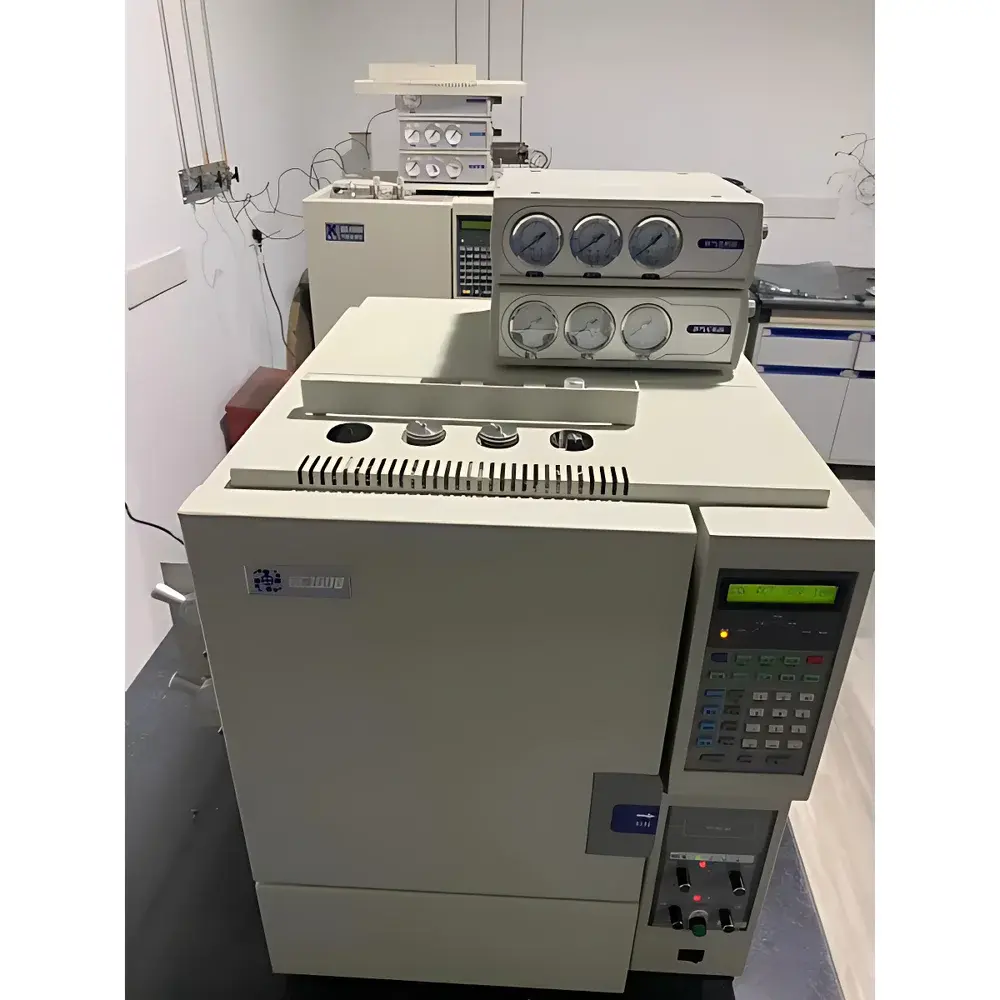
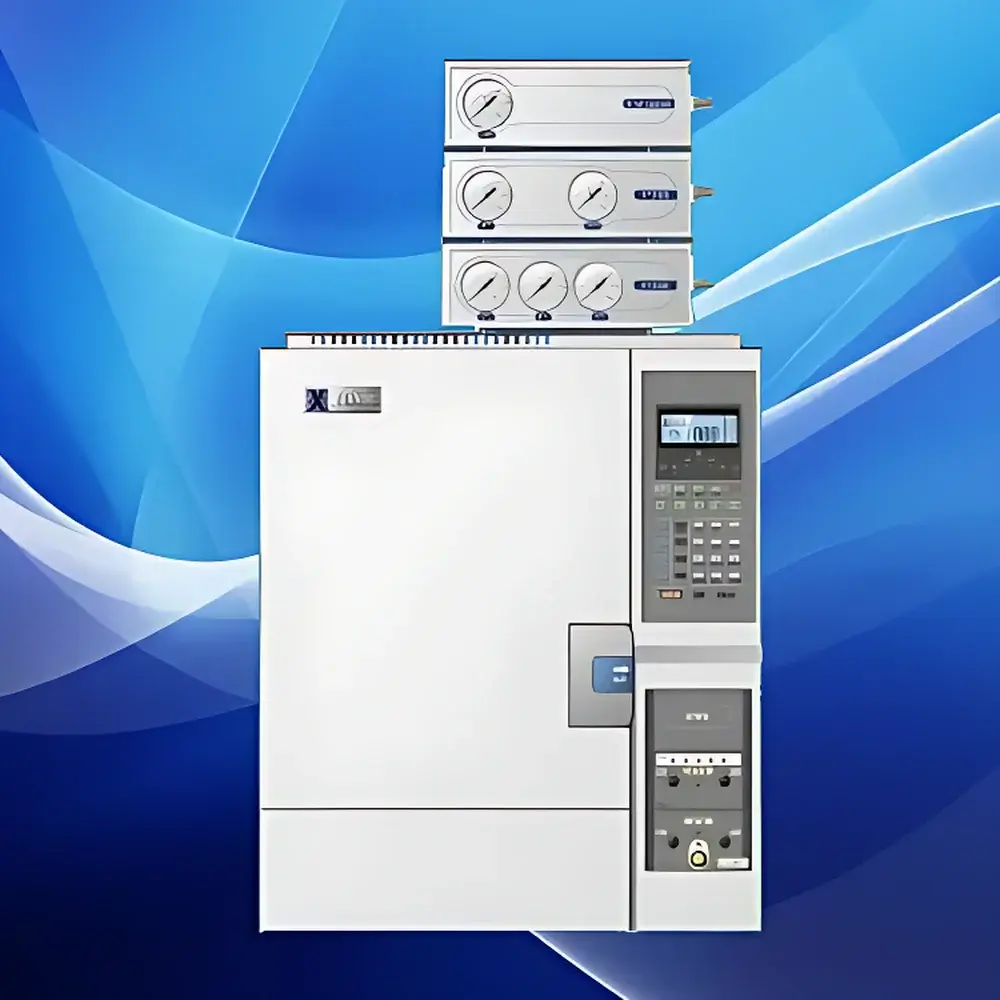
Jiedao/Kexiao GC1690 Non-Methane Hydrocarbons (NMHC) Dedicated Gas Chromatograph
| Brand | Jiedao/Kexiao |
|---|---|
| Origin | Zhejiang, China |
| Model | GC1690 NMHC |
| Instrument Type | Laboratory Gas Chromatograph |
| Application Scope | Environmental Air & Exhaust Monitoring |
| Detection Principle | Dual-Packed-Column Parallel Separation with Single FID Detection |
| Minimum Detectable Concentration | 0.05 mg/m³ (as methane equivalent) |
| Regulatory Compliance | GB 16297–1996, “Methods for Monitoring and Analysis of Air and Waste Gas” (4th Ed.) |
| Sample Introduction | 10-Port Valving System with 1 mL Gas Loop |
| Column Configuration | Two Parallel Packed Columns (Total Hydrocarbons Column + Methane-Specific Column) |
| Detector | Flame Ionization Detector (FID), 150 °C Operating Temperature |
| Injector Temperature | 150 °C |
| Oven Temperature Range | Ambient to 300 °C (programmable) |
| Carrier Gas | High-Purity Nitrogen or Helium |
| Flow Control | Mechanical or Electronic Pressure/Flow Regulation (model-dependent) |
Overview
The Jiedao/Kexiao GC1690 Non-Methane Hydrocarbons (NMHC) Dedicated Gas Chromatograph is a purpose-engineered laboratory gas chromatograph designed specifically for regulatory-compliant measurement of total hydrocarbons (THC) and non-methane hydrocarbons (NMHC) in ambient air and industrial exhaust streams. NMHC—defined as the sum of all volatile organic compounds (VOCs) excluding methane—is a critical air quality parameter due to its role in tropospheric ozone formation and photochemical smog generation. This system implements a validated, single-FID dual-column parallel separation methodology per the Chinese national standard *Methods for Monitoring and Analysis of Air and Waste Gas* (4th Edition), eliminating inter-detector variability inherent in dual-FID configurations. By utilizing a 10-port rotary valve for precise, reproducible sample introduction into two parallel packed columns—one optimized for total hydrocarbon response and the other for selective methane resolution—the instrument delivers accurate, trace-level NMHC quantification with a documented method detection limit of 0.05 mg/m³ (expressed as methane equivalent). The GC1690 NMHC operates under fully programmable temperature control, supporting isothermal and ramped oven profiles essential for robust retention time stability and peak shape reproducibility across routine environmental monitoring workflows.
Key Features
- Dedicated NMHC analysis architecture: Eliminates analytical bias by employing a single FID detector shared between parallel total hydrocarbon and methane-specific packed columns.
- 10-port valving system with fixed 1 mL gas sampling loop ensures high-precision, automated sample introduction without manual syringe handling or carryover risk.
- Thermally stable oven with ambient-to-300 °C programmable range enables precise isothermal operation at 50 °C (per standard method) or flexible method development for alternative VOCs.
- FID detector maintained at 150 °C provides optimal sensitivity and linearity for hydrocarbon detection across the required dynamic range (5–100 µmol/mol methane calibration).
- Injector port rated to 150 °C supports consistent vaporization of atmospheric gas samples without condensation or discrimination.
- Carrier gas flow and pressure regulation compatible with high-purity nitrogen or helium—calibrated and verified per ISO/IEC 17025 traceability guidelines for environmental testing laboratories.
Sample Compatibility & Compliance
The GC1690 NMHC is validated for direct injection of gaseous environmental samples collected in borosilicate glass syringes (10 mL and 100 mL volumes), conforming to the sample handling protocols specified in GB/T 15438–1995 and the *Methods for Monitoring and Analysis of Air and Waste Gas* (4th Ed.). It meets the performance criteria outlined in China’s *Comprehensive Emission Standard of Air Pollutants* (GB 16297–1996), which sets a facility boundary NMHC concentration limit of 5 mg/m³. The method includes mandatory dehydrocarbonized air blank correction to compensate for oxygen-induced positive interference in FID total hydrocarbon response—a requirement aligned with US EPA Method 25A and ISO 11843-1 principles of interference assessment. All calibration, system suitability, and blank subtraction procedures are fully documentable for GLP and internal QA/QC audits.
Software & Data Management
Data acquisition and processing are performed using vendor-supplied chromatography data system (CDS) software compliant with basic electronic record requirements. The software supports area-based external calibration using methane reference standards (5–100 µmol/mol), automatic peak integration with retention time locking, and batch report generation including calculated NMHC values (NMHC = THC − Methane − Dehydrocarbonized Air Blank). Audit trails record user actions, method parameters, and integration events. While not certified to FDA 21 CFR Part 11 out-of-the-box, the system architecture permits configuration for electronic signature and change control when deployed within validated laboratory environments adhering to CNAS-CL01:2018 (equivalent to ISO/IEC 17025).
Applications
- Regulatory NMHC monitoring at factory boundaries and stack emissions per GB 16297–1996 and local environmental protection bureau mandates.
- Indoor air quality (IAQ) assessments in industrial facilities, laboratories, and manufacturing cleanrooms.
- Method validation and proficiency testing for third-party environmental testing laboratories accredited to CNAS.
- Research-grade characterization of hydrocarbon speciation in urban ambient air, landfill gas, and biogas streams—when coupled with optional column screening.
- QA/QC support for continuous emission monitoring systems (CEMS) requiring periodic reference method verification.
FAQ
What is the minimum detectable concentration for NMHC using this system?
The validated method achieves a limit of detection (LOD) of 0.05 mg/m³, expressed as methane equivalent, under specified operating conditions (50 °C isothermal oven, 1 mL gas loop, single FID).
Does the system require two separate FID detectors?
No. The GC1690 NMHC uses a single FID shared between two parallel packed columns via the 10-port valve—eliminating inter-detector sensitivity drift and simplifying calibration and maintenance.
How is oxygen interference corrected in total hydrocarbon measurement?
Dehydrocarbonized compressed air is analyzed as a process blank to quantify and subtract the FID response attributable to O₂; this correction is mathematically applied during NMHC calculation (NMHC = THC − Blank − CH₄).
Is the instrument compliant with international standards such as ISO or EPA methods?
The analytical approach aligns with core principles of US EPA Method 25A and ISO 11843-1 for interference evaluation and detection limit estimation. Full equivalence requires laboratory-specific method validation per ISO/IEC 17025.
Can this system be used for other VOC analyses beyond NMHC?
While optimized for NMHC, the GC1690 platform supports method adaptation for targeted C₂–C₆ hydrocarbons using appropriate packed or capillary columns—subject to revalidation per applicable regulatory guidance.




