Thermo Scientific SampleManager LIMS Software
| Brand | Thermo Fisher |
|---|---|
| Origin | Shanghai, China |
| Deployment Options | On-premises or Cloud (managed by Thermo Fisher or customer-owned infrastructure) |
| Core Modules | Laboratory Execution System (LES), Electronic Lab Notebook (ELN), Scientific Data Management System (SDMS), Chromatography & Mass Spectrometry Integration (with Chromeleon CDS), Third-Party Portal, MES/ERP Interoperability, ASTM D6299-23a AQC Automation, Role-Based Training & Access Control |
| Regulatory Compliance | FDA 21 CFR Part 11, ISO/IEC 17025, GMP, GLP |
| Mobile Support | Native tablet application for LES execution and sample handling |
Overview
Thermo Scientific SampleManager LIMS Software is an enterprise-grade Laboratory Information Management System engineered for regulated and high-throughput laboratory environments. Built on a modular, service-oriented architecture, it provides end-to-end traceability across sample lifecycle management—from intake, scheduling, and analysis to reporting and archival. Unlike monolithic legacy LIMS platforms, SampleManager employs a domain-driven design that decouples core data models from workflow logic, enabling validated configuration without code modification. Its underlying data engine enforces ACID-compliant transaction integrity and supports both relational (SQL Server, Oracle) and hybrid deployment topologies. The system implements a dual-layer security model: attribute-based access control (ABAC) at the functional level and cryptographic hashing of audit trails to satisfy long-term evidential requirements under FDA 21 CFR Part 11 and ISO/IEC 17025.
Key Features
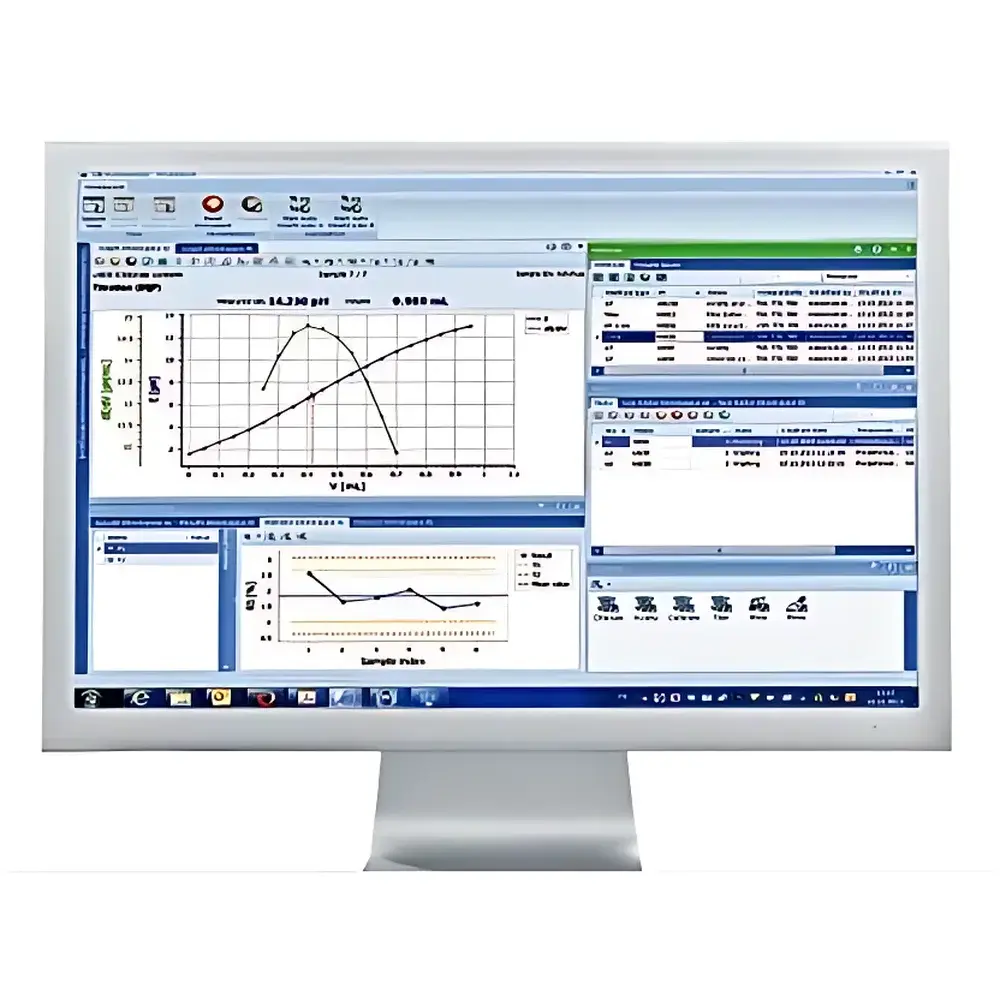
- Laboratory Execution System (LES): Enforces step-by-step procedural compliance by guiding analysts through SOP-defined workflows; captures full contextual metadata—including instrument state, environmental conditions, and user biometrics—within immutable electronic records.
- Integrated Scientific Data Management System (SDMS): Ingests raw instrument files (e.g., .raw, .cdf, .d) directly from chromatographs, mass spectrometers, and spectrophotometers; preserves original file integrity while indexing associated metadata for search, retrieval, and regulatory review.
- Chromeleon CDS Integration: Achieves bidirectional synchronization with Thermo Scientific Chromeleon Chromatography Data System, eliminating manual re-entry and ensuring analytical sequence alignment, peak integration consistency, and audit-ready result lineage.
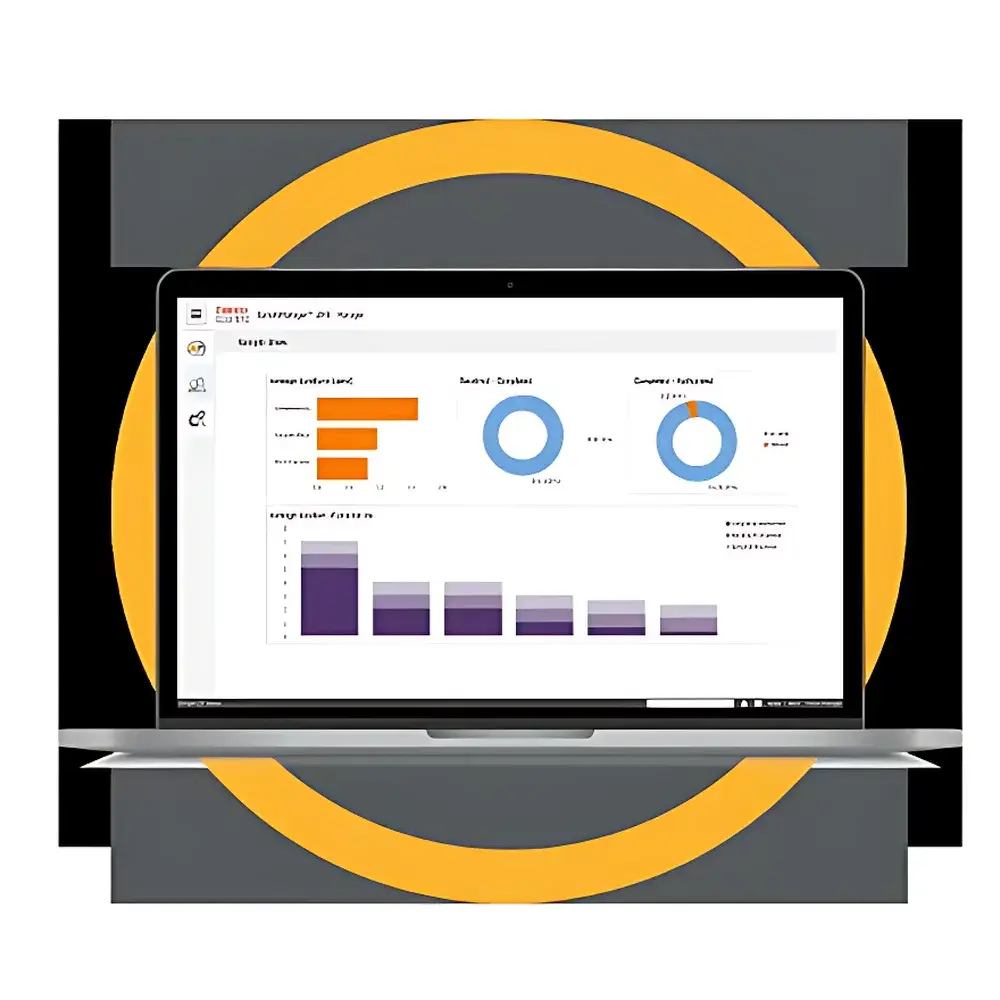
- Configurable Analytics Dashboard: Delivers pre-built, role-specific dashboards (e.g., QC Manager, Lab Director, QA Auditor) with drill-down capability into resource utilization rates, turnaround time distributions, instrument uptime metrics, and inventory shelf-life tracking—all rendered via HTML5-based interactive visualizations.
- Automated AQC Workflow Engine: Implements ASTM D6299-23a methodology for analytical quality control by auto-triggering reference material analyses, applying statistical process control (SPC) rules, generating out-of-trend alerts, and initiating corrective action workflows upon detection of drift or bias.
- Native Tablet Application: Supports offline-capable field data capture on iOS and Android tablets; synchronizes encrypted session logs and annotated images upon network reconnection while maintaining timestamped chain-of-custody integrity.
Sample Compatibility & Compliance
SampleManager LIMS natively supports heterogeneous sample types—including clinical specimens, environmental matrices, pharmaceutical intermediates, and petrochemical feedstocks—through extensible sample class definitions and configurable attribute schemas. All electronic records adhere to ALCOA+ principles (Attributable, Legible, Contemporaneous, Original, Accurate, Complete, Consistent, Enduring, Available). System validation documentation follows IQ/OQ/PQ protocols aligned with Annex 11 and GAMP 5 guidelines. Audit trails are immutable, time-stamped, and protected against tampering via SHA-256 hashing; retention policies comply with jurisdictional requirements for data preservation up to 30 years. The platform has undergone third-party penetration testing and meets ISO 27001-certified information security controls when deployed in Thermo-managed cloud environments.
Software & Data Management
The software utilizes a centralized metadata repository to unify structured (LIMS database), semi-structured (XML/JSON assay definitions), and unstructured data (PDF reports, scanned documents, molecular structures). SDMS connectors support over 120 vendor-specific instrument file formats, with automated parsing of calibration curves, integration parameters, and detector settings. All data exports—including audit trail reports, sample history logs, and instrument qualification records—are generated in PDF/A-2b or CSV formats compliant with eDiscovery standards. Role-based training modules are tracked within the system, with mandatory competency assessments linked to instrument access permissions; completion status automatically updates user entitlements in real time. Integration with SAP ERP and Siemens Opcenter MES occurs via certified RESTful APIs or message queues (MQTT/AMQP), preserving transactional consistency through idempotent endpoint design.
Applications
- Pharmaceutical quality control laboratories requiring full 21 CFR Part 11 compliance for batch release testing.
- Contract research organizations (CROs) managing multi-client studies with segregated data vaults and dynamic portal access controls.
- Petrochemical refineries implementing ASTM D6299-23a–driven fuel specification monitoring across distributed sites.
- Environmental testing labs performing EPA Method-compliant analyses with integrated chain-of-custody tracking and electronic signature workflows.
- Academic core facilities supporting shared instrumentation access, usage billing, and grant-funded project reporting.
FAQ
Does SampleManager support hybrid deployment models?
Yes—customers may deploy on-premises using validated virtualized infrastructure, opt for Thermo Fisher–hosted cloud services with SOC 2 Type II attestation, or implement a private cloud topology managed jointly under SLA-defined operational boundaries.
How is electronic signature enforcement implemented?
Digital signatures conform to PKI-based certificate authorities; each signing event captures biometric context (e.g., Windows Hello, smart card authentication), geolocation, and device fingerprinting, all cryptographically bound to the signed record.
Can historical data from legacy LIMS be migrated?
Thermo Fisher offers certified migration services using schema-mapping tools that preserve audit trail lineage, version-controlled method histories, and sample pedigree relationships—validated per U.S. FDA guidance on legacy system decommissioning.
Is machine learning functionality embedded in the analytics module?
The Predictive Insights add-on leverages historical QC data to train supervised regression models for trend forecasting; however, model training occurs outside the LIMS boundary in validated Python/R environments, with only inference results imported as read-only dashboard visualizations.