
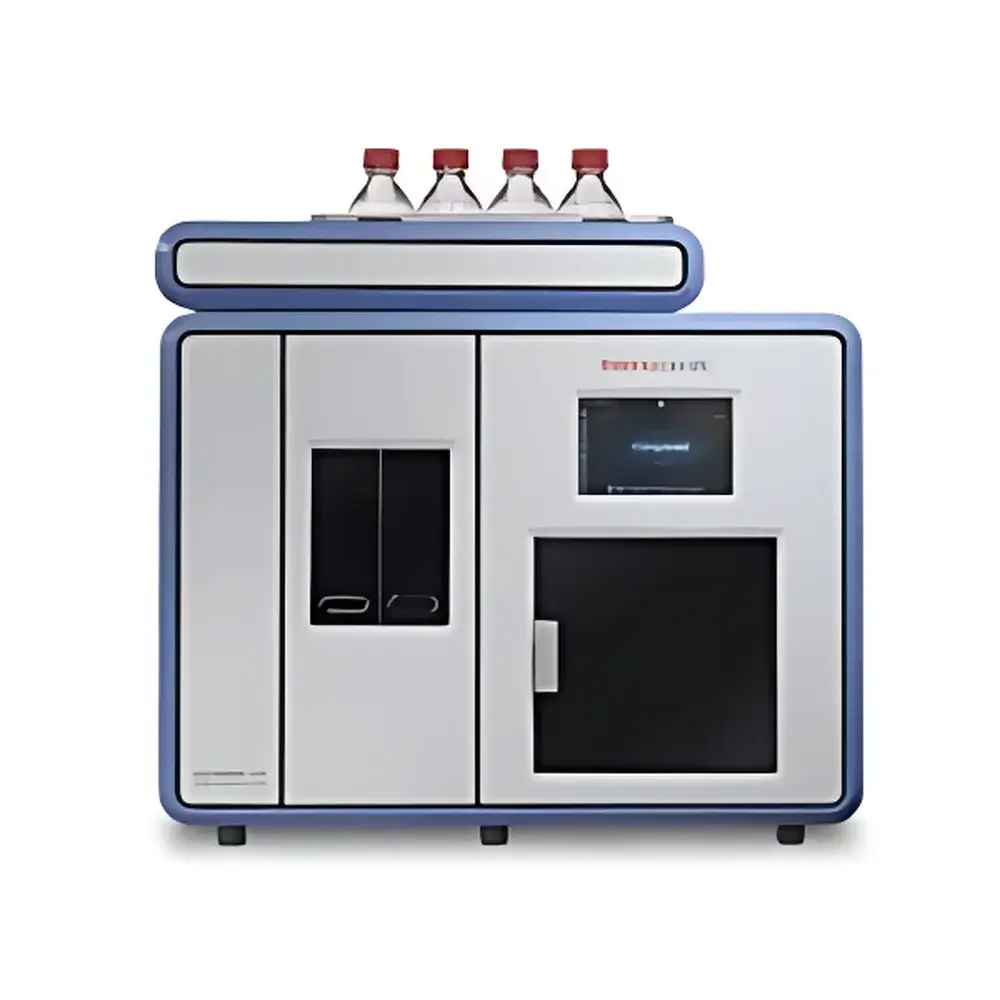
Thermo Scientific EXTREVA ASE Accelerated Solvent Extraction and Concentration System
| Brand | Thermo Scientific |
|---|---|
| Origin | USA |
| Manufacturer Type | Original Equipment Manufacturer (OEM) |
| Import Status | Imported |
| Model | EXTREVA ASE |
| Instrument Type | Vacuum Parallel Concentrator |
| Automation Level | Fully Integrated ASE + Evaporation Workflow |
Overview
The Thermo Scientific EXTREVA ASE Accelerated Solvent Extraction and Concentration System is an engineered platform that unifies accelerated solvent extraction (ASE®), post-extraction cleanup (where integrated), and vacuum-assisted parallel concentration into a single, walk-away automated workflow. It operates on the principle of pressurized fluid extraction—using elevated temperature (up to 200 °C) and pressure (up to 20 MPa) to enhance solute solubility and mass transfer kinetics in solid and semi-solid matrices. Unlike conventional Soxhlet or ultrasonic extraction, ASE technology achieves rapid, reproducible recovery of analytes—including pesticides, PAHs, PCBs, pharmaceutical residues, and environmental contaminants—while minimizing thermal degradation and co-extraction of interfering matrix components. The EXTREVA ASE system extends this capability by eliminating manual intervention between extraction and concentration stages: eluates are pneumatically transferred directly from extraction cells to a heated, nitrogen-purged evaporation carousel, enabling seamless transition to final volume reduction for GC, GC-MS, or LC-MS analysis.
Key Features
- Fully integrated ASE + parallel concentration architecture: eliminates inter-stage sample handling, reducing contamination risk and analyst variability.
- Four-channel parallel extraction capability: enables simultaneous processing of up to four samples per run, significantly increasing laboratory throughput without compromising method robustness.
- Patented gas-assisted solvent delivery and cell purging: reduces solvent consumption by up to 50% compared to legacy ASE systems, supporting ISO 14001-aligned sustainability objectives and lowering hazardous waste generation.
- Automated post-extraction transfer: eluate is pneumatically directed from extraction cells into pre-positioned collection vials on the concentric evaporation rotor—no manual pipetting, no tube switching, no repositioning.
- Programmable vacuum-controlled concentration: precise regulation of nitrogen flow rate, temperature (30–90 °C), and vacuum level (1–760 Torr) ensures consistent residue volume control across all channels (±0.05 mL reproducibility).
- Touchscreen HMI with method library management: supports user-defined ASE and concentration protocols, audit-trail-enabled parameter logging, and password-protected access levels compliant with GLP and 21 CFR Part 11 requirements.
Sample Compatibility & Compliance
The EXTREVA ASE system accommodates standard 11 mL, 22 mL, and 33 mL ASE extraction cells filled with diverse solid and semi-solid matrices—including soil, sediment, sludge, plant tissue, animal feed, food products, and polymer composites. It supports common extraction solvents (e.g., hexane, acetone, dichloromethane, methanol, and water-miscible blends) and is compatible with in-line silica or Florisil cartridge integration for on-flow cleanup. Method validation aligns with EPA Methods 3545A, 3546, and ASTM D7689 for regulated environmental and food safety testing. All firmware and software modules are designed to meet IEC 62304 (medical device software lifecycle) and ISO/IEC 17025:2017 documentation traceability standards.
Software & Data Management
Instrument control and data acquisition are managed via Thermo Scientific Chromeleon™ CDS (Chromatography Data System) version 7.3 or later, with optional extension for standalone operation using the embedded EXTREVA Control Suite. The system generates timestamped, digitally signed audit trails for all critical events—including method execution, solvent batch ID entry, cell positioning confirmation, pressure/temperature profiles, and evaporation endpoint detection. Raw data files (.raw, .csv) include full metadata headers required for FDA submission packages. Electronic signatures, role-based permissions, and secure database backup options support compliance with 21 CFR Part 11, EU Annex 11, and ISO 17025 clause 7.7.
Applications
- Environmental analysis: high-throughput extraction and concentration of persistent organic pollutants (POPs) from soil and sediment prior to GC-ECD or GC-MS/MS quantification.
- Food safety monitoring: recovery of mycotoxins, veterinary drug residues, and pesticide multiresidues from cereals, spices, and dairy matrices under SANTE/2023/2022 guidelines.
- Pharmaceutical QC: isolation of residual solvents and extractables from polymeric packaging materials per USP and ICH Q3C(R8).
- Forensic toxicology: preparation of biological tissues (liver, adipose) for LC-MS/MS screening of novel psychoactive substances (NPS) and opioids.
- Materials science: leachate analysis of flame retardants and plasticizers from recycled plastics and e-waste components.
FAQ
Does the EXTREVA ASE system require external gas cylinders or vacuum pumps?
No—the system integrates an internal nitrogen generator (optional) and a built-in diaphragm vacuum pump capable of achieving ≤1 Torr base pressure; only standard lab-grade compressed air (6–8 bar) is required for pneumatic actuation.
Can I use custom extraction cells or third-party consumables?
Only Thermo Scientific-certified ASE cells and collection vials are validated for pressure integrity, thermal stability, and compatibility with the automated transfer mechanism; non-OEM consumables void warranty and compromise method accuracy.
Is method transfer from legacy ASE instruments supported?
Yes—Chromeleon CDS includes ASE method migration wizards that auto-convert parameters from ASE 100/200/350 systems, preserving temperature ramp profiles, static/dynamic cycle definitions, and flush volumes.
What maintenance intervals are recommended for routine operation?
Daily: visual inspection of O-rings and cell sealing surfaces; weekly: calibration verification of pressure transducers and temperature sensors using NIST-traceable references; annually: full preventive maintenance by Thermo-certified field service engineers.



