
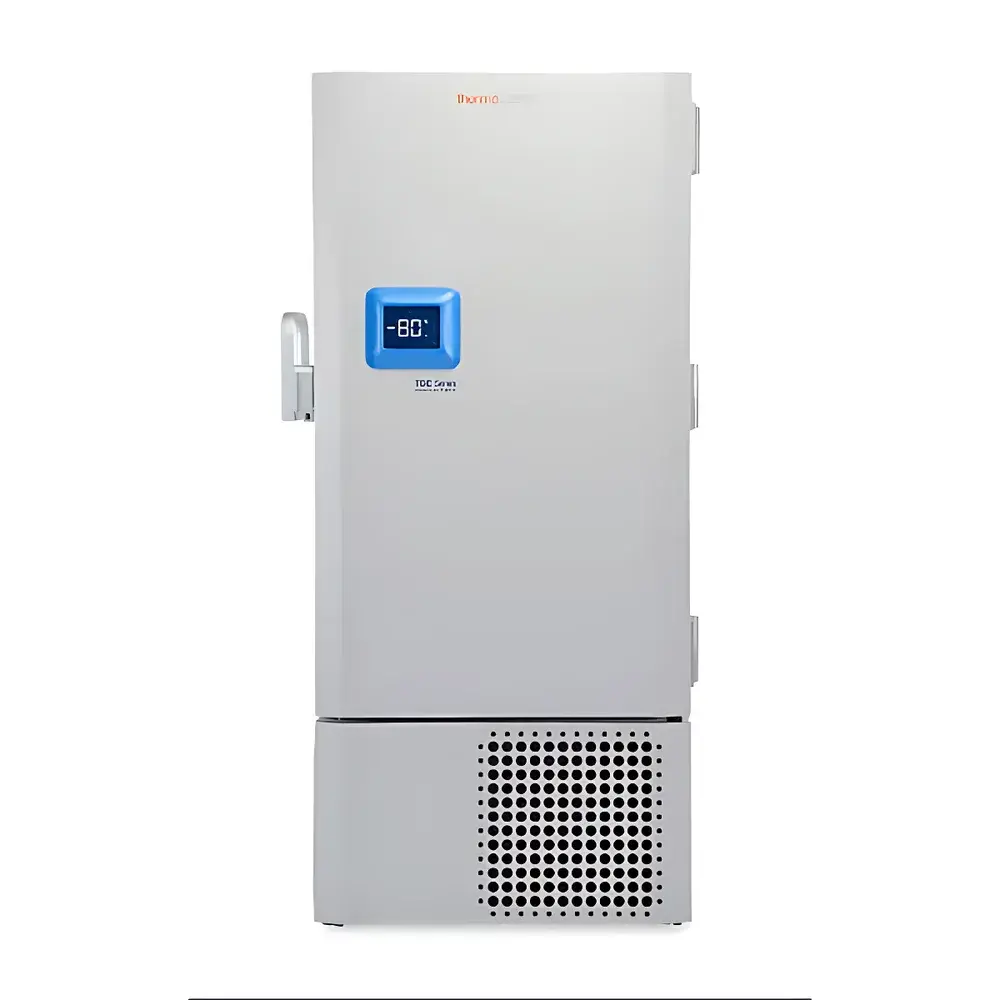
Thermo Scientific™ STP Series Ultra-Low Temperature Freezer (Domestically Manufactured)
| Brand | Thermo Fisher Scientific |
|---|---|
| Origin | Shanghai, China |
| Manufacturer Type | Authorized Distributor |
| Origin Category | Domestically Produced |
| Model | Thermo Scientific™ STP Series Ultra-Low Temperature Freezer (Domestically Manufactured) |
| Pricing | Available Upon Request |
Overview
The Thermo Scientific™ STP Series Ultra-Low Temperature Freezer (Domestically Manufactured) is an engineered solution for reliable, energy-efficient long-term biobanking and sample preservation at –80 °C. Built on H-Drive hydrocarbon refrigeration technology, the system replaces high-global-warming-potential (GWP) hydrofluorocarbon (HFC) refrigerants with natural hydrocarbons—specifically propane (R290) and isobutane (R600a)—enabling compliance with stringent environmental regulations including U.S. EPA SNAP, EU F-Gas Regulation (EU No 517/2014), and ISO 14001-aligned sustainability frameworks. The dual-compressor cascade architecture ensures stable thermal performance under variable ambient conditions (10–32 °C), while optimized insulation using zero-GWP polyurethane foam minimizes heat ingress and reduces HVAC load by up to 25% compared to conventional ULT freezers. Temperature uniformity across the chamber is maintained within ±1.5 °C (at –80 °C setpoint) during steady-state operation, and recovery time after a 30-second door opening is accelerated by approximately 20% versus legacy systems—critical for minimizing thermal shock to sensitive biospecimens such as primary cells, mRNA, viral vectors, and cryopreserved tissues.
Key Features
- H-Drive hydrocarbon refrigeration system delivering up to 25% lower energy consumption and reduced waste heat output versus R404A-based systems
- Acoustically optimized design with sound pressure level <53 dBA—suitable for corridor or shared lab environments without acoustic isolation
- 5.6-inch capacitive touchscreen H-Drive Information Center (HIC) providing real-time temperature monitoring, alarm history, and intuitive navigation
- Four internal insulated doors per unit—reducing cold loss during partial access and preventing exposure of entire inventory to ambient air
- Ergonomic handles, high-contrast display, and adjustable shelf heights designed for operator comfort and workflow efficiency
- Modular capacity options: 300, 400, 500, and 600 standard 2-inch cryobox positions—compatible with Thermo Scientific™ CryoBoxes™, Nunc™ CryoBank™ tubes, Matrix™ microplates, and third-party ANSI/SLAS-format racks
- Integrated mechanical key lock and configurable audible/visual alarms (high/low temperature, door ajar, power failure, sensor fault)
Sample Compatibility & Compliance
The STP Series meets critical requirements for GxP-aligned biorepositories and clinical research laboratories. Chamber geometry and airflow distribution support uniform cooling of diverse specimen formats—including cryovials (0.5–5.0 mL), cryobags, tissue cassettes, and multiwell plates—without thermal stratification artifacts. All models are validated per ISO 14644-1 Class 8 cleanroom-compatible installation guidelines and conform to IEC 61010-1:2012 for laboratory equipment safety. Temperature mapping reports (per ISO/IEC 17025-accredited protocols) and factory-installed NIST-traceable temperature sensors enable qualification under FDA 21 CFR Part 11, EU Annex 15, and WHO TRS 961 for long-term storage of regulated biologicals. The absence of ozone-depleting substances (ODS) and zero-GWP foam formulation satisfies LEED v4.1 BD+C MR Credit 2 and aligns with institutional ESG reporting obligations.
Software & Data Management
Thermo Scientific™ DeviceLink™ Connect provides secure, cloud-enabled remote monitoring via encrypted TLS 1.2 communication. Each freezer integrates dual independent Pt1000 temperature sensors—one in the chamber air stream, one embedded in the evaporator coil—for redundancy and deviation detection. DeviceLink™ supports role-based user access, audit-trail generation (including timestamped parameter changes and alarm acknowledgments), and automated PDF report export compliant with GLP/GMP documentation standards. Optional integration with Thermo Fisher’s SampleManager LIMS or third-party platforms (via RESTful API or Modbus TCP) enables end-to-end chain-of-custody tracking from freeze-thaw cycle to analytical assay.
Applications
- Cryopreservation of human and animal primary cells, stem cell lines, and induced pluripotent stem cells (iPSCs)
- Long-term storage of nucleic acids (genomic DNA, total RNA, fragmented cfDNA), especially for multi-omics biobanks
- Stabilization of thermolabile reagents including enzymes, antibodies, cytokines, and CRISPR-Cas components
- Supporting Good Manufacturing Practice (GMP) workflows for ATMP (Advanced Therapy Medicinal Product) manufacturing
- Regulatory submission-ready storage for clinical trial biospecimens under CLIA, CAP, and ISO 20387:2018 biobanking standards
FAQ
Is the STP Series certified for use in regulated environments (e.g., FDA-regulated labs)?
Yes—the system supports full 21 CFR Part 11 compliance when deployed with DeviceLink™ Connect and configured with electronic signatures, audit trails, and role-based permissions.
What validation documentation is provided with the freezer?
Each unit ships with Factory Acceptance Test (FAT) report, IQ/OQ protocol templates, and NIST-traceable calibration certificates for integrated temperature sensors.
Can the STP Series be integrated into existing facility monitoring networks?
Yes—via RS-485 Modbus RTU or optional Ethernet/IP interface, enabling connection to BMS (Building Management Systems) or centralized lab infrastructure dashboards.
Does the hydrocarbon refrigerant require special handling during service or disposal?
Technicians must follow ASHRAE Standard 15 and local jurisdictional codes for flammable refrigerant handling; all service procedures are documented in the Thermo Scientific Service Manual v3.2 and require certified hydrocarbon-trained personnel.
How does the four-door design impact temperature stability during routine access?
Independent thermal modeling confirms that opening only one inner door results in ≤0.8 °C chamber temperature rise over 60 seconds—significantly lower than single-door ULT systems under identical access conditions.





