
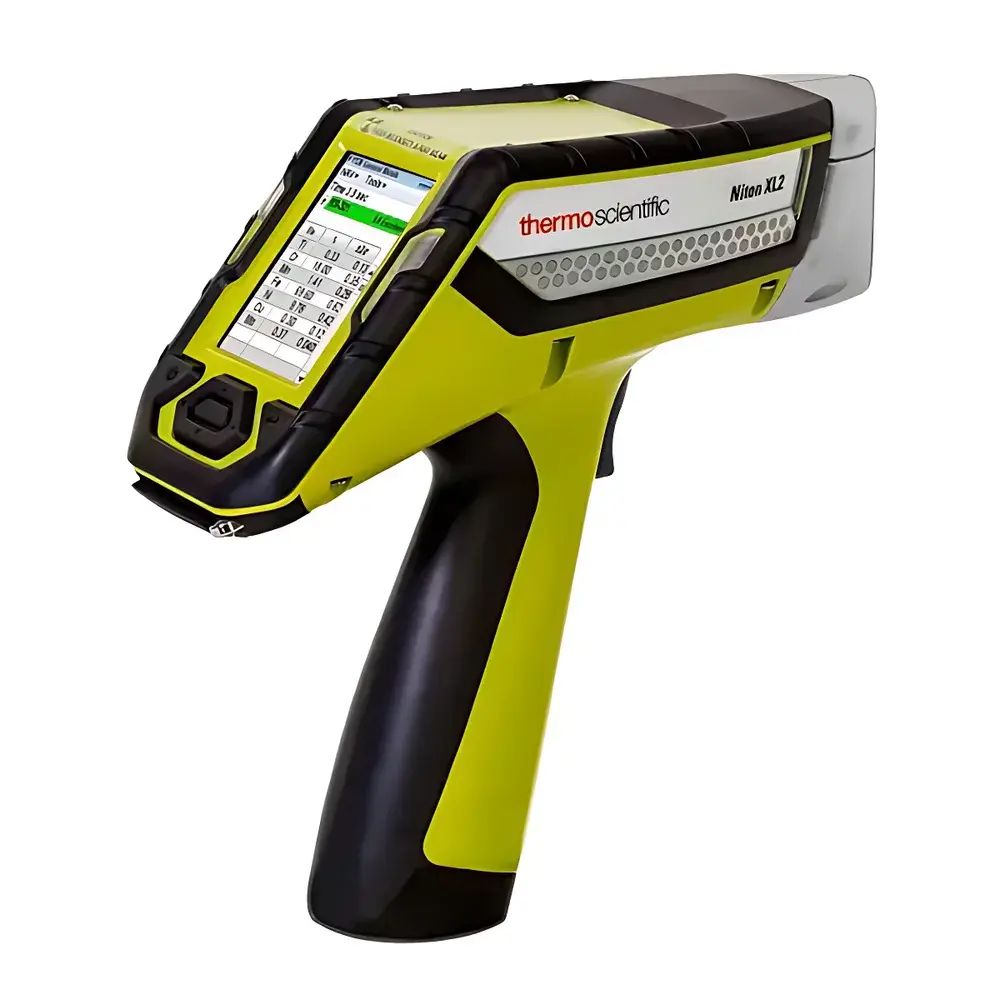
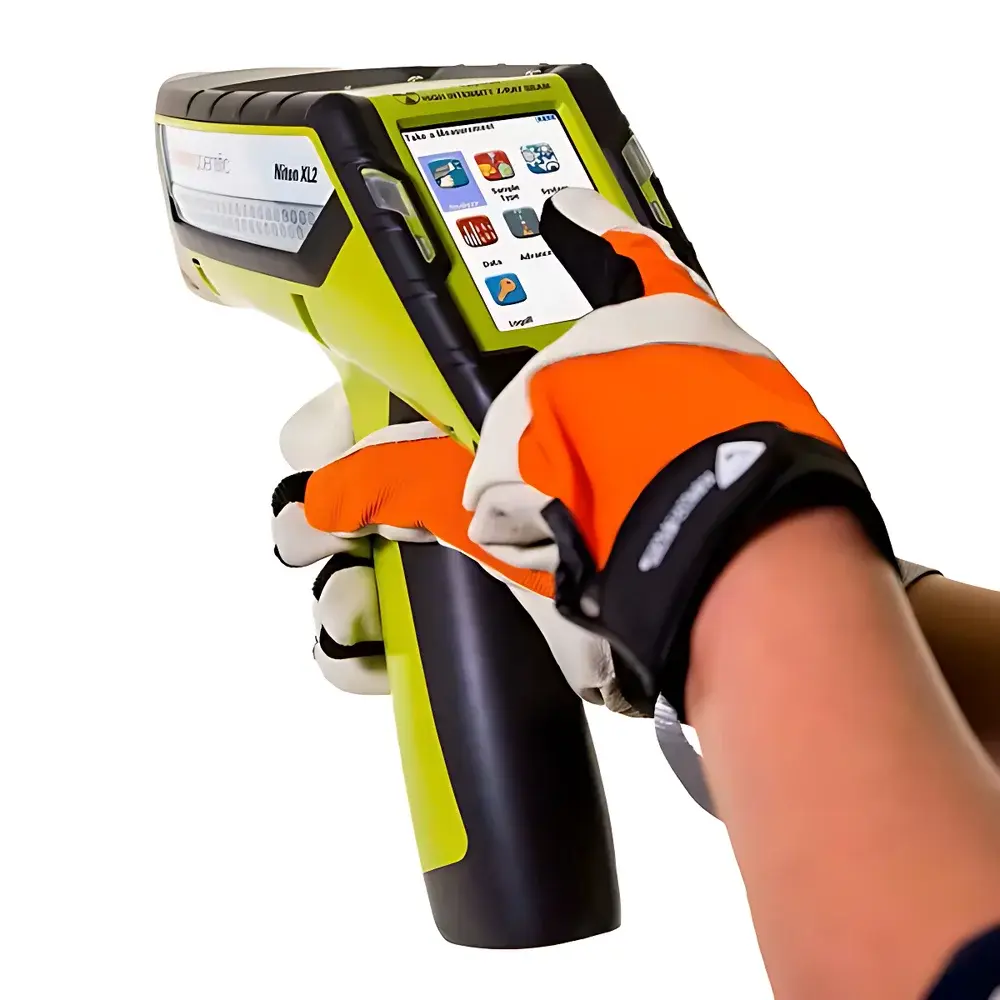
Thermo Fisher Niton XL2 Plus Handheld Energy Dispersive X-Ray Fluorescence (ED-XRF) Spectrometer
| Brand | Thermo Fisher |
|---|---|
| Origin | Shanghai, China |
| Manufacturer Type | Authorized Distributor |
| Regional Classification | Domestic (China-Made) |
| Model | Niton XL2 Plus Handheld ED-XRF Spectrometer |
| Pricing | Available Upon Request |
Overview
The Thermo Fisher Niton XL2 Plus is a field-deployable, handheld energy dispersive X-ray fluorescence (ED-XRF) spectrometer engineered for rapid, non-destructive elemental analysis of solids, alloys, coatings, soils, and consumer goods. Based on fundamental XRF physics—where primary X-rays excite atoms in the sample, causing emission of characteristic secondary (fluorescent) X-rays—the instrument quantifies elemental composition from magnesium (Mg) to uranium (U) in seconds. Its optimized excitation geometry, low-power 2W micro-focus X-ray tube, and graphene-window silicon drift detector (SDD) deliver enhanced sensitivity for light elements (Mg, Al, Si, P, S) without vacuum or helium purge—critical for field-based geochemical surveys, scrap sorting, and regulatory screening. Designed for industrial ruggedness and laboratory-grade repeatability, the XL2 Plus complies with IEC 61000-4 electromagnetic compatibility standards and meets radiation safety requirements per IEC 62495 and national Class II device regulations.
Key Features
- 2W high-stability micro-focus X-ray tube with selectable kV/mA settings for optimized excitation across light-to-heavy elements
- Graphene-window silicon drift detector (SDD) enabling high-count-rate performance and improved Mg–S detection limits under ambient air conditions
- ProGuard™ impact-resistant detector window and reinforced nose cone with alignment guide for consistent measurement geometry
- Integrated 2-megapixel autofocus camera with real-time imaging overlay for precise targeting and spatial documentation
- Capacitive touchscreen interface with physical navigation keys for glove-compatible operation in industrial environments
- Hot-swappable dual-battery system supporting >8 hours continuous operation; IP54-rated enclosure for dust and water splash resistance
- Multi-level password protection with user role management (Operator, Supervisor, Administrator) and audit-trail-capable firmware logging
Sample Compatibility & Compliance
The XL2 Plus accommodates heterogeneous, irregular, and coated samples—including ferrous/non-ferrous alloys, painted surfaces, geological specimens, electronic components, and soil matrices—without sample preparation. It supports standardized test methods aligned with ASTM E1621 (EDXRF for metals), ASTM D6440 (soil heavy metals), ISO 3497 (coating thickness), and USP / (elemental impurities in pharmaceuticals). Firmware includes pre-calibrated, factory-validated methods for alloy grade identification (e.g., ASTM B167, B209), RoHS screening (Pb, Cd, Hg, Cr⁶⁺, Br), and mining-grade geochemistry (Au, Cu, Zn, Ni, Co). All calibrations are traceable to NIST SRM reference materials and support GLP/GMP-compliant data integrity workflows.
Software & Data Management
Powered by Niton Data Transfer (NDT) software, the instrument enables secure, encrypted data export via USB or Wi-Fi to Windows-based desktop systems. Raw spectra, quantitative reports, image metadata, and operator logs are stored in a tamper-evident SQLite database compliant with FDA 21 CFR Part 11 requirements—including electronic signatures, audit trails, and user-access controls. Custom method development is supported through the optional Niton Element Pro suite, allowing users to configure calibration curves, interference corrections (e.g., Mn–Fe overlap), and reporting templates aligned with internal QA/QC protocols or third-party certification bodies.
Applications
- Metal and alloy verification during incoming inspection, production line QC, and PMI (Positive Material Identification) per ASME B31.3 and API RP 578
- Scrap metal sorting and recycling stream optimization using one-touch alloy library matching
- Single-layer coating thickness measurement on electroplated or painted substrates (e.g., Zn on steel, Cr on ABS)
- Precious metal assay in jewelry and bullion, including karat determination and hallmark verification
- Field-based geochemical exploration and mine-site grade control via portable multi-element profiling (e.g., Au, Cu, Mo, REEs)
- In-situ soil screening for As, Pb, Cd, Cr, and Hg at brownfield sites, complying with EPA Method 6200 and CL:U.S. EPA Region 9 criteria
- Consumer product compliance testing for restricted substances under CPSIA, RoHS, and EU REACH Annex XVII
FAQ
Does the XL2 Plus require external calibration standards for routine use?
No—factory-installed calibrations are stable and verified against NIST-traceable reference materials; periodic verification with check standards is recommended per ISO/IEC 17025.
Can it quantify light elements below sodium (Na)?
It detects Mg, Al, Si, P, and S reliably in air mode; sub-Mg elements (e.g., C, N, O) are outside its operational range and require vacuum-purged or wavelength-dispersive systems.
Is the instrument suitable for GMP-regulated environments?
Yes—when configured with audit trail, electronic signature, and user permission modules, it satisfies 21 CFR Part 11 and Annex 11 requirements for regulated QC laboratories.
What is the typical detection limit for lead (Pb) in soil?
Under standard 60-second measurement conditions, the typical 3σ detection limit is ≤15 mg/kg for Pb in homogenized soil matrices with certified reference material validation.
How is radiation safety ensured during operation?
The unit features automatic beam shuttering, proximity sensor interlock, and dose rate monitoring; annual radiation safety officer (RSO) review and local regulatory registration are required per jurisdictional rules.




