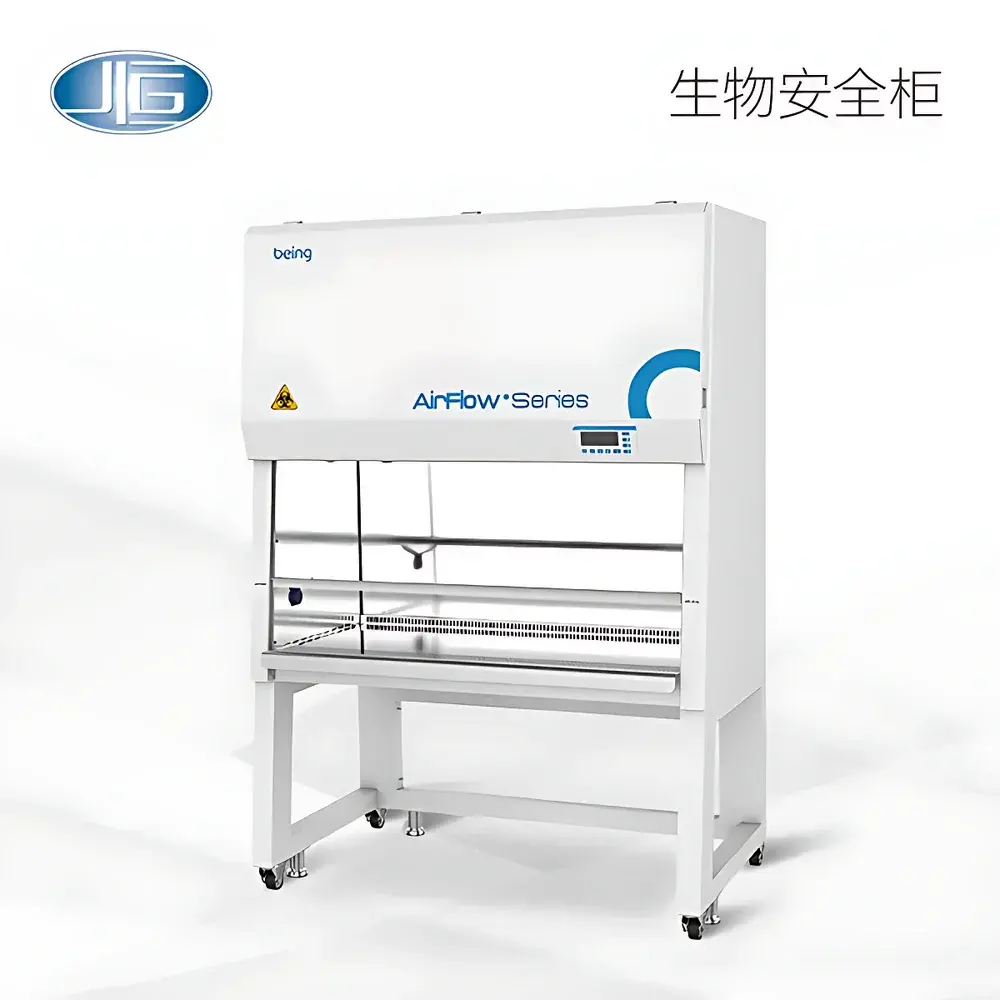
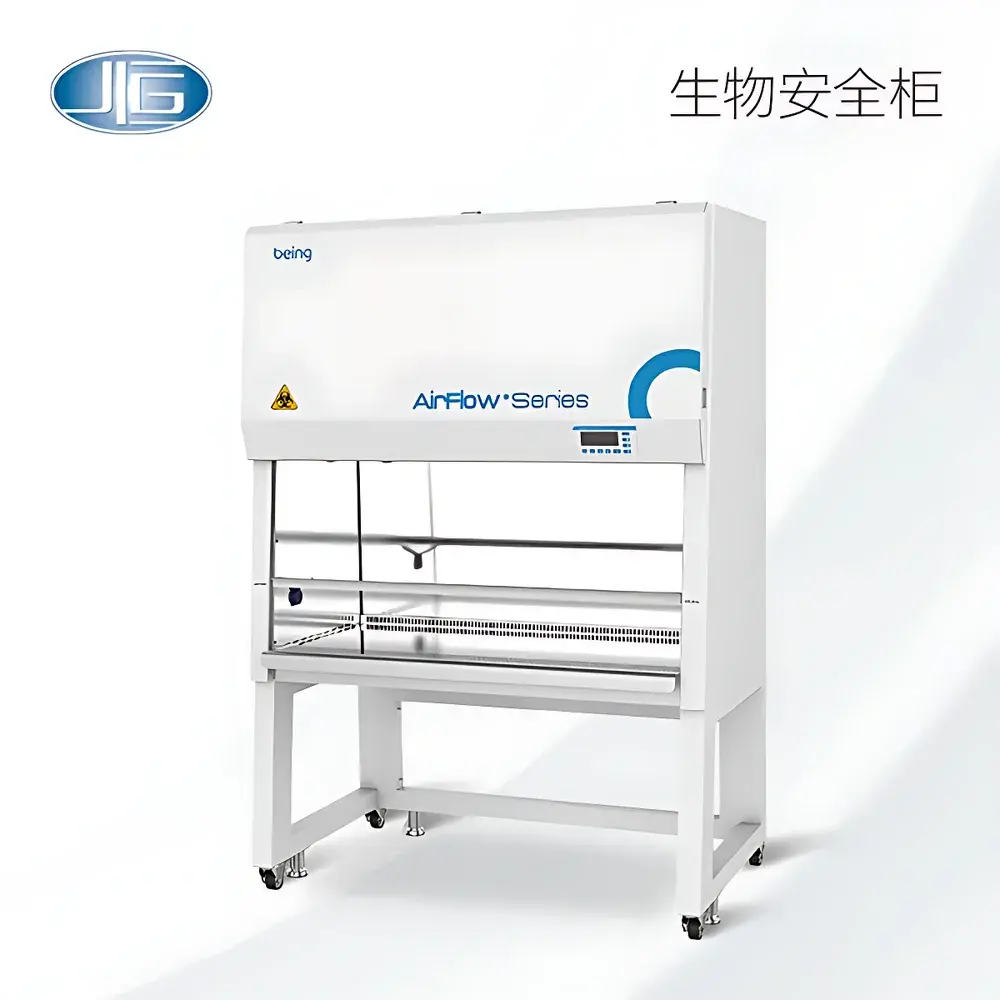
Yiheng BBC-3S1 / BBC-4S1 / BBC-5S1 / BBC-6S1 Class II Biological Safety Cabinet
| Brand | Yiheng |
|---|---|
| Origin | Shanghai, China |
| Manufacturer Type | Direct Manufacturer |
| Origin Category | Domestic (China) |
| Model Series | BBC-3S1, BBC-4S1, BBC-5S1, BBC-6S1 |
| Instrument Class | Class II Type A2 Biological Safety Cabinet |
| External Dimensions (L×W×H, mm) | 1040×810×2100 |
| Internal Work Area Dimensions (L×W×H, mm) | 920×580×655 |
| HEPA Filter Efficiency | ≥99.995% @ 0.3 µm |
| Airflow Velocity (Inflow/Downflow) | Compliant with NSF/ANSI 49 and EN 12469 requirements for Class II A2 cabinets |
| Motor Type | EC (Electronically Commutated) Fan |
| Power Supply | 220 VAC, 50 Hz |
| Optional Features | UV Lamp Timer, Real-time Airflow Monitoring, Filter Life Tracking, Password-Protected Settings, Interlocked UV/Lighting/Window Control |
Overview
The Yiheng BBC-S Series represents a line of certified Class II Type A2 Biological Safety Cabinets engineered for precision containment, operator protection, and product integrity in microbiological, cell culture, and molecular biology laboratories. Designed in full compliance with international safety standards—including NSF/ANSI 49-2022 and EN 12469:2000—these cabinets employ a dual-airflow principle: inward-facing inflow (≥0.5 m/s at the work opening) protects the user from aerosolized biohazards, while downward laminar downflow (≥0.3 m/s across the work surface), filtered through certified HEPA media, safeguards samples from environmental contamination. Recirculated air (70% of total airflow) passes through a pre-filter and primary HEPA filter before re-entry into the work area; exhaust air (30%) is ducted externally or passed through a second HEPA filter in recirculating mode. The cabinet’s structural integrity is reinforced by an all-welded 304 stainless steel interior with radiused corners (R ≥ 12 mm), eliminating crevices that impede decontamination and supporting routine validation per ISO 14644-1 cleanroom protocols.
Key Features
- EC motor-driven blower system delivering stable, energy-efficient airflow—reducing power consumption by 30–60% compared to conventional AC motors;
- Integrated LCD control panel with real-time display of inflow/downflow velocity, HEPA filter operational hours, UV lamp status, and clock function;
- Ergonomic 5° sloped front sash design and backlighted LED illumination reduce operator visual fatigue during extended procedures;
- Removable, flat stainless-steel work surface and fully accessible interior geometry simplify cleaning, disinfection, and periodic certification (e.g., smoke pattern testing, airflow uniformity mapping);
- Interlocked sash, UV lamp, and lighting controls prevent accidental UV exposure and ensure safe startup/shutdown sequences;
- Enclosed negative-pressure chamber surrounding the work area prevents cross-contamination and ensures containment integrity even during filter aging or minor seal degradation;
- Filter life monitoring with audible and visual alarms for pre-failure, failure, or physical damage conditions;
- Non-threaded, height-adjustable leveling feet and integrated paper trap minimize maintenance downtime and mechanical wear;
- Dual HEPA filtration architecture (supply and exhaust) validated to retain ≥99.995% of particles ≥0.3 µm—meeting ISO 14644-1 Class 5 (ISO Class 5) clean air requirements within the work zone.
Sample Compatibility & Compliance
The BBC-S Series accommodates standard biosafety workflows involving Risk Group 1–2 microorganisms (per WHO Laboratory Biosafety Manual, 4th ed.), including bacterial culture, fungal handling, plasmid transfection, and non-aerosol-generating recombinant DNA procedures. It is not intended for use with volatile toxic chemicals or radionuclides without supplemental engineering controls. All models are certified to NSF/ANSI 49-2022 for Class II Type A2 performance and undergo factory-installed airflow verification, HEPA filter integrity testing (via DOP/PAO scanning), and electrical safety assessment (IEC 61010-1). Documentation includes full traceability to calibration standards (NIST-traceable anemometers, photometers), and supports GLP/GMP audit readiness with configurable event logging (e.g., sash position changes, alarm triggers, filter runtime).
Software & Data Management
While hardware-based operation ensures reliability in regulated environments, the embedded controller logs critical operational parameters—including cumulative HEPA runtime, sash open duration, UV exposure cycles, and alarm history—with timestamping compliant with FDA 21 CFR Part 11 Annex 11 principles. Data export is supported via USB interface for integration into laboratory information management systems (LIMS) or electronic lab notebooks (ELN). Password-protected configuration access prevents unauthorized parameter modification, and firmware updates maintain alignment with evolving regulatory expectations (e.g., updated alarm thresholds per revised EN 12469 interpretations).
Applications
- Primary and secondary cell culture under aseptic conditions;
- Microbiological isolation and subculturing of pathogenic and non-pathogenic strains;
- Preparation of sterile media, reagents, and diagnostic kits;
- Handling of lentiviral vectors and other low-to-moderate-risk viral constructs;
- Quality control testing in pharmaceutical manufacturing (supporting ISO 13485 and EU GMP Annex 1 requirements for Grade A environments);
- Teaching laboratories requiring robust, repeatable biosafety infrastructure with minimal training overhead.
FAQ
What safety certifications do the BBC-S Series cabinets hold?
Each unit is independently verified to NSF/ANSI 49-2022 and EN 12469:2000 for Class II Type A2 performance, including airflow containment, filter efficiency, and structural integrity testing.
Can these cabinets be installed without external ducting?
Yes—recirculating (ducted-free) operation is supported via a built-in thimble and secondary exhaust HEPA filter, provided room ventilation meets minimum air exchange requirements (≥12 ACH) and ceiling clearance permits safe thermal dissipation.
How often must the HEPA filters be replaced?
Filter service intervals depend on usage intensity and ambient particulate load; typical replacement occurs every 5–7 years. The system tracks cumulative runtime and triggers alerts when approaching manufacturer-recommended limits.
Is the cabinet compatible with ISO 14644-1 cleanroom classification protocols?
Yes—the downflow velocity, turbulence profile, and particle retention meet ISO 14644-1 Class 5 criteria within the work area when operated per specification and maintained per Yiheng’s preventive maintenance schedule.
Does the controller support audit trail generation for regulatory submissions?
Yes—event logs (alarms, sash movements, UV activation) are time-stamped and stored internally, supporting 21 CFR Part 11-compliant data integrity practices when exported and archived appropriately.
Related Products