
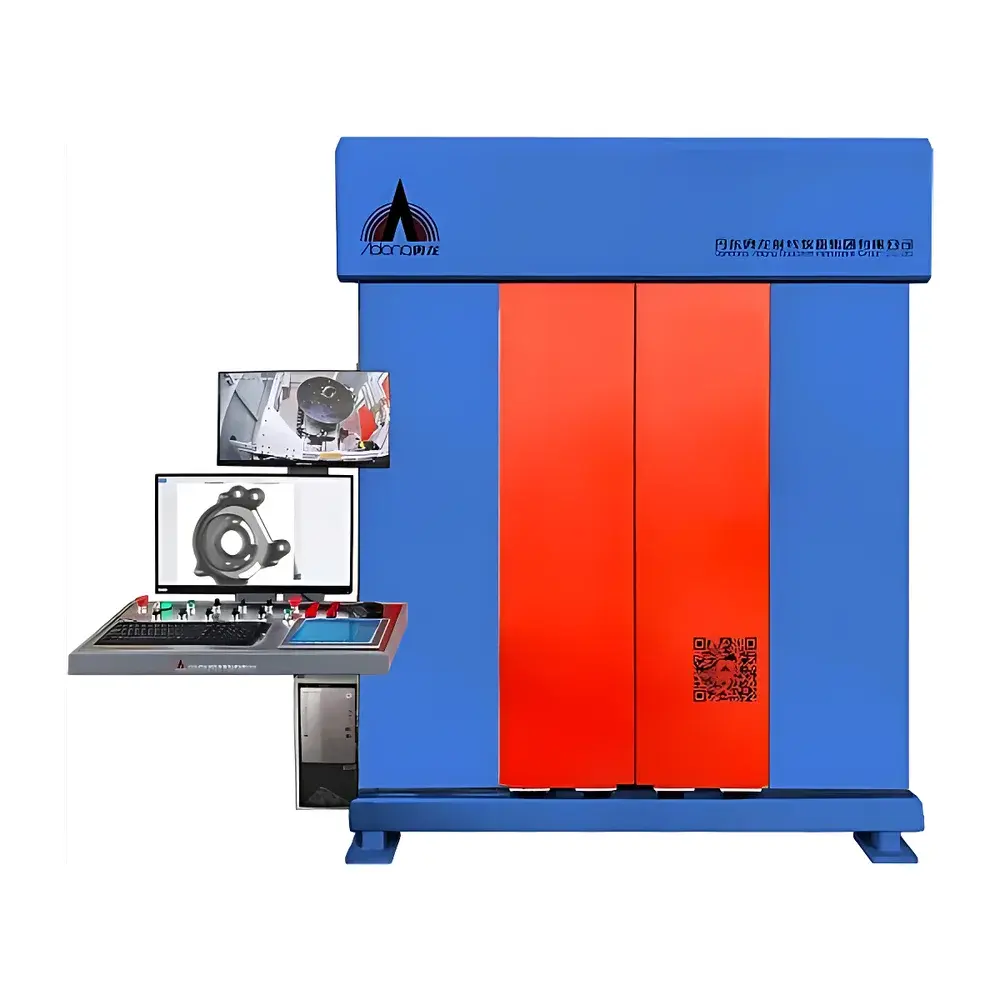
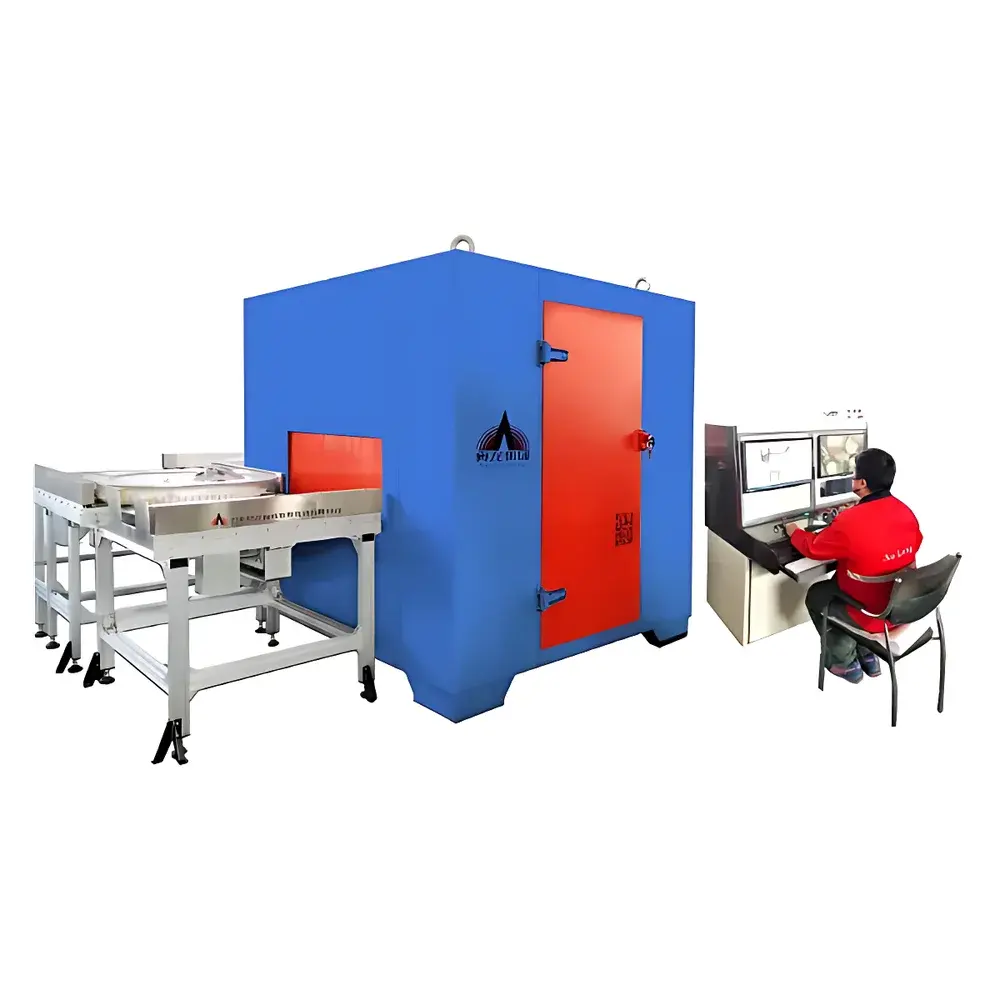
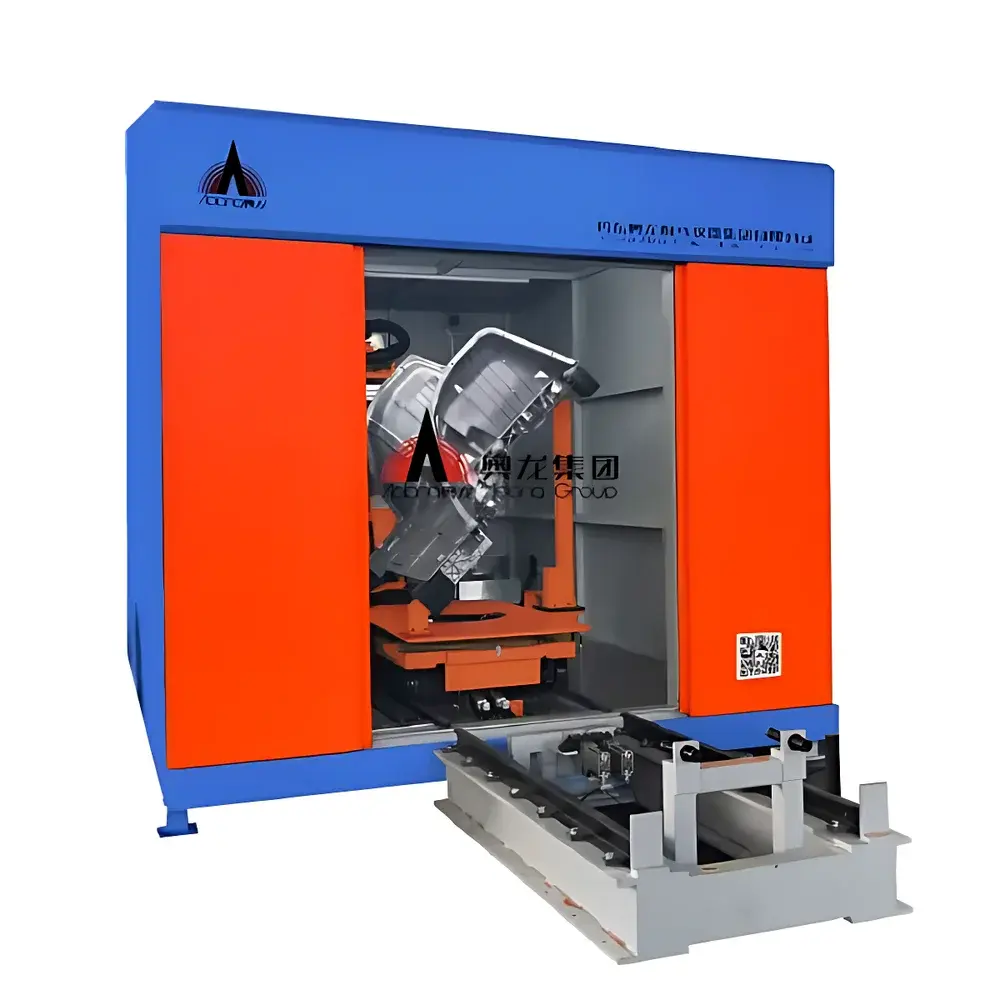
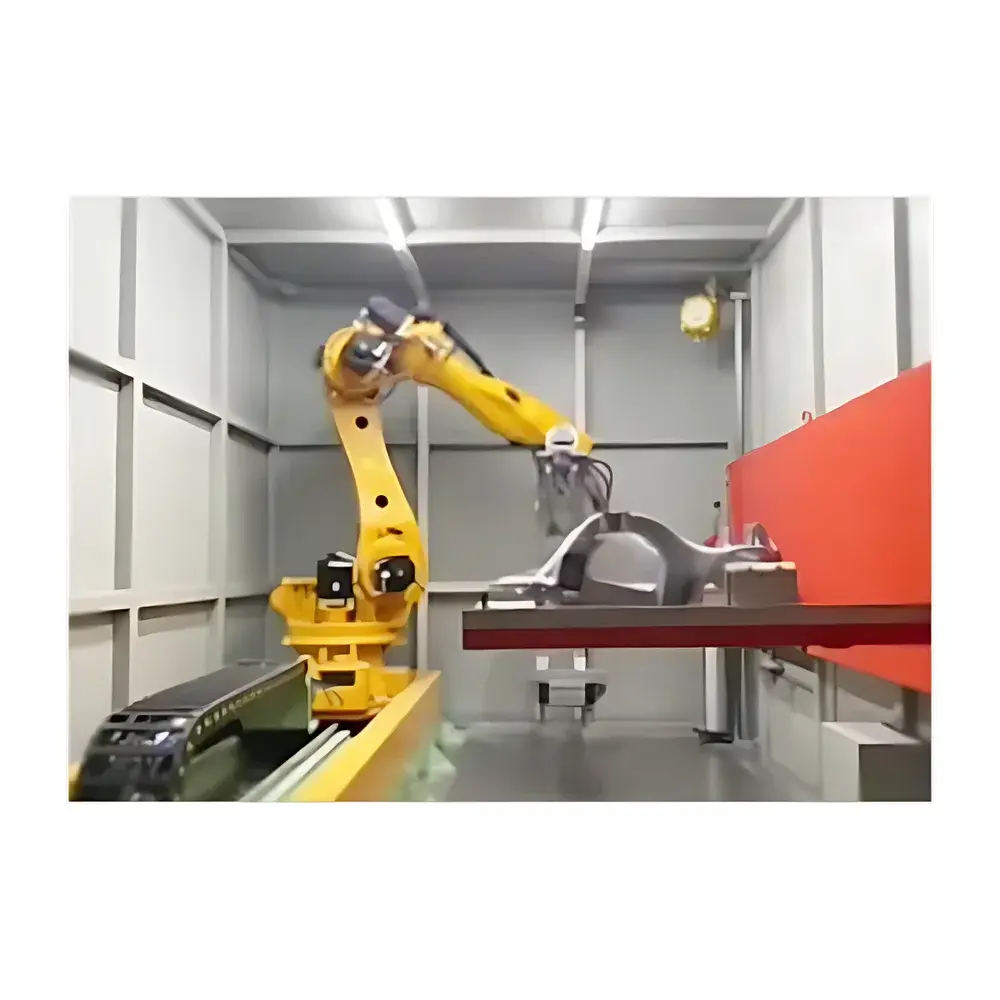
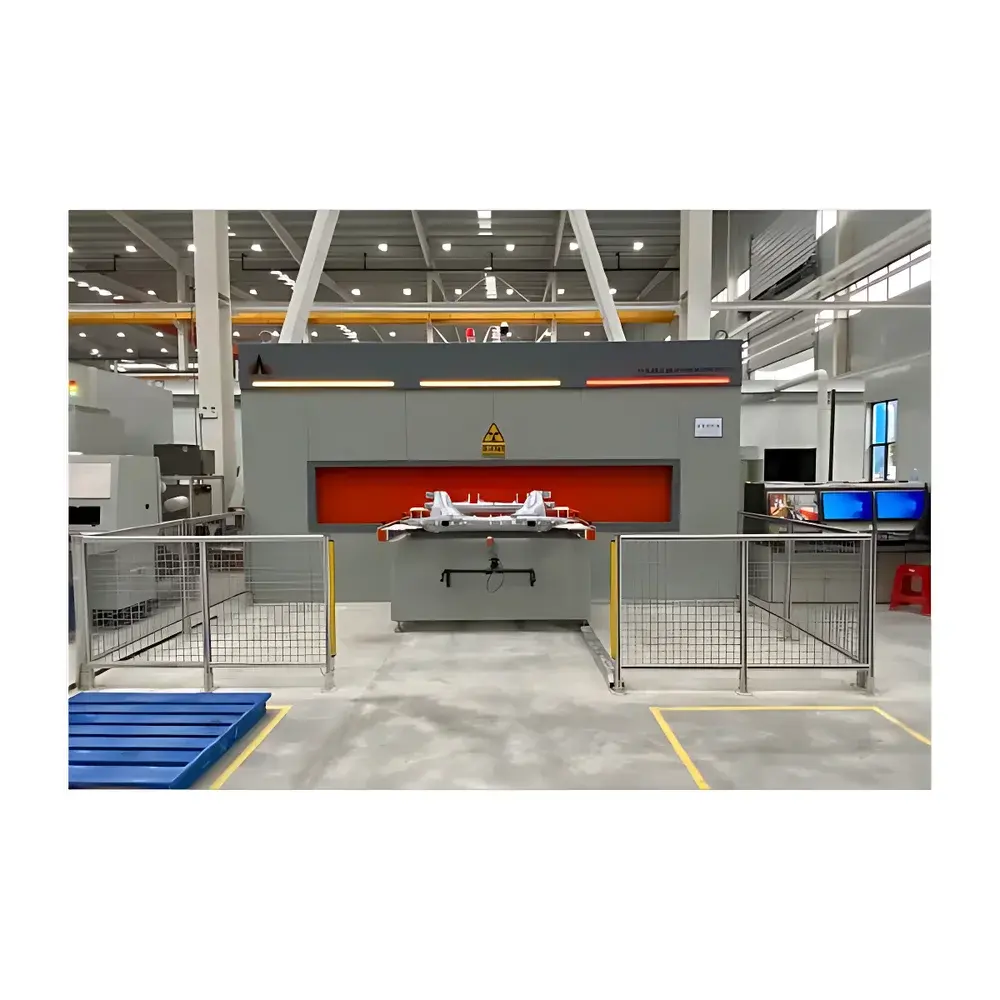
Aolong Inline X-ray Automatic Defect Recognition System
| Brand | Aolong |
|---|---|
| Origin | Liaoning, China |
| Manufacturer Type | OEM Manufacturer |
| Country of Origin | China |
| Model | Inline X-ray Automatic Recognition System |
| Pricing | Upon Request |
| System Resolution | 25–60 lp/cm (line pairs per centimeter) |
| Sensitivity | 0.8–1.5% |
| Core Components | X-ray Generator, Digital Flat-Panel Detector, Real-Time Image Processing Engine, Multi-Axis Precision Inspection Stage, Lead-Shielded Enclosure, Robotic Manipulator |
Overview
The Aolong Inline X-ray Automatic Defect Recognition System is an industrial-grade, high-throughput non-destructive testing (NDT) platform engineered for real-time volumetric and radiographic inspection of metal castings in continuous production environments. Based on digital radiography (DR) principles—utilizing a microfocus or minifocus X-ray source coupled with a high-dynamic-range flat-panel detector—the system captures projection images with spatial resolution ranging from 25 to 60 line pairs per centimeter (lp/cm), enabling reliable detection of sub-millimeter internal discontinuities including gas porosity, slag inclusions, shrinkage cavities, and linear cracks. Unlike conventional offline CT or film-based radiography, this inline architecture integrates seamlessly into automated assembly lines, supporting conveyor-synchronized part indexing and robotic handling without interrupting cycle time. The system operates under controlled radiation safety protocols compliant with IEC 61331-1 and GBZ 137-2019, and its lead-shielded enclosure meets Class II radiation facility requirements for occupational exposure limits (<1 µSv/h at 5 cm from surface).
Key Features
- True inline integration: Synchronized with PLC-controlled production lines via EtherCAT or Profibus interfaces; supports up to 60 parts/hour depending on geometry and required image dwell time.
- Multi-axis precision positioning: Motorized XYZ translation stage combined with ±180° rotation and ±90° tilt enables full geometric coverage of complex castings without manual repositioning.
- Real-time AI-assisted defect classification: Embedded GPU-accelerated image processing engine applies trained convolutional neural networks (CNNs) to distinguish between benign microstructural variations and critical defects per ASTM E2737-20 and ISO 17636-2 criteria.
- Dual-resolution imaging mode: Configurable acquisition settings allow switching between high-speed screening (25–39 lp/cm) and high-fidelity verification (40–60 lp/cm) within the same inspection sequence.
- Radiation-hardened hardware architecture: X-ray generator rated for continuous duty (≥10,000 h tube life); flat-panel detector with CsI:Tl scintillator and amorphous silicon TFT array ensures stable MTF performance over temperature fluctuations (15–30°C operational range).
- Comprehensive safety interlock system: Dual-channel light curtains, door-mounted RF switches, emergency stop relays, and real-time dose monitoring comply with EN 61511 and GB 50084-2017 fire and radiation safety standards.
Sample Compatibility & Compliance
The system accommodates ferrous and non-ferrous castings up to 450 mm × 450 mm × 300 mm (L×W×H) and 25 kg maximum weight. Typical applications include aluminum die-cast housings, ductile iron engine blocks, magnesium transmission cases, and stainless-steel valve bodies. All image acquisition and analysis workflows are designed to support traceable quality documentation per ISO 9001:2015 and IATF 16949 requirements. Audit-ready reporting includes DICOM-compliant image metadata, operator ID, timestamp, exposure parameters (kV, mA, ms), and defect localization coordinates. Optional FDA 21 CFR Part 11 compliance package provides electronic signature capability, role-based access control, and immutable audit trails for regulated medical device or aerospace casting suppliers.
Software & Data Management
The proprietary Aolong IQS (Intelligent Quality Suite) software runs on Windows 10 IoT Enterprise LTSB and features a modular architecture: Acquisition Module (real-time DR preview and exposure optimization), Reconstruction Module (for optional laminography or limited-angle CT reconstruction), Analysis Module (defect segmentation, size/shape quantification, ISO 10565 pore classification), and Reporting Module (customizable PDF/Excel export with SPC charts). Raw image data is stored in lossless TIFF format; processed results are archived in relational SQL Server database with automatic daily backup to network-attached storage (NAS). Integration with MES/ERP systems (e.g., SAP QM, Siemens Opcenter) is supported via OPC UA and RESTful API endpoints.
Applications
- Automotive: In-process inspection of cylinder heads, brake calipers, and suspension knuckles prior to machining.
- Aerospace: Verification of investment-cast turbine blades and structural brackets against AMS 2630 and NADCAP AC7114 requirements.
- Energy: Integrity assessment of valve bodies and pump casings for nuclear-grade castings per ASME BPVC Section V, Article 2.
- Railway: Screening of bogie frame weldments and gearbox housings per EN 15085-3 CL1 certification.
- Industrial machinery: Final QA gate for hydraulic manifold blocks and gearmotor housings before shipment.
FAQ
Does the system support both 2D radiography and computed tomography (CT)?
This configuration is optimized for high-speed 2D digital radiography. Optional laminography or limited-angle CT reconstruction modules are available as add-ons but require extended scan time and are not recommended for true inline deployment.
What radiation safety certifications does the lead shielding meet?
The enclosure conforms to GBZ 137-2019 (China), IEC 61331-1:2014 (international), and local regulatory authority requirements for Class II fixed X-ray installations. Radiation survey reports are provided upon installation commissioning.
Can the AI defect recognition model be retrained for custom defect types?
Yes—Aolong provides SDK access and transfer learning tools for customers to fine-tune models using their own annotated datasets, subject to validation per ISO/IEC 17025 calibration laboratory guidelines.
Is remote diagnostics and software update capability included?
Standard firmware and software updates are delivered via secure HTTPS channel; remote desktop support requires customer-signed SLA and firewall exception for RDP over TLS 1.2.
What is the typical lead time for factory acceptance testing (FAT)?
FAT is scheduled within 4 weeks after mechanical completion and includes functional verification, image quality evaluation per ASTM E2698, and operator training on SOP execution and report generation.



