
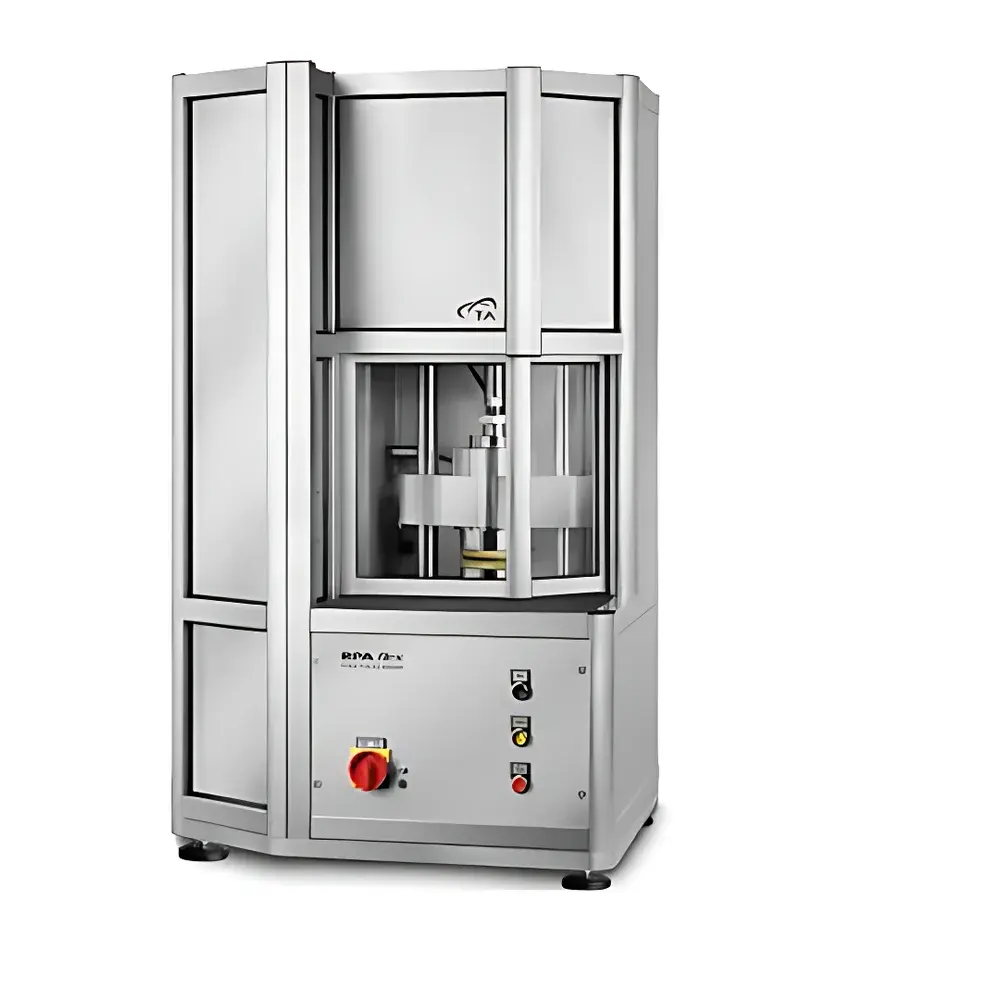
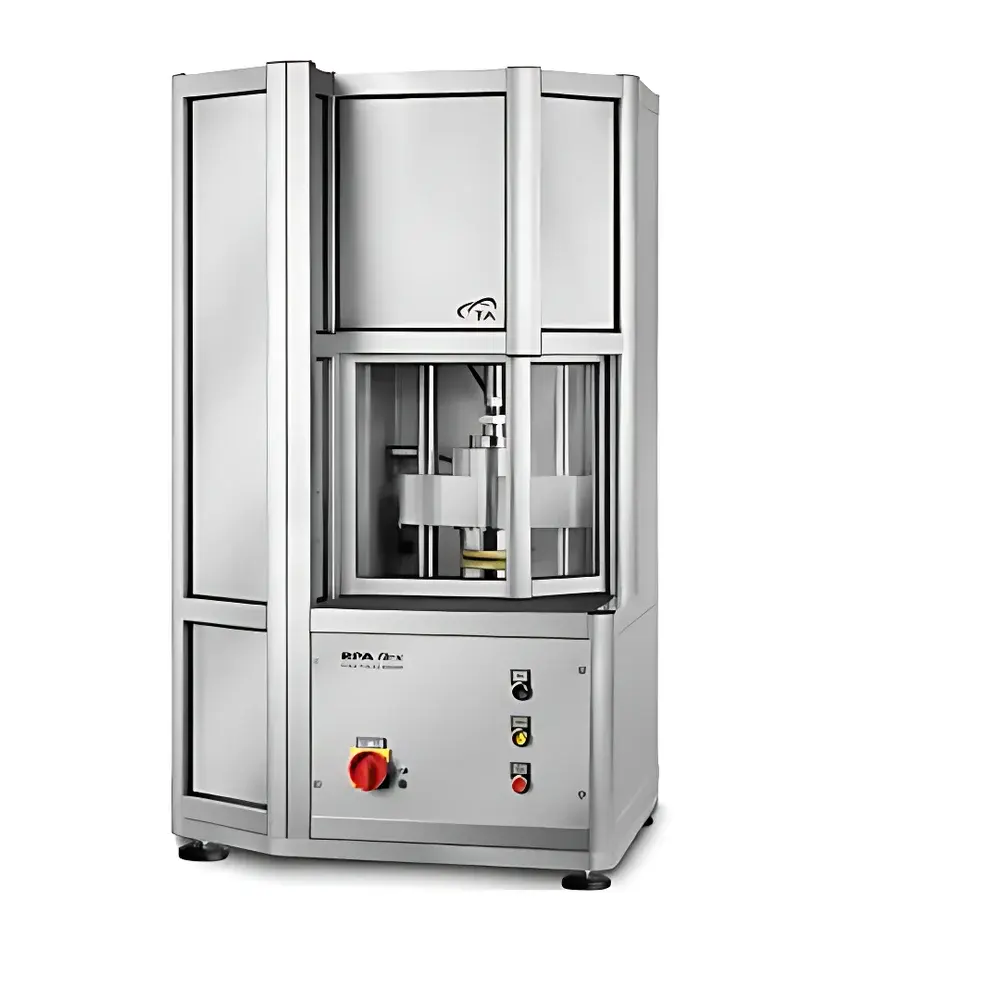
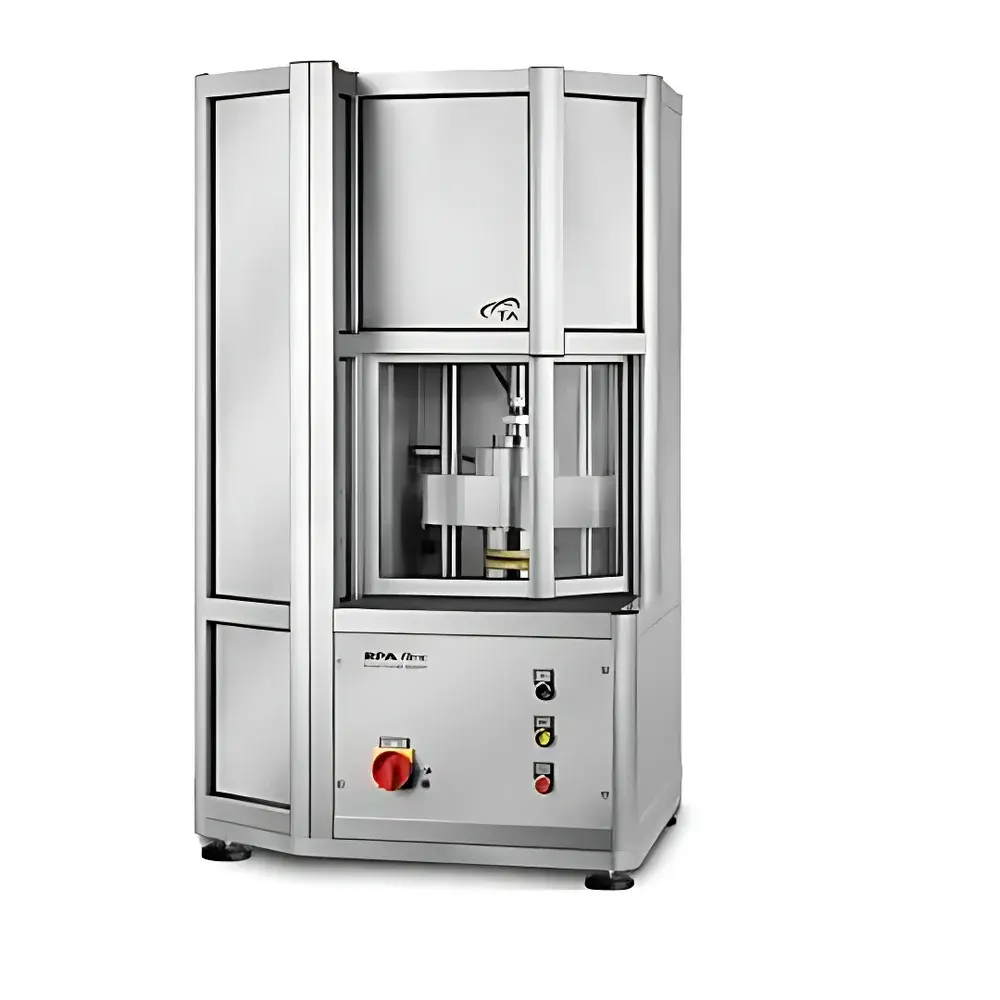
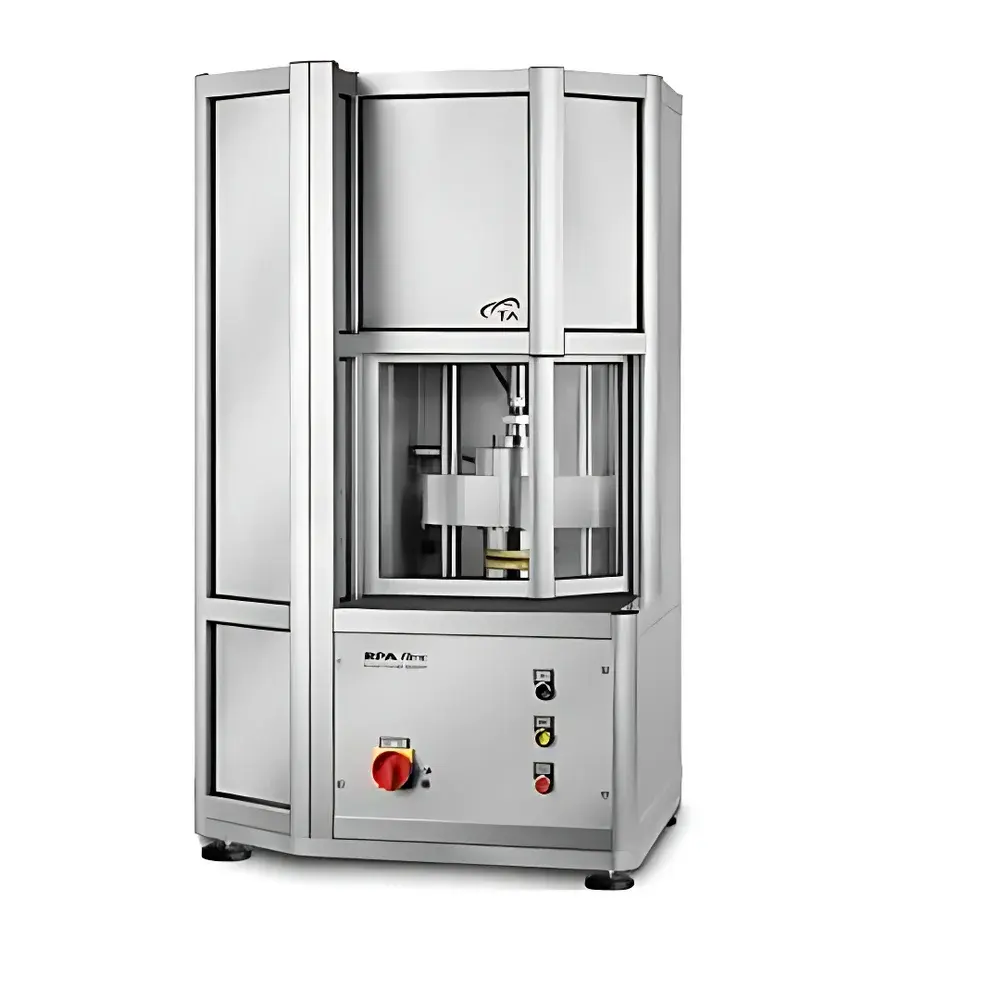
Rubber Process Analyzer RPA Flex by TA Instruments
| Brand | TA Instruments |
|---|---|
| Origin | Germany |
| Model | RPA Flex |
| Drive Type | High-Resolution Direct-Drive Motor |
| Torque Sensor | Patented High-Stiffness, Wide-Range Transducer |
| Frame | Ultra-Rigid Monolithic Structure |
| Control | Fully Programmable Strain, Frequency, Temperature, Time, and Mold Closure Pressure |
| Automation | Integrated Robotic Sample Handler |
| Mold Closure | Pneumatically Actuated, Adjustable Pressure Disc |
| Calibration | User-Executable with Replaceable Die Plates |
| Upgrade Path | Field-Upgradeable to Extended Frequency and Strain Range |
Overview
The Rubber Process Analyzer RPA Flex by TA Instruments is a high-precision, laboratory-grade viscoelastic characterization system engineered specifically for the rubber and elastomer processing industry. Operating on the principle of controlled-strain oscillatory rheometry under dynamic vulcanization conditions, the RPA Flex applies sinusoidal shear deformation to uncured or partially cured rubber compounds within a sealed, temperature-controlled oscillating disk geometry (oscillating parallel-plate configuration). Unlike conventional moving-die rheometers (MDR), the RPA Flex delivers true strain-controlled excitation—enabling accurate measurement of storage modulus (G′), loss modulus (G″), tan δ, and complex viscosity (η*) across wide ranges of strain amplitude, frequency, and temperature. Its design adheres to ASTM D6204 and ISO 6673 standards for rubber compound characterization, supporting both quality control and formulation development in tire, automotive sealing, and industrial rubber goods manufacturing.
Key Features
- High-resolution direct-drive motor: Provides precise, backlash-free strain control from 0.1% to 100% strain amplitude with sub-millisecond response time—critical for detecting Payne effect, Mullins softening, and nonlinear viscoelastic transitions.
- Patented high-stiffness torque sensor: Engineered with ultra-low noise floor and extended dynamic range (0.001–100 N·m), enabling reliable detection of weak elastic signals in low-filler compounds and robust measurement of highly filled systems without signal saturation.
- Monolithic ultra-rigid frame: Eliminates mechanical compliance artifacts through finite-element-optimized cast-aluminum architecture, ensuring measured moduli reflect only sample behavior—not instrument deflection—essential for traceable, inter-laboratory reproducible data.
- Full parameter programmability: Independent real-time control of oscillation strain (0.1–100%), frequency (0.01–100 Hz), temperature (−80 °C to 250 °C with cryo/HT options), dwell time, and mold closure pressure (0–1.2 MPa) via intuitive method scripting.
- Pneumatic die-locking mechanism: Ensures consistent, repeatable sample confinement with closed-loop pressure regulation—minimizing edge effects and enabling valid comparison across batches and formulations.
- User-executable calibration & maintenance: Onboard calibration routines verify torque, temperature, and displacement accuracy; interchangeable die plates (standard 75-mm, optional 50-mm or 100-mm) allow rapid reconfiguration without service engineer intervention.
Sample Compatibility & Compliance
The RPA Flex accommodates raw rubber compounds (NR, SBR, BR, EPDM, FKM, TPV), masterbatches, reclaim rubber blends, and thermoplastic elastomers. Its sealed cavity design prevents volatile loss during high-temperature scorch testing and enables safe evaluation of peroxide-cured systems. All test methods comply with ASTM D6204 (Standard Test Method for Rubber Property—Viscoelastic Properties Using a Moving Die Rheometer), ISO 6673 (Rubber—Determination of Vulcanization Characteristics), and support GLP/GMP documentation requirements. Data audit trails—including operator ID, timestamp, method version, and environmental metadata—are automatically logged in accordance with FDA 21 CFR Part 11 readiness protocols when used with TA’s TRIOS software suite.
Software & Data Management
Controlled exclusively via TA Instruments’ TRIOS software, the RPA Flex integrates into enterprise LIMS environments through standardized OPC UA and CSV export interfaces. TRIOS provides automated method templates for Mooney scorch, cure kinetics (t5, t90, ΔG′), Payne effect analysis, frequency sweeps, and time–temperature superposition (TTS). All raw waveforms, FFT-derived harmonics, and derivative curves are stored in vendor-neutral HDF5 format with embedded metadata. Version-controlled method libraries, electronic signatures, and configurable report generation (PDF, Excel) ensure full traceability for internal QA audits and regulatory submissions.
Applications
- Quantitative assessment of filler dispersion efficiency and polymer–filler interaction strength via strain-sweep nonlinearity analysis
- Determination of scorch safety margin and optimal cure time under production-relevant thermal profiles
- Comparative evaluation of alternative curatives, accelerators, and processing aids on network formation kinetics
- Characterization of thermoplastic elastomer melt elasticity and recovery behavior during extrusion simulation
- Correlation of RPA-derived G′ onset with extrudate swell and calendering stability in pilot-scale trials
- Supporting DOE-driven rubber formulation optimization with statistically robust multi-parameter datasets
FAQ
Is the RPA Flex compliant with ISO/ASTM standards for rubber rheometry?
Yes—the instrument meets the mechanical and metrological requirements of ASTM D6204 and ISO 6673, including specified disk geometry tolerances, temperature uniformity, and torque resolution thresholds.
Can existing RPA models be upgraded to RPA Flex specifications?
Field-upgrade kits are available for select prior-generation RPA platforms to enable enhanced strain control, expanded frequency range, and TRIOS software compatibility—subject to hardware inspection and firmware validation.
Does the system support automated data archiving to network drives or cloud storage?
TRIOS supports scheduled backups to UNC paths, SMB/NFS shares, and configurable REST API endpoints for integration with institutional data lakes or document management systems.
What maintenance intervals are recommended for routine operation?
Daily visual inspection of die surfaces and pneumatic seals; quarterly torque sensor verification using certified reference standards; annual full calibration with traceable NIST-traceable artifacts—documented via built-in calibration log.
Are custom die geometries available for specialized compound types?
TA Instruments offers application-engineered die variants—including grooved, serrated, and low-volume cavities—for highly viscous, fiber-filled, or low-density compounds upon request and qualification.





