
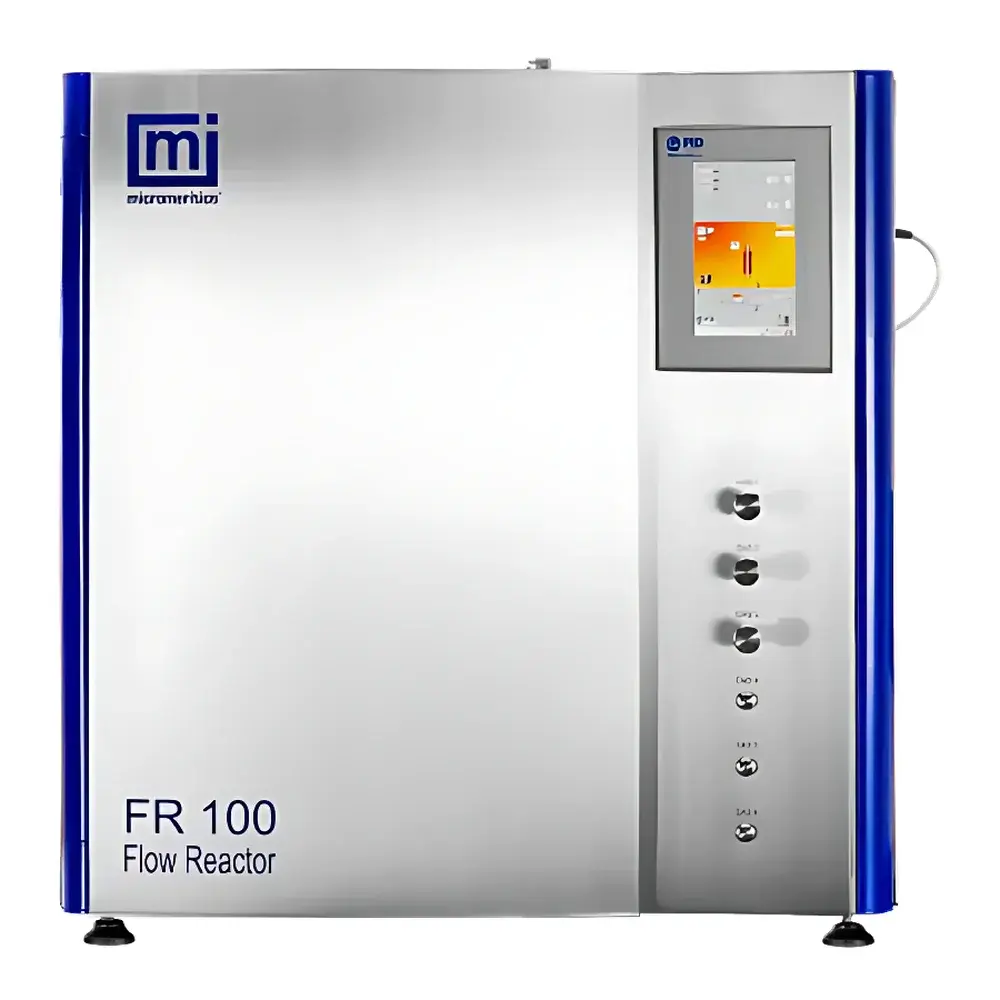
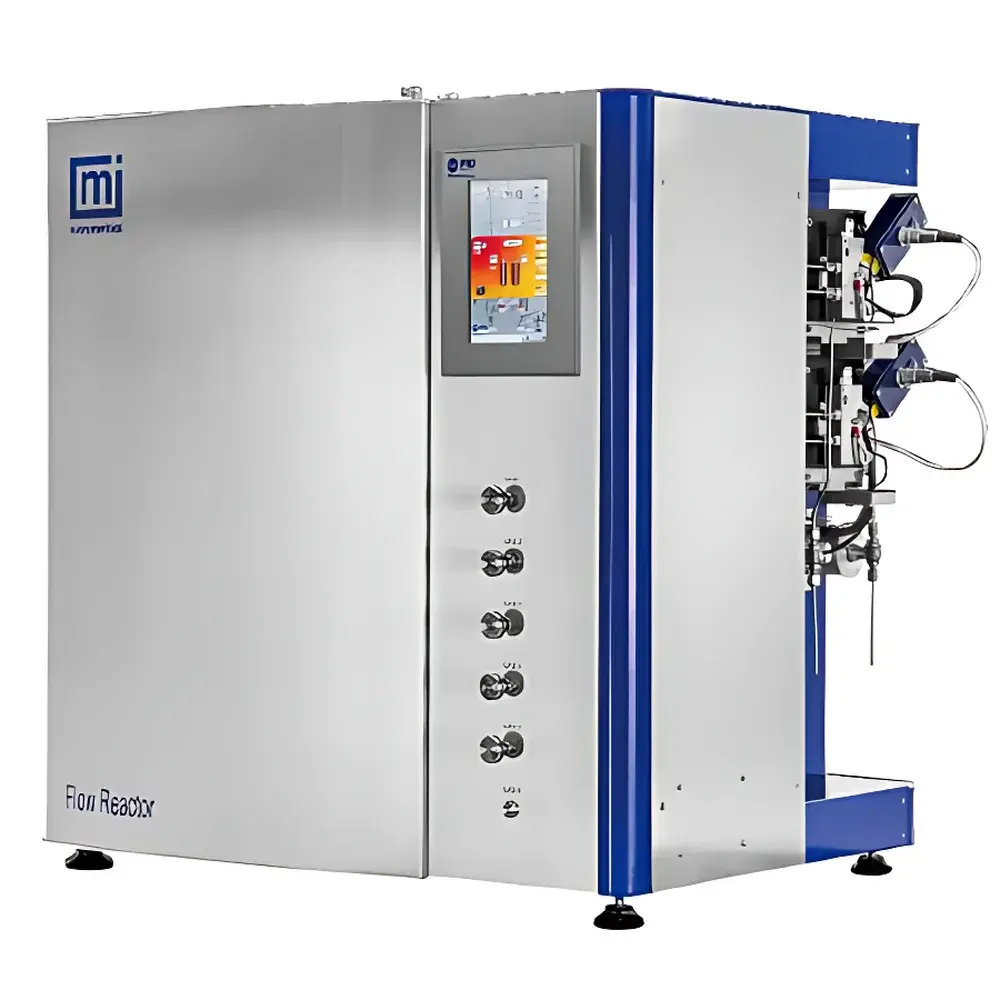
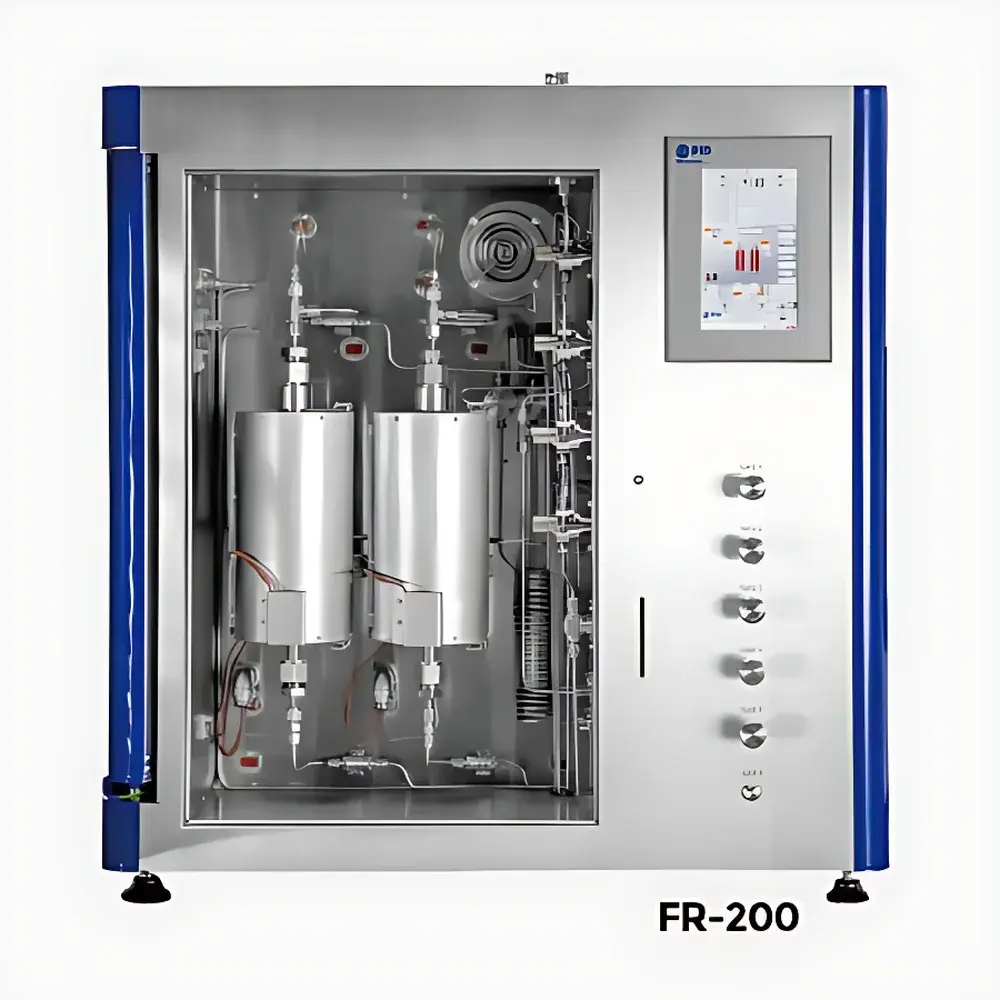
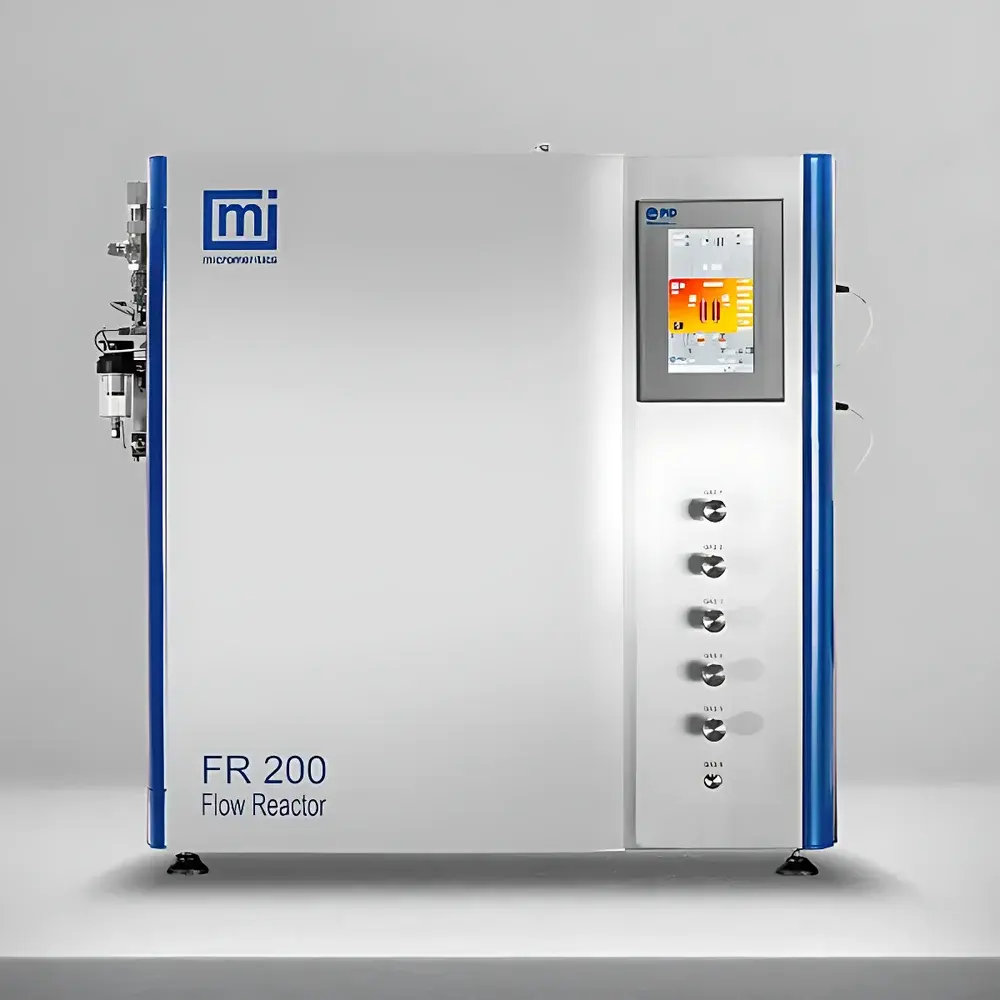
Micromeritics FR-50 / FR-100 / FR-200 Micro Flow Reactor System
| Brand | Micromeritics |
|---|---|
| Origin | Spain |
| Model | FR-50, FR-100, FR-200 |
| Construction Material | Stainless Steel (316 SS) |
| Operating Pressure Range | Ambient to 100 bar or 200 bar (model-dependent) |
| Temperature Range | Ambient to 1000 °C |
| Number of Gas Inlets | Up to 6 |
| Mass Flow Controllers | Up to 6 integrated MFCs |
| Phase Separation | Integrated low-dead-volume gas–liquid or gas–liquid–liquid separator (US Pat. 7895891 B2 |
| Pressure Control Accuracy | ±0.1 bar (US Pat. 8740181 B2) |
| Safety System | Redundant pressure/temperature monitoring, automated shutdown, audible/visual alarms, fail-safe valve actuation |
Overview
The Micromeritics FR Series Micro Flow Reactor System is a benchtop, fully integrated catalytic reaction platform engineered for high-fidelity kinetic evaluation and catalyst performance screening under industrially relevant process conditions. Based on continuous-flow fixed-bed reactor architecture, the system employs precise Couette-type flow dynamics and controlled residence time distribution to emulate commercial-scale catalytic processes—including hydrogenation, reforming, Fischer–Tropsch synthesis, CO₂ hydrogenation, and selective oxidation—while operating at laboratory scale. Its modular design supports operation from ambient pressure up to 200 bar and temperatures spanning ambient to 1000 °C, enabling rigorous thermodynamic and kinetic parameter extraction (e.g., activation energy, turnover frequency, deactivation rate) with high reproducibility across repeated runs. As a turnkey solution, the FR Series eliminates the need for custom integration of gas delivery, thermal management, pressure regulation, and effluent analysis subsystems—reducing commissioning time and minimizing experimental variability.
Key Features
- Patented high-resolution pressure control valve (US Pat. 8740181 B2), delivering stable setpoint maintenance within ±0.1 bar across full operating range
- Ultra-low dead volume gas–liquid and gas–liquid–liquid separators (US Pat. 7895891 B2 & US Pat. 8800301 B2), enabling real-time, quantitative product stream sampling without phase carryover or residence time distortion
- Up to six independently controlled mass flow controllers (MFCs) with NIST-traceable calibration, supporting multi-reactant co-feeding and dynamic composition modulation
- Stainless steel (ASTM A269 TP316) wetted components rated for corrosive and high-temperature service, with ASME BPVC Section VIII Div. 1 compliance documentation available upon request
- Integrated safety architecture featuring dual redundant pressure transducers, thermocouple arrays, emergency venting, and programmable logic controller (PLC)-driven fail-safe response protocols compliant with IEC 61511 SIL 2 requirements
- Modular furnace design with zone-controlled heating profiles, ensuring axial temperature uniformity ≤±2 °C over 150 mm catalyst bed length
Sample Compatibility & Compliance
The FR Series accommodates heterogeneous catalysts in powder, extrudate, pellet, or monolith formats, with standard reactor tubes accommodating 0.1–5 mL catalyst volumes. It supports liquid-phase, gas-phase, and trickle-bed configurations via interchangeable reactor inserts and backpressure regulator interfaces. All fluidic pathways are compatible with common solvents (e.g., water, alcohols, hydrocarbons) and reactive gases (H₂, CO, NH₃, O₂, Cl₂, H₂S) under specified pressure/temperature limits. The system meets ISO/IEC 17025:2017 requirements for test equipment validation and supports audit-ready documentation packages aligned with GLP and GMP environments. Pressure vessel certification conforms to PED 2014/68/EU, and electrical components comply with CE/UKCA directives.
Software & Data Management
Micromeritics’ proprietary ReactorControl™ software provides centralized configuration, real-time monitoring, and automated sequence execution. It features event-triggered data logging (≥10 Hz sampling), synchronized acquisition from up to 32 analog/digital channels (including MFC outputs, thermocouples, pressure transducers, and optional GC/TCD/FID signals), and built-in calculation modules for space velocity (GHSV/LHSV), conversion, selectivity, and yield. Audit trails adhere to FDA 21 CFR Part 11 requirements, including electronic signatures, user role-based access control, and immutable data archiving. Export formats include CSV, HDF5, and direct interface with MATLAB, Python (via REST API), and LIMS platforms.
Applications
- Accelerated catalyst formulation screening for petrochemical, fine chemical, and sustainable fuel applications
- Deactivation mechanism studies under realistic feed impurity exposure (e.g., sulfur poisoning, coking, sintering)
- Reaction network elucidation via isotopic labeling (¹³C, D₂) combined with online MS/GC-MS coupling
- Process intensification assessment, including transient response analysis and ramp-rate sensitivity testing
- Technology transfer support—from lab-scale kinetics to pilot-plant design basis and ASPEN Plus® input parameter generation
FAQ
What reactor tube sizes are supported?
Standard configurations use ¼” and ⅜” OD stainless steel tubes; custom diameters and lengths (up to 300 mm) are available per application requirements.
Can the FR system be interfaced with external analytical instruments?
Yes—dedicated gas-sampling ports with heated transfer lines (up to 200 °C) and standardized Swagelok® fittings enable seamless integration with GC, GC-MS, FTIR, and micro-TCD systems.
Is remote operation supported?
ReactorControl™ includes secure TLS-encrypted remote desktop access and scheduled run initiation via authenticated web portal.
What validation documentation is provided?
Each system ships with Factory Acceptance Test (FAT) report, calibration certificates for all MFCs and sensors, pressure vessel traceability records, and IQ/OQ protocol templates compliant with ASTM E2500 and ISO 13485.
How is catalyst loading and unloading performed?
Front-loading reactor cartridges with quick-disconnect flanges allow tool-free catalyst insertion and retrieval under inert atmosphere using standard glovebox integration kits.
Related Products



