
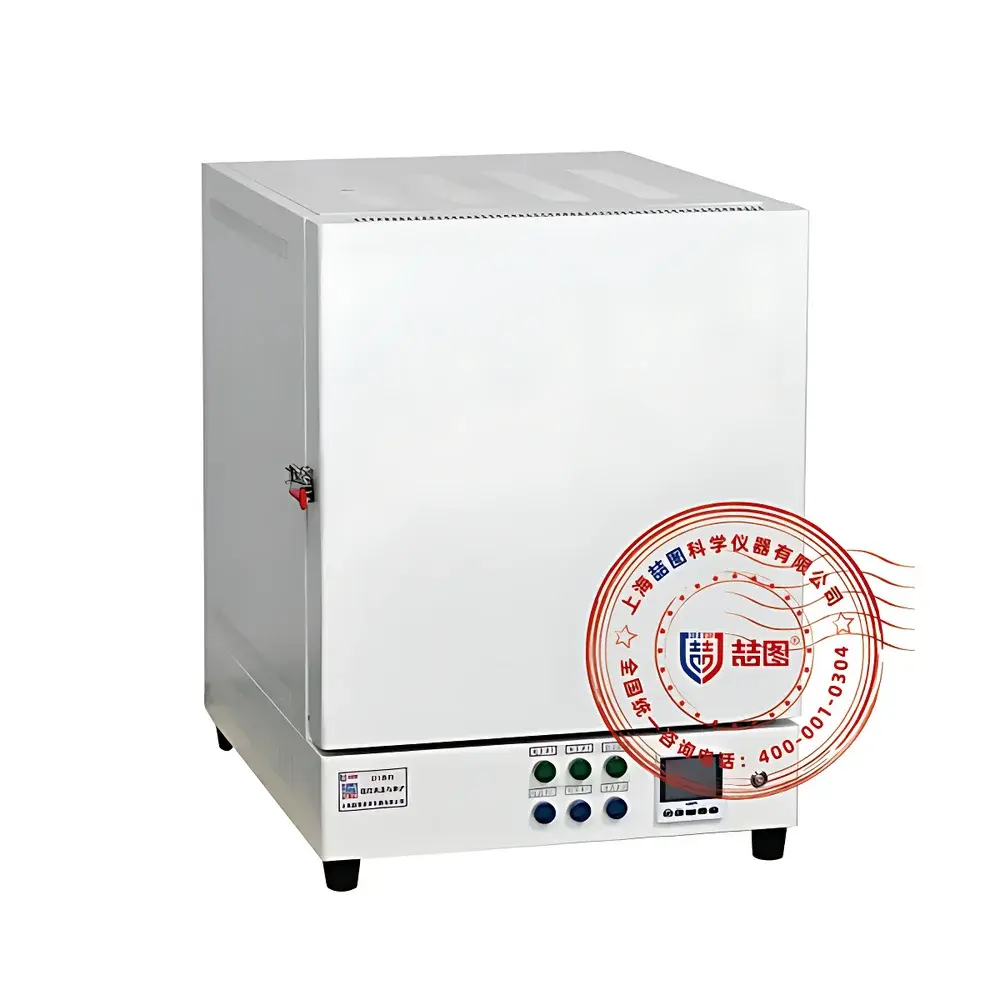
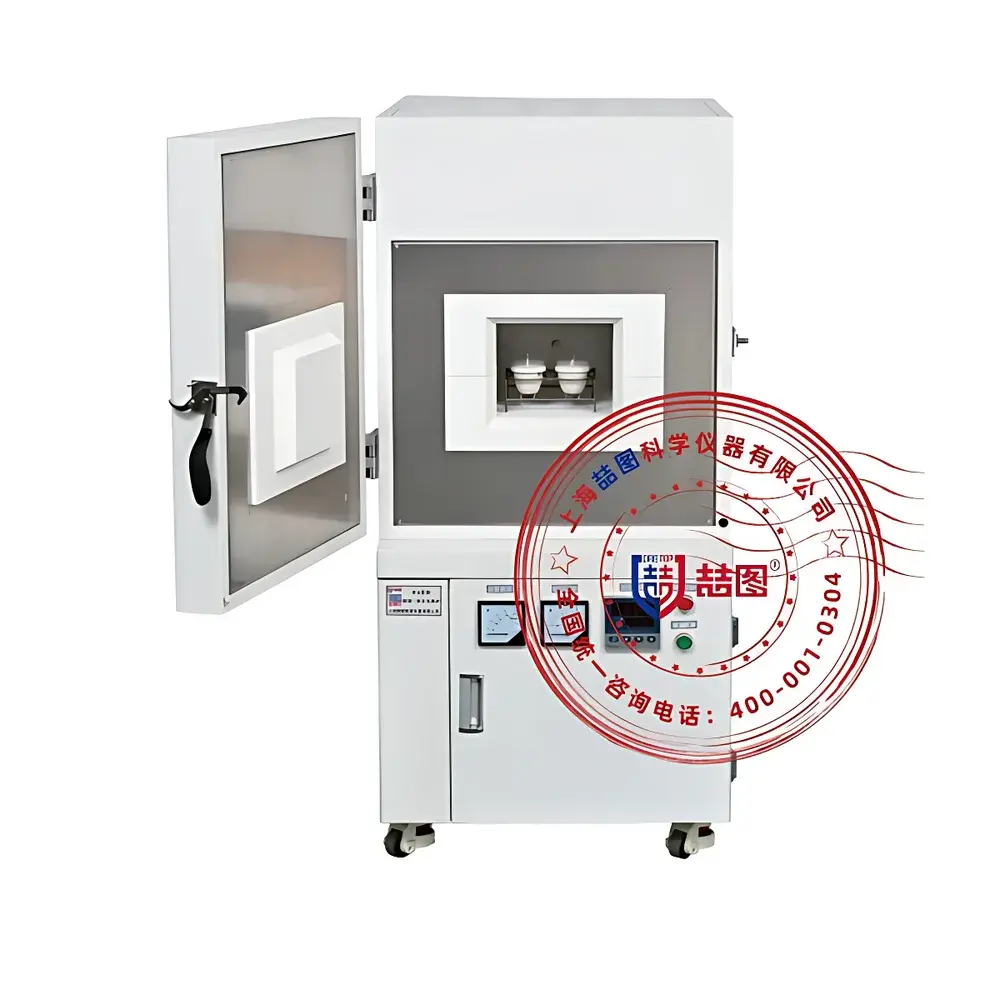
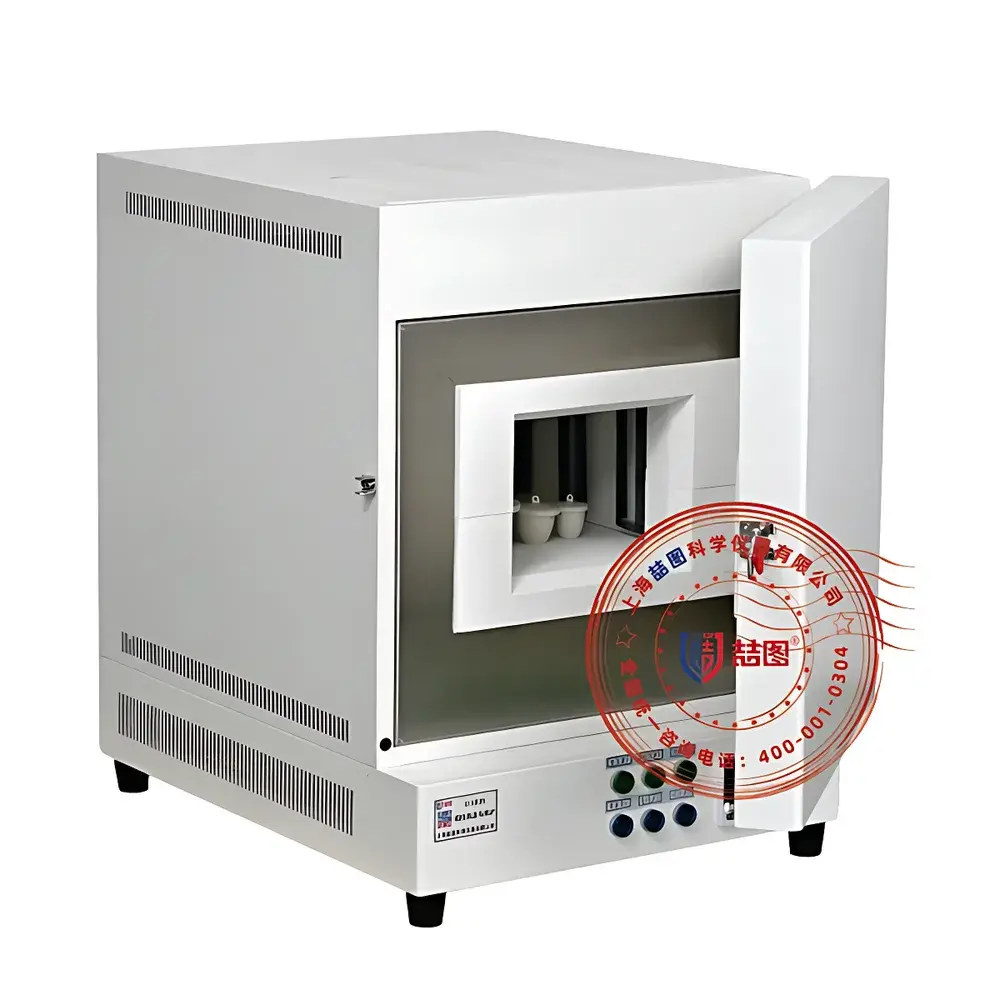
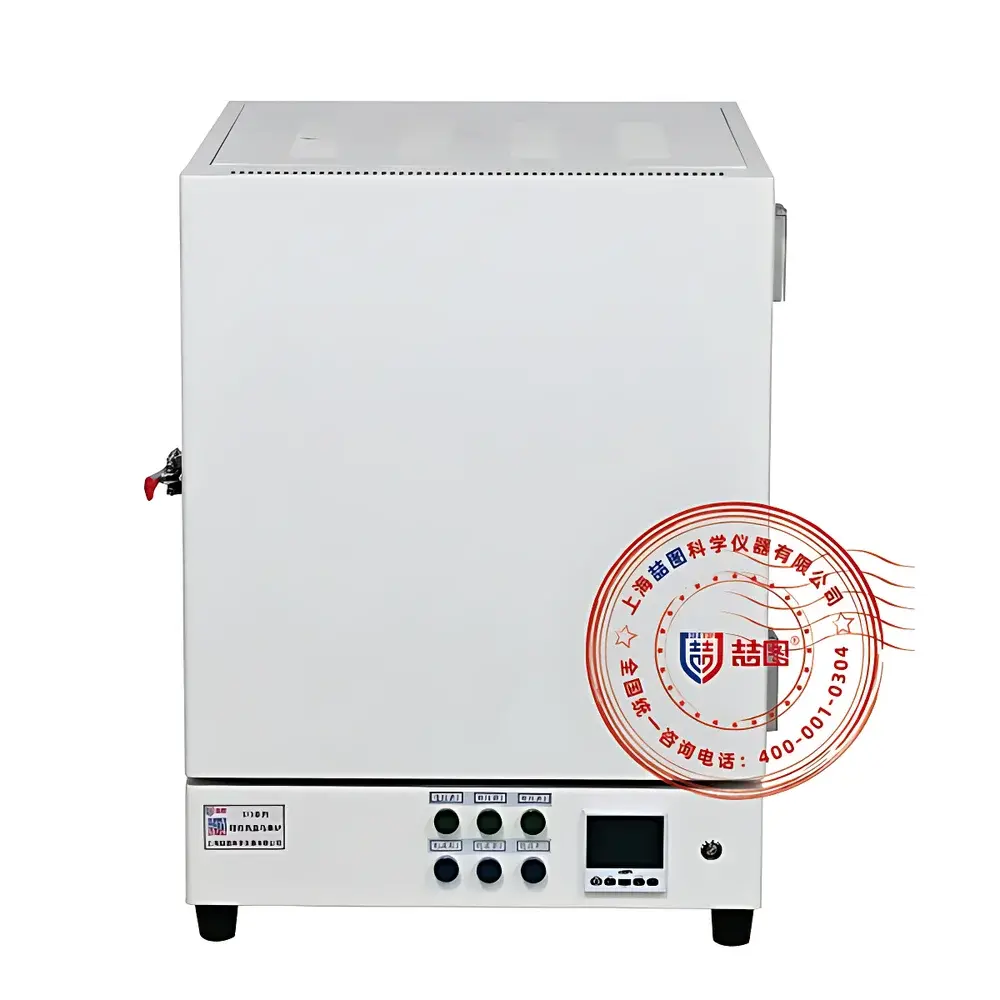
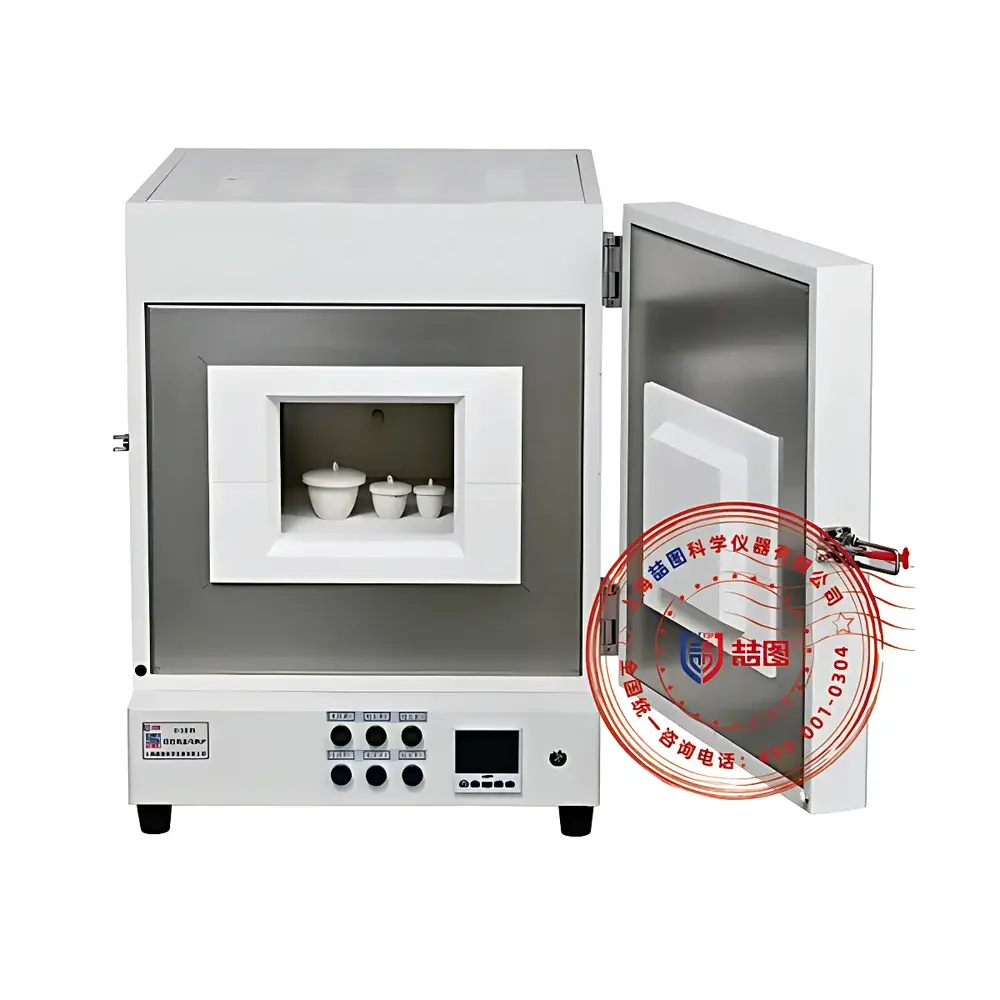
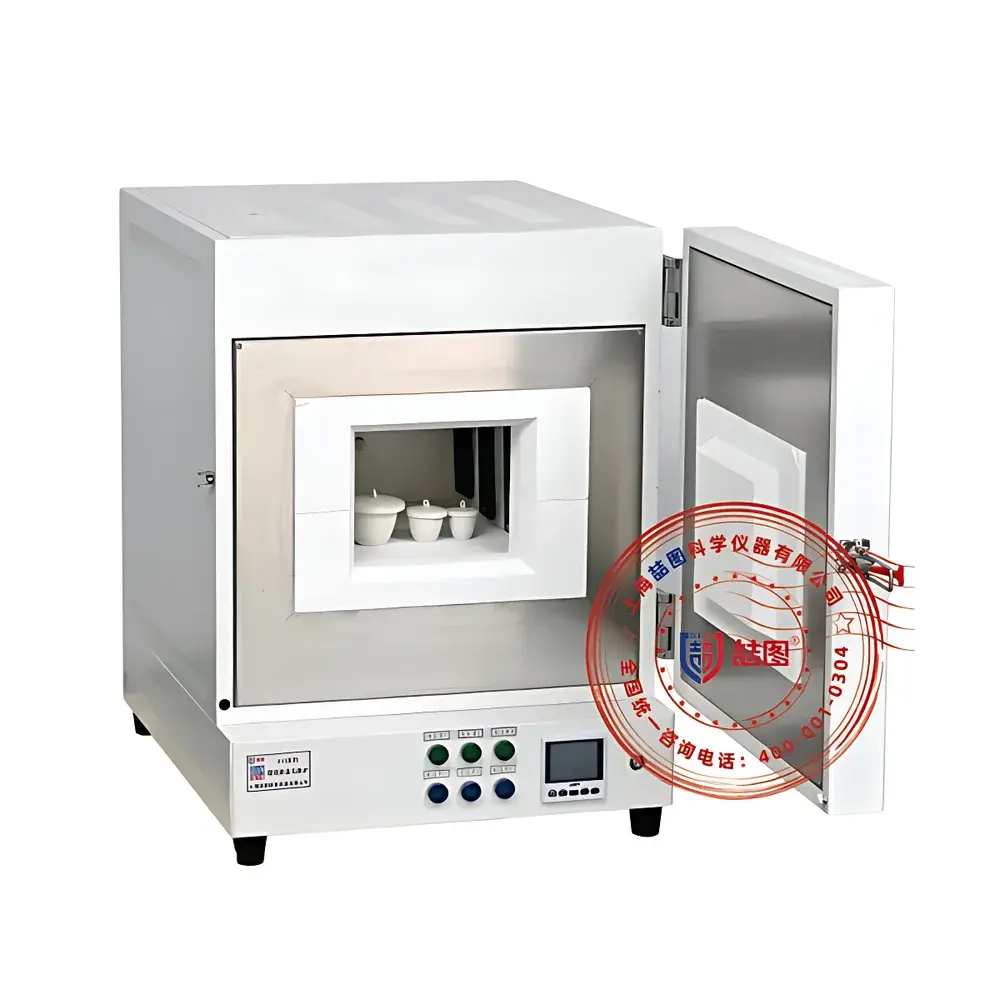
DRETOP S13/S14 Series Silicon Carbide High-Temperature Muffle Furnace
| Brand | DRETOP |
|---|---|
| Origin | Shanghai, China |
| Model | S13/S14 Series |
| Type | Box-Type Muffle Furnace |
| Max Temperature | 1400 °C |
| Temperature Control Accuracy | ±1 °C |
| Max Power | 15000 W |
| Heating Rate to Max Temp | ≤30 min |
| Heating Element | Silicon Carbide (SiC) Rods |
| Internal Chamber Dimensions | 150×250×100 mm to 300×400×300 mm |
| Nominal Volume | 4 L to 36 L |
| Control Mode | Programmable Digital Controller (P Series) / Touchscreen Controller (PV & PV-II Series) |
| Insulation | Vacuum-Microporous Ceramic Fiber Board |
| Chamber Construction | Triple-Wall Radiant Heating |
| Safety Features | Dual-Stage Overtemperature Protection, Door-Interlocked Power Cut-off, Phase Failure & Thermocouple Break Alarms |
Overview
The DRETOP S13/S14 Series Silicon Carbide High-Temperature Muffle Furnace is a precision-engineered box-type laboratory furnace designed for sustained operation at temperatures up to 1400 °C. It employs silicon carbide (SiC) heating elements—robust, oxidation-resistant rods arranged in a triple-wall configuration—to deliver rapid thermal ramping, exceptional temperature uniformity (±3 °C across the working zone), and long-term stability under cyclic high-temperature exposure. Unlike resistance-wire or molybdenum-based systems, SiC elements maintain structural integrity and resist creep deformation above 1200 °C, making this series suitable for applications requiring repeated thermal cycling between ambient and peak temperature without recalibration or element replacement. The furnace complies with fundamental thermal safety architecture per IEC 61000-6-2 (immunity) and IEC 61000-6-4 (emission), and its control architecture supports traceability requirements aligned with GLP and ISO/IEC 17025 laboratory management frameworks.
Key Features
- Triple-wall radiant heating design with SiC rods embedded in high-purity ceramic fiber grooves ensures symmetrical heat distribution and minimizes thermal gradients across the chamber.
- Intelligent PID controller with auto-tuning capability, ±1 °C setpoint accuracy, and programmable ramp/soak profiles (up to 30 segments per program).
- Door-integrated safety interlock: power to heating elements is cut within 100 ms upon door opening; automatic resumption upon closure after user confirmation.
- Vacuum-microporous ceramic fiber insulation (density 40% compared to conventional refractory brick linings.
- Front-access dual-layer stainless steel door seal with integrated refractory baffle minimizes radiant leakage at the aperture, preserving axial temperature homogeneity.
- Dual-stage overtemperature protection: primary limit via independent thermocouple input, secondary via hardware-based thermal cutoff switch rated at 1450 °C.
- Integrated voltage and current monitoring meters (analog or digital depending on model variant) enable real-time verification of electrical load integrity during qualification runs.
- Phosphate conversion coating + high-temp epoxy powder coating on outer casing provides corrosion resistance and mechanical durability in shared lab environments.
Sample Compatibility & Compliance
The S13/S14 series accommodates standard crucibles (alumina, quartz, silicon carbide), ceramic boats, and inert sample holders up to 300 mm in height. Its sealed muffle chamber prevents direct flame contact and atmospheric contamination—critical for ash content determination (ASTM D3174, ISO 1171), volatile matter analysis (ASTM D3175), and coal灰熔点 testing (ISO 540). The furnace meets essential electrical safety requirements per GB 4706.1–2005 (equivalent to IEC 60335-1) and electromagnetic compatibility per GB/T 17626.2–2018 (IEC 61000-4-2). Optional inert gas inlet (N₂, Ar) enables controlled-atmosphere calcination per USP and ASTM E1191 for carbon-free residue protocols.
Software & Data Management
P-series models feature a 4-digit LED display with manual parameter entry; PV-series integrate a 7-inch resistive touchscreen supporting multi-level password access (operator, engineer, administrator), real-time temperature curve visualization, and USB data export (CSV format). PV-II variants add RS485 Modbus RTU interface for integration into centralized lab automation systems (e.g., LabVantage, Thermo Fisher SampleManager). All controllers log timestamped event records—including door openings, alarm triggers, and program completions—with retention depth ≥10,000 entries. Audit trail functionality satisfies FDA 21 CFR Part 11 requirements when paired with external electronic signature validation.
Applications
- Thermal gravimetric analysis (TGA) pre-conditioning and residue quantification in environmental labs (EPA Method 1631, ISO 11885).
- Pharmaceutical excipient screening per USP heavy metals testing and residual solvent removal.
- Cement clinker phase stabilization studies (ASTM C114) and gypsum dehydration kinetics.
- Geochemical sample preparation for XRF and ICP-MS, including certified reference material (CRM) ashing.
- Materials science workflows: sintering of advanced ceramics (ZrO₂, Si₃N₄), pre-oxidation of CMC composites, and electrode calcination for battery R&D.
FAQ
What is the maximum continuous operating temperature for the S14-36PV-II model?
The S14-36PV-II is rated for continuous operation at 1400 °C. Short-term excursions to 1420 °C are permissible for ≤15 minutes per cycle, provided cooling follows manufacturer-specified ramp-down rates.
Can this furnace be used under reducing atmospheres?
No. Silicon carbide elements degrade rapidly in H₂ or CO-rich environments above 1000 °C. For reducing conditions, consult DRETOP’s MoSi₂-based furnace series.
Is NIST-traceable calibration documentation available?
Yes—factory calibration certificates (per ISO/IEC 17025) with as-found/as-left data and uncertainty budgets are provided upon request at additional cost.
How often does the ceramic fiber insulation require replacement?
Under normal usage (≤5 cycles/week at ≤1300 °C), vacuum-microporous insulation retains >92% thermal efficiency for ≥5 years. Visual inspection for cracking or dusting is recommended annually.
Does the PV-II controller support remote monitoring via Ethernet or Wi-Fi?
The standard PV-II includes RS485 only. Ethernet/Wi-Fi gateway modules are available as third-party add-ons compliant with Modbus TCP; DRETOP does not supply or validate these interfaces.



