
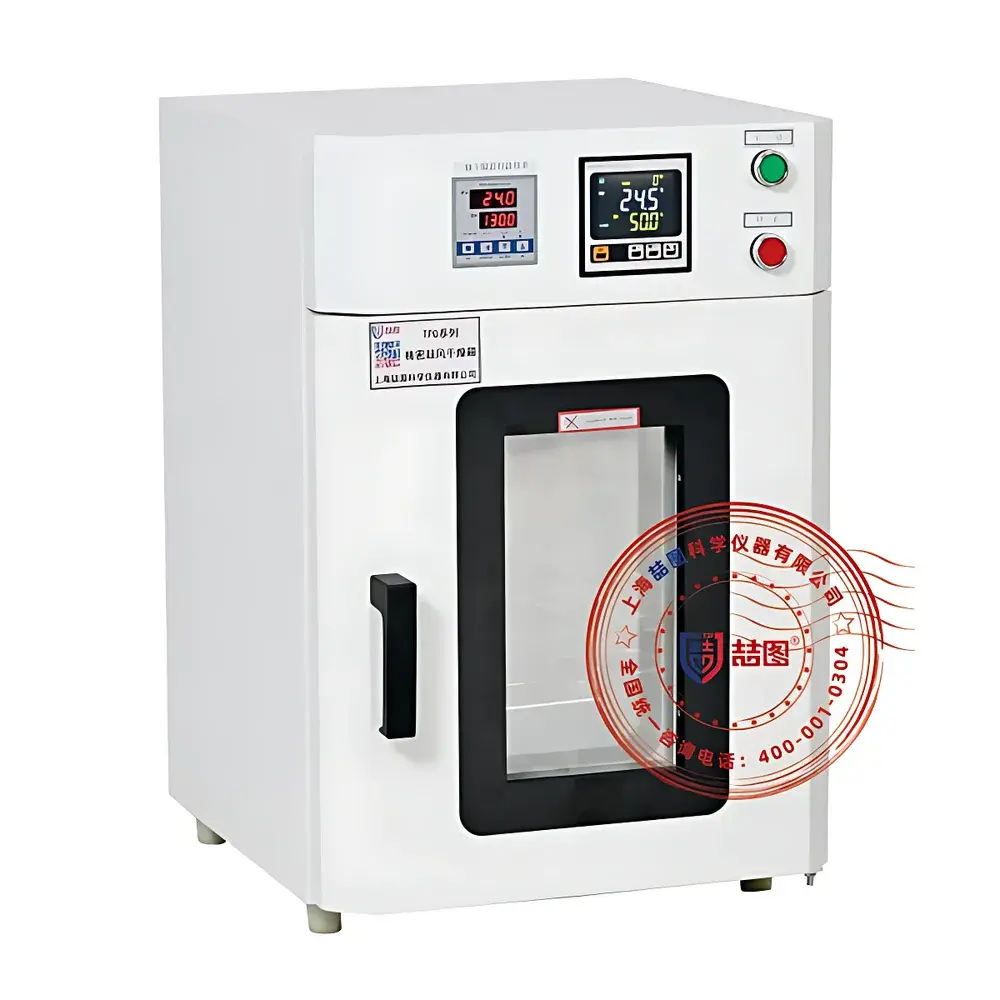
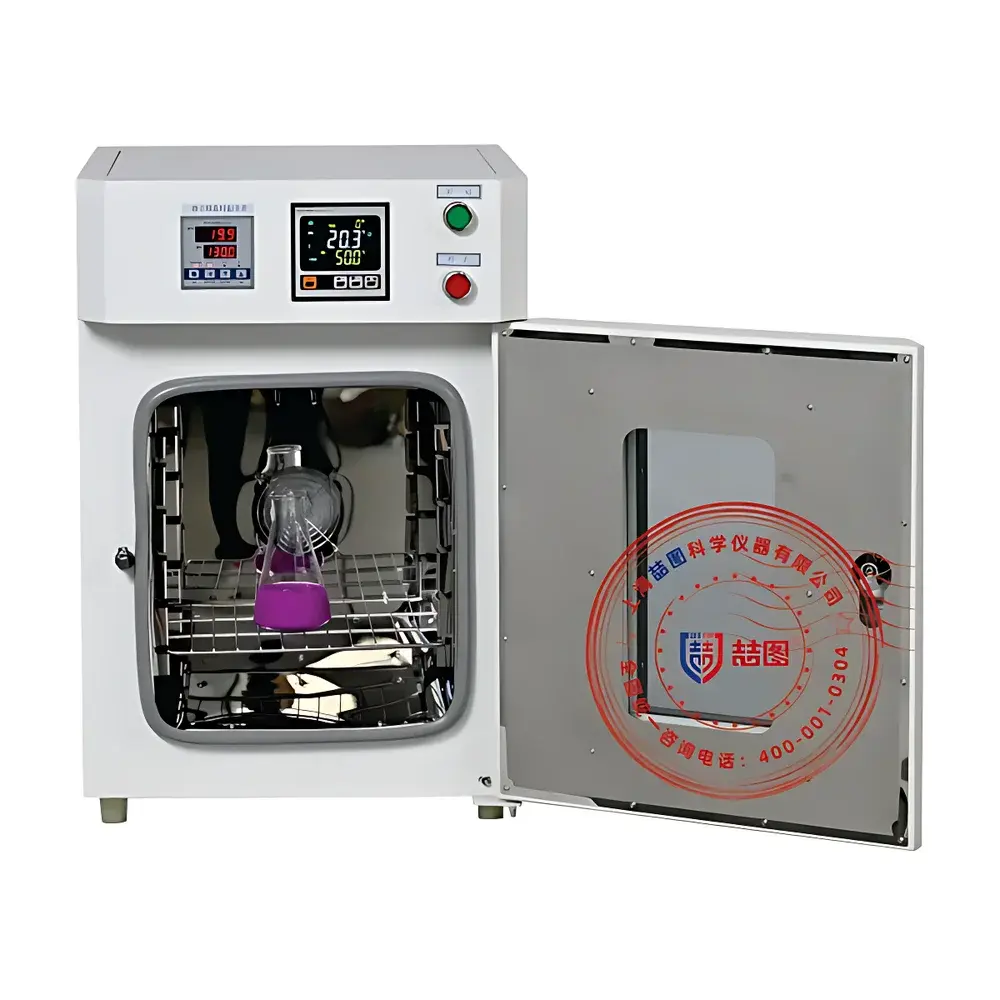
DRETOP TPG-F136B Precision Forced-Air Drying Oven
| Brand | DRETOP |
|---|---|
| Origin | Shanghai, China |
| Model | TPG-F136B |
| Temperature Range | RT+10°C to 300°C |
| Temperature Uniformity | ±1.5°C (@100°C) |
| Temperature Fluctuation | ±0.2°C |
| Temperature Resolution | 0.1°C |
| Inner Chamber Dimensions (W×D×H) | 450×550×550 mm |
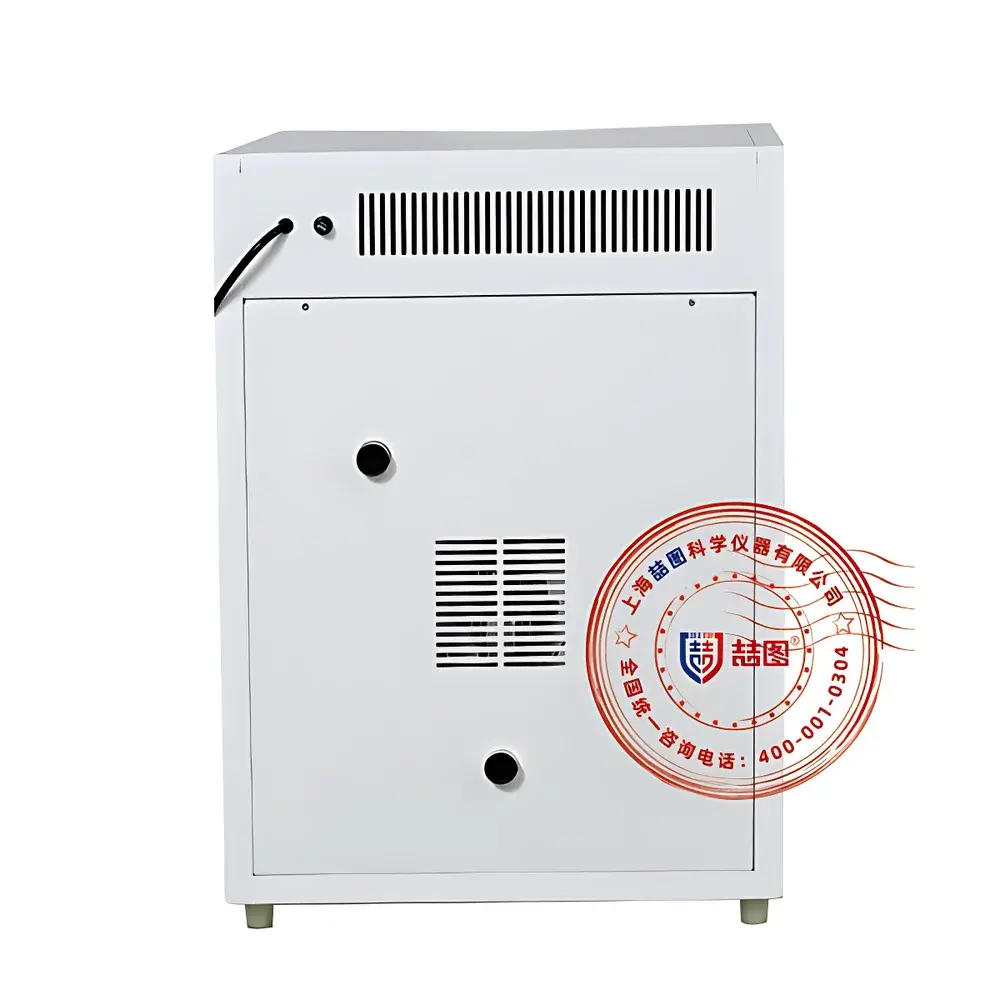
| External Dimensions (W×D×H) | 595×810×870 mm |
| Inner Chamber Material | Stainless Steel (SUS304) |
| Heating Method | Forced-Air Convection (Hot Air Circulation) |
| Working Environment Temperature | 5–45°C |
| Rated Power | 2550 W |
| Nominal Volume | 136 L |
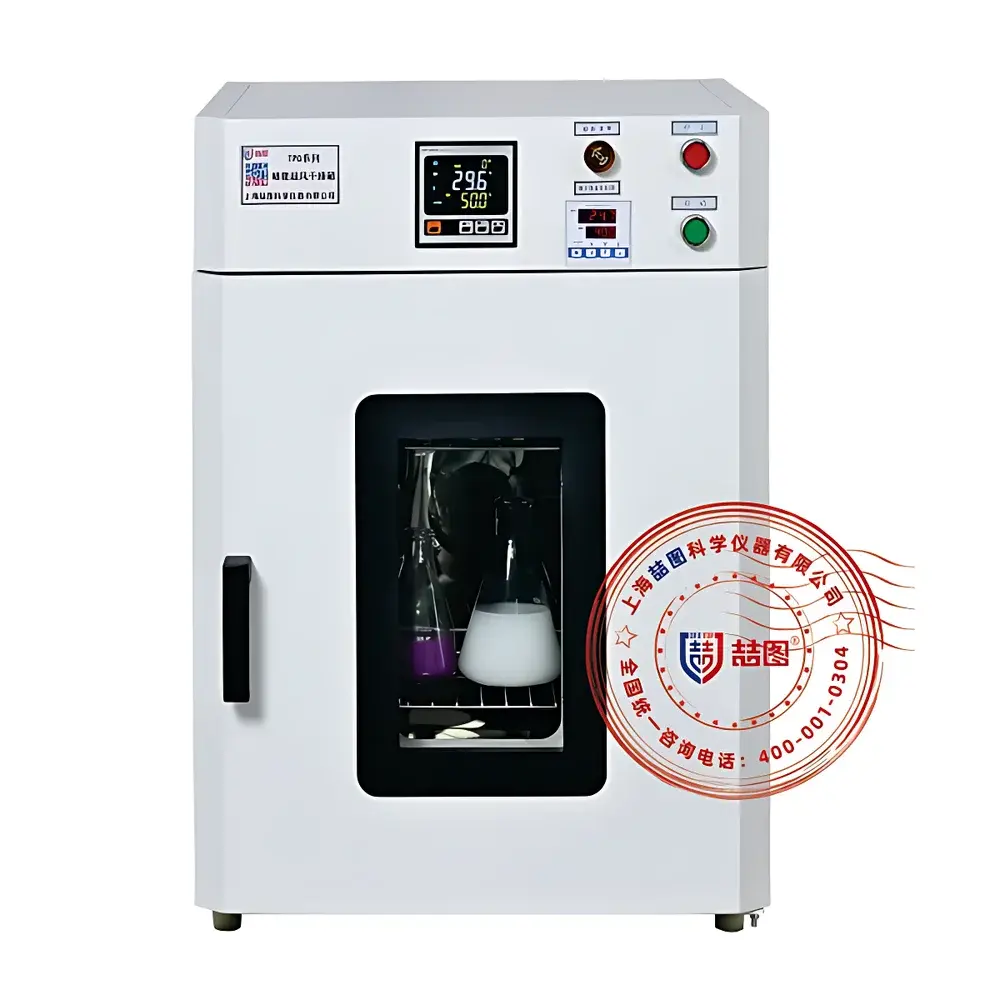
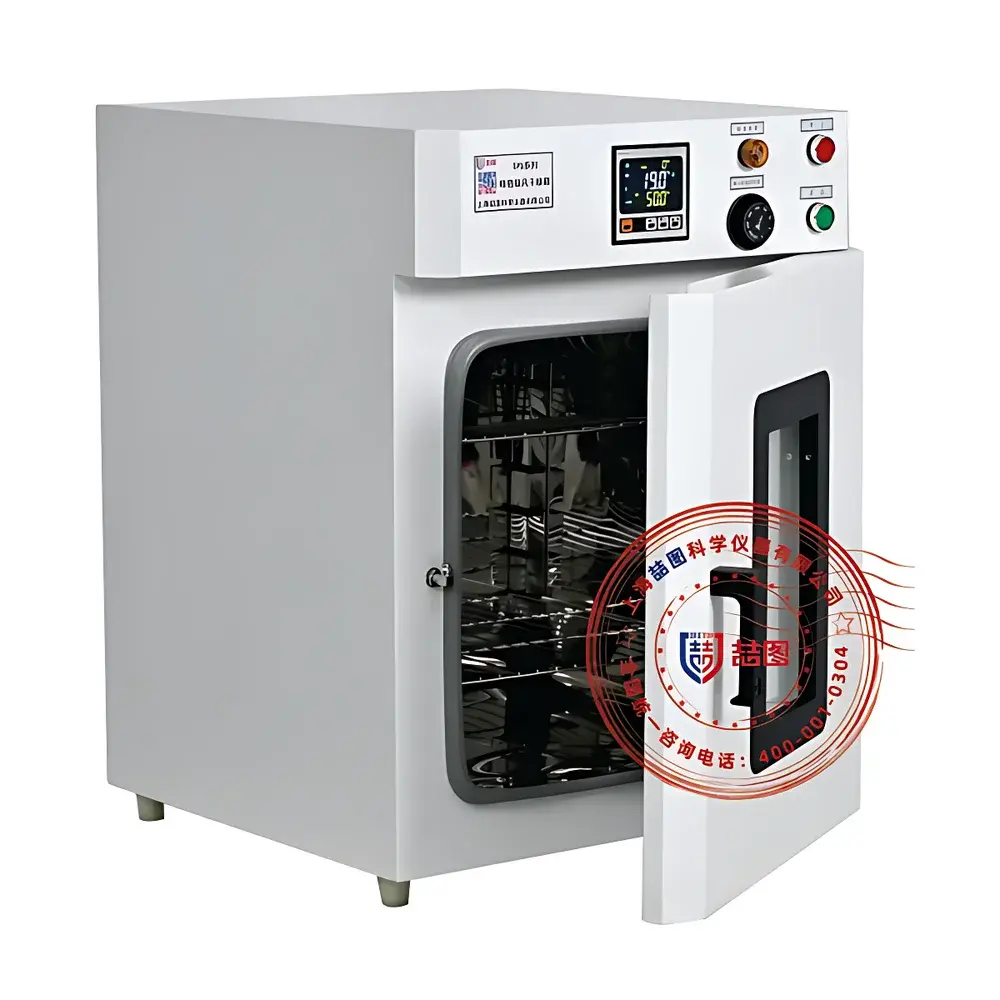
| Standard Shelving | 2 Adjustable Stainless Steel Trays |
| Safety Features | Dual Independent Temperature Limiters, Over-Temperature Alarm, Leakage Protection, Short-Circuit & Overload Protection, Data Retention During Power Failure |
Overview
The DRETOP TPG-F136B Precision Forced-Air Drying Oven is an ISO-compliant laboratory-grade thermal processing instrument engineered for high-accuracy drying, curing, sterilization, and aging applications requiring stable temperature control and exceptional spatial uniformity. Utilizing a microprocessor-controlled PID algorithm with real-time feedback, the oven maintains setpoint accuracy within ±0.2°C fluctuation and delivers ±1.5°C uniformity across its 136 L stainless steel chamber at 100°C—performance metrics aligned with ASTM E145 and ISO 17025 validation requirements for thermal equipment used in GLP and GMP environments. Its forced-air convection architecture employs a high-temperature-rated centrifugal blower and optimized internal airflow ducting to ensure rapid heat-up, minimal thermal overshoot, and reproducible thermal profiles—critical for material stability testing, polymer cross-linking, electronic component preconditioning, and pharmaceutical residual solvent removal.
Key Features
- Microcomputer-based PID temperature controller with dual-stage over-temperature protection: primary control loop + independent mechanical safety limiter (IEC 61000-4-5 compliant), ensuring uninterrupted compliance with FDA 21 CFR Part 11 audit trail requirements when paired with optional data logging modules.
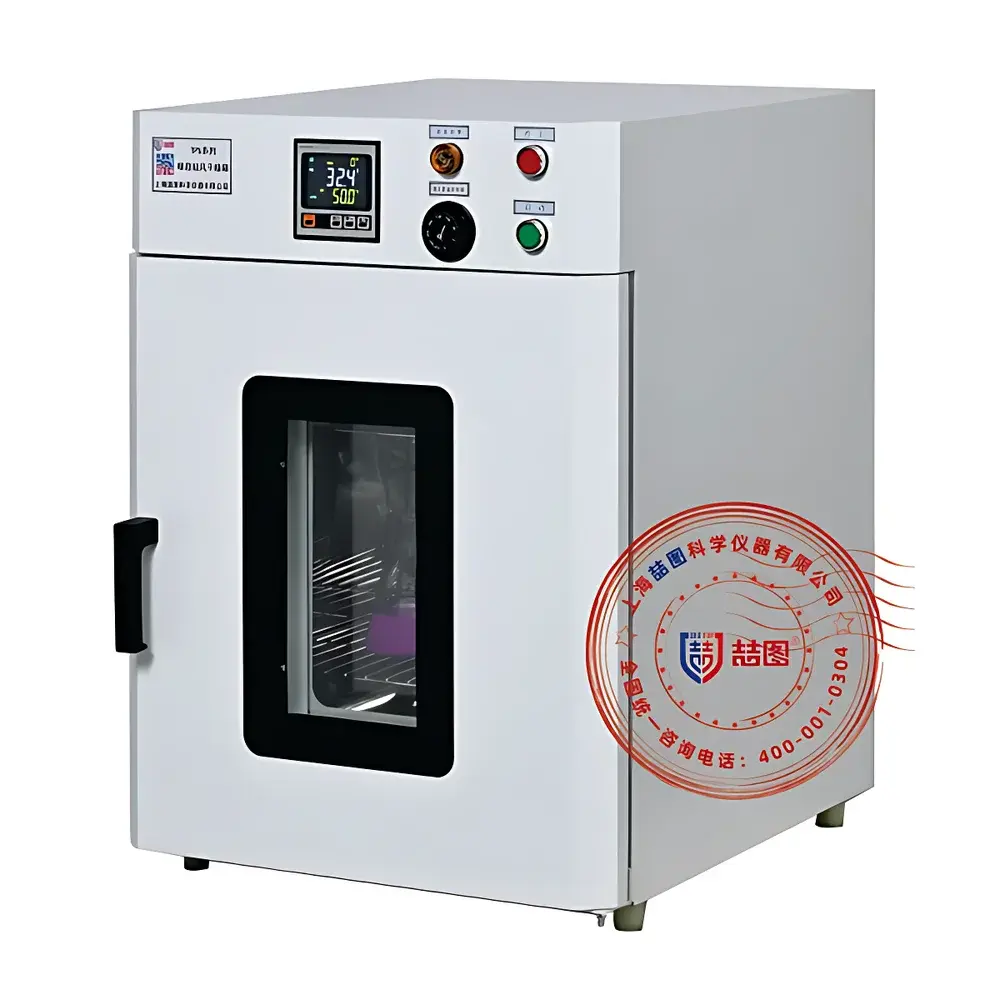
- Triple-layer safety design: tempered double-glazed observation window with silicone-sealed gasket (operational up to 300°C), zinc-alloy ergonomic door handle with dual-point rotary locking mechanism, and high-elasticity synthetic silicone rubber door seal resistant to thermal degradation and outgassing.
- Intelligent diagnostics interface: large backlit LCD display showing real-time temperature, setpoint, timer status, and alphanumeric fault codes (e.g., E01 = sensor open circuit; E03 = heater failure), enabling rapid troubleshooting without service technician intervention.
- Low-noise thermal management system: brushless DC motor driving multi-blade impeller, delivering consistent air velocity ≥0.8 m/s across chamber cross-section while maintaining acoustic output <58 dB(A) at 1 m distance.
- Modular hardware architecture: standardized RS485 communication port (Modbus RTU protocol), optional USB data export interface, configurable test port (Φ50 mm, fitted with silicone plug), and field-upgradable firmware supporting time-programmable ramp/soak cycles.
Sample Compatibility & Compliance
The TPG-F136B accommodates diverse sample formats including Petri dishes, crucibles, metal trays, glassware, PCB assemblies, battery cells, and composite laminates—enabled by fully adjustable, removable stainless steel shelves (SUS304, 1.2 mm thickness, load capacity 15 kg per shelf). Chamber geometry supports uniform exposure under forced convection, eliminating cold spots common in natural-convection ovens. The unit complies with IEC 61010-1:2010 for electrical safety, meets CE marking requirements for EMC (EN 61326-1) and low-voltage directives, and is validated for use in laboratories adhering to ISO/IEC 17025, USP , and EU Annex 11 data integrity standards. Optional calibration certificates traceable to NIM (National Institute of Metrology, China) are available upon request.
Software & Data Management
While the base model operates via embedded front-panel controls, the TPG-F136B supports integration into centralized lab infrastructure through its RS485 port. When connected to third-party SCADA or LIMS platforms (e.g., LabVantage, Thermo Fisher SampleManager), it enables remote parameter setting, real-time temperature logging at user-defined intervals (1–60 s), and automatic generation of CSV-formatted audit logs—including operator ID, timestamp, setpoint changes, alarm events, and power interruption records. Optional USB data logger provides standalone 30-day continuous recording with timestamped thermal profiles exportable for 21 CFR Part 11–compliant review. All firmware updates follow secure signed-binary protocols to prevent unauthorized modification.
Applications
This oven serves mission-critical roles across regulated and research-intensive domains: moisture content determination per AOAC 950.46 and ISO 5587; thermal aging of aerospace composites per MIL-STD-810G Method 502.6; pre-bake conditioning of lithium-ion battery electrodes; residual solvent analysis in API manufacturing (ICH Q5C); humidity-controlled desiccation of optical components; accelerated corrosion testing per ASTM B117; and stability studies for medical device packaging per ISO 11607. Its 300°C upper limit and tight uniformity make it suitable for ceramic sintering pre-heating, catalyst activation, and inert-atmosphere-compatible modifications (when retrofitted with nitrogen purge kit).
FAQ
What is the maximum allowable ambient temperature for continuous operation?
The unit is rated for continuous duty at ambient temperatures between 5°C and 45°C, provided adequate ventilation clearance (≥100 mm on all sides) and relative humidity ≤80% non-condensing.
Can the TPG-F136B be validated for GMP environments?
Yes—its dual-limit temperature control, non-volatile parameter memory, and optional IQ/OQ documentation package support qualification per ASTM E2500 and EU GMP Annex 15. Calibration reports include uncertainty budgets per ISO/IEC 17025.
Is the stainless steel chamber electropolished or passivated?
The inner chamber uses standard mill-finish SUS304 stainless steel; electropolishing or citric acid passivation is available as a factory-installed option for enhanced corrosion resistance in halogen-rich environments.
Does the oven support programmable multi-step temperature profiles?
Native panel programming supports single-setpoint timed operation only; multi-segment ramp/soak sequences require the optional color touchscreen controller (TPG-F136B-P variant) or external PLC integration via RS485.
What maintenance intervals are recommended for long-term reliability?
Blower filter inspection every 200 operating hours; door gasket replacement every 24 months under standard use; annual verification of temperature sensor accuracy and PID tuning parameters using NIST-traceable reference thermometers.



