
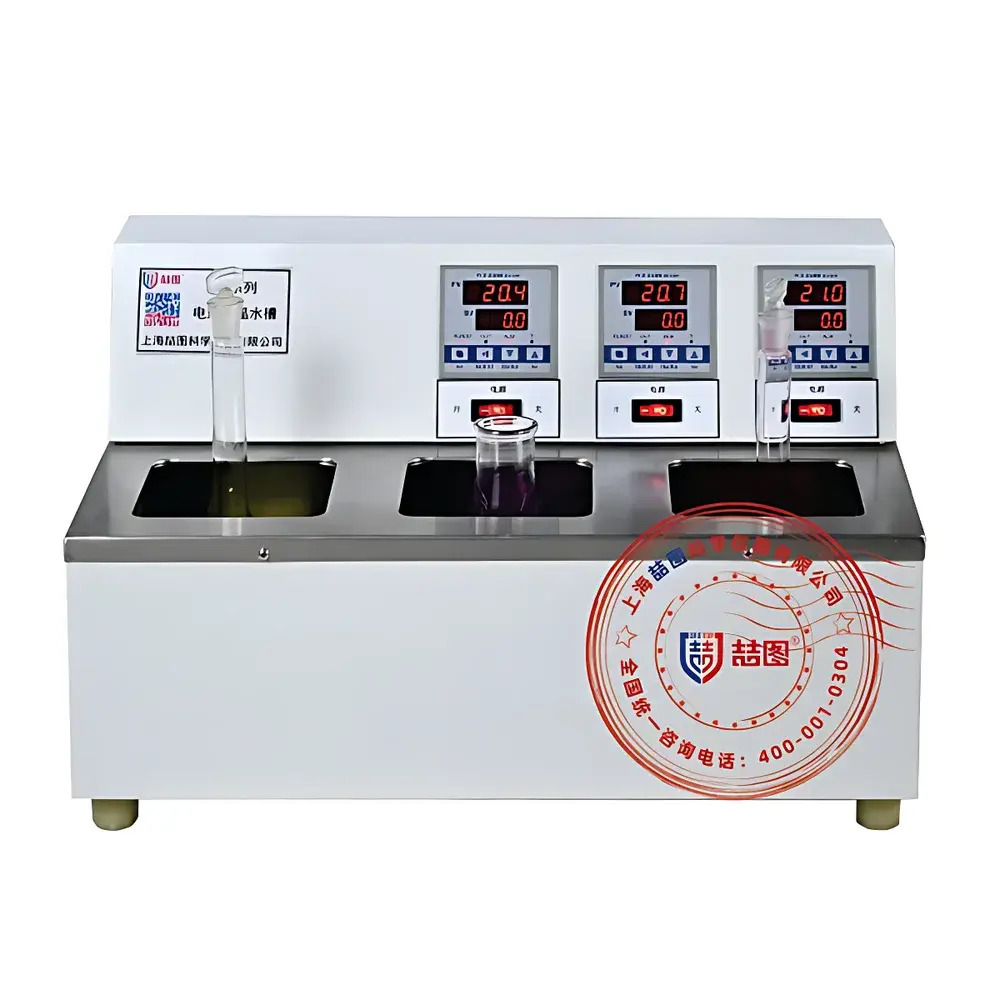
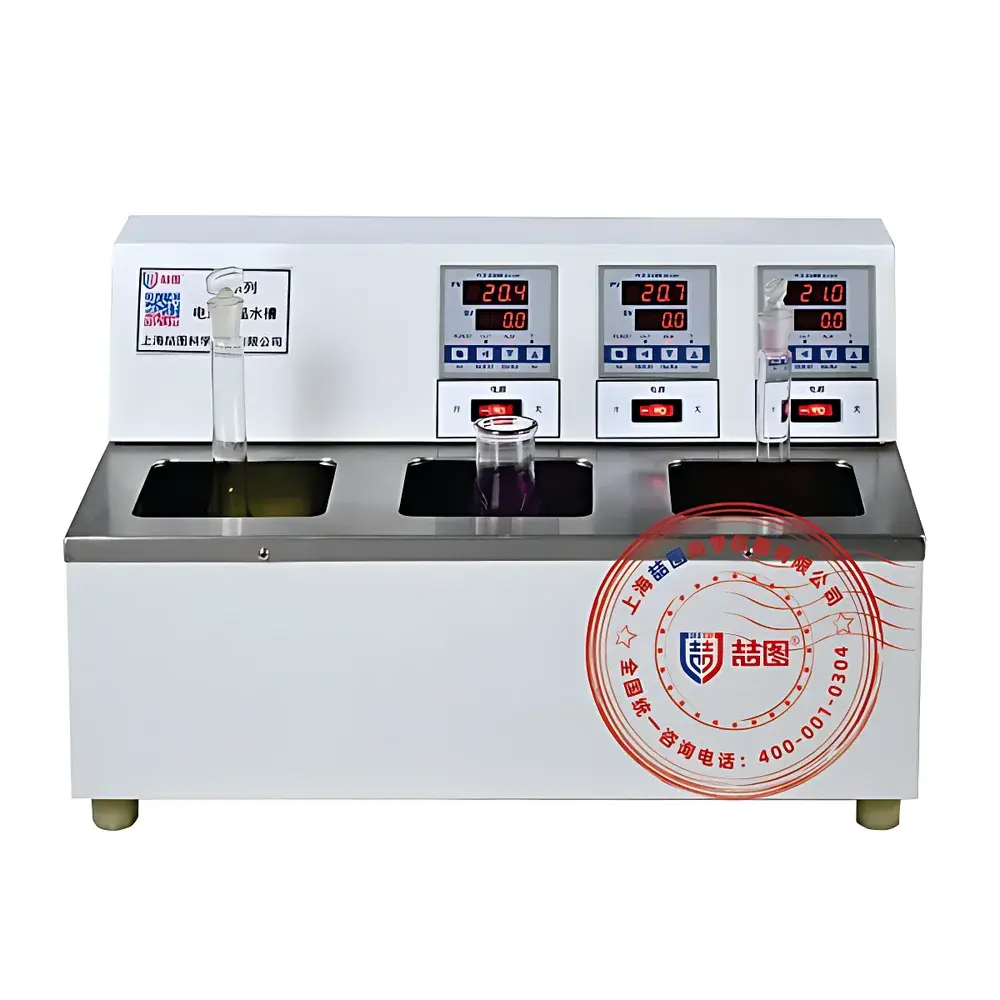
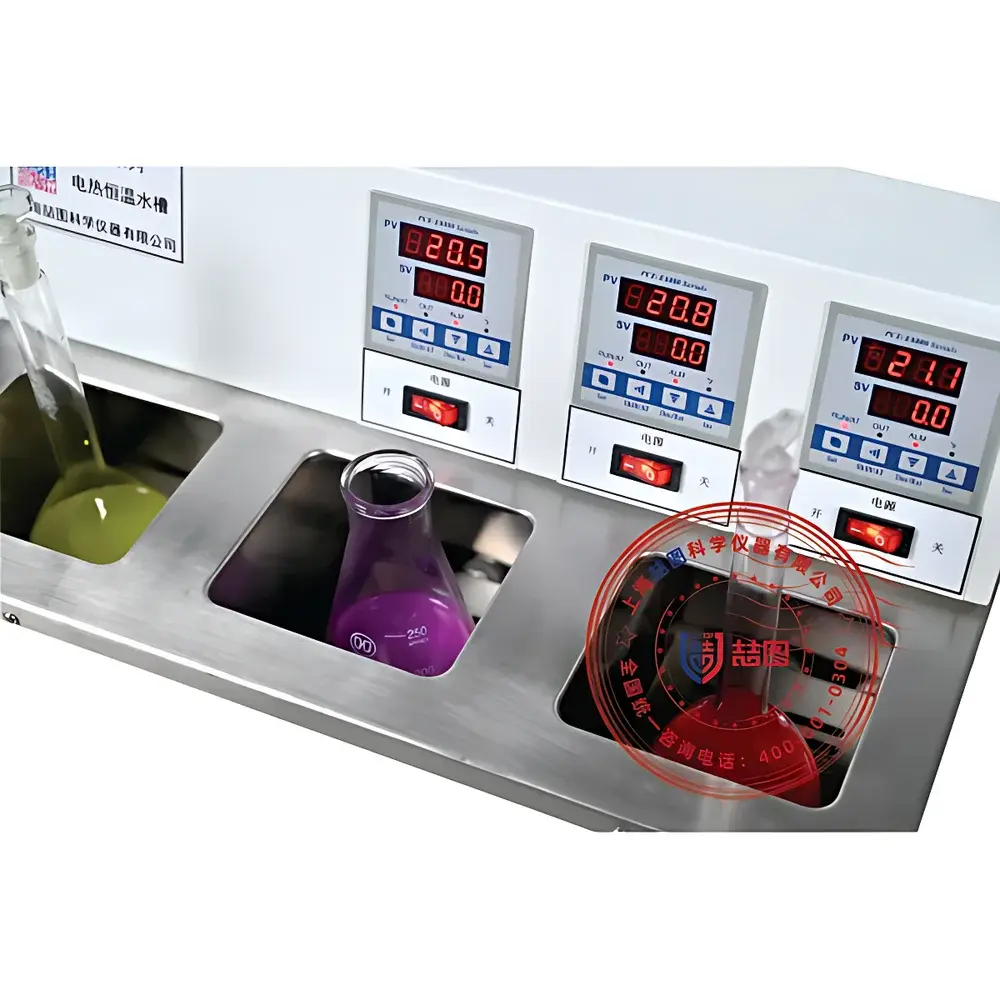
DRETOP TDK-8DZ Triple-Independent Temperature Control Circulating Water/Oil Bath
| Brand | DRETOP |
|---|---|
| Origin | Shanghai, China |
| Model | TDK-8DZ |
| Instrument Type | Triple-Zone Circulating Water/Oil Bath |
| Temperature Range | RT+5 to 99°C |
| Temperature Resolution | 0.1°C |
| Bath Capacity | 3 × 3 L (independent zones) |
| Circulation | Internal & External |
| Temperature Control Mode | Heating & Cooling Capable |
| Input Power | 1500 W |
| Voltage | AC 220 V, 50 Hz |
| Construction | 304 Stainless Steel Inner Tank & Lid |
| Insulation | Multi-Layer Waterproof Thermal Insulation |
| Safety Features | Over-Temperature Alarm, Auto-Recovery After Power Failure, Parameter Memory Retention |
Overview
The DRETOP TDK-8DZ Triple-Independent Temperature Control Circulating Water/Oil Bath is an engineered precision thermal management system designed for laboratories requiring simultaneous, isolated temperature control across three distinct sample environments. Unlike conventional single-zone baths, the TDK-8DZ implements a tri-channel architecture—each of its three 3-liter stainless steel chambers operates with independent PID-based temperature regulation, enabling concurrent experiments at differing setpoints without thermal crosstalk. The unit utilizes resistive heating elements fully immersed in the bath medium, coupled with a high-efficiency centrifugal circulation pump that supports both internal recirculation and external loop integration (e.g., jacketed reactors, condensers, or sensor calibration rigs). Its operational range spans from ambient +5°C to 99°C, making it suitable for applications ranging from enzyme incubation and solvent reflux to polymerization support and calibration traceability workflows. The system complies with fundamental thermal stability requirements outlined in ISO/IEC 17025:2017 for laboratory equipment qualification and aligns with general Good Laboratory Practice (GLP) expectations for temperature-controlled instrumentation used in method validation.
Key Features
- Triple independent temperature zones—each chamber features dedicated PT100-class temperature sensing, digital PID controller, and localized heating circuitry, ensuring ±0.3°C temperature uniformity within each zone (per ASTM E1112-22).
- Robust 304 stainless steel construction for inner tank, lid, and perforated baffle plates—resistant to corrosion from water, glycol-water mixtures, silicone oils, and low-viscosity heat transfer fluids.
- Multi-layer thermal insulation minimizes heat loss and surface temperature rise; integrated drip-proof sealing prevents condensation leakage during prolonged operation.
- Intelligent auto-recovery function retains user-defined parameters—including setpoint, ramp rate, and alarm thresholds—after unexpected power interruption or controller reset.
- Over-temperature safety cutoff activates at user-configurable upper limits; audible and visual alarms trigger prior to heater deactivation, preventing sample degradation or bath medium boiling.
- Front-panel one-touch drain valve enables rapid, spill-free medium replacement; laser-cut perforated stainless steel trays enhance convective heat distribution and accommodate standard labware (e.g., test tubes, flasks, cuvettes).
Sample Compatibility & Compliance
The TDK-8DZ accommodates a broad spectrum of sample containers—including glass beakers (up to 1 L), reaction flasks, immersion probes, and jacketed vessels—across all three zones simultaneously. It supports both aqueous (distilled or deionized water recommended) and non-aqueous media (e.g., silicone oil, ethylene glycol/water blends), with viscosity limits up to 500 cSt at operating temperature. For regulatory environments, the device meets mechanical and electrical safety standards per IEC 61010-1:2010 (Safety Requirements for Electrical Equipment for Measurement, Control, and Laboratory Use). While not inherently 21 CFR Part 11 compliant, optional RS485 interface modules enable integration with validated LIMS or ELN platforms supporting electronic audit trails when paired with appropriate software validation protocols.
Software & Data Management
The base configuration includes a front-panel LCD interface with real-time display of actual vs. setpoint temperatures per zone, status indicators for heating/circulation activity, and configurable alarm thresholds. Optional accessories expand data handling capabilities: a 30-segment programmable temperature controller allows time-dependent thermal profiles (e.g., ramp-hold-cool sequences); an RS485 communication port supports Modbus RTU protocol for remote monitoring via SCADA or custom LabVIEW/Python scripts. When deployed in GLP/GMP settings, users may implement manual logbooks or third-party electronic record systems to document calibration history, daily performance checks (e.g., stability verification using NIST-traceable thermistors), and maintenance events—all essential for ISO 17025 accreditation readiness.
Applications
- Simultaneous optimization of enzymatic reaction kinetics under varied thermal conditions (e.g., 37°C, 45°C, and 60°C in parallel).
- Calibration of temperature-sensitive sensors (thermocouples, RTDs, infrared pyrometers) against reference standards in multi-point verification protocols.
- Support of jacketed reactor systems requiring precise external temperature control during exothermic or endothermic synthesis.
- Accelerated stability testing of pharmaceutical formulations per ICH Q1A(R3), where discrete temperature zones replicate storage conditions (e.g., 25°C/60% RH, 40°C/75% RH analogs).
- Material science workflows involving thermal annealing of thin films or polymer samples under controlled convection environments.
- Environmental testing labs performing aquatic toxicity assays requiring stable, multi-level temperature exposure chambers.
FAQ
What types of bath media are compatible with the TDK-8DZ?
Distilled or Type III purified water is strongly recommended for aqueous operation. For elevated temperatures (>65°C) or extended duty cycles, silicone oil (e.g., Dow Corning 200 Fluid, 50 cSt) or propylene glycol–water mixtures (up to 50% v/v) may be used—provided viscosity remains below 500 cSt at operating temperature.
Does the unit support external temperature feedback control?
Yes—the external circulation port can be connected to a jacketed vessel equipped with a secondary PT100 probe; however, closed-loop feedback requires integration with an external programmable logic controller (PLC) or compatible process controller, as the native controller manages only internal sensor inputs.
Is routine calibration required, and how is it performed?
Per ISO/IEC 17025, periodic calibration against NIST-traceable references is advised at least annually—or before critical experiments. Users should verify temperature accuracy at three points across the operating range (e.g., 30°C, 60°C, 90°C) using a calibrated handheld thermometer with ≤±0.05°C uncertainty.
Can the TDK-8DZ be used for cooling applications?
The base model is heating-only. A dedicated refrigerated variant (TDK-24R) is available for active cooling down to 15°C; the TDK-8DZ may achieve limited passive cooling via ambient heat exchange but lacks compressor-based refrigeration.
What maintenance procedures ensure long-term reliability?
Monthly inspection of the drain valve seal integrity, quarterly descaling (if using non-purified water), biannual verification of pump impeller clearance, and annual replacement of the main thermal fuse (part #FUSE-TDK8DZ-15A) are recommended per the manufacturer’s maintenance schedule.



