
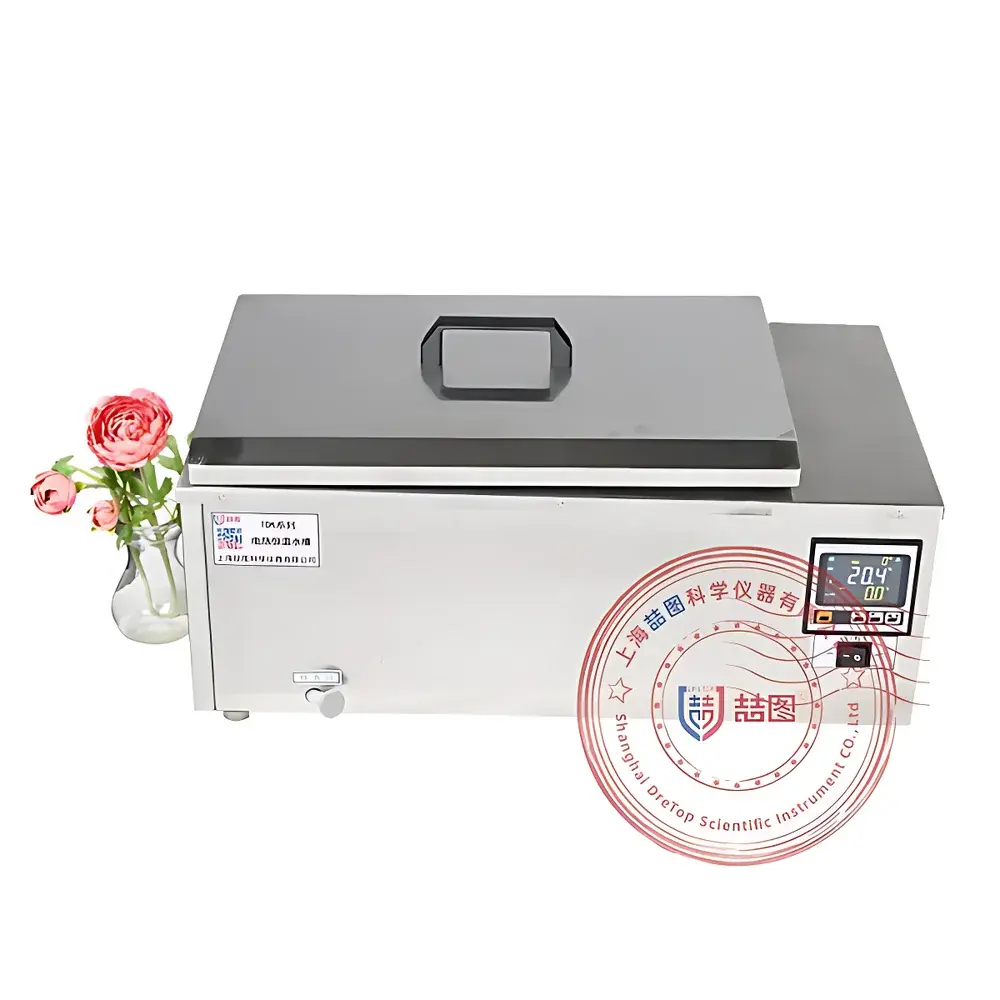
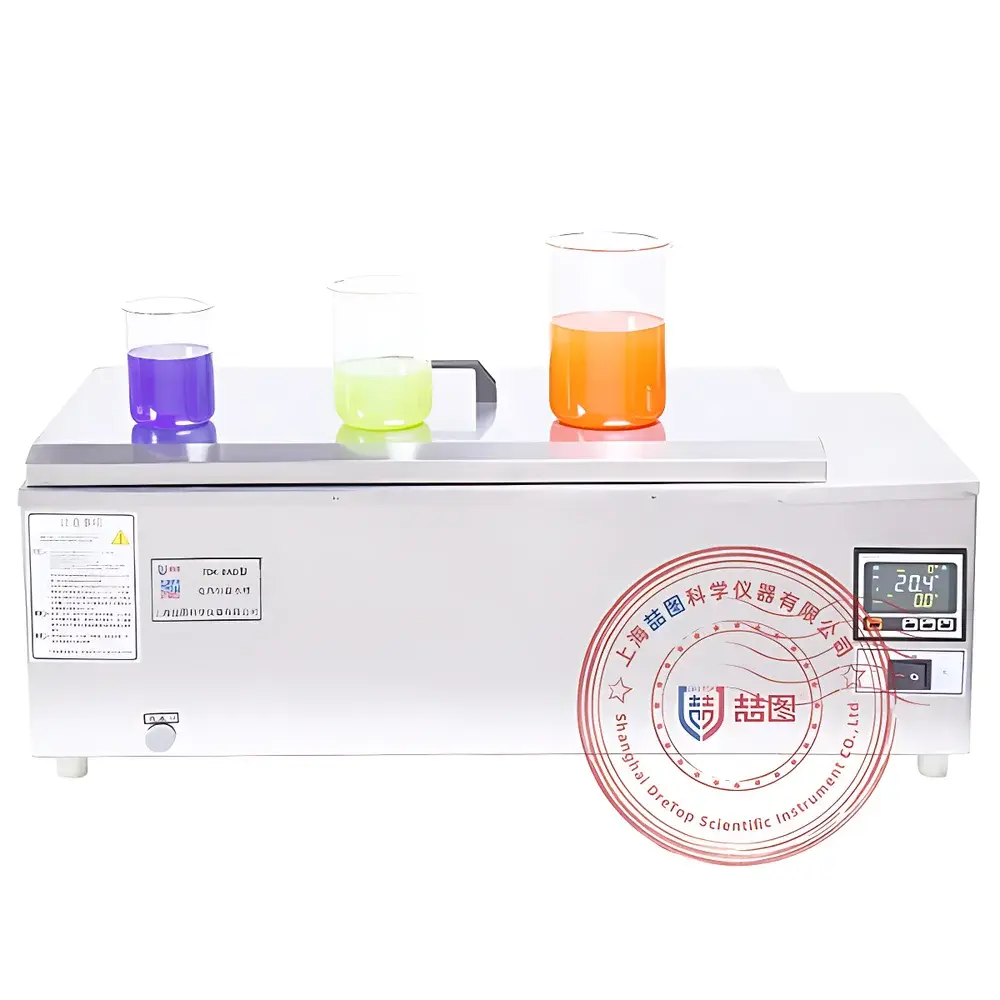
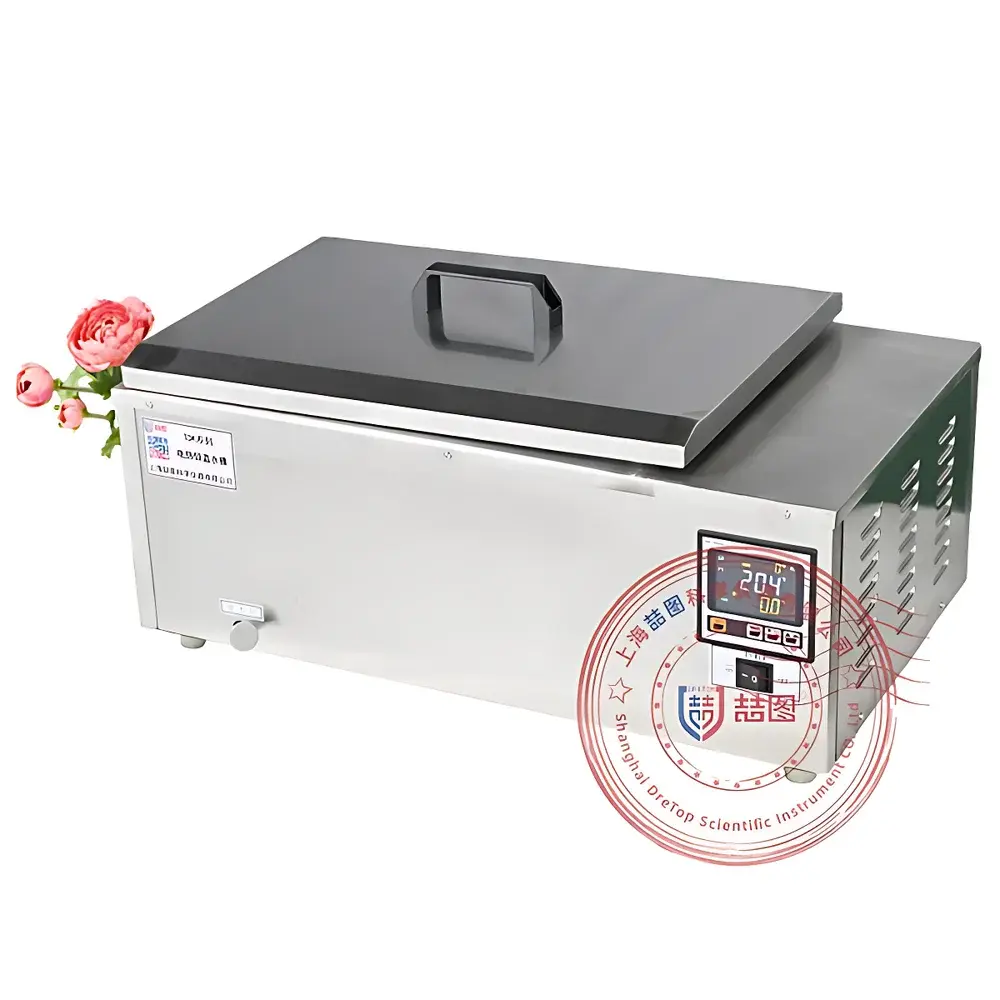
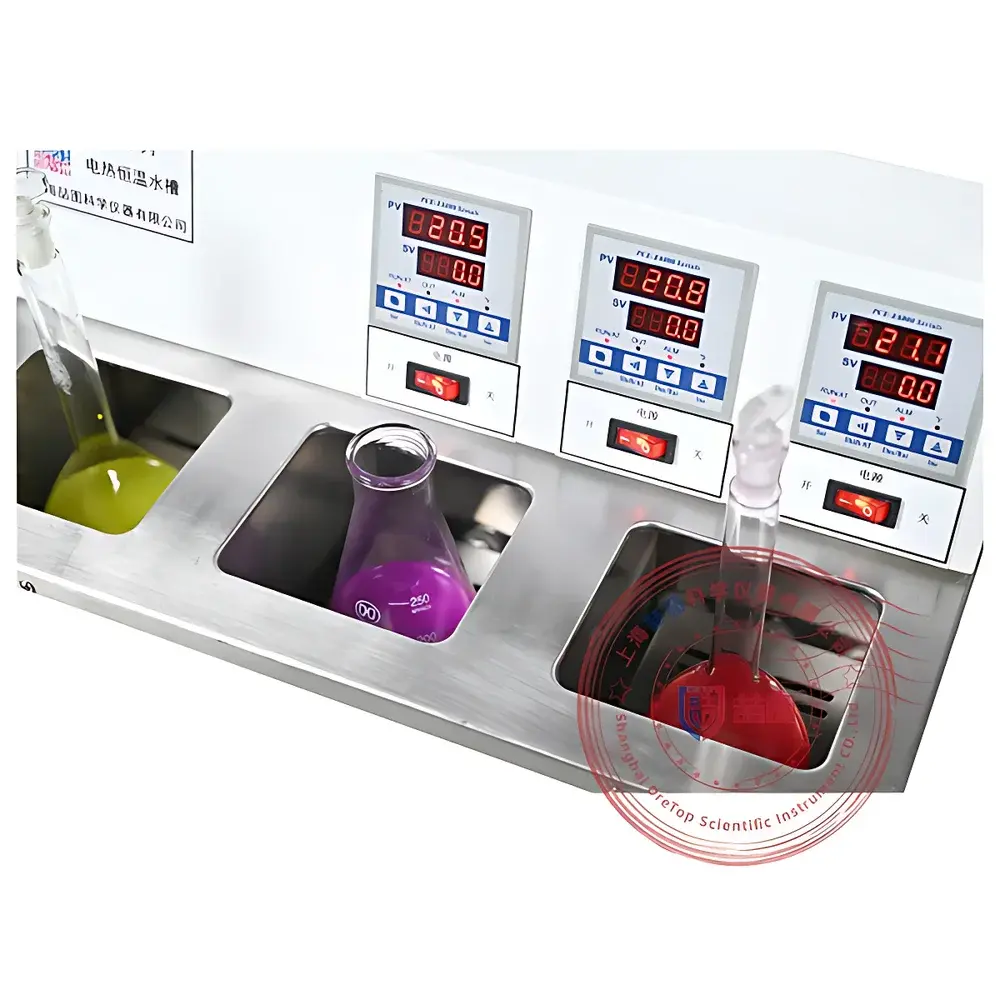
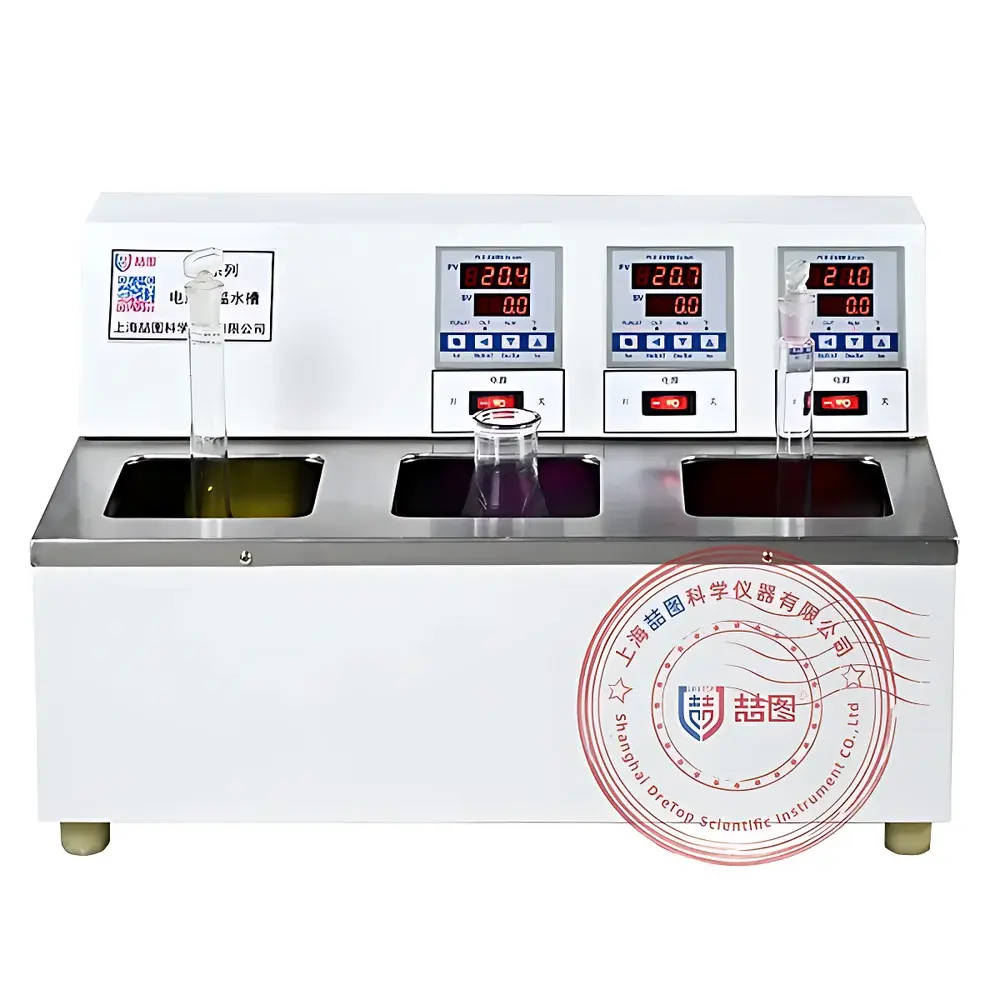
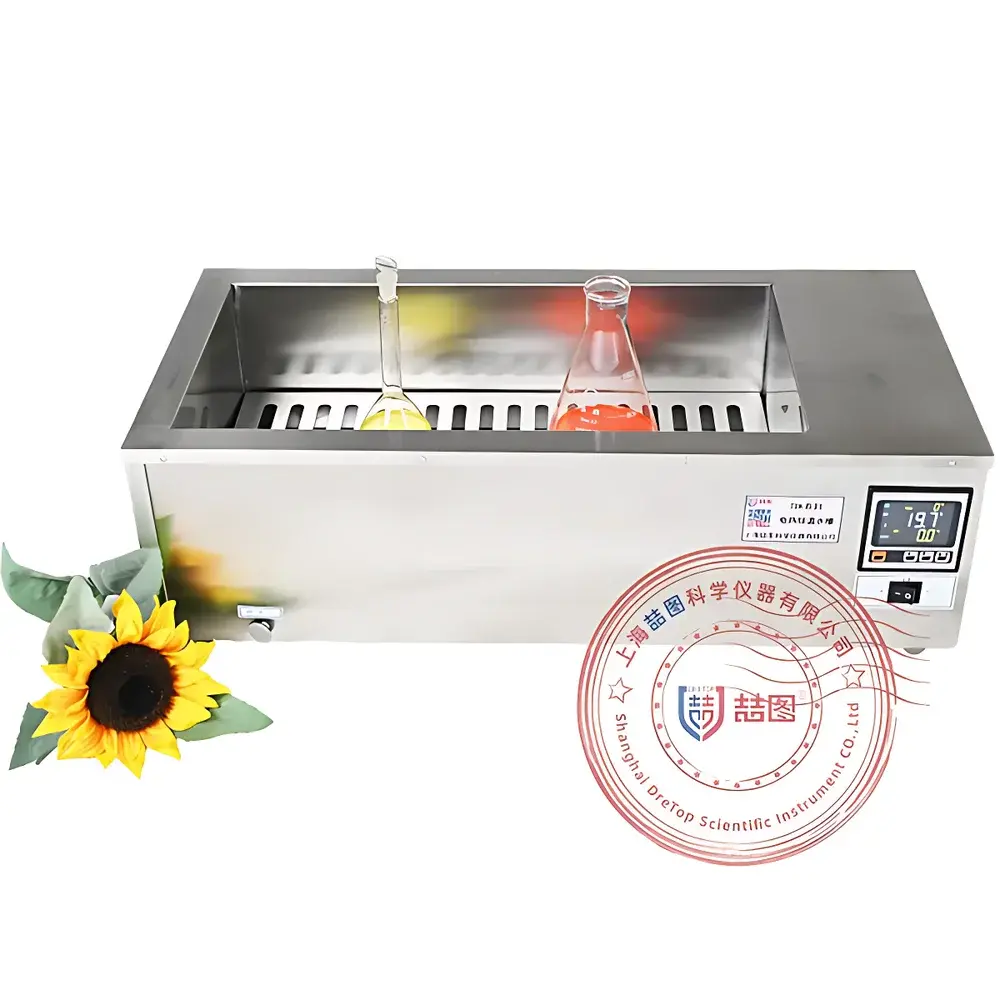
DRETOP TDK-360C-II Precision Circulating Water Bath
| Brand | DRETOP |
|---|---|
| Origin | Shanghai, China |
| Model | TDK-360C-II |
| Bath Volume | 360 L |
| Temperature Range | RT+5°C to 100°C |
| Temperature Resolution | 0.1°C |
| Control Mode | Heating-Only PID |
| Circulation Type | Internal Pump Circulation |
| Construction | 304 Stainless Steel Interior & Powder-Coated Cold-Rolled Steel Exterior |
| Insulation Thickness | 100 mm |
| Power Supply | AC 380 V |
| Internal Dimensions (W×H×D) | 1000 × 450 × 800 mm |
| External Dimensions (W×H×D) | 1200 × 955 × 1270 mm |
| Safety Features | Dry-run Protection, Over-Temperature Alarm, Auto-Recovery After Power Failure, Parameter Memory Retention |
Overview
The DRETOP TDK-360C-II is a high-capacity, precision-engineered circulating water bath designed for demanding laboratory and pilot-scale applications requiring stable, uniform thermal environments over extended durations. Operating on the principle of resistive heating combined with forced internal circulation, it maintains temperature homogeneity across its 360 L working volume via a sealed immersion heater and integrated centrifugal pump. Unlike basic static baths, this unit ensures minimal axial and radial thermal gradients—critical for reproducible sample conditioning in biological incubation, solvent evaporation, enzymatic reaction support, sterilization pre-heating, and jacketed reactor temperature control. Its robust architecture conforms to fundamental design expectations for Class I laboratory thermal equipment under ISO/IEC 17025-aligned environments, supporting traceable calibration practices and long-term operational stability in GLP-compliant workflows.
Key Features
- Microprocessor-based PID temperature controller with LED digital display, offering 0.1°C resolution and programmable timer functionality for unattended operation.
- High-sensitivity PT100 sensor integrated directly into the heating zone, enabling real-time feedback and dynamic power modulation for ±0.3°C typical stability (at 37°C, load-dependent).
- 304 stainless steel interior chamber and lid—electropolished and laser-cut with optimized perforation pattern—to enhance fluid dynamics, resist corrosion, and simplify decontamination.
- Triple-layer thermal insulation (100 mm mineral wool + vacuum-sealed air gap + reflective foil) minimizing heat loss and surface temperature rise during prolonged 100°C operation.
- Fail-safe dry-run protection system activated by submerged capacitive water-level sensor; automatically interrupts heating and triggers audible/visual alarm upon low-fluid detection.
- Over-temperature cut-off with independent mechanical thermostat backup, compliant with IEC 61000-4-2 ESD immunity requirements.
- Auto-recovery mode preserves setpoint and timer status after power interruption, eliminating manual reconfiguration in shared lab settings.
- Front-panel accessible quick-drain valve with EPDM sealing gasket, enabling rapid medium exchange without disassembly.
Sample Compatibility & Compliance
The TDK-360C-II accommodates standard laboratory glassware up to Ø300 mm diameter and supports immersion of external vessels, condenser coils, or jacketed reactors via its open-top configuration. It is compatible with deionized water, glycerol-water mixtures (up to 50% v/v), and low-viscosity silicone oils within its specified temperature range. The unit meets CE marking requirements for electromagnetic compatibility (EN 61326-1) and low-voltage safety (EN 61010-1). While not certified for medical device manufacturing per ISO 13485, its construction materials and control architecture align with general-purpose laboratory equipment standards referenced in ASTM E2500 (Verification of Pharmaceutical Equipment) and USP (Analytical Instrument Qualification). Routine calibration using NIST-traceable reference thermometers satisfies IQ/OQ documentation needs for regulated QC labs.
Software & Data Management
This model operates as a standalone analog-digital hybrid instrument without embedded data logging or network connectivity. All operational parameters—including setpoint, real-time bath temperature, elapsed time, and alarm status—are displayed locally on the front-panel LCD. For integration into centralized monitoring systems, optional analog 4–20 mA output (available upon request) enables connection to PLCs or SCADA platforms. Users performing validation per FDA 21 CFR Part 11 may implement external electronic loggers with audit-trail capability; the unit’s parameter memory retention and deterministic alarm behavior support ALCOA+ data integrity principles when paired with such peripherals.
Applications
- Precise pre-heating of culture media prior to autoclaving or filtration.
- Controlled evaporation of organic solvents during sample concentration (e.g., EPA Method 1664B lipid extraction).
- Thermal equilibration of reference standards in metrology laboratories.
- Temperature conditioning of calibration phantoms for infrared thermography validation.
- Support heating for jacketed chemical reactors during kinetic studies (e.g., Arrhenius parameter determination).
- Stabilization of optical components requiring thermal drift mitigation in spectroscopic setups.
- Warm-water acclimatization protocols in aquatic toxicology testing (OECD 202, 210).
FAQ
What is the recommended operating medium for optimal longevity?
Deionized or Type III purified water is strongly recommended. Tap water introduces scale-forming ions that accelerate heater degradation and impair sensor accuracy over time.
Can this bath be used with oil-based media?
Yes—silicone oils with flash points above 150°C are compatible up to 100°C; however, oil use requires verification of pump seal compatibility and increases cleaning frequency.
Is external refrigeration support available for sub-ambient operation?
The base TDK-360C-II is heating-only. Sub-zero capability requires retrofitting with an R-series chiller module (sold separately), which interfaces via dedicated coolant ports.
Does the unit include validation documentation?
Factory calibration certificates (as-found/as-left) are provided upon request. Full IQ/OQ protocol templates are available from DRETOP’s technical support team for GxP environments.
What maintenance intervals are advised?
Biannual inspection of heater element resistance, annual verification of water-level sensor response, and quarterly descaling (if non-purified water is used) constitute minimum preventive maintenance.



