
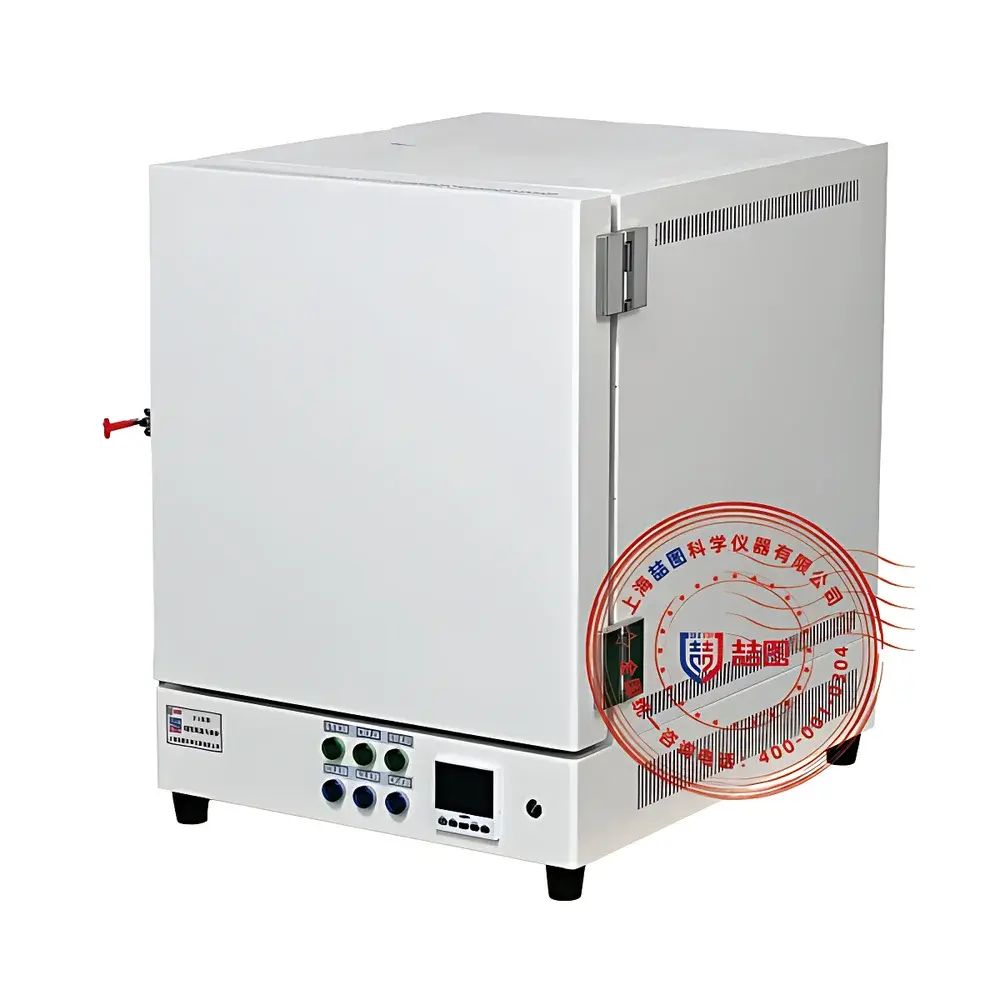
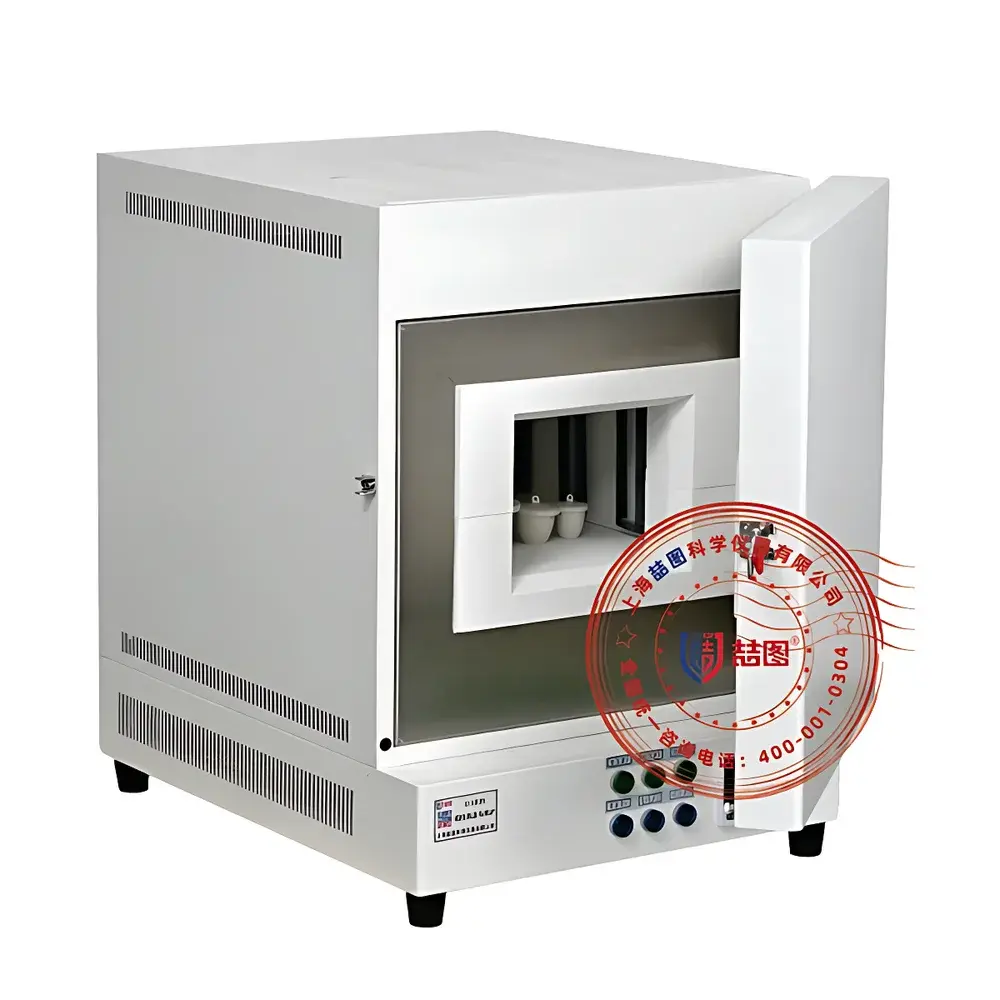
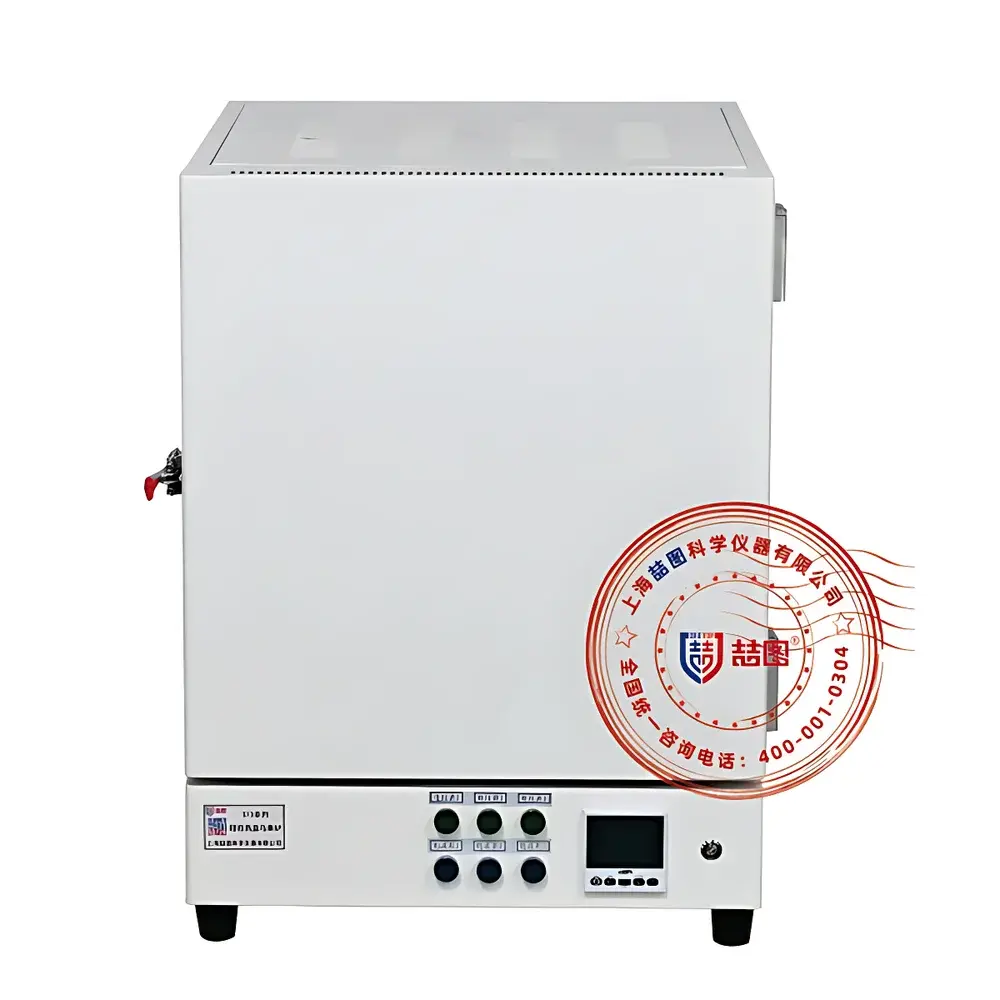
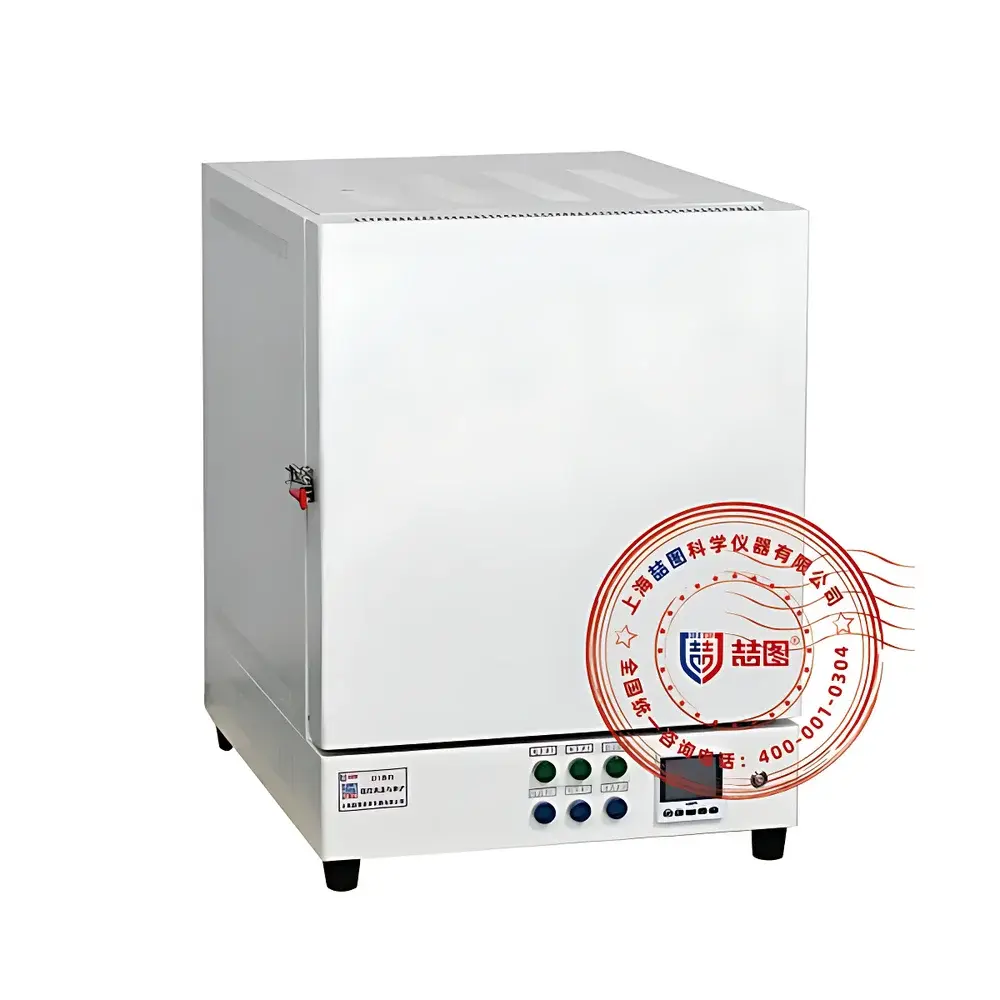
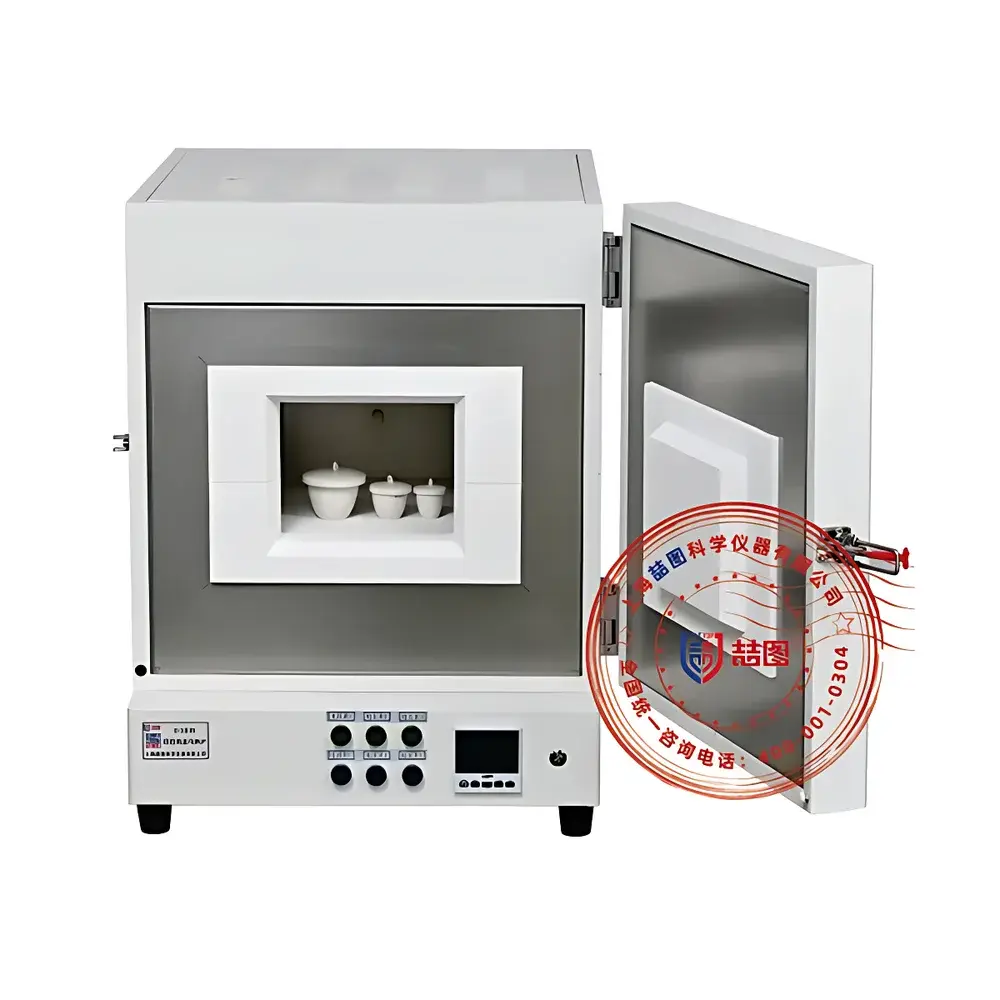
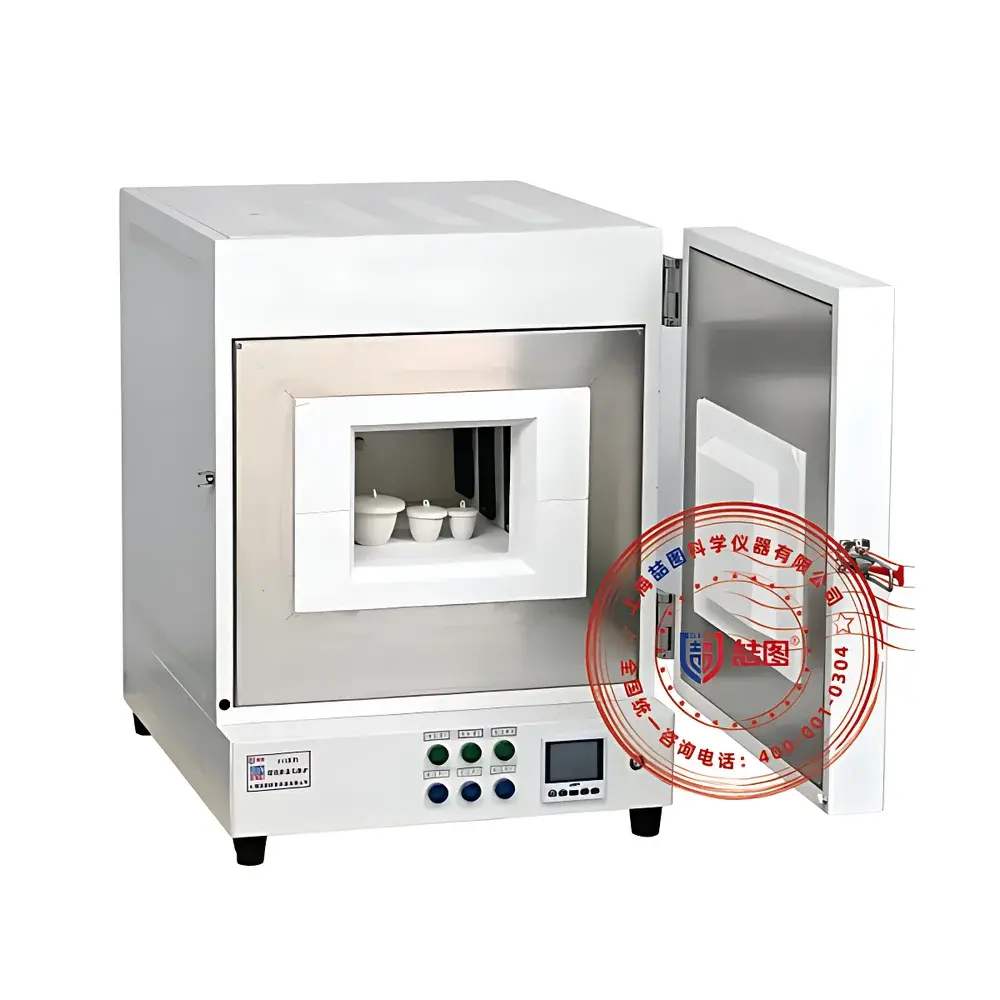
DRETOP S14-18PV-II Programmable High-Temperature Muffle Furnace
| Brand | DRETOP |
|---|---|
| Origin | Shanghai, China |
| Model | S14-18PV-II |
| Instrument Type | Box-Type Muffle Furnace |
| Max. Temperature | 1400 °C |
| Temperature Control Accuracy | ±1 °C |
| Max. Power | 10 kW |
| Heating Time to Max. Temp. | 60 min |
| Heating Element | Silicon Carbide Rods |
| Internal Chamber Dimensions (W×D×H) | 250 × 400 × 180 mm |
| Nominal Volume | 18 L |
| Control System | Programmable Digital Controller with Ramp/Soak Capability |
| Insulation Material | Vacuum-Microporous Ceramic Fiber Board |
| Heating Configuration | Triple-Wall Radiant Heating (Front, Back, Top) |
| Safety Features | Door-Interlocked Power Cut-off, Dual-Stage Overtemperature Alarm, Thermocouple Break Detection, Phase Loss Protection |
Overview
The DRETOP S14-18PV-II is a programmable high-temperature box-type muffle furnace engineered for precision thermal processing in research laboratories, quality control environments, and industrial R&D settings. It operates on the principle of resistive radiant heating using silicon carbide (SiC) rods embedded within triple-wall ceramic fiber insulation, ensuring uniform thermal distribution and minimal thermal inertia. Designed for applications requiring strict temperature reproducibility and programmable thermal profiles—including ashing, calcination, sintering, heat treatment, and thermal gravimetric pre-conditioning—the furnace complies with fundamental thermal process requirements outlined in ASTM E1113, ISO 8573-1 (for clean ambient operation), and USP and for pharmaceutical residue ash analysis. Its maximum operating temperature of 1400 °C enables full compatibility with refractory material testing, coal ash fusion studies per ASTM D1857, and ceramic phase transformation experiments.
Key Features
- Triple-wall radiant heating architecture with SiC rods mounted on front, back, and top furnace walls—optimized for axial and radial thermal symmetry and rapid heat recovery after door opening.
- Intelligent PID temperature controller with auto-tuning capability, real-time ramp/soak programming (up to 30 segments), and deviation-based alarm thresholds (±0.5 °C to ±5 °C user-selectable).
- Door-interlocked safety circuit: power supply to heating elements is automatically cut upon door opening; resumes operation only after door resealing and manual confirmation or configurable auto-resume mode.
- Vacuum-microporous ceramic fiber chamber lining (density: ~220 kg/m³), providing thermal conductivity 40% compared to traditional firebrick-lined units.
- Integrated voltage and current monitoring panel (AC 220 V / 380 V dual-voltage compatible), enabling real-time diagnostics of electrical load stability and early detection of element degradation or phase imbalance.
- Phosphate conversion coating + high-temp epoxy polyester powder coating on outer steel enclosure—resistant to thermal cycling-induced flaking and corrosion under laboratory humidity conditions (tested per ISO 9227 salt spray, 500 h).
Sample Compatibility & Compliance
The S14-18PV-II accommodates standard crucibles (alumina, silica, platinum, and graphite) up to Ø90 mm × 60 mm height, supporting ASTM C114 (cement chemical analysis), ASTM D3174 (ash content in coal), and ISO 1171 (determination of ash in solid mineral fuels). Its 18 L nominal chamber volume permits batch processing of up to 12 × 30 mL porcelain crucibles or single large-format samples (e.g., 200 g geological composites). The furnace meets GLP documentation prerequisites via optional RS485 Modbus RTU interface for audit-trail-capable data logging. Optional inert gas inlet (N₂/Ar, 0–10 L/min flow rate) enables controlled-atmosphere operations compliant with ISO 8573-3 (compressed air purity classes) and supports redox-sensitive sample treatments without oxidation artifacts.
Software & Data Management
While the base configuration features a 4.3″ monochrome LCD with tactile keypad navigation, the PV-II series supports field-upgradable integration with DRETOP’s THERMOSOFT v3.2 control suite via USB or RS485. This software provides full IEC 62443-aligned user role management (Operator, Technician, Administrator), electronic signature support per FDA 21 CFR Part 11 Annex 11, and automated report generation (PDF/CSV) including timestamped temperature curves, alarm logs, and power consumption summaries. All thermal profiles are stored with SHA-256 checksum integrity verification and support encrypted backup to network drives or local USB media.
Applications
- Environmental testing: Determination of loss on ignition (LOI), total organic carbon (TOC) combustion, and heavy metal stabilization in soil/sediment per EPA Method 3050B and ISO 11466.
- Pharmaceutical QC: Residue on ignition (ROI) testing per USP , excipient decomposition profiling, and catalyst recovery from active pharmaceutical ingredient (API) synthesis residues.
- Materials science: Sintering of ferrites and piezoceramics, annealing of thin-film substrates, and thermal aging studies of polymer composites per ISO 2578.
- Fuel analysis: Proximate analysis (moisture, volatile matter, fixed carbon, ash) of biomass, coal, and petcoke per ASTM D3172–D3176 and ISO 19577.
- Academic research: Solid-state reaction kinetics, phase diagram mapping, and thermogravimetric calibration reference furnace applications.
FAQ
What thermocouple type is used for temperature sensing?
Type S (Platinum/Rhodium 10%) thermocouples are factory-installed, certified to ITS-90 traceability with NIST-traceable calibration certificate (optionally available with UKAS accreditation).
Is the furnace suitable for vacuum or reduced-pressure operation?
No—this model is designed exclusively for atmospheric or inert-gas-purged operation. Vacuum compatibility requires structural reinforcement and specialized sealing; consult DRETOP’s V-series furnaces for such applications.
Can the controller store multiple thermal programs?
Yes—the internal memory retains up to 16 independent ramp/soak programs (30 segments each), with password-protected editing and version-stamped archival via USB export.
What maintenance intervals are recommended for silicon carbide heating elements?
Under continuous operation at ≤1300 °C, SiC rods typically maintain rated performance for ≥3000 h; visual inspection every 500 h and resistance measurement every 1000 h are advised per IEC 60519-12.
Does the unit comply with electromagnetic compatibility (EMC) directives?
Yes—certified to EN 61326-1:2013 (industrial environment) and EN 55011:2016 Class B emission limits, with conducted/radiated immunity tested per EN 61000-4-2/3/4/6.



