
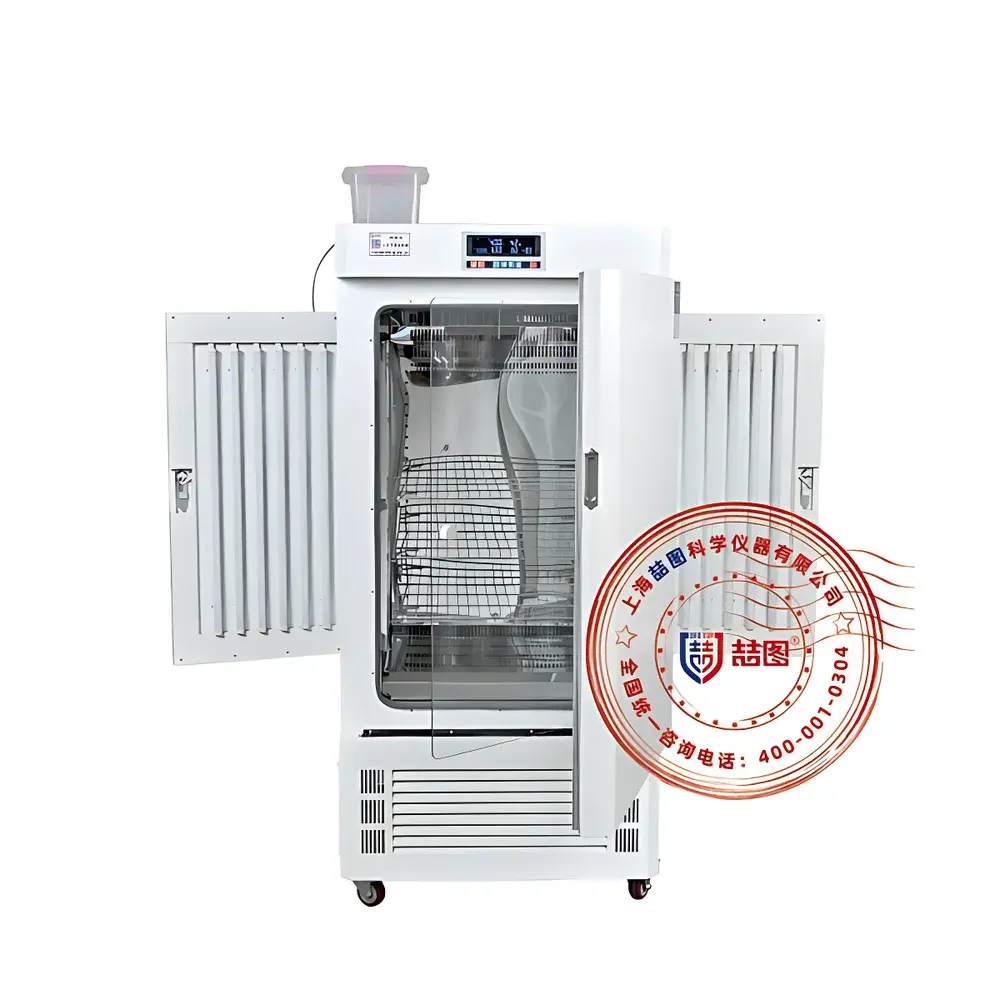
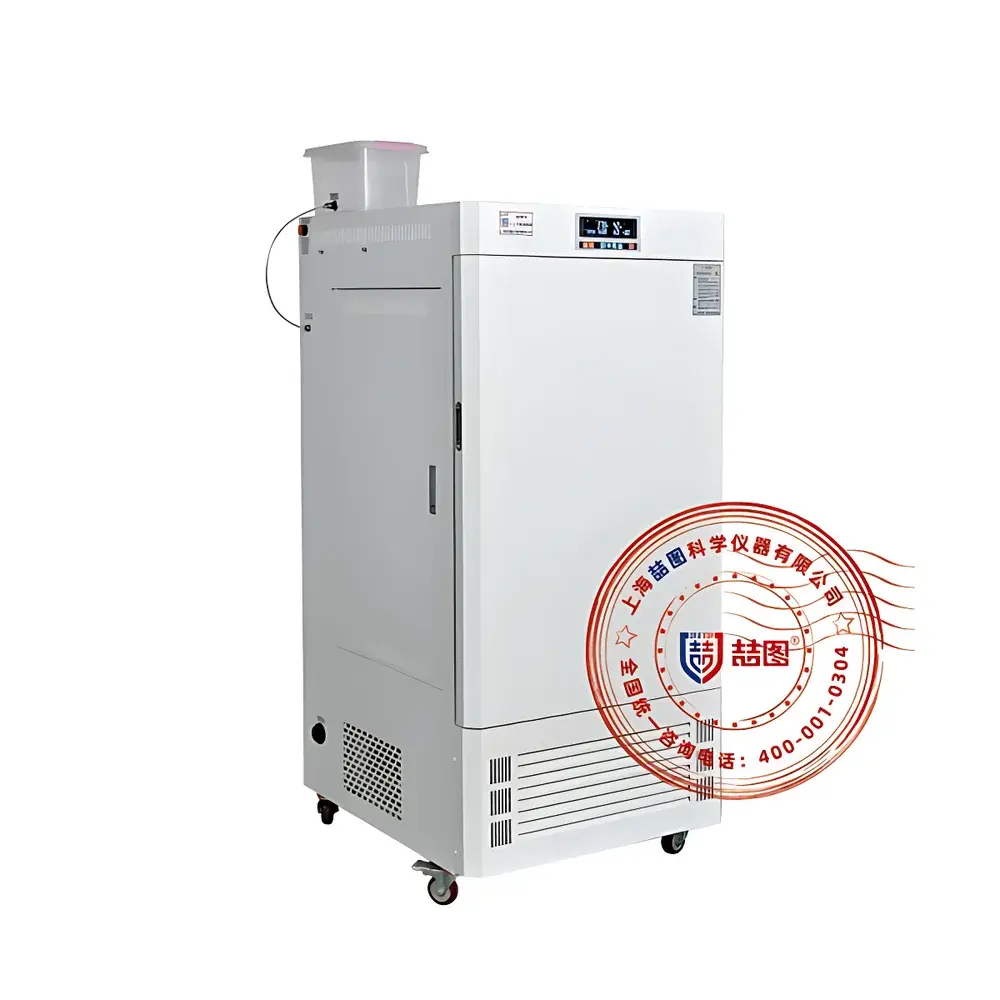
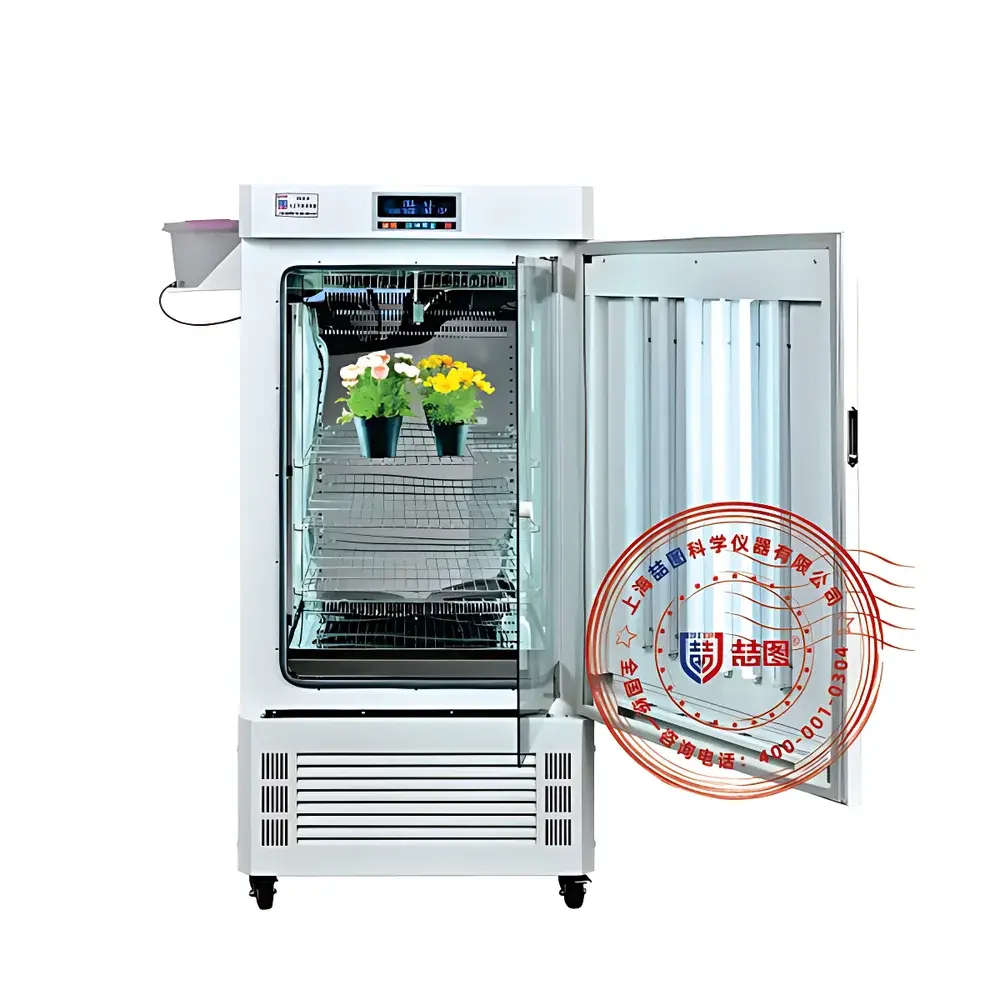
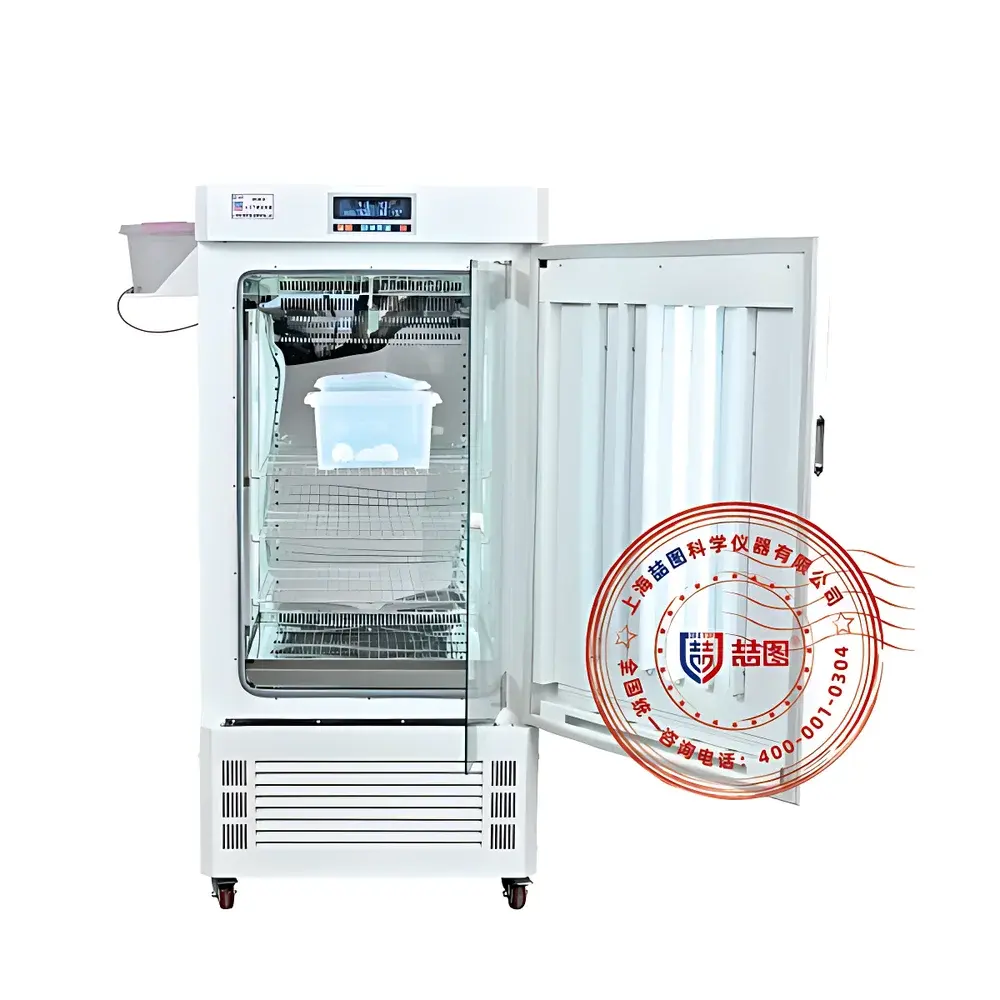
DRETOP ZRQ.CP-FZ1000 Multi-Function Artificial Climate Chamber
| Brand | DRETOP |
|---|---|
| Origin | Shanghai, China |
| Model | ZRQ.CP-FZ1000 |
| Temperature Range | 0–60 °C (0–50 °C without illumination |
| Temperature Uniformity | ±0.5 °C |
| Humidity Range | 30–95 % RH |
| Humidity Accuracy | ±3–5 % RH |
| Capacity | 1000 L |
| Illumination Type | Full-spectrum LED |
| Illumination Intensity | 0–25,000 lx (triple-side, 0–100 level dimmable) |
| Control Interface | Color Touchscreen Controller |
| Power Supply | AC 220 V / 380 V, 50 Hz |
| Input Power | 5500 W |
Overview
The DRETOP ZRQ.CP-FZ1000 Multi-Function Artificial Climate Chamber is a precision-engineered environmental simulation system designed for reproducible, long-term biological and ecological research under tightly controlled temperature, humidity, and photoperiodic conditions. Based on the principle of active thermoelectric and refrigerant-based climate regulation—combined with microprocessor-driven PID feedback loops for temperature and humidity—the chamber delivers stable, uniform environmental profiles across its 1000 L working volume. Its integrated full-spectrum LED lighting system enables spectral tuning and intensity control to emulate natural diurnal cycles or induce specific photomorphogenic responses. The unit complies with fundamental operational requirements for GLP-compliant plant physiology studies, microbial culture stability testing, BOD incubation per ISO 5815-1, and developmental biology protocols requiring defined light–temperature–humidity coupling.
Key Features
- Triple-mode operation: fixed-setpoint, day/night cycling, and 30-segment programmable sequences—enabling complex environmental profiles over days or weeks without manual intervention
- High-fidelity climate control: ±0.5 °C temperature uniformity and ±3–5 % RH accuracy maintained via balanced PID algorithms, nickel-chromium heating elements, and R134a-free refrigeration circuitry
- Full-spectrum LED illumination system: 0–25,000 lx output with 0–100 level continuous dimming; configurable red/blue ratios (4:1 to 9:1) optimized for photobiological applications including seed germination, tissue culture, and phototropism assays
- Dual-door architecture with tempered glass inner door and nano-composite magnetic seal—minimizing thermal leakage during observation while preserving internal gradient integrity
- Stainless steel interior chamber (304 grade), adjustable stainless steel shelving, and rounded internal corners for full cleanability and autoclave-compatible decontamination
- Intelligent safety architecture: power-loss memory retention, dual-stage over-temperature alarm, compressor runtime protection (start-delay & stop-interval logic), and automatic defrost cycle management
Sample Compatibility & Compliance
The ZRQ.CP-FZ1000 accommodates diverse biological specimens—from Petri dishes and multi-well plates to potted seedlings, insect rearing trays, and aquatic microcosms—within its 1050 × 590 × 1650 mm stainless steel chamber. Its design supports standard ICH Q5C stability testing envelopes and aligns with core requirements of ISO 17025-accredited laboratories for environmental parameter traceability. While not certified to UL/EN 61010-1 out-of-the-box, the unit incorporates Class II insulation, grounded chassis construction, and overcurrent protection suitable for routine academic and industrial bioscience use. It meets essential functional criteria for ASTM E1826 (BOD incubation), USP (controlled environment storage), and OECD 208 (terrestrial plant toxicity testing) when operated within specified parameter boundaries.
Software & Data Management
The embedded color touchscreen controller logs real-time temperature, humidity, illumination intensity, and operational status with timestamped records stored internally (≥30 days at 1-min intervals). Data export is supported via USB interface in CSV format for downstream analysis in MATLAB, Python, or LIMS platforms. The controller implements audit-trail functionality—including user login tracking, parameter change logging, and alarm event timestamps—facilitating basic 21 CFR Part 11 readiness when paired with institutional electronic signature policies. Remote monitoring is achievable via optional RS485 Modbus RTU integration into building management systems (BMS) or centralized lab infrastructure.
Applications
- Plant science: Photoperiod-controlled germination, vernalization studies, stress response phenotyping (drought, heat, low-light), and controlled-environment propagation of medicinal species (e.g., Dendrobium officinale)
- Microbiology: Aerobic/anaerobic culture maintenance, fungal sporulation assays, and standardized BOD5 incubation per ISO 5815-1
- Entomology & aquaculture: Insect life-cycle synchronization, larval rearing under species-specific thermal-hygric regimes, and algal growth optimization
- Biotechnology: Stem cell differentiation support, 3D organoid maturation under dynamic light cues, and biopolymer degradation kinetics under simulated field conditions
- Environmental toxicology: OECD 208 and 227 test guideline execution for terrestrial and aquatic endpoints requiring precise climatic replication
FAQ
What is the maximum sustained operating temperature when illumination is active?
The chamber maintains up to 65 °C under illumination and up to 50 °C in dark mode—ensuring compatibility with thermophilic culture protocols and accelerated aging studies.
Can the LED spectrum be customized beyond standard red/blue ratios?
Yes. Optional spectral configurations—including narrowband violet (405 nm), green (525 nm), and white (6500 K) channels—are available as factory-configured modules for specialized photobiological investigations.
Is the unit suitable for GMP-regulated stability storage?
While the ZRQ.CP-FZ1000 provides high repeatability and data logging, formal GMP compliance requires site-specific IQ/OQ/PQ validation, environmental mapping, and integration with qualified backup power and alarm escalation systems.
How is humidity calibrated and verified?
Relative humidity sensors are pre-calibrated at factory using saturated salt solutions (e.g., MgCl₂, NaCl, KNO₃) per ISO 4618. Users may perform field verification using NIST-traceable hygrometers; drift compensation is accessible via service menu.
What maintenance intervals are recommended for long-term reliability?
Compressor oil and refrigerant charge require inspection every 24 months; condenser coil cleaning every 6 months; and LED driver thermal paste replacement every 48 months under continuous operation.





