
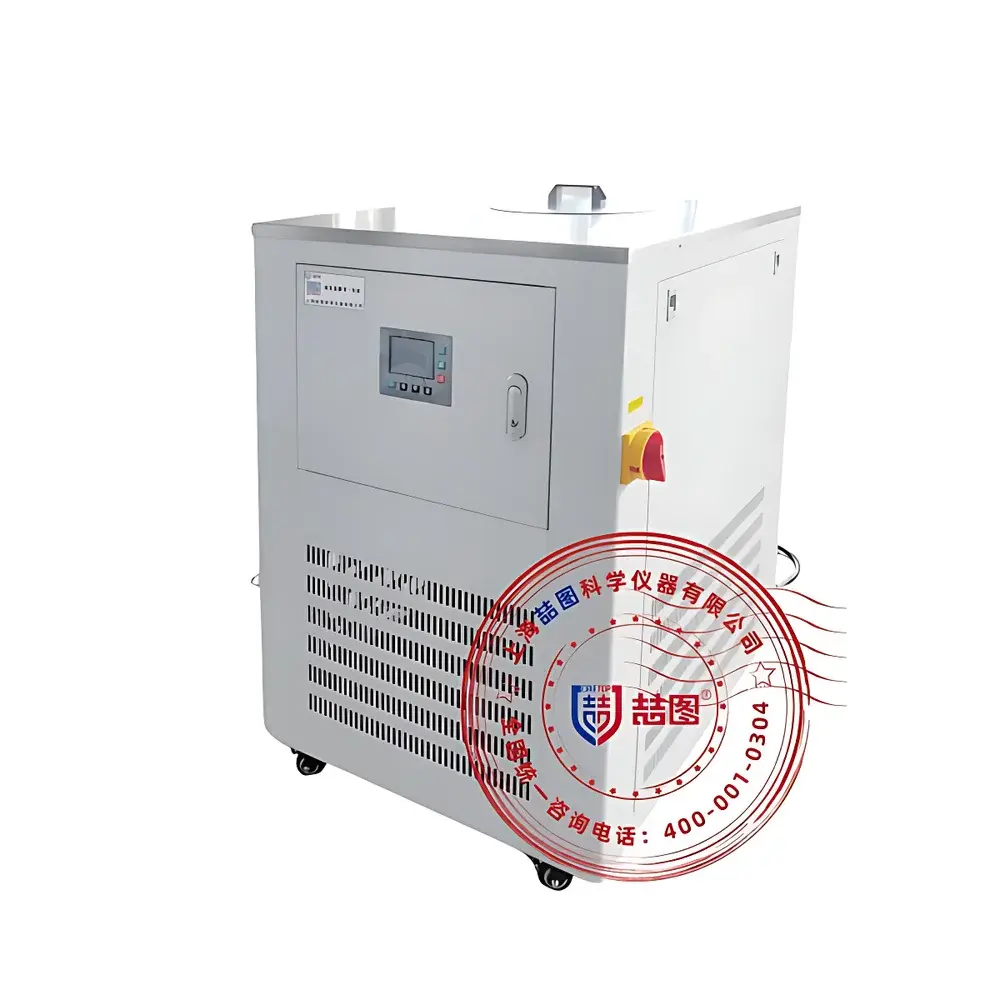
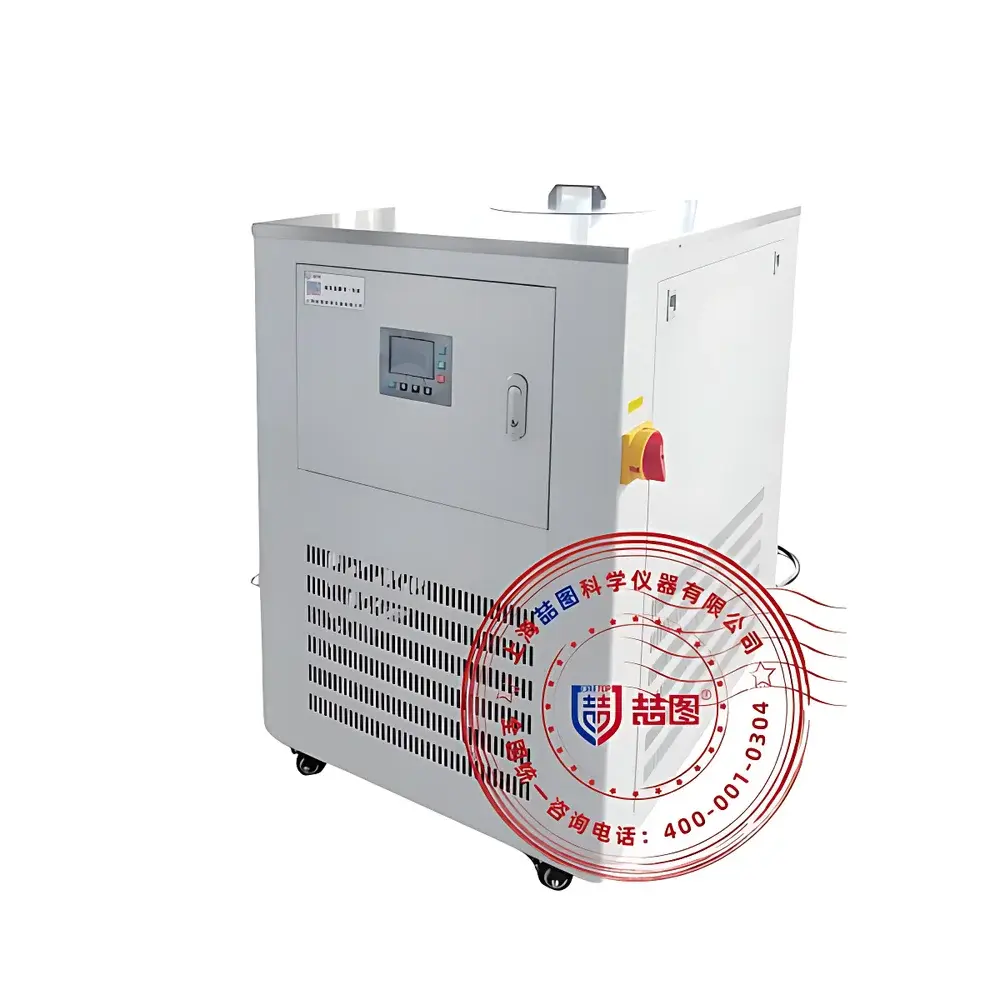
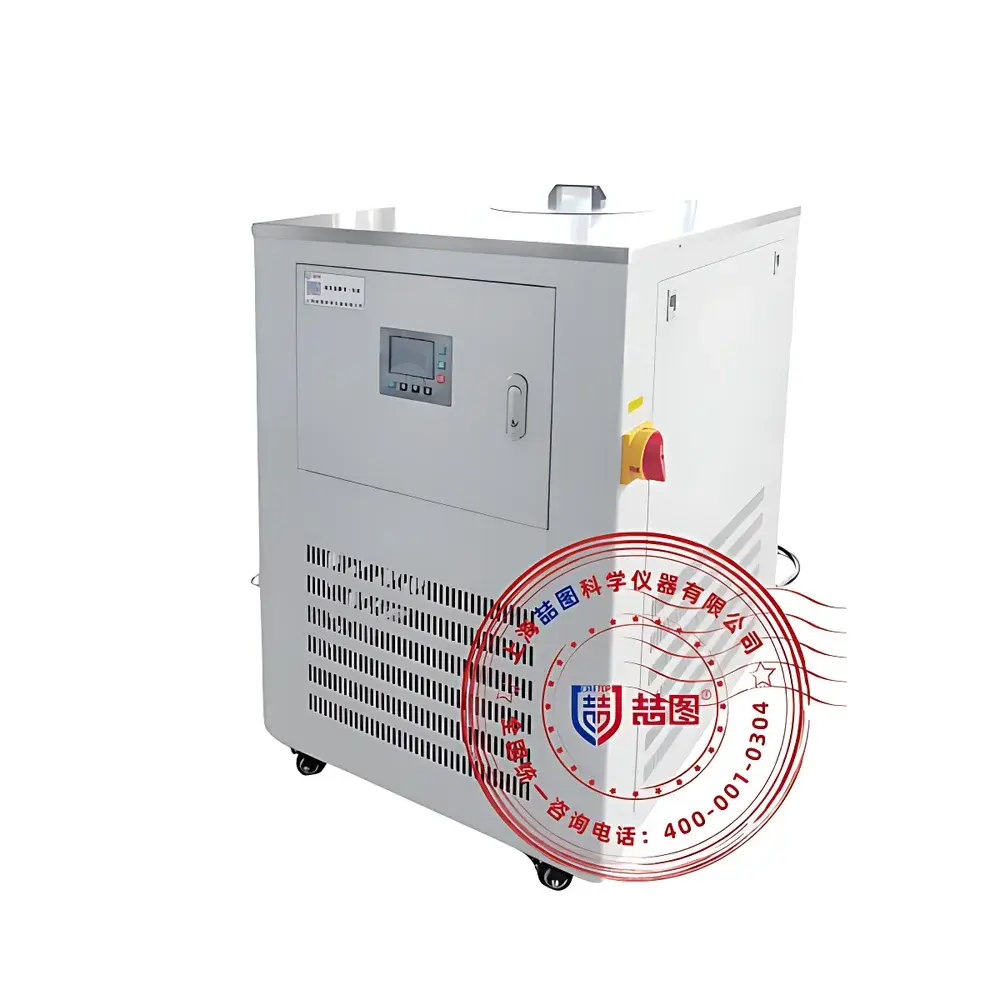
DRETOP HLX-10-80 Integrated High-Low Temperature Circulating Chiller
| Brand | DRETOP |
|---|---|
| Origin | Shanghai, China |
| Model | HLX-10-80 |
| Type | Integrated Circulating Chiller |
| Cooling Method | Water-Cooled |
| Temperature Range | −80 °C to 200 °C |
| Temperature Stability | ±1 °C |
| Reservoir Volume | 10 L |
| Circulation Flow Rate | 20 L/min |
| Pump Head | 10–12 m |
| Circulation Port Diameter | φ10 mm (stainless steel quick-connect fitting) |
| Operating Mode | Continuous |
| Construction | Stainless Steel Inner Tank & Work Surface |
| Control System | PID-Based Digital Temperature Controller with RS485 Interface |
| Safety Features | Over-Temperature, Low-Level, Leak, Short-Circuit, and Pressure Monitoring |
| Ingress Protection Rating | IP54 |
Overview
The DRETOP HLX-10-80 Integrated High-Low Temperature Circulating Chiller is a precision-engineered thermal management system designed for laboratory and industrial applications requiring stable, bidirectional temperature control across an exceptionally wide operational range—from cryogenic −80 °C to elevated 200 °C. Unlike conventional single-mode chillers or bath units, the HLX-10-80 integrates refrigeration, electric heating, high-efficiency circulation, and closed-loop temperature regulation into a single robust platform. Its thermodynamic architecture employs a dual-stage cascade refrigeration system coupled with variable-speed inverter-driven compressors and immersed tubular electric heaters—enabling rapid, energy-efficient transitions between extreme setpoints while maintaining tight thermal uniformity. The unit circulates heat-transfer media—including water, aqueous glycol mixtures, silicone oil, or specialized low-temperature fluids—through external equipment (e.g., reactors, spectroscopic cells, vacuum deposition chambers) or directly within its integrated stainless-steel reservoir for immersion-based experiments. This makes it suitable for applications demanding both dynamic ramping and long-term isothermal stability under continuous operation, including material characterization, catalytic reaction profiling, semiconductor laser diode thermal management, and high-fidelity thermal cycling validation per ASTM E1545 and ISO 11357 standards.
Key Features
- PID-controlled digital temperature regulation with real-time feedback from high-stability platinum RTD sensors (Class A tolerance), delivering ±1 °C setpoint accuracy and minimal overshoot during thermal transients.
- Integrated dual-mode thermal actuation: inverter-driven compressor refrigeration for efficient sub-zero cooling and optimized tubular electric heating for precise, uniform warming up to 200 °C.
- High-capacity, corrosion-resistant stainless-steel reservoir (10 L volume) with seamless welds and electropolished interior surface to prevent microbial growth and fluid degradation.
- Low-noise, magnetically coupled circulation pump rated for continuous duty at 20 L/min flow and 10–12 m head; thermally isolated from the reservoir to eliminate self-heating artifacts.
- RS485 serial interface compliant with Modbus RTU protocol, enabling integration into centralized lab automation systems for remote monitoring, data logging, and audit-trail generation aligned with FDA 21 CFR Part 11 requirements.
- IP54-rated enclosure with reinforced insulation, condensate management tray, and redundant safety interlocks—including over-temperature cutoff, low-fluid-level shutoff, leak detection circuitry, and pressure-sensing shutdown.
Sample Compatibility & Compliance
The HLX-10-80 supports a broad spectrum of heat-transfer media validated for compatibility across its full temperature span: deionized water (0–100 °C), 30–50% ethylene glycol/water blends (−40 °C to 120 °C), silicone oils (−50 °C to 200 °C), and specialty fluorinated fluids for ultra-low-temperature operation. All wetted components—including tubing, fittings, pump housing, and reservoir—are fabricated from AISI 316 stainless steel or PTFE-lined equivalents to ensure chemical inertness against organic solvents, acids, and bases encountered in pharmaceutical synthesis, electrochemical testing, or metallurgical purification. The system conforms to IEC 61010-1:2010 for electrical safety in laboratory equipment and meets CE marking requirements for EMC and low-voltage directives. Optional GLP/GMP-compliant software packages support electronic signature, user access control, and time-stamped event logs traceable to ISO/IEC 17025 calibration protocols.
Software & Data Management
The embedded controller provides local touchscreen operation with intuitive menu navigation, multi-segment ramp-soak programming, and real-time graphical display of temperature vs. time curves. Via the RS485 port, users can deploy third-party SCADA platforms (e.g., LabVIEW, MATLAB, or custom Python-based dashboards) to acquire timestamped temperature, flow rate, compressor frequency, and heater power data at configurable intervals (1 s to 60 min resolution). All communication sessions are authenticated, and configuration changes are logged with operator ID and timestamp. Optional DRETOP ThermalLink™ software extends functionality with automated report generation (PDF/CSV), alarm escalation via email/SMS, and trend analysis tools supporting statistical process control (SPC) charting—essential for quality assurance workflows in regulated environments.
Applications
- Chemical synthesis requiring sequential low-temperature addition (e.g., −30 °C Grignard initiation) followed by elevated-temperature reflux (e.g., 110 °C esterification) without equipment changeover.
- Thermal stress testing of advanced materials (polymers, composites, battery electrolytes) per ASTM D696, ISO 11359, and IPC-TM-650 2.6.7.
- Cooling of high-power optoelectronic devices—including quantum cascade lasers, fiber amplifiers, and photodetectors—where junction temperature must remain within ±0.5 °C of setpoint under varying load conditions.
- Controlled-rate freezing of biological samples (e.g., cell lines, tissue constructs) using programmable cooling profiles compliant with USP and ISO 20367.
- Temperature conditioning of analytical instrumentation such as HPLC column ovens, GC detectors, and FTIR sample compartments where ambient drift compromises measurement repeatability.
- Process-scale thermal management for jacketed reactors, crystallizers, and thin-film coating systems operating under vacuum or inert atmosphere.
FAQ
What types of heat-transfer fluids are compatible with the HLX-10-80 across its full −80 °C to 200 °C range?
Silicone oils (e.g., DC200 series) and synthetic hydrocarbon-based fluids (e.g., Marlotherm SH, Therminol VP-1) are recommended for the full range. Ethylene glycol/water mixtures are suitable down to −40 °C; for lower temperatures, specialized low-viscosity fluorinated fluids must be selected and verified for pump compatibility.
Does the unit support external temperature feedback for cascade control?
Yes—the RS485 interface allows connection to external PT100 or thermocouple sensors mounted on the target device (e.g., reactor wall), enabling master-slave control configurations that prioritize process temperature over bath temperature.
Is the HLX-10-80 suitable for use in cleanroom or GMP environments?
With optional HEPA-filtered air intake, non-shedding internal gasketing, and validation documentation (IQ/OQ protocols), the unit meets ISO 14644-1 Class 7 cleanroom requirements and supports GMP Annex 1 thermal mapping activities.
Can the circulation pump operate dry without damaging the system?
No—the pump includes automatic dry-run protection triggered by flow interruption or low-level detection; sustained operation without fluid will initiate immediate shutdown and visual/audible alarms.
What maintenance intervals are recommended for optimal long-term performance?
Compressor oil and refrigerant levels should be verified annually; filter-drier cartridges require replacement every 24 months; and the reservoir interior should be cleaned with isopropyl alcohol and dried thoroughly before refilling with new fluid—especially after switching media types.



