
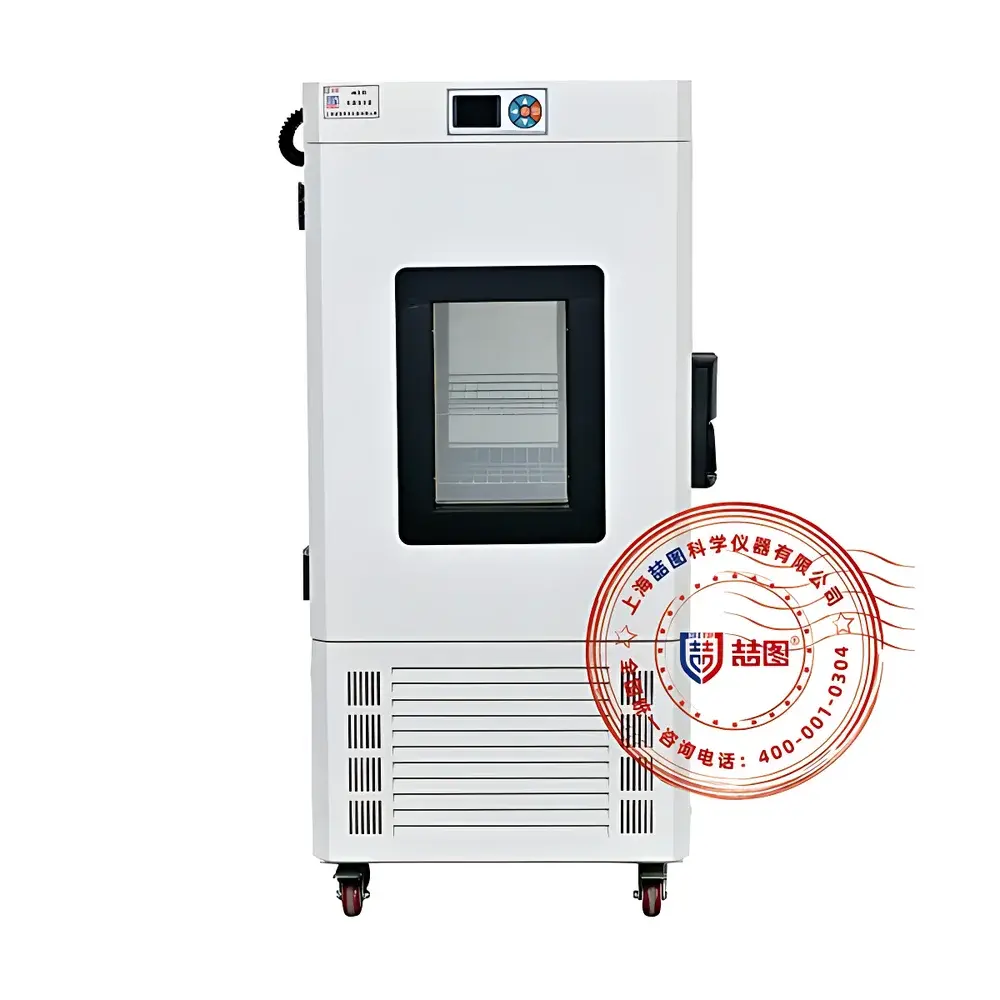
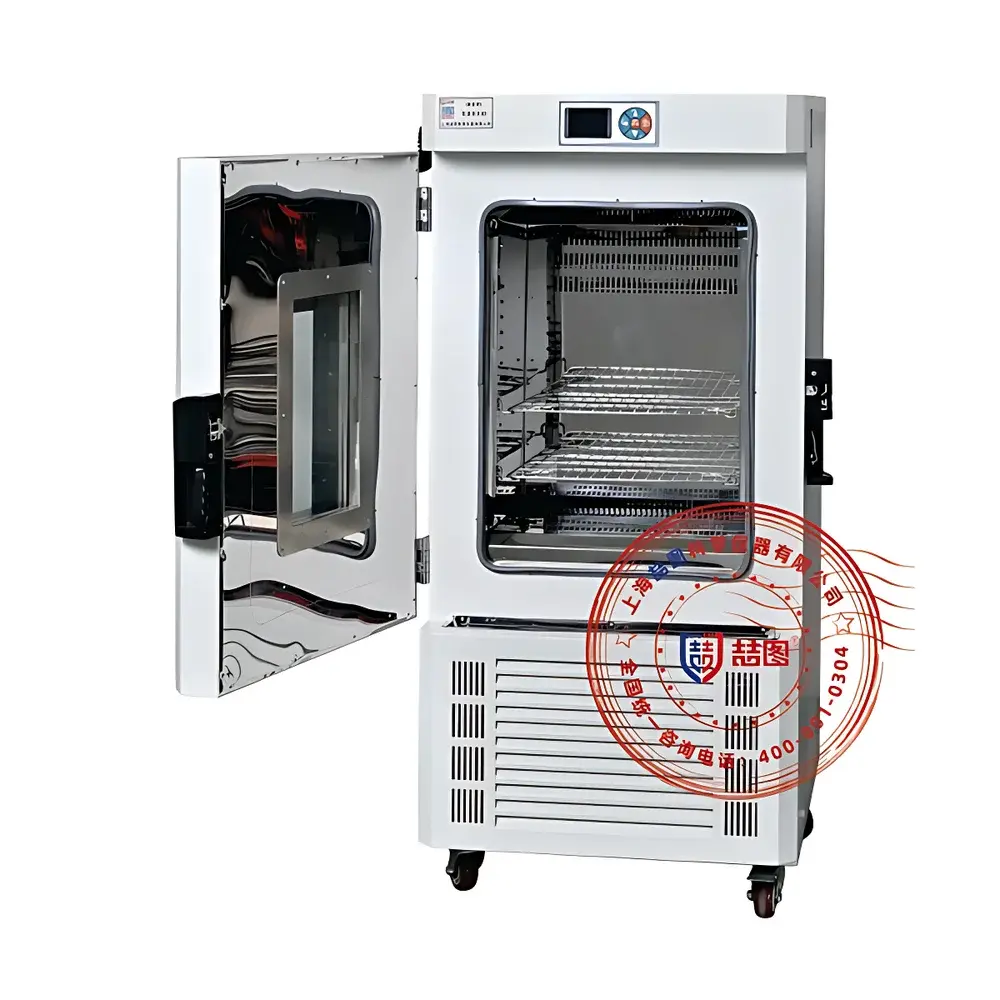
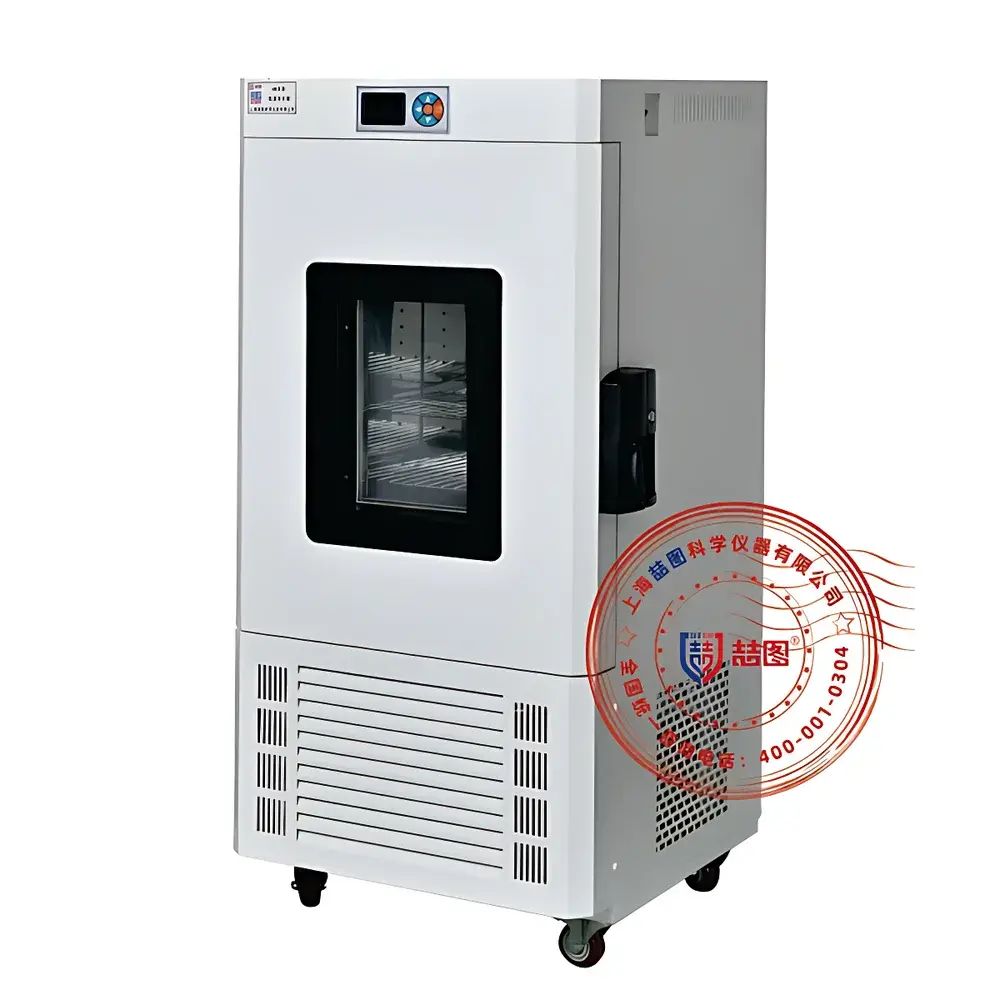
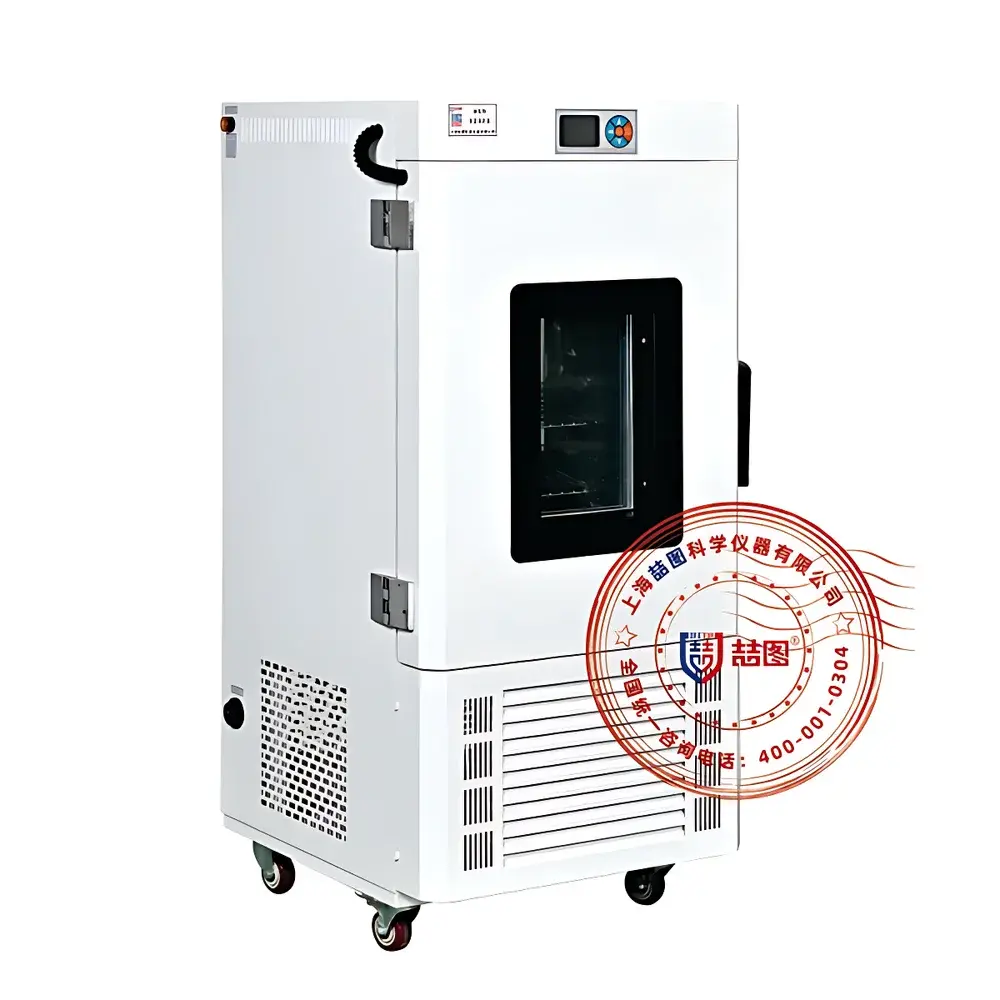
DRETOP DW-250CL Low Temperature Incubator
| Brand | DRETOP |
|---|---|
| Origin | Shanghai, China |
| Model | DW-250CL |
| Refrigeration Type | Compressor-based |
| Temperature Range | −10 °C to +65 °C |
| Temperature Uniformity | ±0.5 °C |
| Capacity | 250 L |
| External Dimensions (W×D×H) | 850 mm × 930 mm × 1810 mm |
| Power Supply | AC 220 V, 50 Hz |
| Input Power | 3000 W |
| Temperature Resolution | 0.1 °C |
| Observation Window | Embedded, with anti-fog heating |
| Test Port | 25 mm diameter, stainless steel plug included |
| Interior Material | Stainless steel chamber with adjustable, removable shelves |
| Door Lock | Key-operated mechanical lock |
| Safety Features | Over-temperature alarm, power failure recovery, parameter memory, compressor delay start/stop protection |
| Air Circulation | Optimized laminar airflow via axial fan and engineered internal ducting |
| Refrigerant | CFC-free, environmentally compliant refrigerant (R134a or equivalent) |
Overview
The DRETOP DW-250CL Low Temperature Incubator is a precision-engineered environmental chamber designed for stable, reproducible temperature control across a broad operational range of −10 °C to +65 °C. Built upon a robust compressor-based refrigeration architecture, it delivers high thermal stability (±0.5 °C fluctuation) and uniformity—critical for applications demanding strict thermal consistency, including microbial culture maintenance, pharmaceutical stability testing, biobanking of reagents, low-temperature material conditioning, and electronic component reliability evaluation. Unlike ambient-only or Peltier-cooled units, the DW-250CL employs a high-efficiency hermetic compressor paired with an optimized heat exchange system and CFC-free refrigerant (R134a or equivalent), enabling reliable sub-zero operation without condensation-induced chamber degradation. Its 250 L working volume accommodates standard ISO-compliant shelving configurations while maintaining laminar air distribution through a calibrated axial fan and integrated baffle-guided airflow path—ensuring minimal vertical/horizontal gradients (<0.8 °C deviation across load) per IEC 61000-4-11 validation practices.
Key Features
- Microprocessor-based P.I.D. temperature controller with 0.1 °C resolution, real-time display of setpoint, actual temperature, and elapsed time; programmable over-temperature cut-off with audible/visual alarm.
- Stainless steel interior chamber (304 grade) with fully removable, height-adjustable shelves—enabling thorough cleaning, autoclave-compatible decontamination, and flexible sample layout.
- Double-layer insulated door with embedded anti-fog heated observation window (standard); prevents moisture accumulation during low-temperature operation and maintains optical clarity for non-intrusive monitoring.
- Mechanically keyed door lock system—prevents unauthorized access and accidental opening during critical experiments, supporting GLP/GMP-aligned workflow integrity.
- Four-point leveling base with dual-mode mobility: swivel casters (locking) + independent adjustable feet—ensures both positional flexibility and vibration-dampened stability on uneven laboratory floors.
- Compressor protection suite: automatic delay-on-start (≥3 min), inter-cycle pause (≥5 min), and self-diagnostic fault logging—extending service life and minimizing downtime in continuous-use environments.
Sample Compatibility & Compliance
The DW-250CL supports diverse sample formats—including Petri dishes, multi-well plates, serum bottles, vials, and PCB assemblies—without compromising thermal fidelity. Its stainless steel chamber resists corrosion from common solvents (e.g., ethanol, isopropanol) and biological residues. The unit complies with key international safety and electromagnetic compatibility standards: IEC 61010-1 (Electrical Safety for Laboratory Equipment), IEC 61326-1 (EMC for Measurement Devices), and GB/T 2423.1–2008 (Cold Testing). While not certified to UL 61010 or EN 61000-6-3 out-of-box, its design aligns with foundational requirements for FDA 21 CFR Part 11–compatible data logging when paired with optional RS485 interface modules. It is routinely deployed in ISO 17025-accredited labs for USP excipient storage qualification and ASTM E2875-22 cold-chain simulation protocols.
Software & Data Management
The DW-250CL operates as a standalone instrument with local control via its 4.3-inch capacitive-touch LCD interface. For integration into centralized lab management systems, the optional RS485 serial interface enables Modbus RTU communication—supporting bidirectional parameter setting, real-time temperature streaming, and event-triggered log export (e.g., alarm activation, door open duration). When combined with third-party SCADA platforms (e.g., LabVIEW, Ignition), it facilitates automated audit trails meeting GLP Annex 11 and 21 CFR Part 11 requirements—including user authentication, electronic signatures, and immutable record retention. Optional accessories include a USB data logger (±0.2 °C accuracy, 1-min interval, 30-day buffer) and a thermal printer module for hard-copy temperature logs—both configurable for alarm-triggered print-on-event.
Applications
- Low-temperature microbial cultivation (e.g., psychrophilic bacteria at 4–10 °C) and cryopreservation buffer equilibration prior to −80 °C storage.
- Accelerated stability testing of APIs and formulated drugs per ICH Q1A(R3), including long-term (25 °C/60% RH) and intermediate (30 °C/65% RH) conditions—leveraging precise humidity-independent thermal control.
- Environmental stress screening of electronic components (JEDEC JESD22-A119) and polymer composites under controlled cold soak (−10 °C to 0 °C).
- Pre-conditioning of calibration standards (e.g., reference thermistors, RTDs) prior to metrological verification in metrology labs.
- Storage and acclimatization of cell culture media, growth factors, and enzyme reagents requiring consistent sub-ambient temperatures to prevent denaturation.
FAQ
What is the minimum operating temperature of the DW-250CL?
The unit achieves a stable setpoint down to −10 °C, verified under full-load conditions (ASTM E744-20 Annex A3) with ≤2 hr stabilization time from ambient (25 °C) to −10 °C.
Can the incubator maintain temperature uniformity with the door opened frequently?
Yes—the intelligent P.I.D. algorithm compensates for transient thermal loss; recovery to ±0.5 °C tolerance requires ≤8 minutes after a 30-second door opening (tested per ISO 15197:2013 Annex B).
Is the 25 mm test port suitable for feedthrough of power cables and sensor wires?
Yes—the port accepts standard 3–6 mm OD cables; the included stainless steel plug ensures thermal and particulate sealing when unused.
Does the unit support external data logging without optional modules?
No—local display and control are native; RS485 or USB data logging require factory-installed or field-upgraded interface kits.
What maintenance intervals are recommended for the compressor system?
Annual inspection of condenser coil cleanliness and refrigerant pressure verification is advised; no scheduled oil changes are required due to sealed-system design.





