
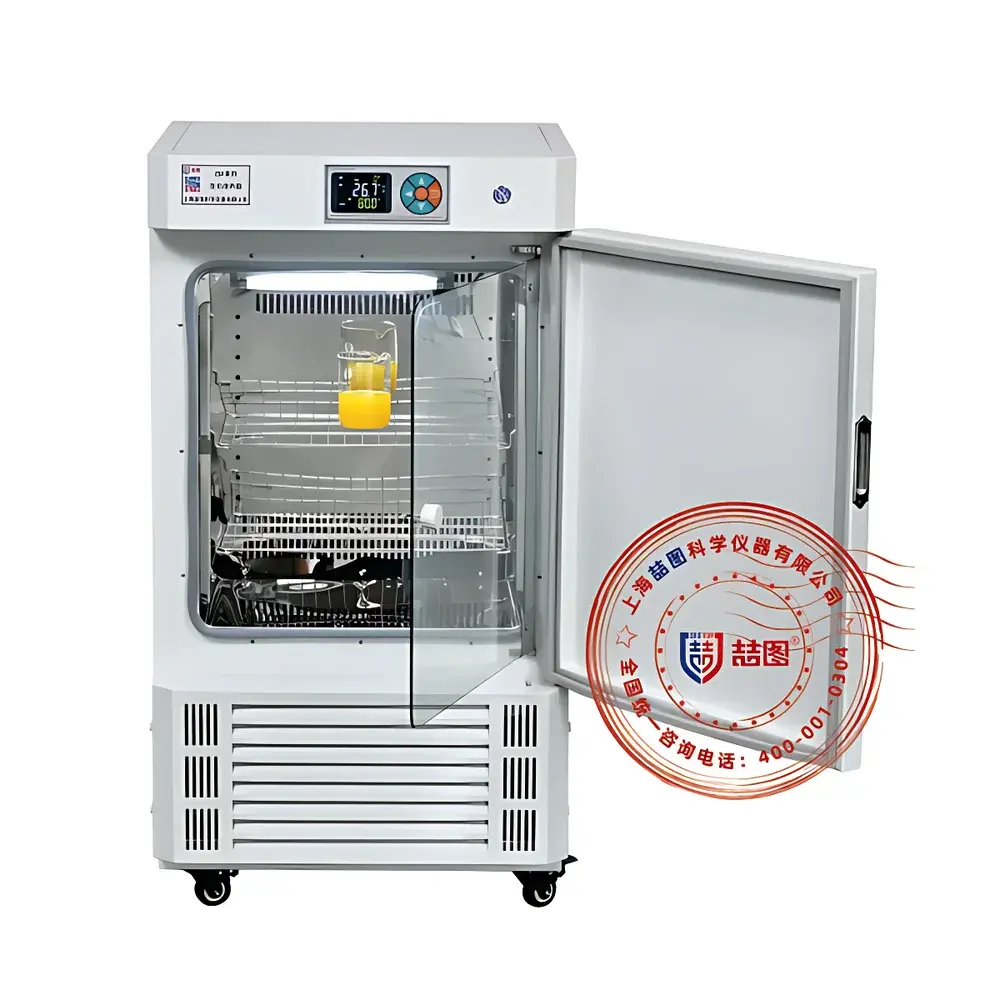
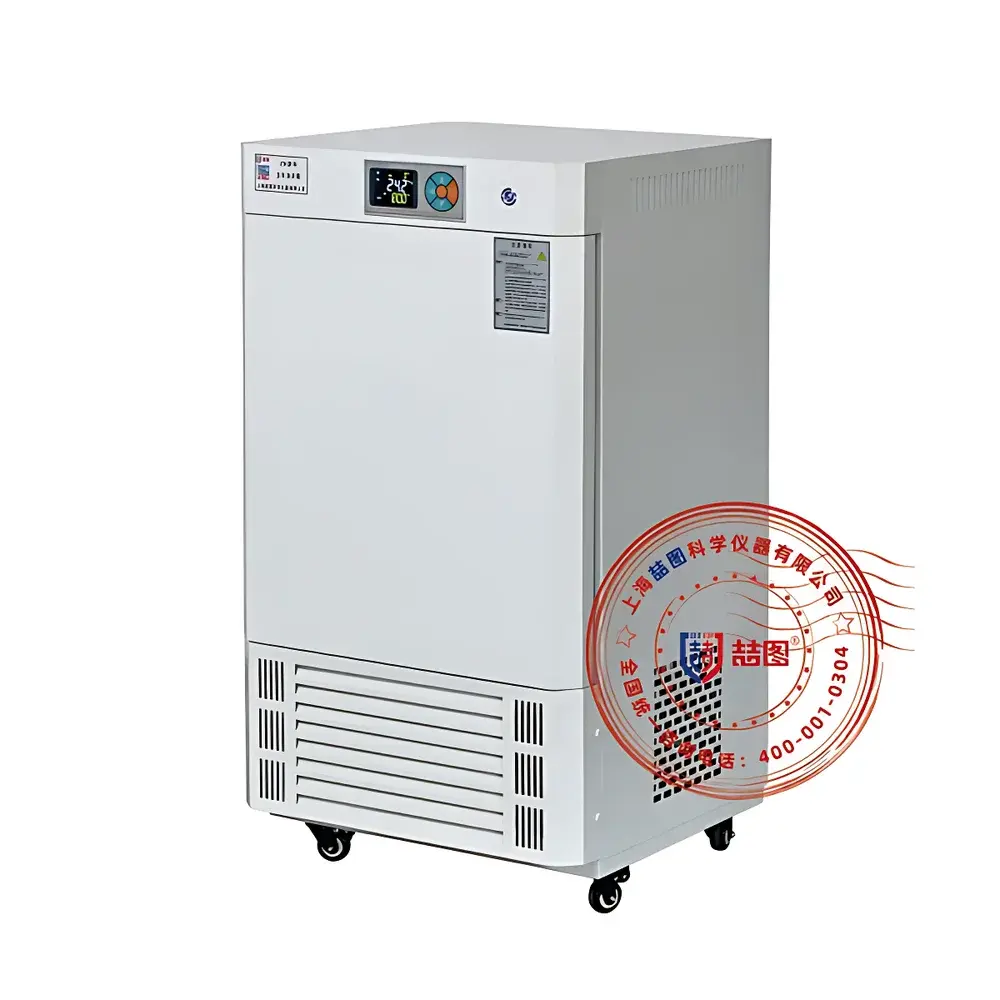
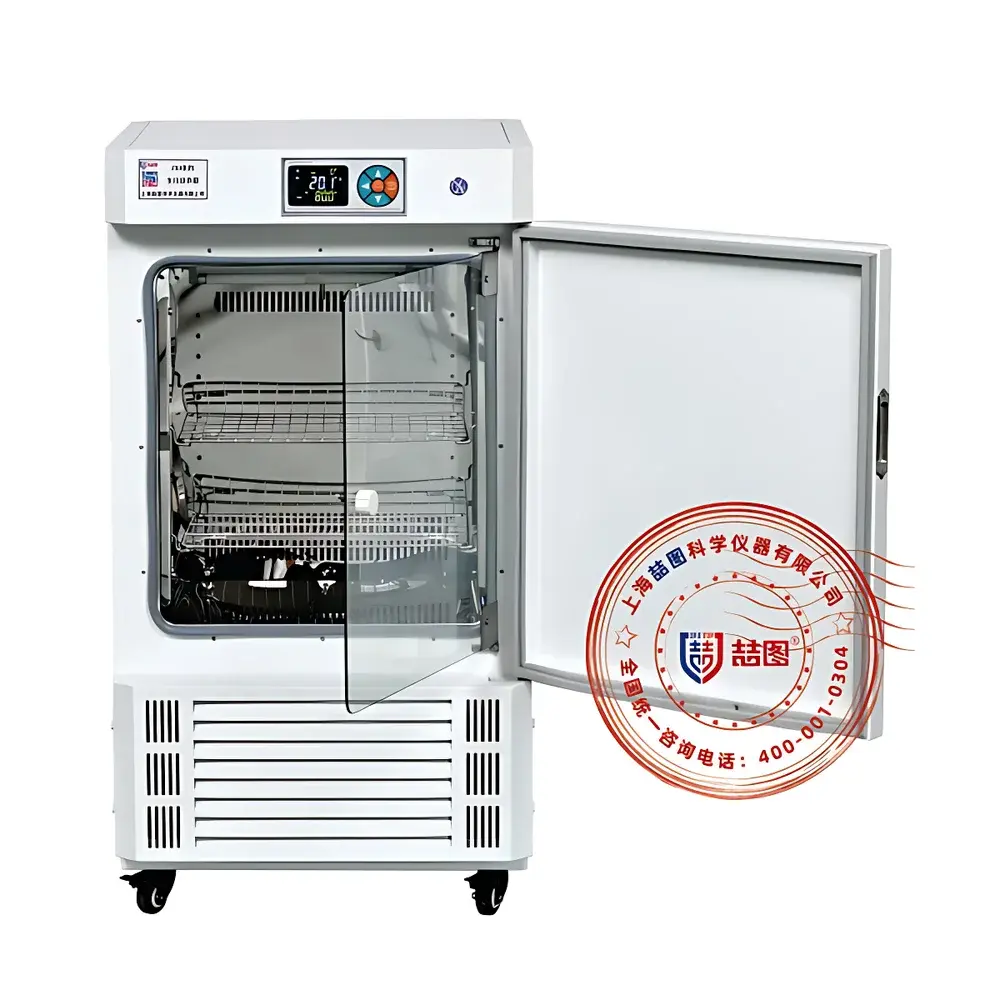
DRETOP BOD-100CP-VI Intelligent Integrated BOD Incubation & Measurement Workstation
| Brand | DRETOP |
|---|---|
| Origin | Shanghai, China |
| Model | BOD-100CP-VI |
| Instrument Type | Laboratory BOD Analyzer & Incubator |
| Principle | Manometric Pressure-Difference Method |
| Measurement Range | 0–4000 mg/L |
| Detection Limit | 1 mg/L |
| Accuracy | ±8% |
| Temperature Control Range | 0–65 °C |
| Temperature Uniformity | ±0.5 °C |
| Temperature Resolution | 0.1 °C |
| Incubation Temperature Setpoint | 20 °C ±1 °C |
| Sample Capacity (Incubator) | 450 × 380 × 590 mm (W×D×H) |
| Independent Test Channels | Up to 6 |
| Data Storage Duration | 10 years |
| RS485 Interface | Yes |
| Built-in Power Outlet & 25 mm Test Port | Yes |
| Auto Temperature Compensation | Yes |
| Real-time Curve Logging & Export | Yes |
| Data Upload Capability | Yes |
| Battery Backup | Yes |
| Programmable Stages | 30-segment microprocessor controller |
Overview
The DRETOP BOD-100CP-VI Intelligent Integrated BOD Incubation & Measurement Workstation is a dual-function, ISO-compliant environmental analysis platform engineered for precise biochemical oxygen demand (BOD) determination and controlled microbial incubation in accordance with standard methods including ASTM D5210, ISO 5815-1:2019, and EPA Method 405.1. Unlike conventional standalone BOD incubators or manometric analyzers, this workstation integrates a temperature-stabilized incubation chamber and a pressure-difference-based BOD measurement system into a single, space-efficient unit—eliminating inter-device calibration drift, ambient interference, and manual transfer errors. The system operates on the principle of sealed-bottle manometry: microbial respiration consumes dissolved oxygen in the sample, generating a measurable pressure differential across a gas-permeable membrane; this differential is converted into quantitative BOD values (mg/L O₂) using stoichiometric conversion algorithms and real-time temperature-compensated transduction. Designed for GLP-aligned laboratories, it supports full traceability through time-stamped, audit-ready data logs and meets structural requirements for routine verification under ISO/IEC 17025-accredited quality systems.
Key Features
- Integrated architecture combining Class II microbiological incubation (20 °C ±1 °C setpoint, ±0.5 °C uniformity) with six independent, sealed-manometer BOD measurement channels—each operating autonomously with individual start/stop control.
- Manometric sensor module utilizes mercury-free, solid-state pressure transducers with 0.01 mg/L resolution and <0.5% full-scale drift over 30-day continuous operation.
- Microprocessor-based 30-stage programmable controller enables multi-step incubation protocols (e.g., pre-incubation at 30 °C followed by BOD measurement at 20 °C), with automatic power-loss recovery and parameter retention.
- Optimized forced-air circulation system ensures uniform thermal distribution across the 450 × 380 × 590 mm stainless-steel interior (electropolished 304 grade), minimizing stratification during extended 7–30 day assays.
- Compressor-based refrigeration uses R134a (non-ozone-depleting) with start-delay logic, thermal overload protection, and condensate management—certified for continuous 24/7 operation under laboratory-grade duty cycles.
- Front-panel capacitive touchscreen interface provides intuitive navigation, real-time BOD concentration readouts, auto-generated kinetic curves, and one-touch export of CSV-formatted datasets via RS485 to LIMS or Excel-compatible software.
Sample Compatibility & Compliance
The BOD-100CP-VI accommodates standard 60 mL or 300 mL BOD bottles (glass or PETG), including seeded and unseeded wastewater, surface water, effluent, drinking water post-chlorination samples, and biodegradability screening matrices (e.g., OECD 301 series test substrates). All wetted components comply with USP Class VI biocompatibility standards. The system supports method validation per ISO 5815-2:2019 (precision testing), and its data logging architecture satisfies FDA 21 CFR Part 11 requirements for electronic records—including user authentication, immutable timestamps, and change audit trails. Calibration verification is performed using certified sodium acetate reference solutions (100–500 mg/L BOD), with documented linearity (R² > 0.999) across the full 0–4000 mg/L range.
Software & Data Management
Data acquisition and reporting are handled via embedded firmware compliant with IEC 62443-3-3 industrial cybersecurity profiles. Each measurement channel records up to 960 timepoints (adjustable sampling interval: 1–240 min), storing raw pressure differentials, compensated BOD values, temperature history, and event markers (e.g., “sample loaded”, “zero calibration initiated”). Local storage retains ≥10 years of compressed binary logs; optional cloud synchronization (via Ethernet or RS485-to-USB gateway) enables remote monitoring and integration with ELN platforms. Printed reports include ISO 17025-mandated metadata: operator ID, instrument serial number, calibration certificate IDs, environmental chamber log, and uncertainty budget per GUM (JCGM 100:2008).
Applications
This workstation serves as a primary analytical tool in municipal wastewater treatment plants for compliance monitoring against discharge permits (e.g., NPDES); in pharmaceutical QC labs for biodegradability assessment of excipients per ICH Q5C; in academic environmental microbiology for kinetic modeling of heterotrophic respiration rates; and in food & beverage R&D for organic load estimation in process streams. Its modular design allows adaptation to modified BOD protocols—including nitrification-inhibited BOD₅, carbonaceous BOD (cBOD), and low-concentration BOD (LC-BOD) down to 1 mg/L detection limit—without hardware modification.
FAQ
Does the system require external calibration gases or consumable reagents?
No. The manometric method is self-referencing and requires only certified BOD standard solutions for periodic verification—no zero gas, span gas, or chemical titrants.
Can multiple users access historical data with role-based permissions?
Yes. Firmware v2.4+ supports LDAP-integrated authentication and configurable access tiers (view-only, edit, admin) synchronized via enterprise directory services.
Is the incubator chamber suitable for non-BOD applications such as mold growth or seed germination studies?
Yes. The 0–65 °C range, ±0.5 °C stability, and programmable humidity compensation (via optional external hygrometer input) support AOAC, ASTM D3273, and ISTA-standard biological assays.
How is measurement traceability maintained during power interruption?
Internal supercapacitor backup preserves volatile memory for ≥72 hours; all active assays resume from last valid timestamp without data loss upon restoration.
What documentation is provided for regulatory submissions?
Factory-issued IQ/OQ protocols, metrological traceability certificates (NIM Shanghai), and a complete Design Qualification (DQ) dossier aligned with EU Annex 11 and WHO TRS 937 are included with each unit.
Related Products







