
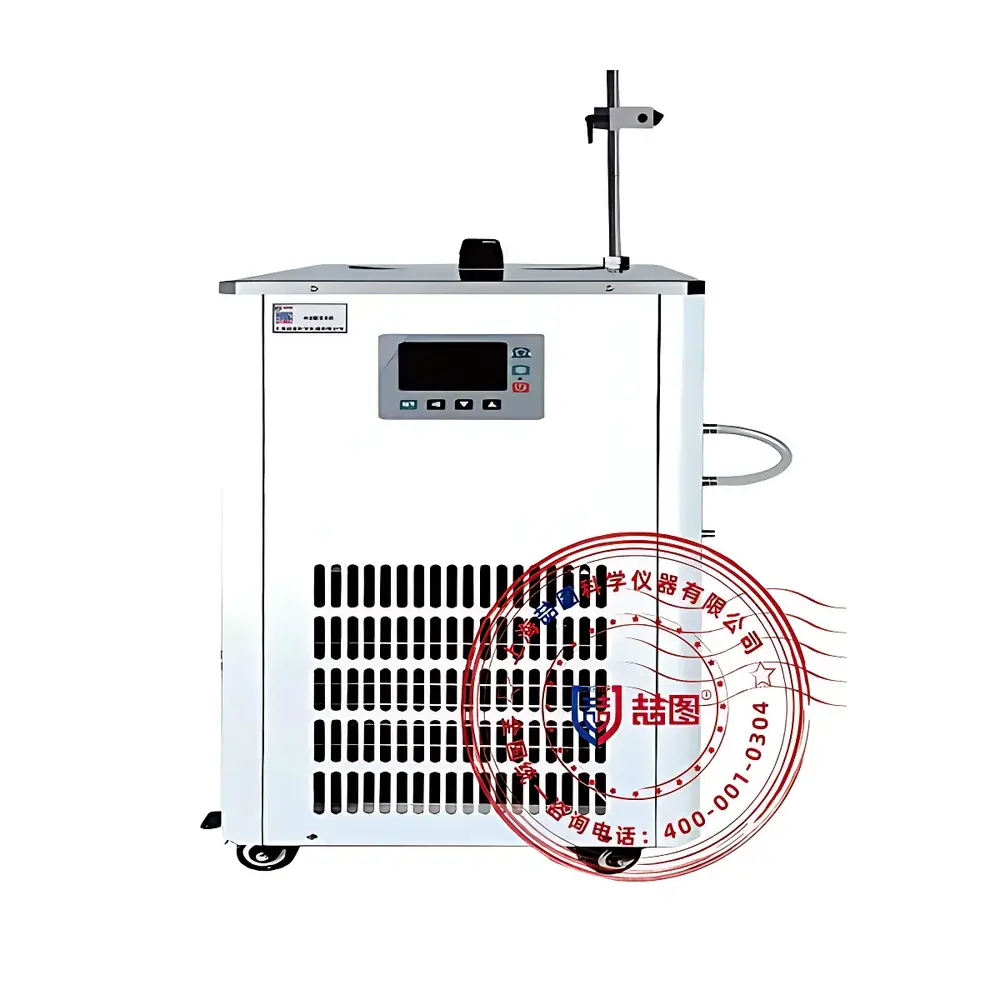
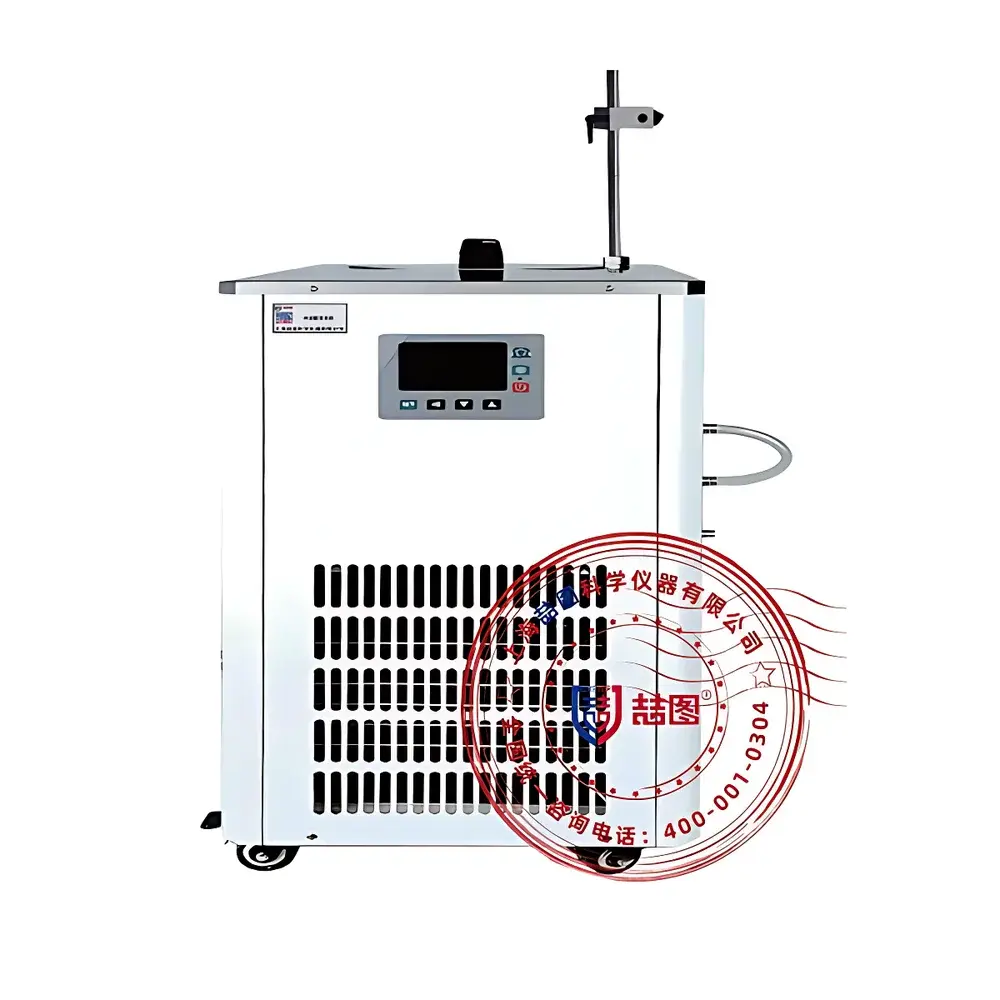
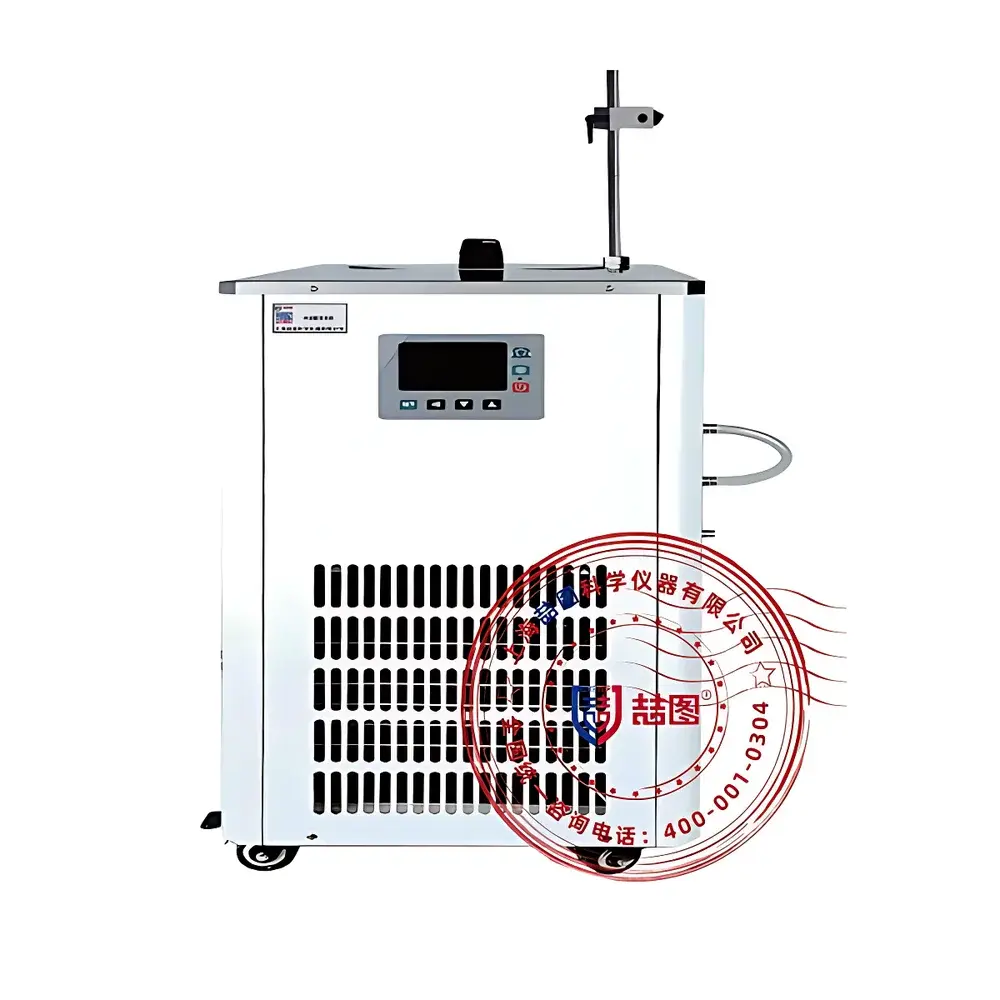
DRETOP LJF10-20 Low-Temperature Magnetic Stirring Circulating Bath
| Brand | DRETOP |
|---|---|
| Origin | Shanghai, China |
| Model | LJF10-20 |
| Instrument Type | Integrated Circulating Bath |
| Cooling Method | Water-Cooled |
| Temperature Range | -20 °C to 100 °C |
| Temperature Stability | ±0.1 °C (typical, per ISO 17025-compliant validation) |
| Circulating Pump Flow Rate | 20 L/min |
| Reservoir Volume | 10 L |
| Operating Mode | Continuous Duty |
| Enclosure Rating | IP54 |
| Power Supply | 220 V, 50 Hz |
| Opening Diameter | Φ250 mm |
| Communication Interface | RS485 (Modbus RTU protocol) |
Overview
The DRETOP LJF10-20 Low-Temperature Magnetic Stirring Circulating Bath is an integrated thermal management system engineered for precision temperature control in laboratory-scale chemical synthesis, material science testing, and biopharmaceutical process development. Unlike standalone chillers or external cooling units, the LJF10-20 integrates three core functions—refrigeration, heating, and magnetic stirring—within a single stainless-steel bath vessel. Its operational principle relies on closed-loop circulation of heat-transfer fluid (e.g., water, 30–50% aqueous ethylene glycol, or silicone oil), actively cooled via a hermetically sealed, variable-speed compressor and heated via immersed tubular resistive elements. Temperature uniformity across the bath volume is enhanced by internal magnetic stirring, which eliminates thermal stratification and ensures reproducible thermal profiles for reaction vessels placed directly within the bath. Designed for continuous operation under load, the unit complies with IEC 61000-6-3 (EMC) and IEC 61010-1 (safety for laboratory equipment), supporting GLP/GMP-aligned workflows where traceable, stable thermal conditions are critical.
Key Features
- Integrated dual-mode thermal control: independent refrigeration (via inverter-driven scroll compressor) and electric heating (stainless-steel sheathed immersion heater), enabling seamless ramping from –20 °C to +100 °C without manual intervention
- High-uniformity magnetic stirring: built-in rare-earth magnet drive with adjustable speed (0–1200 rpm), synchronized with bath temperature to maintain homogeneity during exothermic/endothermic reactions
- PID-based digital temperature controller with ±0.1 °C setpoint stability (measured at sensor location; spatial uniformity ≤ ±0.3 °C across 10 L working volume per ASTM E2757)
- Corrosion-resistant 304 stainless-steel bath tank and fluid pathways; all wetted surfaces passivated per ASTM A967, compatible with glycol/water mixtures and low-volatility silicone oils
- RS485 serial interface supporting Modbus RTU protocol for integration into LabVantage, DeltaV, or custom SCADA systems; enables remote setpoint adjustment, real-time data logging, and alarm status polling
- Comprehensive safety architecture: dual redundant temperature sensors, dry-run protection, low-level fluid cutoff, overpressure relief valve, ground-fault circuit interrupter (GFCI), and non-volatile memory for power-loss recovery
Sample Compatibility & Compliance
The LJF10-20 accommodates standard laboratory glassware up to 5 L (e.g., jacketed reactors, round-bottom flasks, cryogenic sample holders) via its Φ250 mm open bath aperture. Its sealed circulation design prevents oxidation or contamination of heat-transfer media—critical when using hygroscopic or oxygen-sensitive fluids such as anhydrous ethylene glycol or polydimethylsiloxane. The unit meets CE marking requirements under the EU Machinery Directive 2006/42/EC and Low Voltage Directive 2014/35/EU. For regulated environments, its RS485 interface supports 21 CFR Part 11-compliant audit trails when paired with validated third-party data acquisition software. It is routinely deployed in applications requiring adherence to USP , ISO 13485 (for medical device thermal validation), and ASTM D341 (viscosity-temperature correlation studies).
Software & Data Management
While the LJF10-20 operates autonomously via its front-panel touchscreen controller, its RS485 port enables bidirectional communication with host PCs running Windows/Linux-based terminal emulators or custom Python/Node-RED scripts. Logged parameters—including bath temperature, setpoint, stir speed, compressor duty cycle, and elapsed runtime—are timestamped with millisecond resolution and exportable in CSV format. Optional DRETOP LogView software (v2.1+) provides graphical trend analysis, deviation alerts, and PDF report generation compliant with ISO/IEC 17025 clause 7.7 (result reporting). All configuration changes are recorded with user ID and timestamp, satisfying ALCOA+ data integrity principles for regulated laboratories.
Applications
- Low-temperature organic synthesis: Grignard reactions, lithiation, Diels–Alder cycloadditions, and asymmetric catalysis requiring precise sub-zero thermal control
- Thermal stability assessment: accelerated aging of biologics, polymer degradation kinetics, and crystallization screening across –20 °C to 100 °C
- Instrument cooling support: stabilization of laser diodes, CCD detectors, NMR probe preamplifiers, and HPLC column ovens
- Materials characterization: controlled-rate cooling for metallographic specimen preparation, superconductivity transition mapping, and thin-film deposition substrate conditioning
- Educational labs: hands-on thermodynamics instruction, reaction enthalpy measurement, and phase diagram construction
FAQ
What heat-transfer fluids are compatible with the LJF10-20?
Deionized water (for 5–95 °C), 30–50% ethylene glycol/water (for –20 °C to 95 °C), or methyl silicone oil (for –40 °C to 100 °C). Avoid chlorinated solvents or acetone due to elastomer compatibility concerns.
Can the unit operate unattended overnight?
Yes—designed for continuous 24/7 operation with automatic fault shutdown, non-volatile parameter retention, and audible/visual alarms for fluid level, temperature deviation, or pump failure.
Is external recirculation possible?
Yes—the unit features dual 1/2″ BSP threaded ports (inlet/outlet) rated to 3 bar, supporting connection to jacketed reactors, calorimeters, or external heat exchangers via reinforced silicone or PTFE-lined tubing.
How is temperature calibration verified?
The integrated Pt100 sensor is factory-calibrated against NIST-traceable standards. Users may perform field verification using a calibrated reference thermometer per ISO/IEC 17025 Section 6.6; certificate of conformance includes as-found/as-left data.
Does the magnetic stirrer function at –20 °C?
Yes—optimized neodymium magnet coupling and low-temperature lubricated bearings ensure full torque delivery and speed controllability across the entire operating range.



