
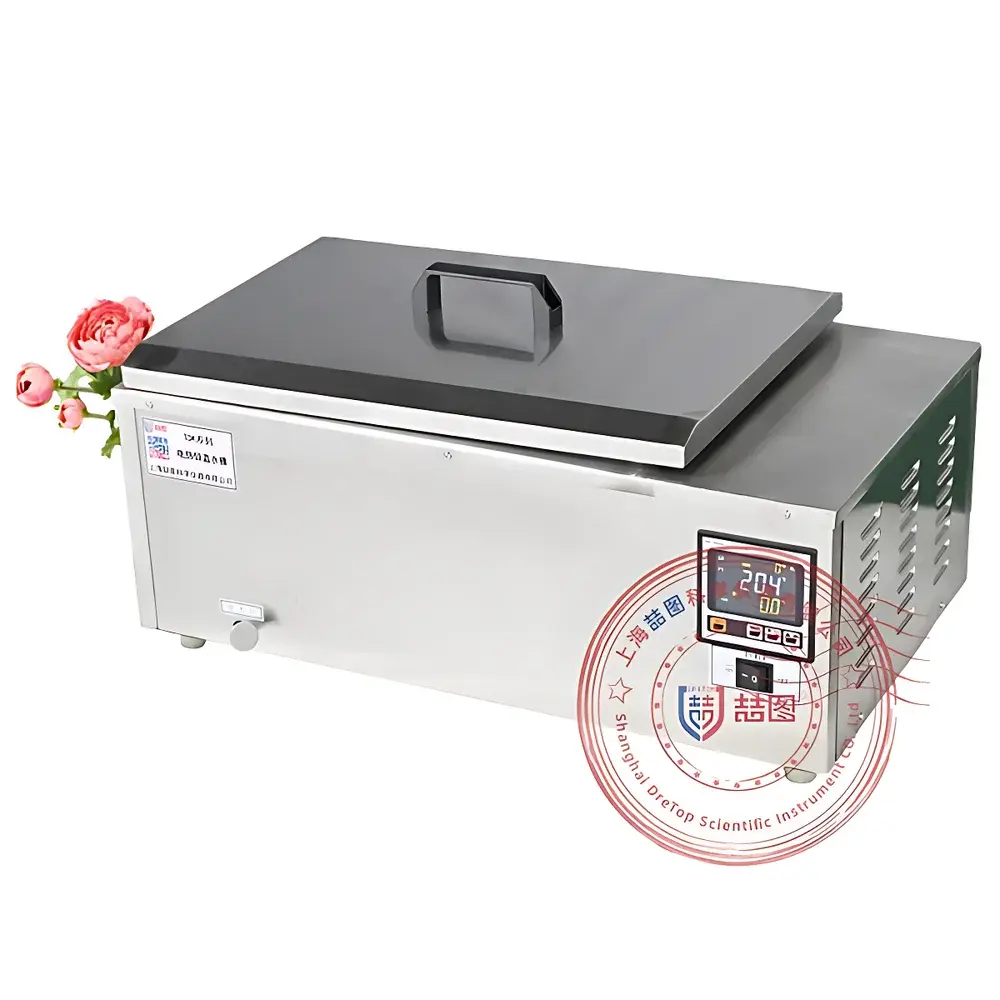
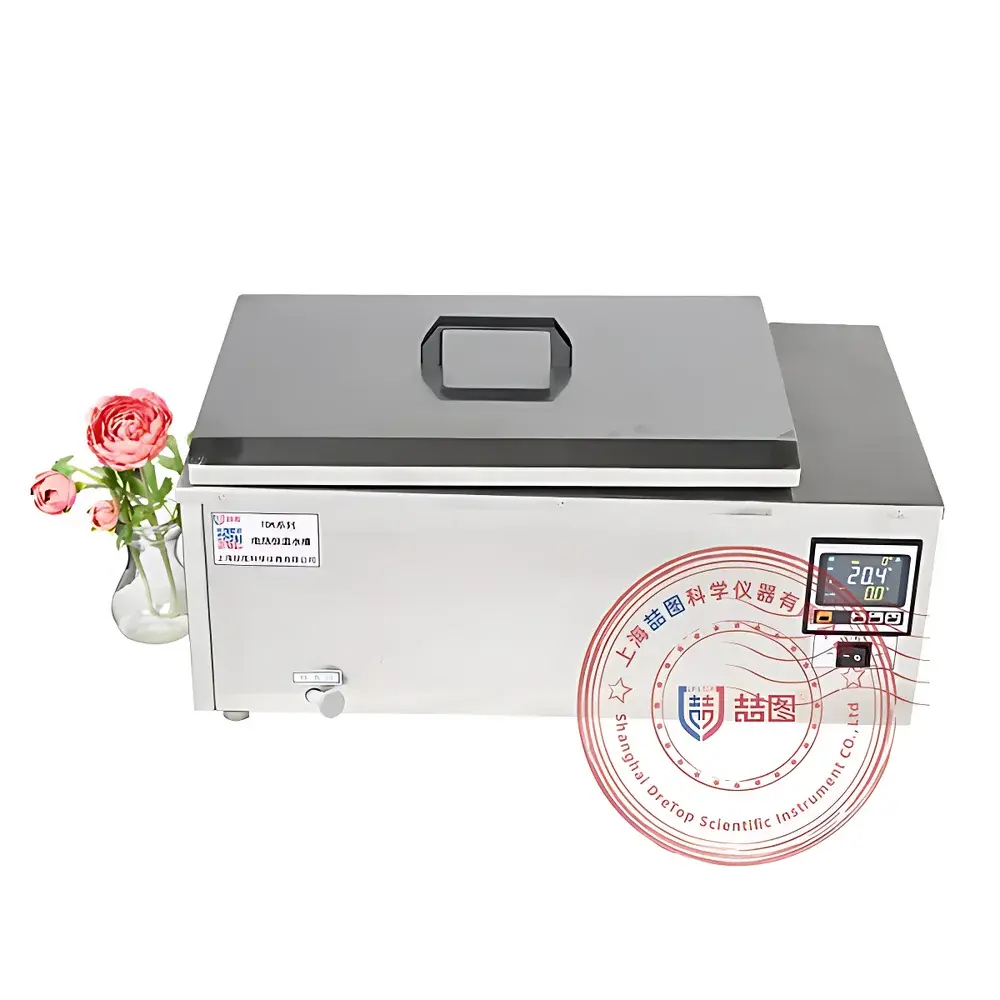
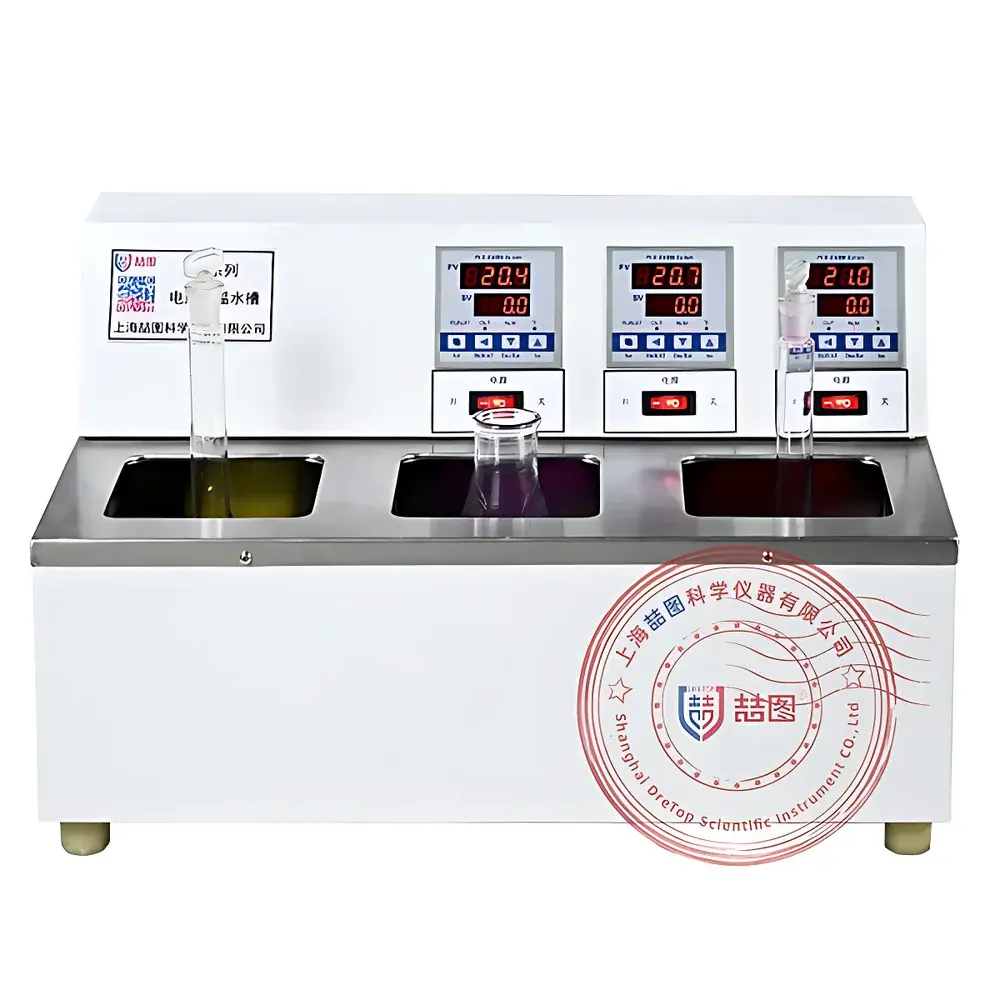
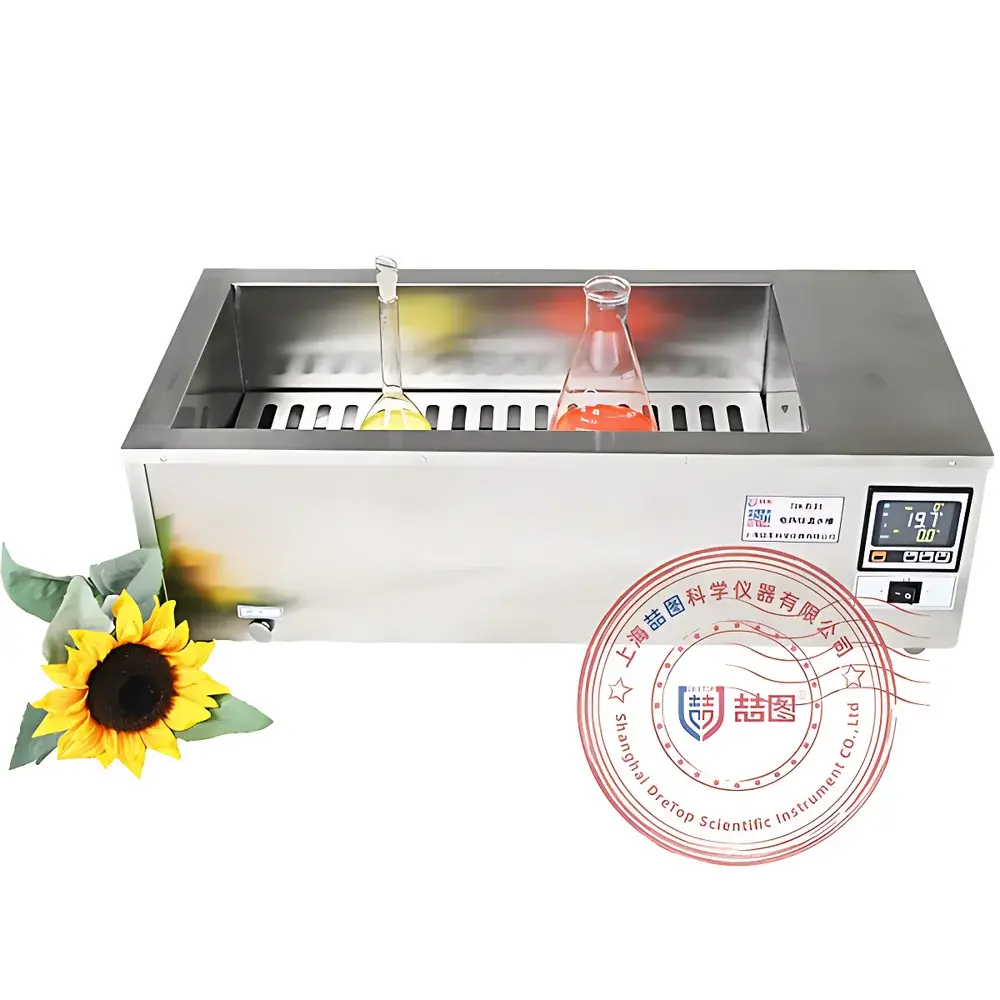
DRETOP TDK & DK4 Series Precision Electric Constant-Temperature Water Baths
| Brand | DRETOP |
|---|---|
| Origin | Shanghai, China |
| Model Series | TDK & DK4 |
| Bath Volume | 12–120 L |
| Temperature Range | RT +5°C to 100°C |
| Temperature Resolution | 0.1°C |
| Temperature Stability | ±0.03°C to ±0.5°C (model-dependent) |
| Heating Power | 1000–9000 W |
| Voltage | AC 220 V, 50 Hz |
| Control Type | PID-based microprocessor controller with LED/LCD display |
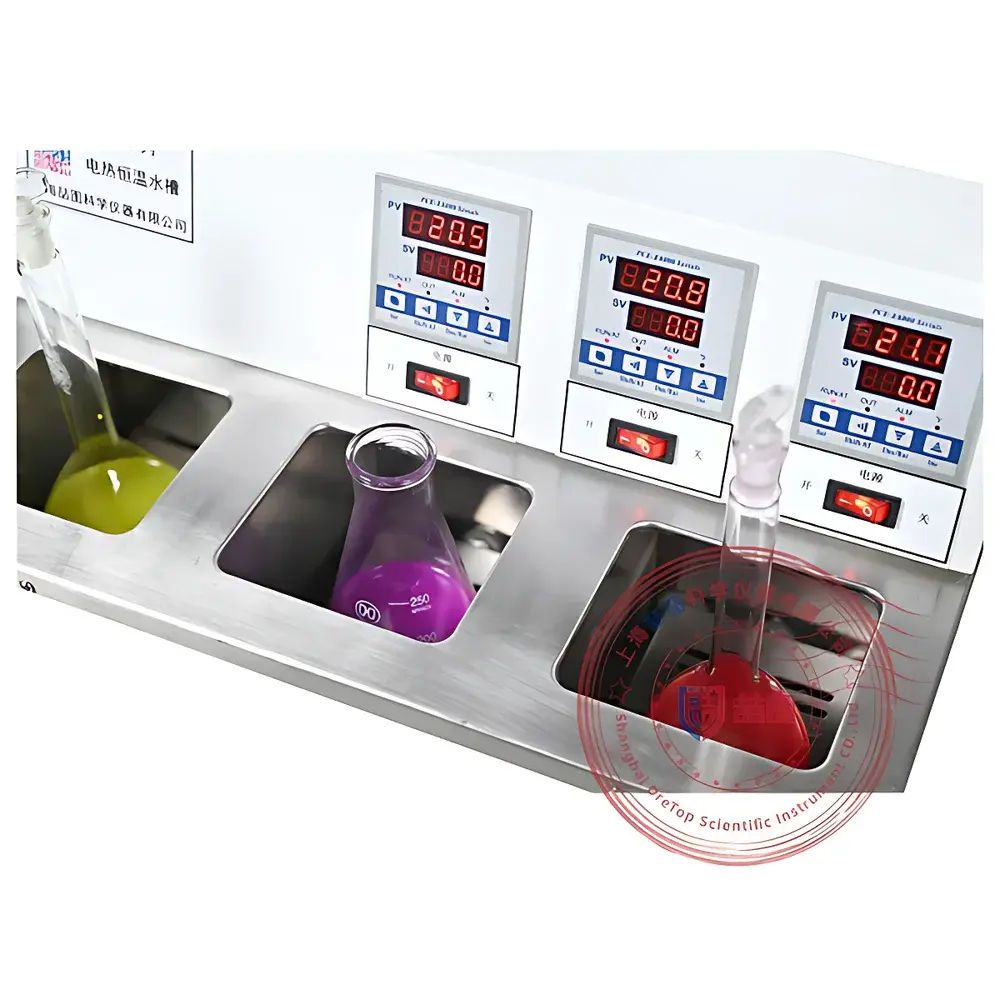
| Optional Features | Dry-run protection (F-series), recirculating pump (B-series), triple-zone independent temperature control (D-series), refrigeration module (R-series), programmable 30-segment timer, RS485 communication interface, auto-refill (external water source required) |
Overview
The DRETOP TDK and DK4 Series Electric Constant-Temperature Water Baths are engineered for precision thermal management in laboratory environments where stable, uniform, and reproducible heating is essential. These baths operate on the principle of resistive immersion heating combined with high-fidelity PID feedback control, enabling accurate maintenance of setpoint temperatures across a wide operational range (RT +5°C to 100°C). Designed for applications requiring sustained thermal exposure—such as enzyme incubation, sample equilibration, solvent evaporation, sterilization support, and calibration of temperature-sensitive instruments—the series integrates thermally optimized stainless-steel construction, multi-layer insulation, and intelligent thermal regulation logic. Unlike open-loop or analog thermostats, the TDK/DK4 platform employs digital microprocessor-based control with real-time sensor compensation, ensuring minimal overshoot, rapid recovery from load disturbances, and long-term drift resistance—critical attributes for GLP-compliant workflows and ISO/IEC 17025-accredited testing laboratories.
Key Features
- Microprocessor-controlled PID temperature regulation with auto-tuning capability, delivering stability as tight as ±0.03°C (model-dependent) and resolution of 0.1°C (or 0.01°C on select B-series units)
- 304 stainless-steel inner tank and lid—corrosion-resistant, non-reactive, and compliant with USP and ISO 15189 material compatibility guidelines for aqueous biological and pharmaceutical media
- Multi-layer insulated chamber design minimizes heat loss and eliminates condensation-induced leakage; integrated quick-release drain valve enables safe, tool-free fluid disposal
- Closed-loop immersion heating elements immersed directly in the bath medium ensure high thermal transfer efficiency and low energy waste—typical power utilization efficiency exceeds 92% at steady state
- Dry-run protection system with embedded water-level sensor activates immediately at startup and continuously monitors fluid volume, halting heating and triggering audible/visual alarm if level falls below operational threshold (standard on F-series models)
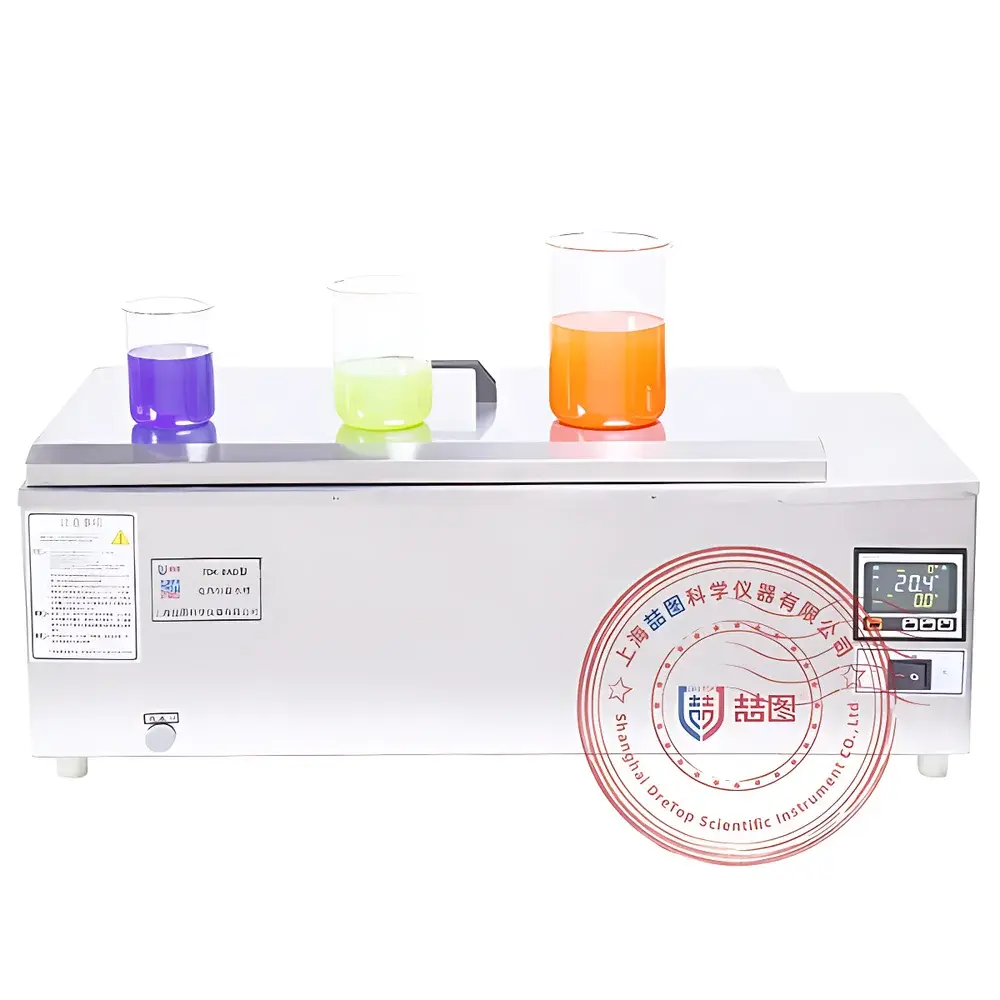
- Triple independent temperature zones (TDK-8D model) allow concurrent operation of three distinct thermal protocols—ideal for comparative studies, multi-sample processing, or QC reference standard conditioning
- Optional recirculation pump (B-series) generates laminar flow with velocity ≤0.15 m/s, achieving spatial temperature uniformity ≤±0.2°C across full bath volume per ASTM E2206-21 requirements for liquid thermal baths
- Programmable 30-segment temperature/time profiles support complex thermal ramping, hold-and-soak sequences, and automated shutdown—compatible with 21 CFR Part 11 audit trail configuration when paired with optional RS485-enabled software
Sample Compatibility & Compliance
The TDK and DK4 baths accommodate a broad spectrum of sample containers—including glass beakers, stainless-steel reactors, jacketed flasks, and plastic centrifuge tubes—without compromising thermal homogeneity. Their 304 stainless-steel tanks exhibit neutral reactivity toward deionized water, buffer solutions, ethanol/water mixtures, and glycerol-based media up to 65% v/v. Units conform to IEC 61010-1:2010 safety standards for laboratory electrical equipment and meet EMC Class B emission limits per EN 61326-1. For regulated environments, optional configurations support FDA 21 CFR Part 11-compliant electronic records via time-stamped, user-authenticated data logging through the RS485 interface. All models comply with ISO 17025 clause 6.4.7 regarding environmental condition monitoring and are routinely validated using NIST-traceable PT100 probes per EURACHEM/CITAC Guide CG4.
Software & Data Management
While standalone operation requires no PC, optional DRETOP LabLink™ software (v3.2+) enables remote monitoring, real-time graphing, and export of CSV-formatted temperature logs with metadata (operator ID, batch number, timestamp, deviation flags). The RS485 interface supports Modbus RTU protocol, permitting integration into centralized SCADA or LIMS platforms. Audit trail functionality—when enabled—records all parameter changes, alarm events, and manual overrides with immutable timestamps and operator credentials, satisfying ALCOA+ data integrity principles. Firmware updates are delivered via secure HTTPS portal and validated using SHA-256 checksums prior to installation.
Applications
- Biological: Cell culture media pre-warming, antibody dilution equilibration, PCR tube conditioning, microbial growth support at defined thermal setpoints
- Pharmaceutical: Dissolution test apparatus calibration (USP ), stability study sample incubation, excipient solubility profiling
- Chemical: Reflux support, solvent recovery, viscosity measurement bath (ASTM D445), hydrolysis reaction control
- Materials Science: Polymer annealing, composite resin curing initiation, thermal aging of elastomers
- Environmental: BOD incubation, sediment toxicity assay temperature control, aquatic organism acclimation
- Education & Research: Undergraduate thermodynamics labs, graduate-level kinetic studies, method development for ISO 5725 repeatability assessment
FAQ
What is the recommended working fluid for optimal longevity and performance?
Deionized water (≥18.2 MΩ·cm resistivity) or ASTM Type III purified water is strongly recommended. Tap water introduces scale deposits that impair heater efficiency, reduce sensor accuracy, and compromise corrosion resistance over time.
Can the bath maintain temperature during power interruption?
Yes—non-volatile memory preserves all active parameters including setpoint, timer status, and alarm thresholds. Upon power restoration, the unit resumes operation with original settings and initiates controlled ramp-up to avoid thermal shock.
Is external cooling integration supported?
Refrigerated variants (R-series) integrate hermetically sealed compressors with R134a refrigerant and dual-stage PID control, extending operational range down to 15°C. For custom chiller coupling, auxiliary coolant ports are available on DK4-30-II and TDK-XB164 models.
How is temperature uniformity verified across the bath volume?
Per ASTM E2206-21, uniformity is validated using nine calibrated PT100 sensors placed at standardized positions (center, corners, mid-height). DRETOP provides factory-issued uniformity reports upon request, traceable to NIM (China National Institute of Metrology).
Are these units suitable for GMP-regulated manufacturing environments?
Yes—when equipped with RS485 + LabLink™ and configured with electronic signature, audit trail, and backup logging, they satisfy Annex 11 and EU GMP Chapter 4 requirements for computerized system validation (CSV) and data integrity governance.



