
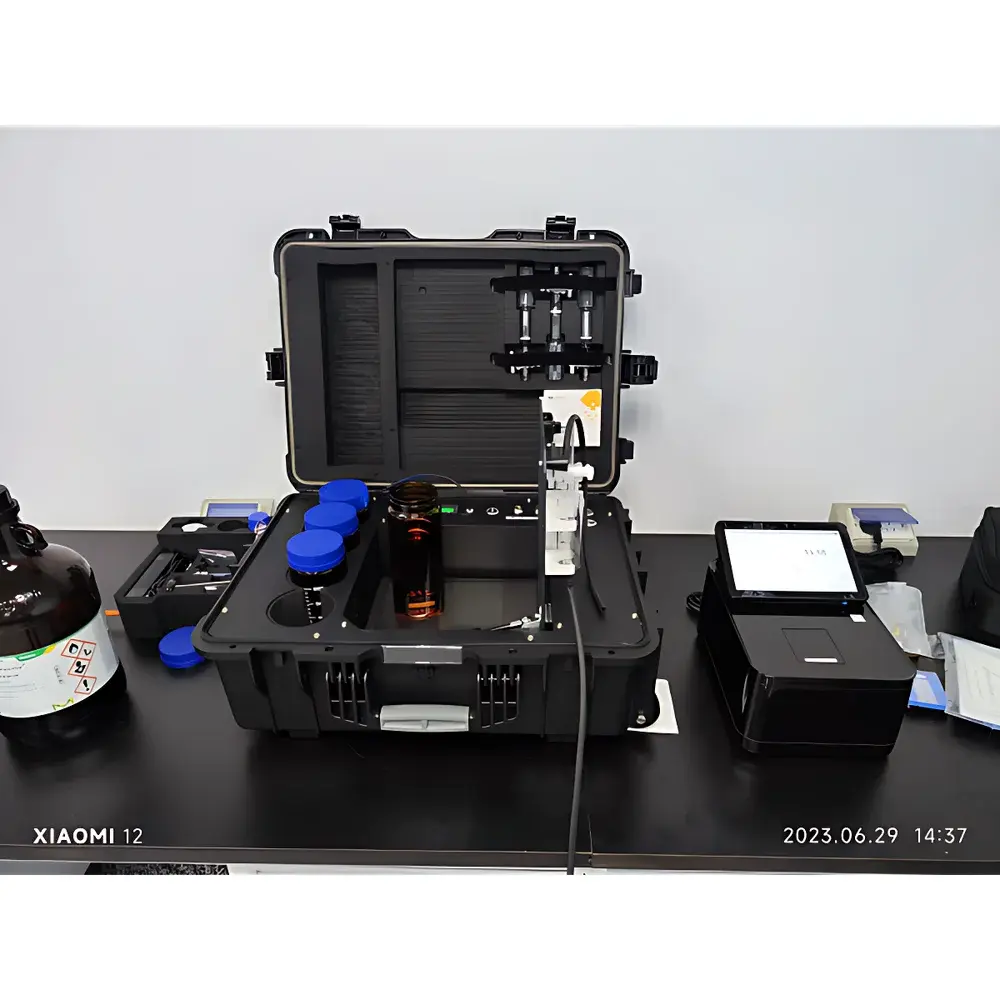
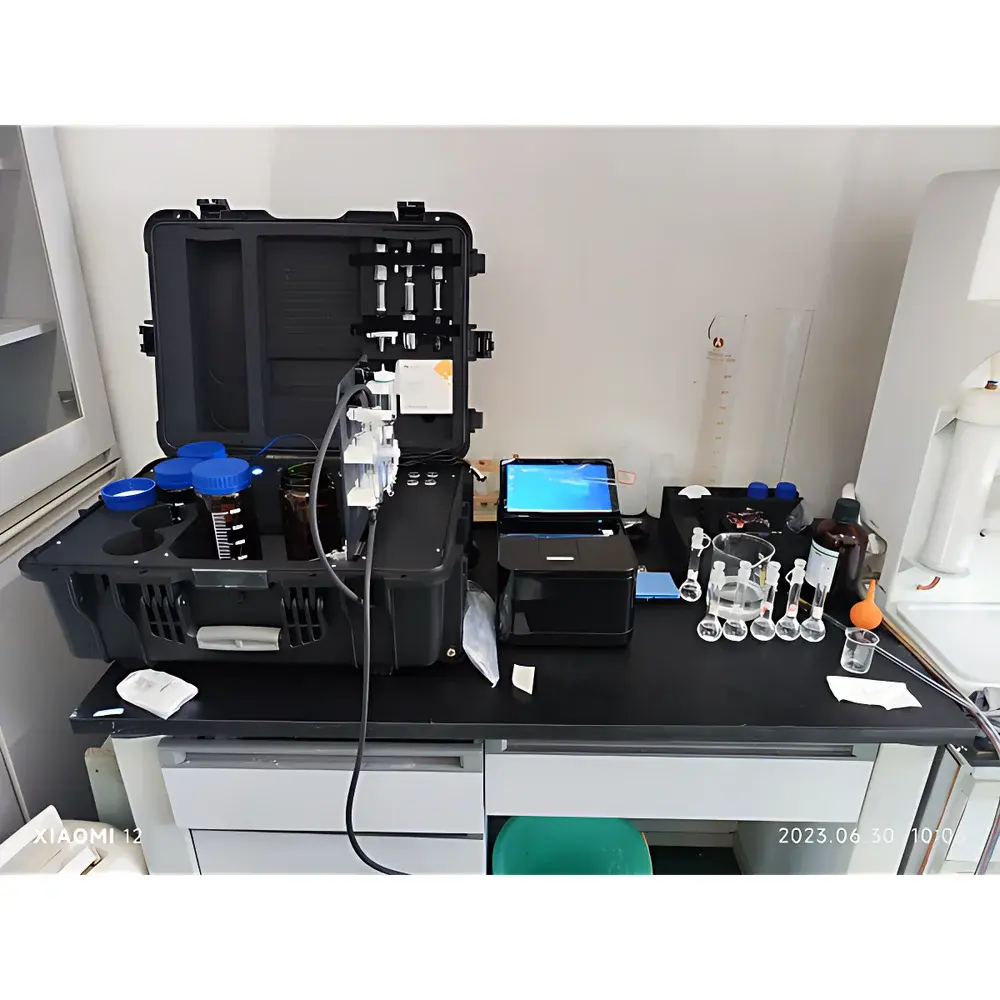
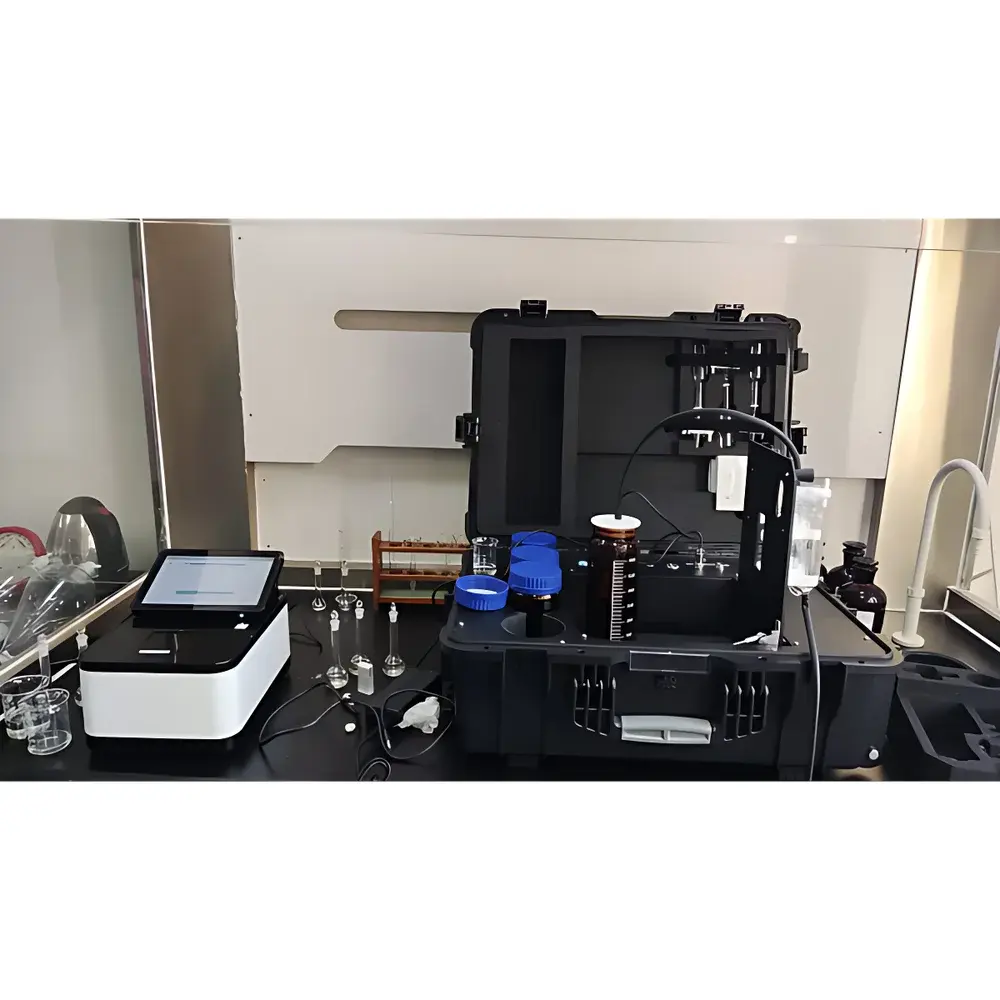
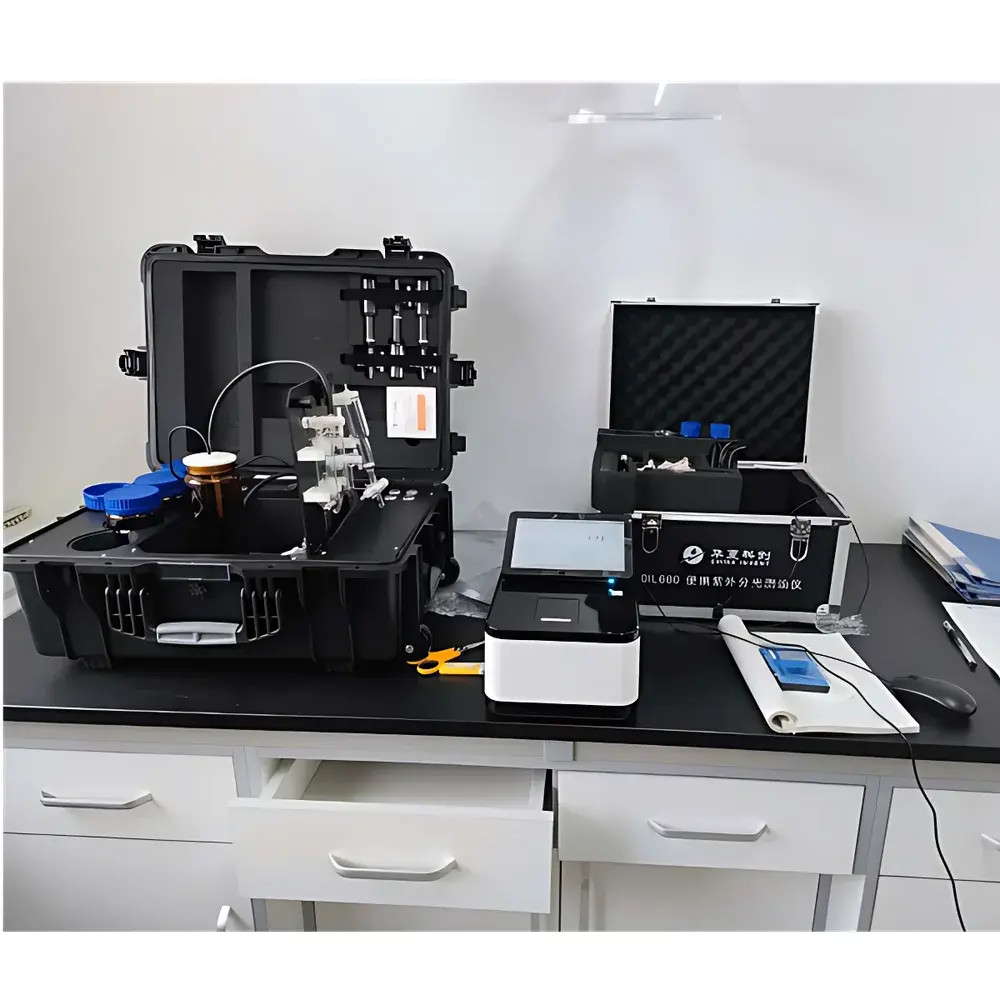
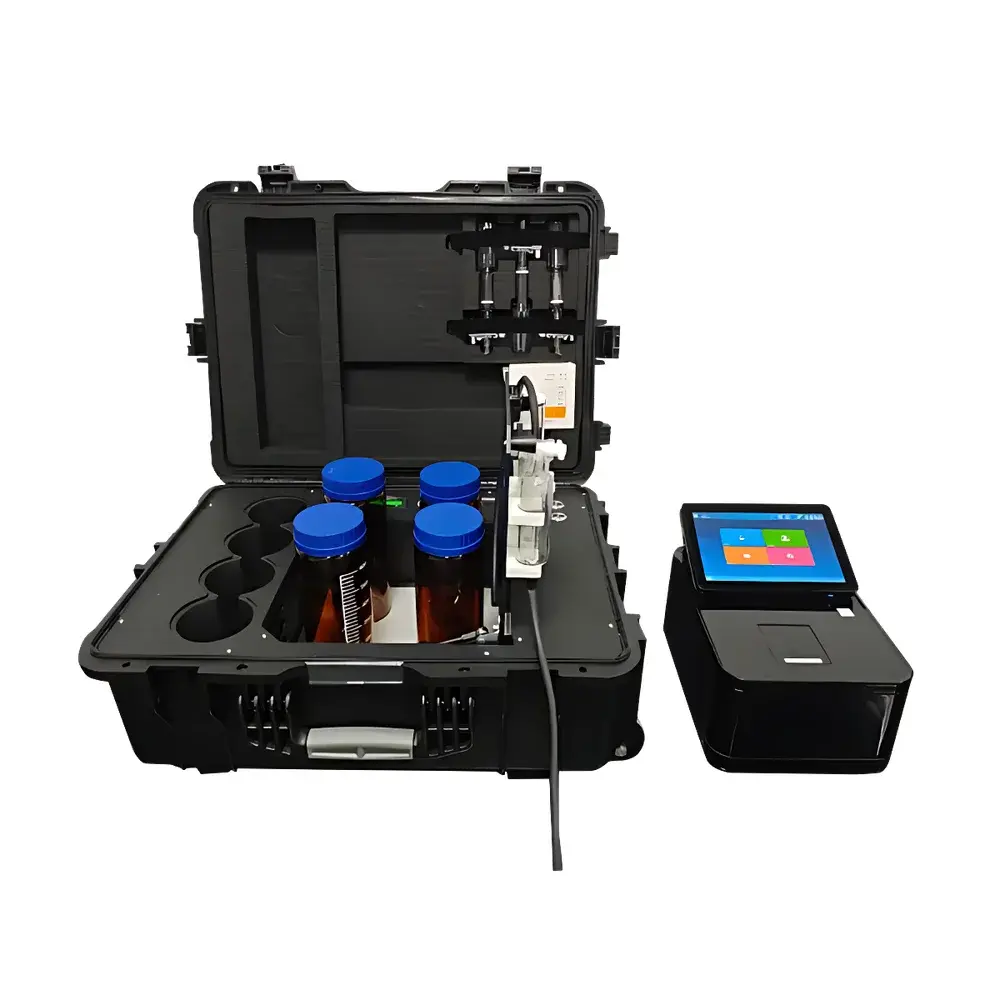
Spectra Invent OIL-680 Portable UV Spectrophotometric Oil Analyzer
| Brand | Spectra Invent |
|---|---|
| Origin | Beijing, China |
| Model | OIL-680 |
| Instrument Type | Portable |
| Measurement Principle | UV Spectrophotometry |
| Detection Limit (Method) | 0.01 mg/L |
| Accuracy | ±2.0% |
| Wavelength Range | 190–1000 nm |
| Test Wavelength | 225 nm |
| Wavelength Accuracy | ±1.5 nm |
| Wavelength Repeatability | ≤0.5 nm |
| Resolution | 0.0002 mg/L |
| Instrument Detection Limit (IDL) | ≤0.005 mg/L (3×SD of n=11 n-hexane blank) |
| Precision (RSD) | ≤0.6% |
| Linearity (r) | >0.9995 |
| Extraction Capacity | 4 simultaneous samples |
| Ingress Protection | IP67 |
| Dimensions (L×W×H) | 490 × 370 × 210 mm |
| Power Supply | 220 V, 50 Hz, 50 W |
| Operating Temperature | −5 to +45 °C |
| Operating Humidity | 20–85 % RH |
| Battery Runtime | >8 h continuous operation |
Overview
The Spectra Invent OIL-680 Portable UV Spectrophotometric Oil Analyzer is an engineered field-deployable instrument designed for the quantitative determination of petroleum hydrocarbons (oil) in aqueous environmental matrices. It operates on the principle of ultraviolet absorption spectroscopy, specifically targeting the characteristic absorbance band of aliphatic and aromatic hydrocarbons at 225 nm—aligned with the regulatory methodology specified in HJ 970–2018, “Determination of Petroleum Hydrocarbons in Water—UV Spectrophotometric Method.” The system integrates sample extraction, phase separation, and photometric quantification into a single ruggedized platform, eliminating reliance on centralized laboratory infrastructure. Its optical architecture employs a high-stability deuterium lamp source and a precision monochromator to ensure spectral fidelity across the 190–1000 nm range, with calibrated wavelength accuracy (±1.5 nm) and repeatability (≤0.5 nm) validated per ISO/IEC 17025 traceable procedures.
Key Features
- Four-channel parallel extraction module enabling simultaneous processing of up to four water samples—reducing analysis cycle time and improving throughput for multi-site surveys.
- Integrated automatic liquid–liquid extraction and gravity-driven phase separation using n-hexane or petroleum ether as extractant—minimizing operator intervention and inter-sample contamination risk.
- IP67-rated enclosure certified for dust-tightness and immersion resistance up to 1 m for 30 minutes—suitable for deployment in rain, mud, coastal spray, or humid field conditions.
- Dedicated industrial-grade tablet computer with preloaded analytical software, capacitive touchscreen, and real-time data visualization—including auto-generation of calibration curves (r > 0.9995) and QC flagging.
- Onboard power management supporting ≥8 hours of continuous operation on internal rechargeable battery or direct AC input (220 V, 50 Hz); thermal design validated for stable performance between −5 °C and +45 °C ambient.
- Comprehensive connectivity suite including RS-232 serial port, Bluetooth 5.0, and IEEE 802.11 b/g/n Wi-Fi—enabling secure wireless data export to LIMS, remote firmware updates, and synchronized GPS-tagged sampling logs.
Sample Compatibility & Compliance
The OIL-680 is validated for use with surface water, groundwater, seawater, and irrigation water per GB 5084–2021 (“Water Quality Standards for Agricultural Irrigation”). Sample preparation follows HJ 970–2018 protocols: acidification to pH ≤2, n-hexane extraction, emulsion breaking via centrifugation or filtration, and measurement of the upper organic phase at 225 nm. The instrument’s method detection limit (MDL) of 0.01 mg/L and instrument detection limit (IDL) of ≤0.005 mg/L (based on 3σ of 11 n-hexane blanks) meet the sensitivity requirements for Class I–III water quality monitoring under China’s Environmental Monitoring Technical Specifications. All calibration and verification records support audit readiness for GLP-compliant environmental testing laboratories.
Software & Data Management
Firmware v3.2 includes embedded data integrity controls compliant with ALCOA+ principles: electronic signatures, immutable audit trails, and role-based access control. Calibration curves are stored with metadata (date/time, operator ID, standard lot number, temperature). Raw absorbance values, extracted concentration results, RSD calculations (≤0.6%), and pass/fail status against acceptance criteria (accuracy ≤±2.0%) are exported in CSV or PDF formats. Optional integration with laboratory information management systems (LIMS) is supported via HL7 or ASTM E1384-compliant APIs. All data transmissions over Wi-Fi or Bluetooth employ TLS 1.2 encryption.
Applications
- Regulatory compliance monitoring of effluent discharge points and wastewater treatment plant outfalls.
- Rapid assessment of oil spills in rivers, lakes, and marine nearshore zones during emergency response operations.
- Long-term trend analysis of petroleum hydrocarbon accumulation in agricultural irrigation sources.
- Field validation of fixed online oil-in-water sensors deployed in industrial process water loops.
- Supporting environmental impact assessments (EIA) and baseline studies for offshore drilling or pipeline corridor projects.
FAQ
Does the OIL-680 comply with international standards such as ISO 9377-2 or ASTM D7066?
The OIL-680 implements the measurement principle and procedural framework of HJ 970–2018, which is harmonized with the technical basis of ISO 9377-2 (petroleum hydrocarbons in water by IR and UV methods). While not certified to ISO/ASTM test reports, its optical performance, detection limits, and precision metrics are benchmarked against those standards during factory validation.
Can the instrument quantify other hydrophobic organic compounds beyond petroleum hydrocarbons?
No. The 225 nm measurement wavelength and n-hexane extraction protocol are optimized specifically for the UV-absorbing fraction of crude oil, diesel, gasoline, and lubricating oils per HJ 970–2018. It does not substitute for GC–FID or GC–MS methods required for compound-specific identification.
Is user calibration verification required before each field deployment?
Yes. A three-point calibration check using certified reference materials (CRM) at 0.05, 0.5, and 5.0 mg/L is recommended prior to daily use. The instrument stores calibration history and flags deviations exceeding ±1.5% from historical slope/intercept baselines.
What maintenance is required for the extraction module?
The four-channel peristaltic pump tubing and phase-separation funnels require cleaning with n-hexane after every 20 extractions; full replacement is recommended every 200 cycles. No optical alignment or lamp replacement is needed within the first 2,000 operating hours.
How is data integrity ensured during offline field operation?
All measurements are timestamped, geotagged (via integrated GPS), and written to encrypted internal storage (16 GB eMMC). Sync occurs automatically upon Wi-Fi reconnection, with conflict resolution logic preserving original acquisition order and metadata.







