
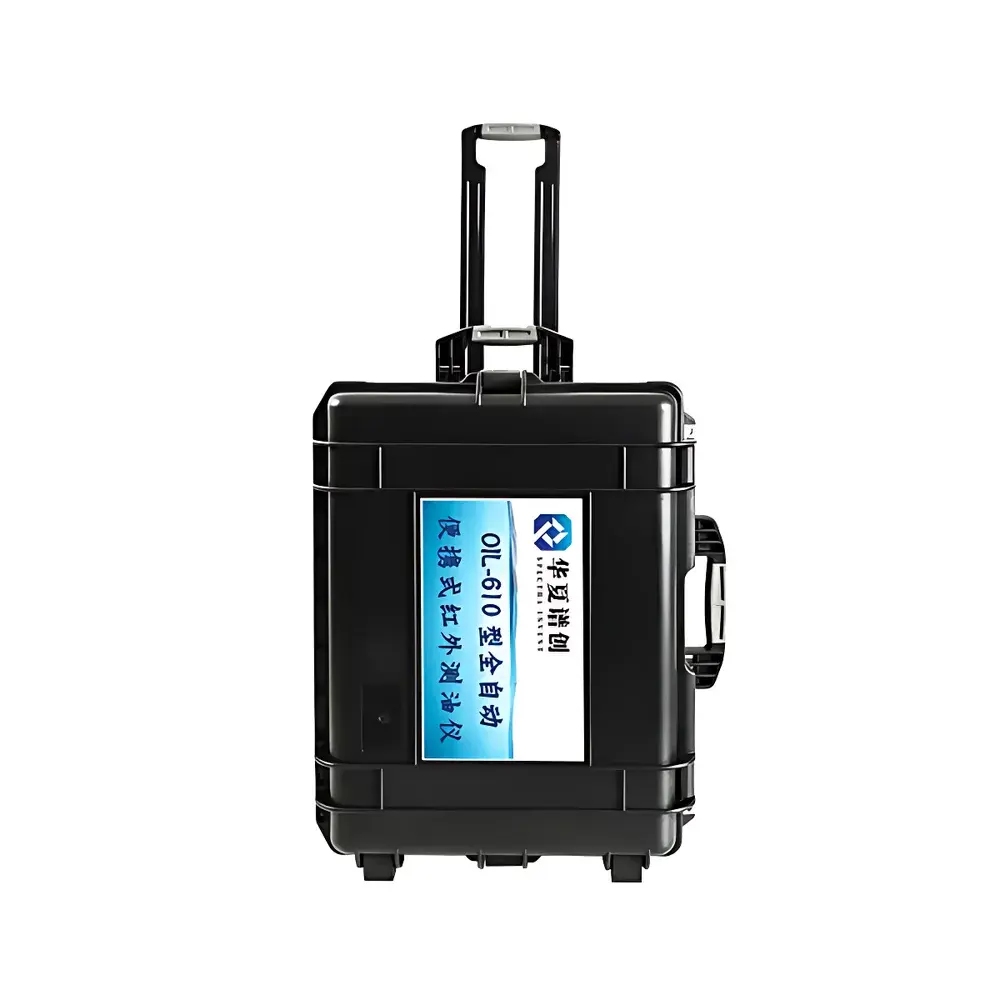
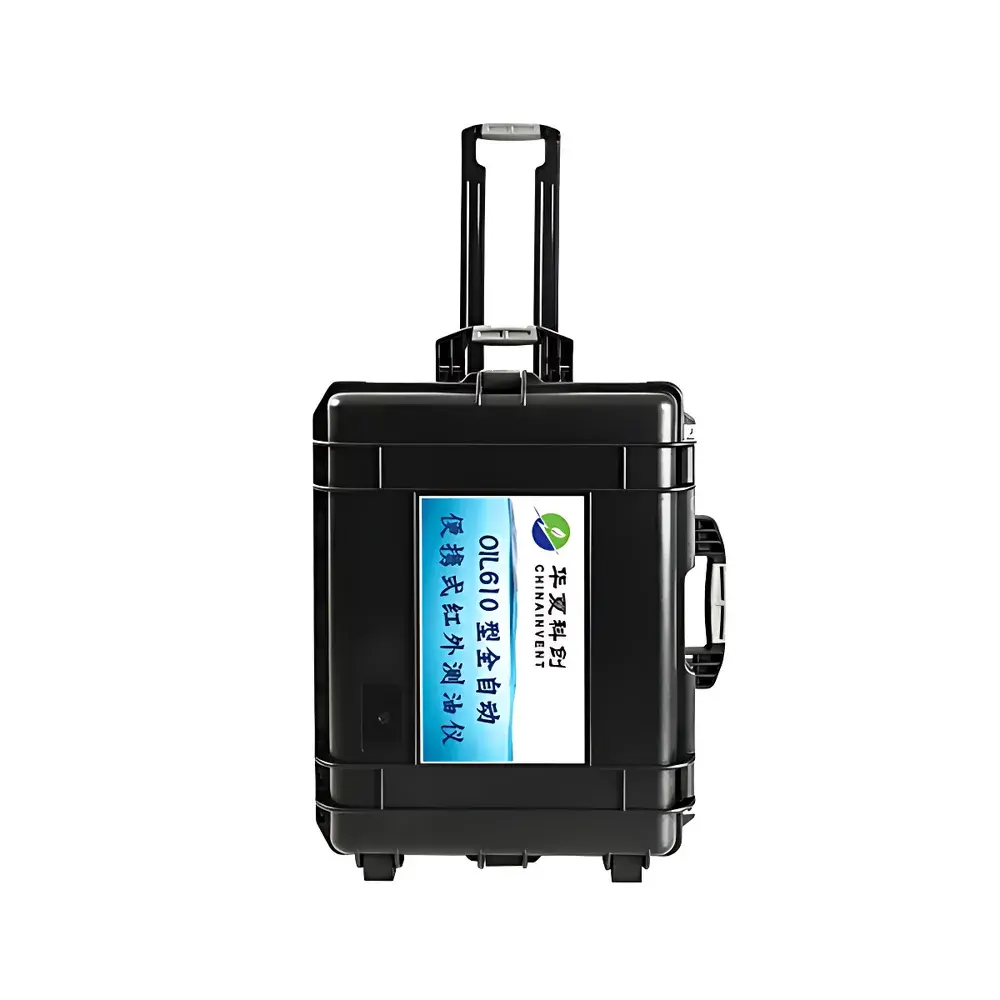
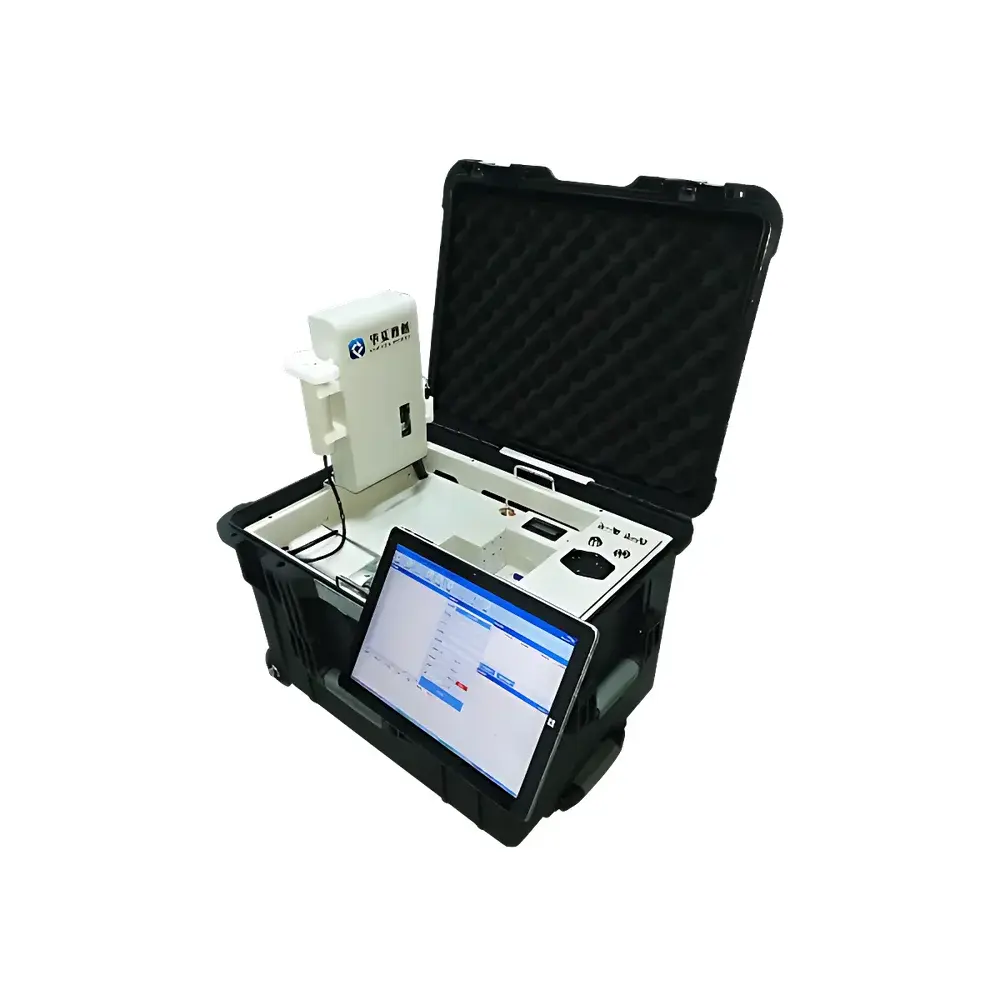
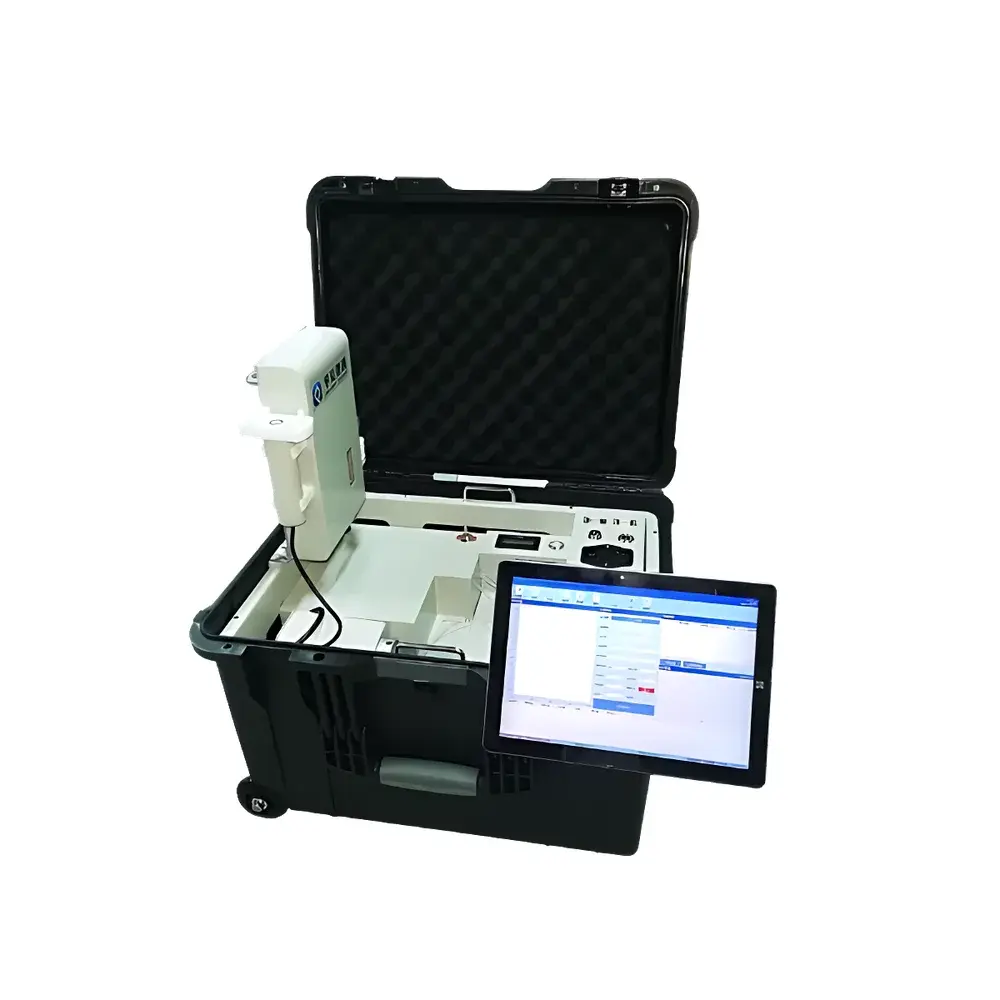
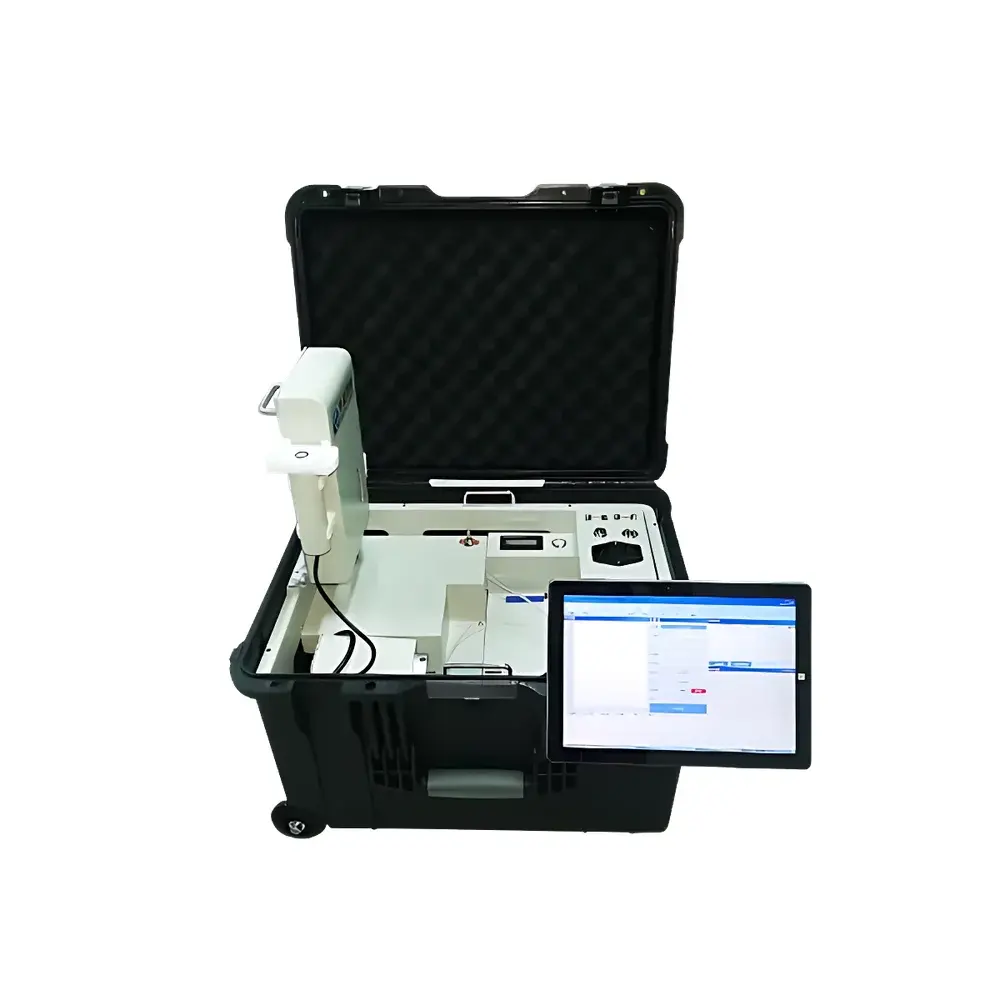
Spectra Invent OIL-610 Portable Automated Infrared Oil Content Analyzer
| Brand | Spectra Invent (Chinainvent) |
|---|---|
| Origin | Beijing, China |
| Model | OIL-610 |
| Principle | Infrared Spectrophotometry |
| Measurement Range | 0–64,000 mg/L (auto-dilution beyond range) |
| Detection Limit | 0.06 mg/L |
| Accuracy | ≤1.5% (at 30–50 mg/L) |
| Wavenumber Range | 3400–2400 cm⁻¹ (2941–4167 nm) |
| Absorbance Range | 0.0000–2.0000 AU |
| Wavelength Accuracy | ±2 nm |
| Wavelength Repeatability | ±1 cm⁻¹ |
| Precision (RSD) | ≤0.6% (at 30–50 mg/L) |
| Linearity (r) | >0.9995 |
| Sample Volume | 0–650 mL |
| Analysis Time | 8 min per sample |
| IP Rating | IP67 |
| Display | 10.5-inch Windows touchscreen with keyboard |
| Dimensions | 523 × 415 × 375 mm |
| Power | 220 V, 50 Hz, 50 W |
| Operating Environment | −5 to 45 °C, 20–85% RH |
Overview
The Spectra Invent OIL-610 Portable Automated Infrared Oil Content Analyzer is an engineered solution for field-deployable, regulatory-compliant quantification of total petroleum hydrocarbons (TPH), mineral oil, and animal/vegetable oils in aqueous, soil, and gaseous matrices. It operates on the principle of mid-infrared absorption spectroscopy—specifically targeting the C–H stretching vibrations in aliphatic hydrocarbons at wavenumbers between 3400 cm⁻¹ and 2400 cm⁻¹ (2941–4167 nm). This spectral region enables selective detection of hydrocarbon functional groups while minimizing interference from water, organic acids, or polar solvents when using tetrachloroethylene (C₂Cl₄) as the extraction solvent. Designed in strict alignment with Chinese national environmental standards—including HJ 637-2018 (water), HJ 1051-2019 (soil), and HJ 1077-2019 (stack emissions)—the OIL-610 delivers laboratory-grade data integrity under non-laboratory conditions. Its fully automated liquid handling system integrates high-speed vortex-assisted extraction, phase separation, and cell filling, eliminating manual transfer errors and reducing analyst exposure to hazardous solvents.
Key Features
- Fully integrated portable platform with built-in 10.5-inch Windows touchscreen PC, enabling standalone operation without external computing hardware.
- IP67-rated enclosure ensures dust-tight and immersion-resistant performance for use in harsh outdoor, industrial, or emergency response environments.
- Automated dilution module extends dynamic measurement range up to 64,000 mg/L while maintaining trace-level sensitivity (DL = 0.06 mg/L, determined as 3×SD of 11 blank measurements in C₂Cl₄).
- Optical path stability maintained via thermally stabilized interferometer and precision-machined ZnSe beam splitter; wavelength accuracy ±2 nm and repeatability ±1 cm⁻¹ meet ISO 17025 calibration traceability requirements.
- Quantitative analysis engine applies dual-wavelength ratio correction (e.g., 2930 cm⁻¹, 2960 cm⁻¹, and 3030 cm⁻¹ bands) to compensate for solvent matrix effects and spectral baseline drift.
- Sample handling supports variable volumes (0–650 mL) with calibrated sampling cups; compatible with standard EPA-approved glassware and disposable extraction vessels.
Sample Compatibility & Compliance
The OIL-610 accommodates diverse environmental matrices requiring oil content assessment: wastewater effluents, surface and groundwater, leachates, soil extracts (via acidified C₂Cl₄ extraction), and fixed-source stack condensates (oil mist and cooking fume particulates). All analytical protocols adhere to method-defined sample preparation steps—including pH adjustment to ≤2 prior to extraction—as stipulated in HJ 637-2018. The instrument’s optical design and chemometric algorithms are validated against certified reference materials (CRMs) traceable to NIST SRM 1648a (Urban Particulate Matter) and custom hydrocarbon mixtures. Data output conforms to GLP documentation standards, supporting audit-ready electronic records including full absorbance spectra, raw peak integrals, dilution logs, and operator metadata. While not pre-certified for US EPA Method 1664 or ISO 9377-2, its spectral acquisition architecture and calibration workflow are technically aligned with those frameworks for cross-jurisdictional method adaptation.
Software & Data Management
The embedded Windows-based software provides full method configuration, real-time spectral visualization, multi-point calibration curve generation (linear and polynomial), and automated report generation in PDF and CSV formats. Audit trail functionality records all user actions—including method edits, calibration updates, and result overrides—with timestamps and operator ID. Data files include embedded spectral metadata (wavenumber resolution, scan count, aperture setting) and comply with basic FDA 21 CFR Part 11 principles through password-protected user roles (Operator, Supervisor, Administrator) and immutable log files. Exported datasets retain native absorbance units (AU) and support post-acquisition reprocessing using third-party chemometric tools (e.g., MATLAB, Unscrambler). No cloud synchronization or remote telemetry is enabled by default; all data remains resident on the local SSD unless explicitly exported via USB or network share.
Applications
- Rapid on-site screening of industrial discharge points for compliance with local wastewater oil limits (e.g., ≤10 mg/L for municipal sewer acceptance).
- Emergency response triage during pipeline ruptures or tanker spills, delivering quantitative TPH results within 8 minutes per sample without lab transport delays.
- Soil remediation site characterization, supporting HJ 1051-2019–compliant extraction and analysis of petroleum-contaminated vadose and saturated zone samples.
- Restaurant exhaust monitoring per HJ 1077-2019, where aerosolized cooking oil is captured on quartz filters and extracted for infrared quantification.
- QA/QC verification of oil-water separator efficiency in marine, refinery, and manufacturing facilities.
FAQ
Does the OIL-610 require external gas supply or vacuum pump for operation?
No—the system uses positive-pressure fluidics and gravity-assisted phase separation; no compressed air, nitrogen, or vacuum infrastructure is needed.
Can the instrument be calibrated using non-C₂Cl₄ solvents such as FC-40 or cyclohexane?
Calibration is optimized for tetrachloroethylene per HJ 637-2018; alternative solvents require full revalidation of spectral baselines, extraction efficiency, and detection limits.
Is the touchscreen interface operable with gloves or in wet conditions?
Yes—the capacitive screen supports gloved-finger input and maintains responsiveness under high-humidity and light-rain conditions, consistent with IP67 operational validation.
How is instrument performance verified between calibrations?
A daily system suitability test (SST) protocol is included, using a certified mid-range check standard (e.g., 25 mg/L oil-in-C₂Cl₄); acceptance criteria include absorbance reproducibility (RSD ≤0.6%) and linearity (r ≥0.999).
What maintenance intervals are recommended for field deployment?
Optical windows should be cleaned weekly with spectroscopic-grade methanol; extraction tubing requires replacement every 200 analyses; annual factory recalibration is advised for ISO/IEC 17025-aligned laboratories.
Related Products







