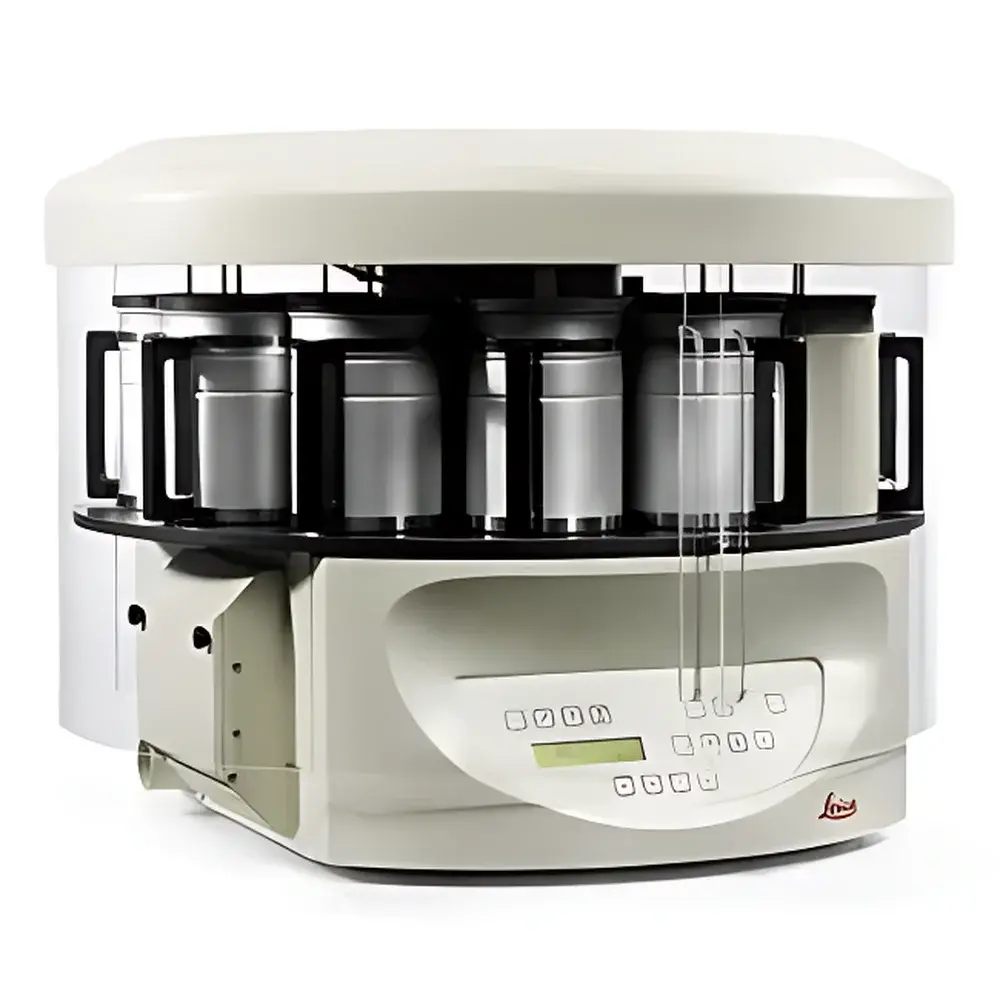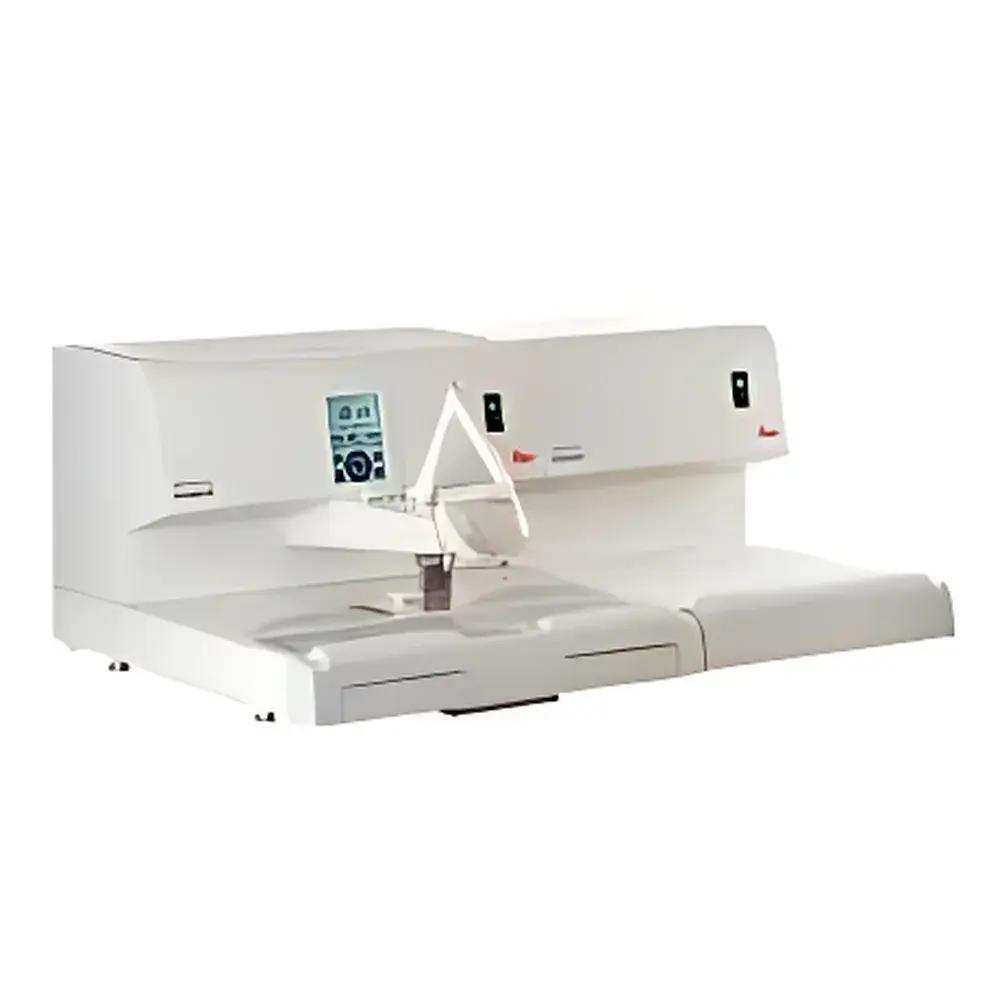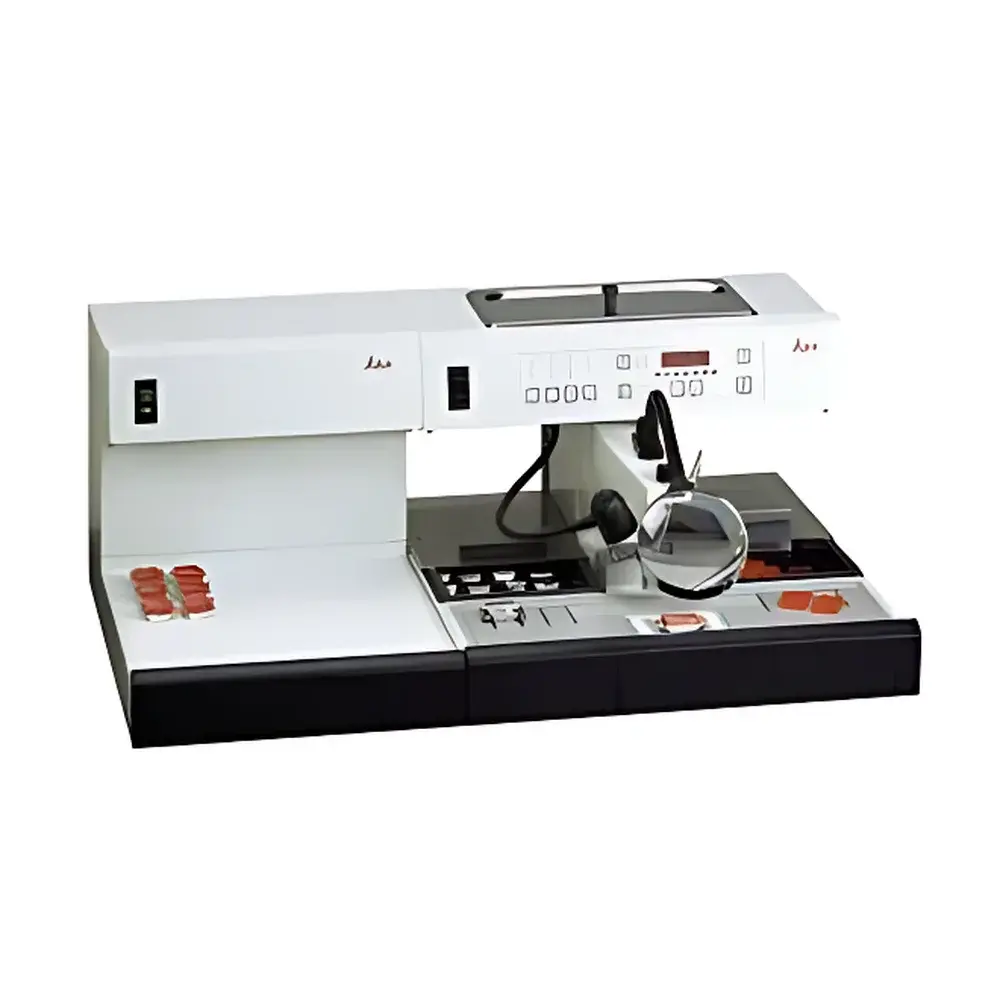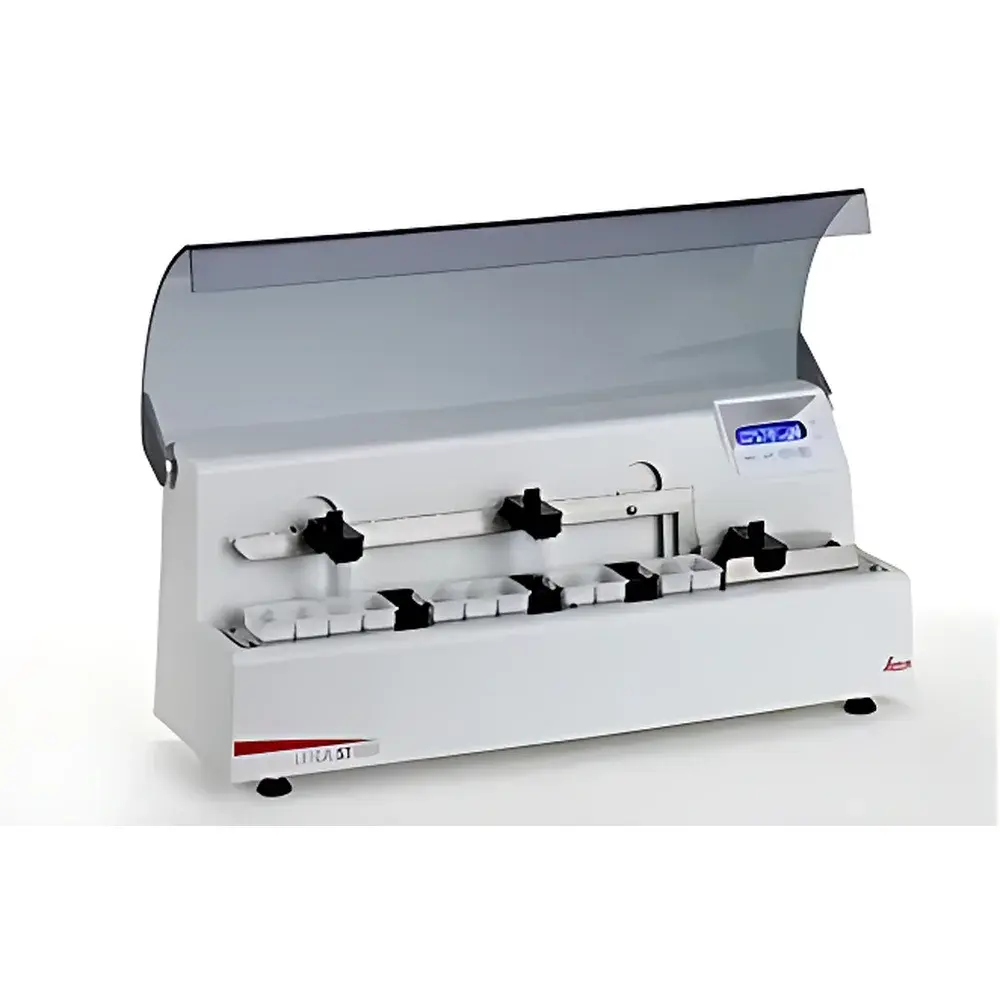
Leica ST4020 Compact Linear Slide Stainer
| Origin | Germany |
|---|---|
| Manufacturer Type | Authorized Distributor |
| Origin Category | Imported |
| Model | ST4020 |
| Pricing | Available Upon Request |
Overview
The Leica ST4020 Compact Linear Slide Stainer is an automated, benchtop-scale linear stainer engineered for precision histopathology laboratories requiring high reproducibility, space efficiency, and workflow flexibility. Utilizing a linear transport mechanism with programmable reagent stations and precisely timed immersion cycles, the ST4020 delivers consistent hematoxylin–eosin (H&E), special stains (e.g., Masson’s trichrome, PAS), and immunohistochemical (IHC) pretreatment protocols across diverse specimen types—including frozen sections, Mohs micrographic surgery specimens, fine-needle aspirations (FNA), and core biopsies. Its architecture follows the fundamental principles of controlled reagent exposure, temperature-stable incubation zones (ambient to 65 °C optional), and sequential slide advancement via motorized carrier rails—ensuring minimal inter-slide variability and compliance with CAP/CLIA pre-analytical standardization requirements.
Key Features
- Compact footprint (W × D × H: 480 × 520 × 390 mm) enables direct placement atop cryostats or integration into limited-space histology workstations.
- Linear staining architecture with up to 16 programmable reagent stations—supporting customizable protocols with independent dwell times per station (2–300 seconds, adjustable in 1-second increments).
- Modular fluid handling: Three selectable rinse stations (deionized water or buffer), optional agitation mode per reagent bath, and low-volume reagent reservoirs (≤120 mL per station) to minimize consumable waste and reduce operational cost.
- High-throughput capacity: Processes 1–4 slides simultaneously per cycle; achieves ≥400 slides/hour under optimized protocol conditions with automatic batch loading and unloading.
- Integrated acoustic end-of-cycle notification and real-time status LED indicators for hands-free monitoring during concurrent lab tasks.
- Robust stainless-steel and chemical-resistant polymer construction compliant with ISO 13485 design controls for medical device manufacturing environments.
Sample Compatibility & Compliance
The ST4020 accommodates standard 1″ × 3″ (25 × 75 mm) glass slides with frosted or adhesive coatings, including charged, silanized, and APES-treated variants. It supports both routine paraffin-embedded tissue sections (3–5 µm) and frozen sections (5–10 µm), maintaining edge integrity and minimizing section lifting during agitation. All staining protocols are configurable to align with ASTM E2872 (Standard Practice for Validation of Automated Histological Stainers), CAP Checklist ANP.30720 (Staining Quality Assurance), and ISO 15189:2022 clause 5.3.2 (Pre-examination process control). The system supports audit-ready log generation—including user ID, timestamp, protocol version, reagent lot numbers, and cycle parameters—for GLP/GMP traceability.
Software & Data Management
The ST4020 operates via Leica Biosystems’ proprietary ST4020 Control Software (v3.2+), installed on an embedded industrial-grade controller with password-protected user roles (Administrator, Technician, Viewer). Protocols are stored locally with version control and exportable as XML files for cross-system replication. The software includes built-in QC tools: automated drift detection for staining intensity consistency (measured via integrated RGB sensor calibration), reagent depletion alerts, and maintenance scheduling based on actual usage cycles. Data logs comply with FDA 21 CFR Part 11 requirements for electronic records and signatures when deployed with networked authentication and audit trail configuration.
Applications
- Routine H&E staining of dermatopathology specimens, especially Mohs margin assessment where rapid turnaround and morphologic fidelity are critical.
- Special stain automation for connective tissue (e.g., Van Gieson), mucopolysaccharides (Alcian blue), and microorganisms (Gram, AFB)—reducing manual variability and technician fatigue.
- IHC antigen retrieval workflows (heat-induced epitope retrieval using citrate or EDTA buffers) with precise temperature ramping and hold profiles.
- High-mix, low-volume labs managing urgent intraoperative consultations alongside scheduled diagnostic caseloads.
- Research histology cores requiring protocol portability between instruments and long-term staining reproducibility across multi-site studies.
FAQ
What slide capacity does the ST4020 support per run?
The instrument processes 1–4 slides concurrently per staining cycle, with a maximum throughput of ≥400 slides per hour depending on protocol complexity and dwell times.
Is the ST4020 compatible with third-party reagents?
Yes—open reagent architecture accepts all standard aqueous- and alcohol-based histological reagents; however, Leica recommends validated reagent kits for optimal performance and warranty coverage.
Does the system support remote monitoring or network connectivity?
Local Ethernet interface enables integration into LIS/HIS via HL7 v2.5 messaging; remote diagnostics require Leica Service Portal authorization and secure VPN tunneling.
How is cleaning and maintenance performed?
Automated daily rinse cycles purge residual reagents; monthly deep-cleaning kits include dedicated tubing flush solutions and brush sets for station nozzles and rail guides—documented in the Maintenance Log module.
Can protocols be transferred from larger Leica stainers (e.g., ST5020)?
Yes—ST4020 software imports ST5020 protocol templates with automatic parameter scaling for reduced volume and adjusted timing logic.