
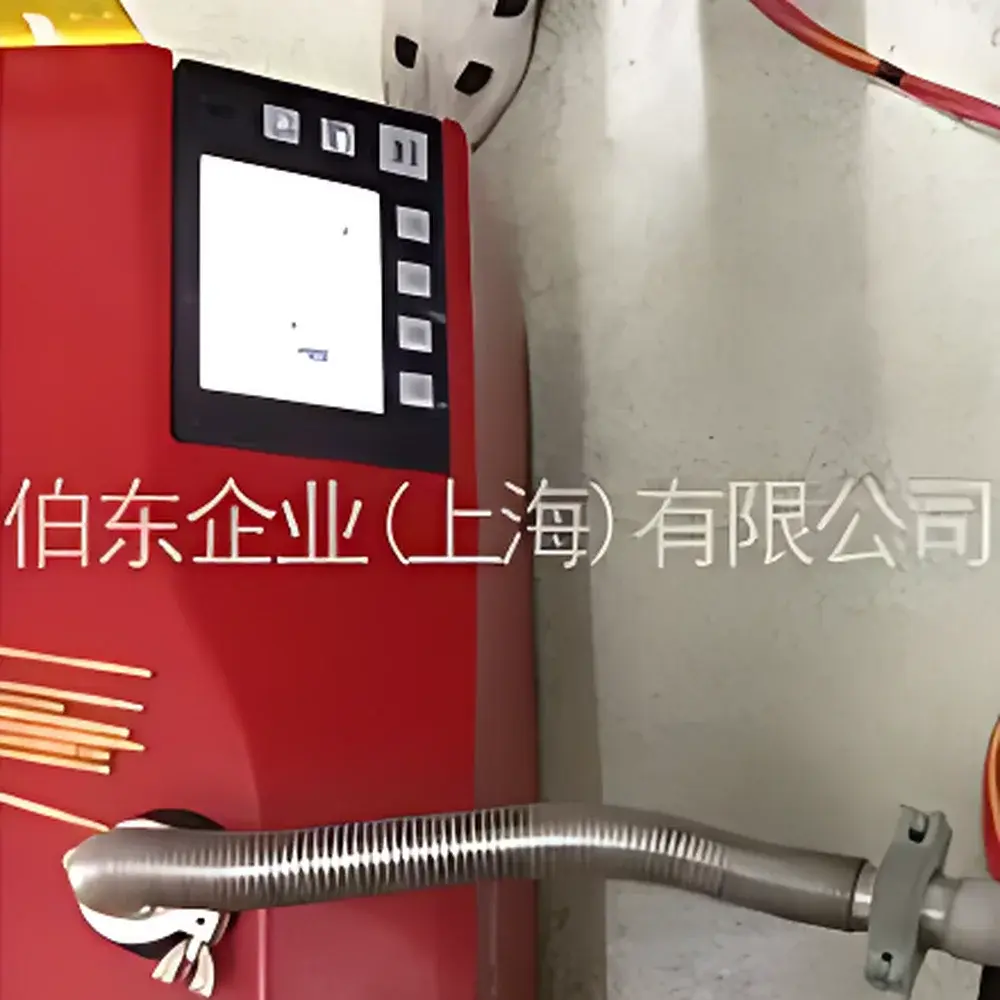
Pfeiffer Vacuum ASM 340 Helium Mass Spectrometer Leak Detector for Heat Pipe Testing
| Brand | Pfeiffer Vacuum |
|---|---|
| Origin | France |
| Model | ASM 340 (Thermal Pipe-Specific Configuration) |
| Detection Sensitivity | ≤1×10⁻⁸ mbar·L/s (He) |
| Operating Mode | Vacuum Test (Sniffer & Accumulation Compatible) |
| Pumping System | Integrated HiPace 80 Molecular Pump + ACP 20 Dry Scroll Backing Pump |
| Compliance | CE, RoHS, ISO 9001 Certified |
| Interface Options | Analog I/O, RS-232, Ethernet (Modbus TCP), Optional Footswitch Integration |
Overview
The Pfeiffer Vacuum ASM 340 Helium Mass Spectrometer Leak Detector is a high-sensitivity, industrial-grade vacuum leak detection system engineered for precision quantification of helium tracer gas ingress in evacuated components. Based on quadrupole mass spectrometry operating at unit mass resolution (m/z = 4 for 4He), the ASM 340 delivers stable, reproducible leak rate measurements down to 1×10⁻⁸ mbar·L/s—making it uniquely suited for quality assurance in heat pipe manufacturing. Heat pipes rely on hermetic encapsulation of phase-change working fluids (e.g., water, ammonia, or methanol) under controlled partial vacuum; even sub-micron leaks compromise thermal resistance, long-term reliability, and device safety. Unlike pressure-rise or bubble-test methods, helium mass spectrometry provides quantitative, non-destructive, and trace-level sensitivity essential for validating micro-leak integrity in high-volume electronics thermal management assemblies.
Key Features
- Integrated ultra-high-vacuum architecture featuring Pfeiffer’s HiPace 80 turbomolecular pump and ACP 20 dry scroll backing pump—ensuring rapid pump-down (<60 s to 1×10⁻³ mbar) and stable base pressure (<5×10⁻⁷ mbar).
- Dual-mode operation: optimized vacuum testing (hard-line connection) and flexible sniffer mode for localized leak localization—both calibrated per ISO 9934-3 and ASTM E432.
- Real-time digital signal processing with auto-zero stabilization and dynamic background compensation to minimize drift during extended production runs.
- Modular front-end interface supporting custom fixture integration—including bespoke vacuum chucks, O-ring-sealed thermal pipe adapters, and helium spray manifolds designed for cylindrical and vapor chamber (VC) geometries.
- Optional footswitch control module enabling hands-free start/stop sequencing—reducing operator fatigue and improving throughput consistency in high-cycle QA environments.
- Robust mechanical design compliant with IP54 environmental rating; suitable for cleanroom Class 10,000 (ISO 7) and factory-floor deployment.
Sample Compatibility & Compliance
The ASM 340 is validated for direct vacuum testing of sealed microfluidic thermal transport devices including copper/aluminum wick-based heat pipes, flattened heat pipes (FHP), and two-phase vapor chambers up to 200 mm × 150 mm. Fixture designs accommodate standard diameters (3–12 mm) and flat-profile VC modules without requiring internal porting. All test protocols align with IPC-9701A (Performance Requirements for Surface Mount Solder Attachments) and JEDEC J-STD-020 (Moisture Sensitivity Levels), ensuring compatibility with electronics thermal component qualification workflows. The system meets EU Machinery Directive 2006/42/EC, EMC Directive 2014/30/EU, and supports audit-ready documentation for ISO 13485 and IATF 16949-certified production lines.
Software & Data Management
Equipped with Pfeiffer’s proprietary LeakTest Pro v3.2 software, the ASM 340 enables full traceability through configurable pass/fail thresholds (e.g., ≤1×10⁻⁸ mbar·L/s), timestamped result logging, and CSV/PDF export. Audit trails record operator ID, test duration, helium exposure timing, and raw ion current data—fully compliant with FDA 21 CFR Part 11 requirements when deployed with user authentication and electronic signature modules. Remote diagnostics via Ethernet allow predictive maintenance alerts based on pump performance metrics and detector filament life estimation. Data integration with MES platforms (Siemens Opcenter, Rockwell FactoryTalk) is supported through OPC UA and Modbus TCP protocols.
Applications
- Final acceptance testing of heat pipes for notebook PCs, GPU cooling modules, and 5G base station power converters.
- In-process leak validation during copper sintering and end-cap brazing in thermal module assembly lines.
- R&D characterization of novel wick structures (sintered powder, grooved, mesh) under accelerated thermal cycling (−40°C to +125°C).
- Leak mapping of multi-channel vapor chambers using sequential helium spray and positional correlation algorithms.
- Calibration verification against NIST-traceable leak standards (e.g., Vici Calibrations Series LK-100) in metrology labs.
FAQ
What leak rate threshold is typical for heat pipe qualification?
Industry-standard acceptance criteria for consumer electronics heat pipes range from 1×10⁻⁸ to 5×10⁻⁹ mbar·L/s, depending on fluid type, operating temperature, and expected service lifetime.
Can the ASM 340 detect leaks in non-evacuated heat pipes?
Yes—using sniffer mode with external helium spray and accumulation testing, though vacuum-mode sensitivity remains superior for quantitative certification.
Is fixture customization available for non-standard heat pipe geometries?
Yes—Pfeiffer-certified engineering partners provide mechanical design, vacuum sealing validation, and leak-tightness verification for custom chucks and manifold interfaces.
Does the system support GLP/GMP-compliant reporting?
With optional software licensing and hardware authentication modules, full 21 CFR Part 11 compliance—including electronic signatures, audit logs, and data immutability—is achievable.
What maintenance intervals are recommended for high-throughput production use?
Molecular pump oil replacement every 12 months (or 8,000 operating hours); filament replacement every 18–24 months under continuous operation; quarterly calibration with certified reference leaks.





