
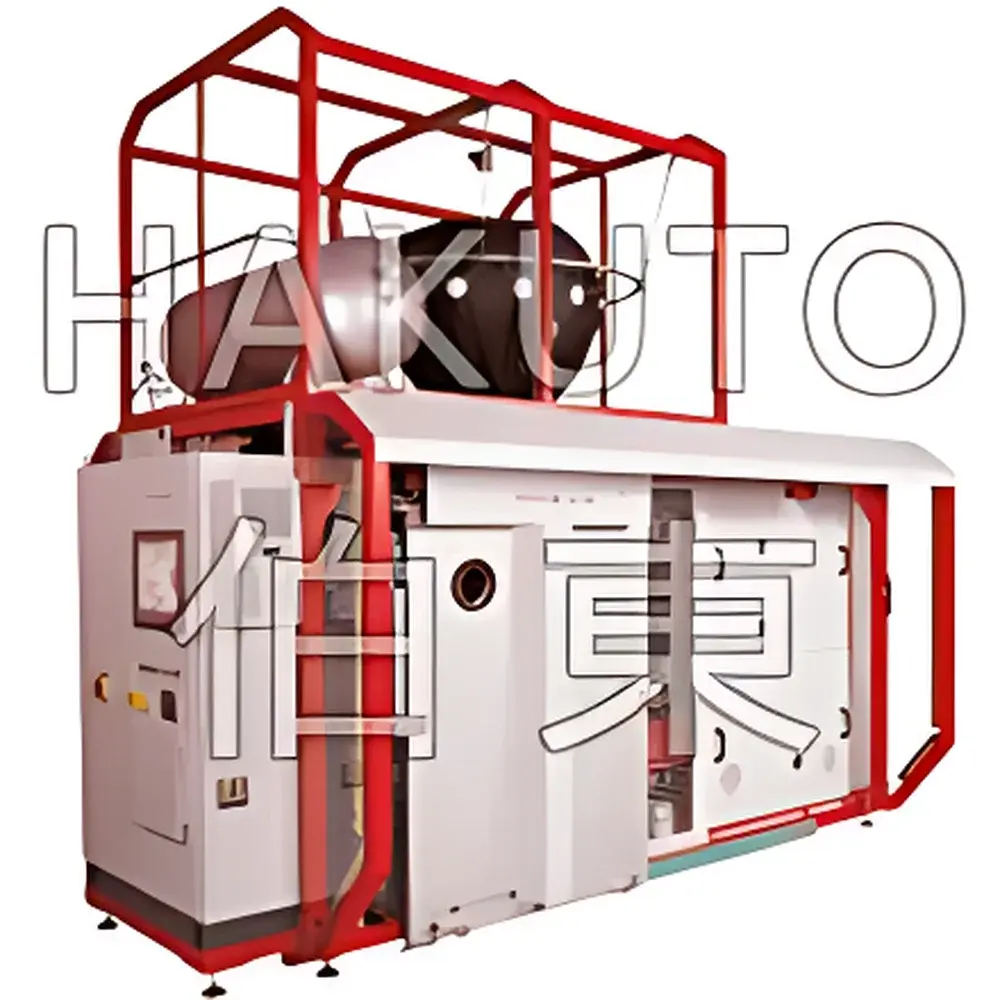
Helium Mass Spectrometer Leak Detection System for High-Voltage Switchgear
| Key | Origin: France |
|---|---|
| Supplier Type | Authorized Distributor |
| Import Status | Imported |
| Model | HV Switchgear-Specific Leak Detection System |
| Price Range | USD 110,000 – 138,000 (FOB) |
Overview
The Helium Mass Spectrometer Leak Detection System for High-Voltage Switchgear is a precision-engineered vacuum-integrated leak testing platform designed specifically for the electrical power transmission and distribution industry. It operates on the principle of residual gas analysis using quadrupole mass spectrometry, with helium (⁴He⁺) as the tracer gas. When helium is introduced externally or internally to a pressurized or evacuated component—such as gas-insulated switchgear (GIS), circuit breakers, or medium-voltage disconnectors—the system detects helium ions via magnetic or electrostatic mass filtering, enabling quantitative leak rate measurement down to 1 × 10⁻¹² mbar·L/s. Unlike generic benchtop helium leak detectors, this configuration integrates custom vacuum manifolds, high-conductance pumping stages, and application-specific test fixtures optimized for large-volume, high-surface-area components typical in HV/MV infrastructure. The system is engineered for reproducible, traceable, and auditable leak verification under industrial operating conditions—not laboratory-only environments.
Key Features
- Quadrupole mass spectrometer core with <1 amu resolution, calibrated per ISO 9934-3 and ASTM E432 standards for tracer gas detection sensitivity
- Dedicated vacuum architecture featuring dual-stage turbomolecular pumping (≥600 L/s total speed) coupled with dry backing pumps to ensure rapid pump-down of GIS enclosures up to 5 m³ volume
- Automated test sequencing with programmable pressure ramping, hold times, and helium injection protocols compliant with IEC 62271-203 and IEEE C37.122.1 requirements
- Integrated helium partial pressure monitoring and real-time leak rate calculation (in mbar·L/s) with automatic pass/fail classification based on user-defined thresholds
- Modular mechanical interface design supporting flange-based coupling to SF₆-filled compartments, bushings, and sealed interrupter chambers without disassembly
- Optional helium recovery module (HRM-200 series) enabling >90% helium reuse—reducing operational gas consumption and lowering cost-per-test by up to 65% over standalone systems
Sample Compatibility & Compliance
This system is validated for non-destructive leak assessment of hermetically sealed high-voltage components including gas-insulated metal-enclosed switchgear (GIS), sulfur hexafluoride (SF₆) circuit breakers, vacuum interrupters, medium-voltage ring main units (RMUs), and electromagnetic actuators (e.g., contactors and solenoid-operated isolators). All hardware interfaces comply with EN 50182 (electrical safety for HV equipment testing) and ISO 10855-2 (vacuum system integrity requirements). Software operation supports audit trail generation meeting FDA 21 CFR Part 11 and EU Annex 11 data integrity expectations when deployed in regulated utility maintenance facilities. Calibration certificates are traceable to LNE (Laboratoire National de Métrologie et d’Essais), France.
Software & Data Management
The embedded control software—LeakTest Suite v4.2—provides full lifecycle test management: from test plan definition (including multi-point scanning paths for large assemblies) to automated report generation in PDF/CSV formats. Each test record includes timestamped vacuum curves, helium signal traces, environmental temperature/pressure metadata, and operator ID. Data export supports OPC UA integration for SCADA-level synchronization within substation digital twin platforms. All changes to test parameters, calibration settings, or user permissions are logged with immutable timestamps and digital signatures—fully satisfying GLP/GMP-aligned quality management system (QMS) requirements.
Applications
- Routine factory acceptance testing (FAT) of new GIS bays prior to commissioning
- Periodic in-service inspection of aging SF₆ equipment to verify seal integrity and prevent dielectric failure
- Root-cause analysis of partial discharge events linked to micro-leakage-induced gas degradation
- Validation of repair welds or gasket replacements following outage maintenance
- Qualification of third-party spare parts (e.g., insulators, bushings) against OEM leakage specifications
- Supporting ISO 50001 energy management audits by quantifying SF₆ fugitive emissions
FAQ
Does this system support both vacuum and sniffer-mode detection?
Yes—it operates in both vacuum mode (for pressurized components tested under negative pressure) and localized sniffer mode (for atmospheric-pressure components using helium spray), with automatic sensor reconfiguration and sensitivity recalibration.
Can it be integrated into an existing substation SCADA network?
Yes—via Ethernet/IP or Modbus TCP; optional OPC UA server license enables bidirectional communication with Siemens Desigo, Schneider EcoStruxure, or GE Digital Grid solutions.
What calibration interval is recommended for field use?
Annual calibration is advised, with intermediate verification using certified leak standards (e.g., Vici 1 × 10⁻⁹ mbar·L/s reference leaks) prior to critical FAT campaigns.
Is training provided for utility maintenance personnel?
Yes—comprehensive on-site operator certification (2-day course) and remote supervisor-level training on data interpretation and regulatory reporting are included with system delivery.
Related Products




