
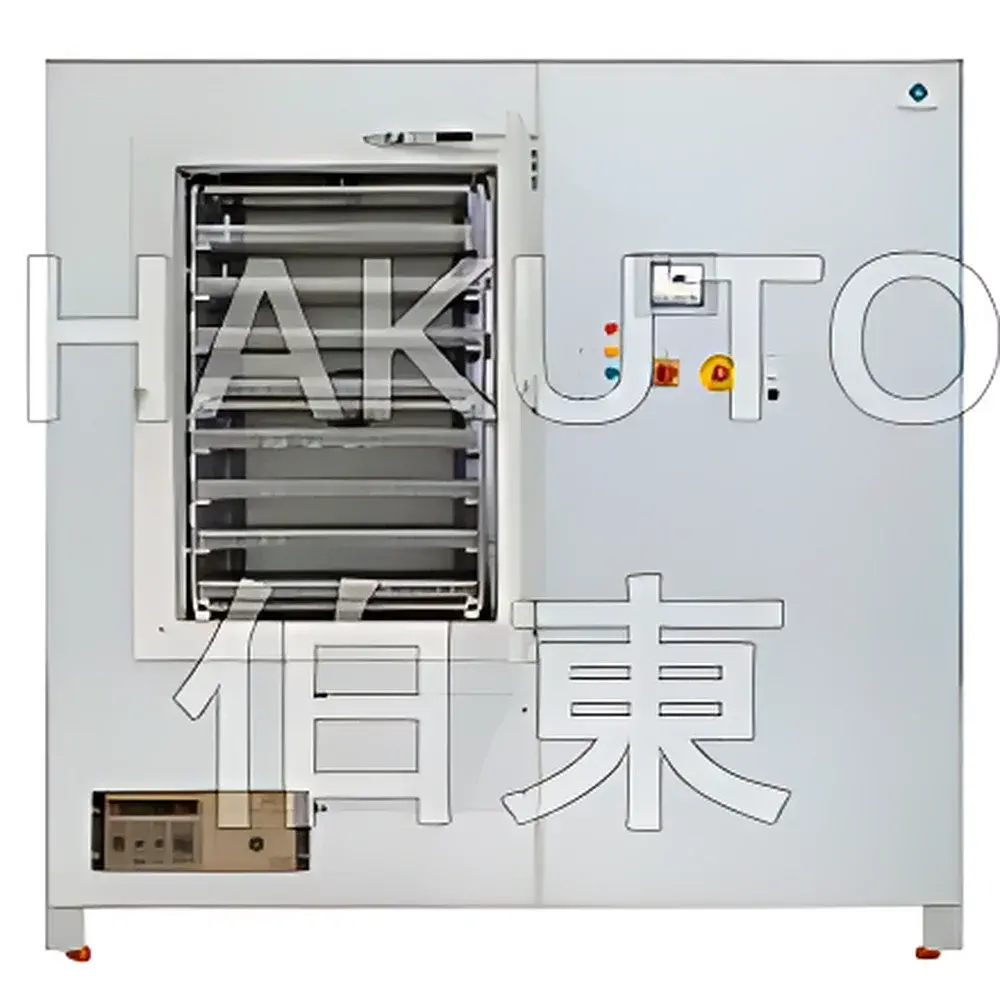
Europlasma CD Series Plasma Surface Treater for Microfluidic Chip Hydrophilization and Hydrophobization
| Brand | Europlasma |
|---|---|
| Origin | Belgium |
| Model | CD |
| RF Power | 5 kW |
| Chamber Dimensions | 700 × 700 × 1200 mm |
| Chamber Volume | 490 L |
| Chamber Material | Aluminum |
| Process Gases | O₂, Ar, and other reactive/inert gases |
| Control System | Fully Automated |
| Equipment Type | Imported Plasma Surface Treatment System |
| Compliance | REACH, RoHS, WEEE, USP Class VI |
Overview
The Europlasma CD Series Plasma Surface Treater is an industrial-grade, low-pressure radiofrequency (RF) plasma system engineered for precise, uniform surface functionalization of microfluidic chips and other polymer-based lab-on-a-chip substrates. Operating at 5 kW RF power under controlled vacuum conditions, the system utilizes plasma-enhanced surface polymerization and atomic layer deposition (ALD)-compatible processes to modify surface energy without altering bulk material properties. Unlike atmospheric plasma or corona treatments, this vacuum-based approach ensures reproducible, conformal nanoscale coatings on complex 3D geometries—including microchannels with aspect ratios exceeding 10:1—enabling reliable hydrophilic (WCA < 10°) or hydrophobic (WCA up to 150°) surface states. The aluminum chamber provides electromagnetic shielding, thermal stability, and compatibility with aggressive process chemistries, supporting both oxygen-based activation and fluorocarbon-based passivation protocols.
Key Features
- High-power 5 kW RF generator with impedance-matching network for stable plasma ignition and sustained discharge across variable load conditions
- Large-volume 490 L aluminum vacuum chamber (700 × 700 × 1200 mm), optimized for batch processing of standard microfluidic chip carriers and multi-wafer fixtures
- Fully automated PLC-based control system with recipe-driven operation, real-time pressure/temperature monitoring, and integrated safety interlocks
- Multi-gas inlet manifold supporting O₂, Ar, CF₄, C₄F₈, and custom gas blends for tailored surface chemistry (e.g., -OH group enrichment for hydrophilicity or -CFₓ termination for hydrophobicity)
- Nanometer-precision coating capability: functional layers ranging from 5–50 nm for hydrophilic Nanofics® 10 and 110–150° hydrophobic Nanofics® 110/120 variants, with thickness control verified via ellipsometry and XPS
- Compliance-ready architecture: supports audit trails, user access levels, and electronic signature functionality aligned with FDA 21 CFR Part 11 requirements for regulated laboratories
Sample Compatibility & Compliance
The CD Series accommodates standard microfluidic substrates including PDMS, COC, PMMA, PC, and cyclic olefin polymer (COP) chips—regardless of channel depth (≥10 µm), width (≥20 µm), or aspect ratio. Surface modification is non-thermal and substrate-neutral: no measurable change in mechanical modulus, optical clarity, or dimensional stability occurs post-treatment. All Nanofics® and PlasmaGuard® coating formulations are certified per REACH Annex XIV, RoHS Directive 2011/65/EU, WEEE Directive 2012/19/EU, and USP / cytotoxicity testing (Class VI). Halogen-free options are available upon specification for medical device OEMs requiring IEC 61249-2-21 compliance.
Software & Data Management
The Europlasma ControlSuite™ software provides ISO/IEC 17025-aligned process documentation: each run logs timestamped chamber pressure, forward/reflected RF power, gas flow rates, treatment duration, and end-point optical emission spectroscopy (OES) signatures. Data export complies with ASTM E2500-18 for equipment qualification and supports GLP/GMP audit readiness. Integration with LIMS platforms is enabled via OPC UA and CSV/JSON APIs. Electronic records include operator ID, calibration status of mass flow controllers, and maintenance history—all retained for ≥15 years per internal SOP-PS-004.
Applications
- Hydrophilic conditioning of PDMS microchannels to suppress bubble nucleation and improve aqueous reagent wetting in immunoassay and PCR-on-chip devices
- Hydrophobic patterning of COC chips for digital microfluidics (DMF) electrode insulation and droplet actuation fidelity
- Surface activation prior to covalent immobilization of antibodies, DNA probes, or enzymes—enhancing binding density and assay signal-to-noise ratio
- Barrier coating for implantable diagnostic sensors requiring long-term biofouling resistance in saline or serum environments
- Pre-treatment of thermoplastic microfluidic housings prior to adhesive bonding or ultrasonic welding
FAQ
What is the minimum feature size that can be uniformly treated within microchannels?
Microchannels with widths down to 20 µm and depths up to 200 µm achieve full surface coverage, confirmed by contact angle mapping and SEM-EDS depth profiling.
Can the system handle multi-material chips (e.g., PDMS bonded to glass)?
Yes—the low-temperature plasma (<40 °C substrate rise) prevents delamination; differential etch rates are compensated via gas chemistry tuning and pulse modulation.
Is validation support provided for regulatory submissions?
Europlasma supplies IQ/OQ protocols, traceable calibration certificates for all critical sensors, and a Design Qualification (DQ) package compliant with ISO 13485:2016 Annex A for medical device manufacturers.
How is process repeatability ensured across batches?
Each treatment cycle includes automatic chamber conditioning, real-time RF impedance feedback, and post-run OES verification against reference spectra—ensuring ±0.8° WCA deviation over 1,000 consecutive runs.
What maintenance intervals are recommended for sustained GMP operation?
Plasma electrode inspection every 500 hours; RF matching network recalibration every 1,000 hours; vacuum pump oil change every 3,000 hours—documented in the Maintenance Logbook per ISO 15189:2022 clause 5.3.



