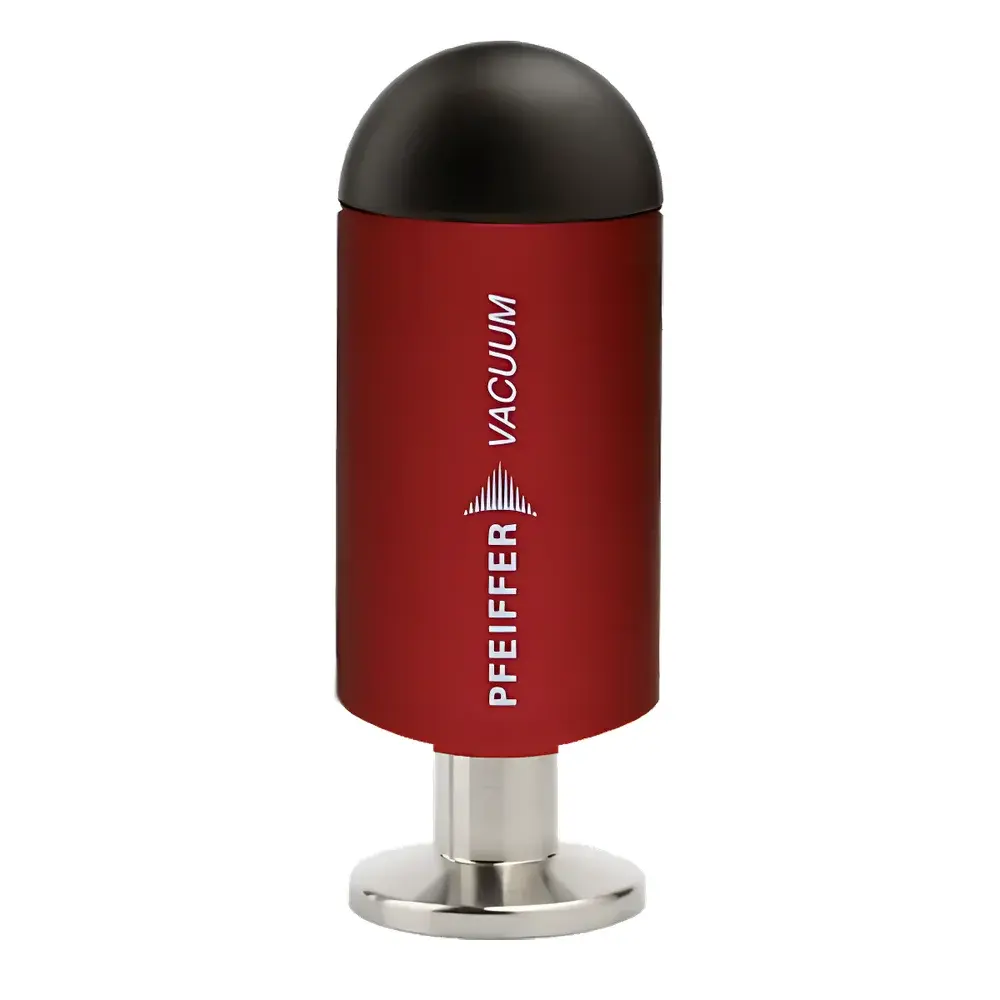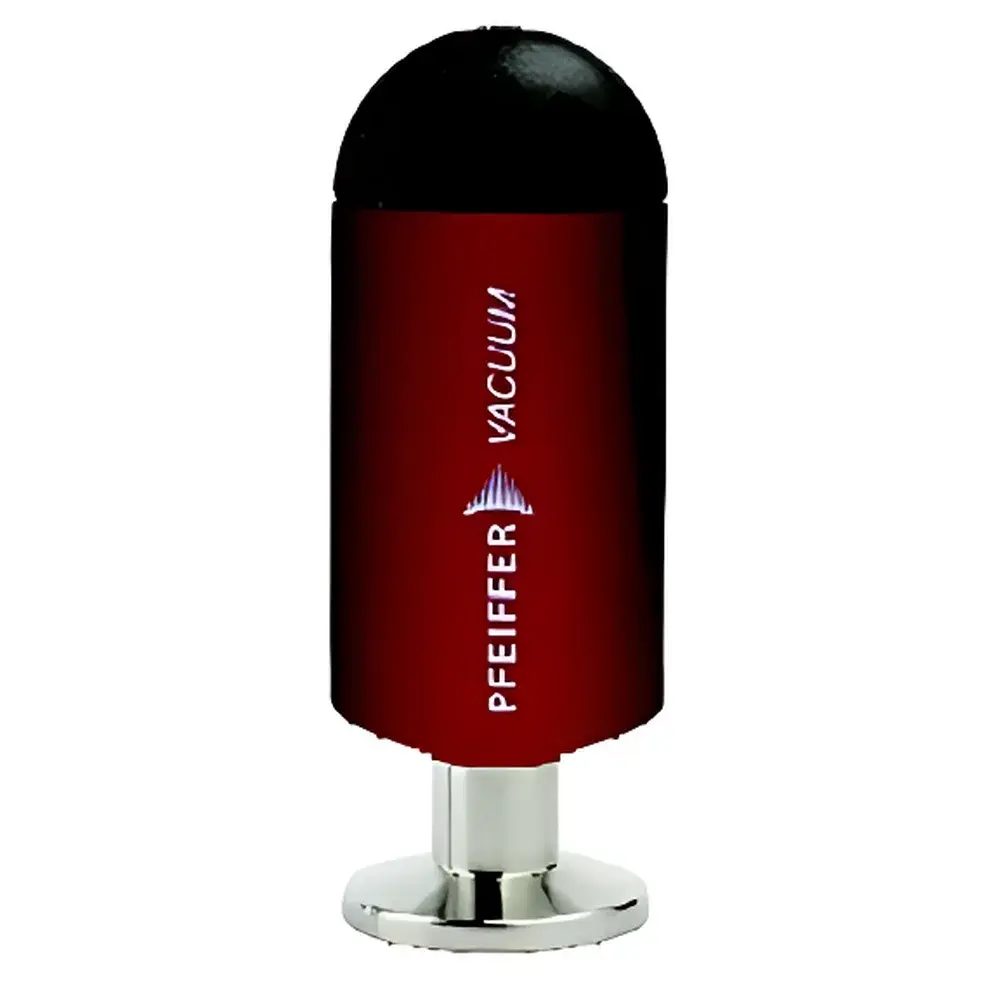
Pfeiffer Vacuum ActiveLine Pirani Vacuum Gauge
| Brand | Pfeiffer Vacuum |
|---|---|
| Origin | Germany |
| Model | ActiveLine |
| Pressure Range | 10⁻¹¹ to 55,000 mbar |
| Output Signal | 0–10 V analog with integrated error diagnostics |
| Interface | Integrated measurement interface |
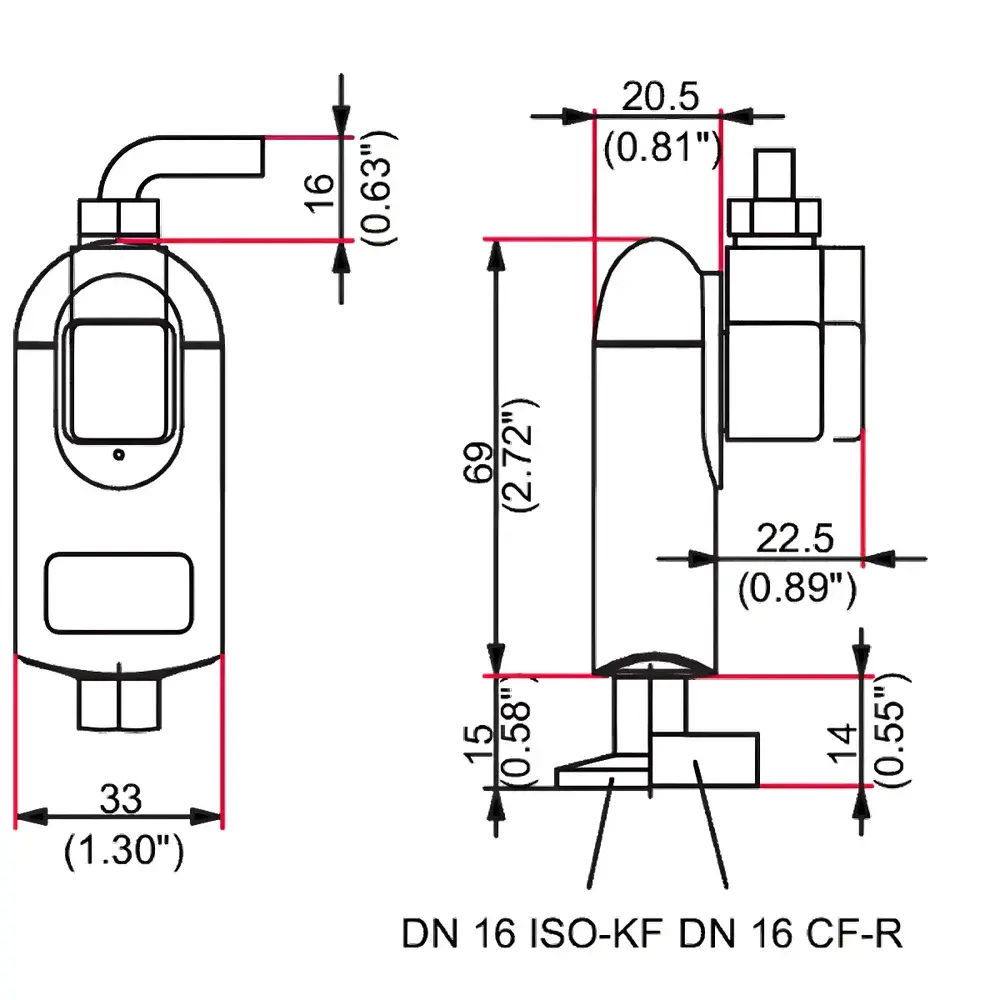
| Mounting Options | DN 16, DN 25/40, G 1/4″ |
| Operating Temperature | +5 °C to +60 °C (varies by sensor type) |
| Sensor Types | APR (Pirani), CMR (Capacitance Manometer), TPR (Combined Pirani/Thermocouple), PKR/IKR (Cold Cathode Ionization), PBR/IMR (Hot Cathode Ionization) |
| Pressure Units | Selectable (mbar, Pa, Torr, psi, etc.) |
| Compliance | CE, RoHS, EMC Directive 2014/30/EU |
| Software Integration | Compatible with Pfeiffer Vacuum Control Suite and third-party SCADA/PLC systems |
Overview
The Pfeiffer Vacuum ActiveLine Pirani Vacuum Gauge is a modular, high-reliability vacuum measurement platform engineered for precision pressure monitoring across ultra-high vacuum (UHV) to rough vacuum regimes—from 10⁻¹¹ mbar up to 55,000 mbar. Based on the thermal conductivity principle of Pirani gauging—where gas thermal conductivity modulates sensor filament resistance—the ActiveLine series delivers stable, repeatable readings in non-corrosive, non-condensable gas environments (e.g., N₂, Ar, He, air). Unlike single-range gauges, the ActiveLine architecture supports interchangeable sensor heads (APR, CMR, TPR, PKR, IKR, IMR) within a unified electronics module, enabling seamless adaptation to process-specific vacuum requirements without hardware redesign. Its compact mechanical footprint and standardized mounting interfaces (DN 16, DN 25/40, G 1/4″) facilitate integration into vacuum chambers, load locks, coating systems, and accelerator beamlines where space and signal integrity are critical constraints.
Key Features
- Modular sensor architecture: Interchangeable transducers (Pirani, capacitance manometer, cold/hot cathode ionization) share one control unit, reducing inventory complexity and lifecycle cost.
- Wide dynamic range coverage: Single-platform compatibility from atmospheric pressure (55,000 mbar) down to UHV (10⁻¹¹ mbar), eliminating need for multiple gauge types in multi-stage vacuum systems.
- Integrated analog output: Factory-calibrated 0–10 V DC signal with embedded diagnostic status (e.g., sensor fault, overpressure, temperature out-of-spec), supporting real-time health monitoring in automated environments.
- Configurable pressure units: User-selectable display and output units—including mbar, Pa, Torr, psi, and kgf/cm²—via front-panel interface or remote command (RS-485/Modbus RTU).
- Rugged industrial design: Aluminum housing rated IP54; operating ambient temperature range from +5 °C to +60 °C (sensor-dependent); EMI-hardened circuitry compliant with EN 61326-1 for laboratory and production floor deployment.
- Low power consumption: Typical 2.5 W per sensor head, suitable for continuous operation in energy-sensitive or thermally isolated vacuum enclosures.
Sample Compatibility & Compliance
The ActiveLine gauge family is validated for use with common process gases including nitrogen, argon, helium, oxygen, hydrogen, and dry air. It is not recommended for condensable vapors (e.g., water, solvents), corrosive gases (e.g., Cl₂, NH₃, HF), or reactive plasmas without protective shielding or differential pumping. All ActiveLine transducers conform to EU directives: CE marking per Machinery Directive 2006/42/EC, Electromagnetic Compatibility Directive 2014/30/EU, and RoHS 2011/65/EU. Calibration traceability follows ISO/IEC 17025-accredited procedures at Pfeiffer Vacuum’s metrology laboratories. For regulated environments (pharmaceutical, semiconductor, aerospace), the system supports audit-ready data logging when paired with Pfeiffer Vacuum Control Suite v5.x, which implements electronic signature, user access levels, and FDA 21 CFR Part 11-compliant audit trails.
Software & Data Management
ActiveLine devices communicate via RS-485 using Modbus RTU protocol (standard) or optional Ethernet/IP or PROFINET modules. The Pfeiffer Vacuum Control Suite provides configuration, real-time visualization, alarm management, and trend logging with CSV export. Raw sensor data—including pressure value, temperature, status flags, and calibration ID—is timestamped with microsecond resolution. Third-party integration is supported through OPC UA servers and LabVIEW/VIs. Data retention complies with GLP/GMP documentation standards: all configuration changes, calibration events, and sensor faults are recorded with operator ID, timestamp, and reason code. Firmware updates are performed via secure USB or network upload with SHA-256 signature verification.
Applications
- Leak detection systems: Paired with helium mass spectrometers (e.g., Pfeiffer Vacuum ASM 340), ActiveLine gauges monitor foreline and test chamber pressure during sniffing and accumulation modes.
- Thin-film deposition: Real-time pressure feedback in sputtering, evaporation, and ALD reactors ensures stoichiometric layer growth and minimizes particle generation.
- Surface science & UHV research: PKR/IKR sensors maintain stable base pressures below 10⁻⁹ mbar in synchrotron beamlines and molecular beam epitaxy (MBE) systems.
- Accelerator vacuum systems: Redundant CMR/TPR combinations provide cross-verified pressure data across differential pumping stages in LINACs and storage rings.
- Industrial vacuum furnaces: APR and CMR variants withstand thermal cycling from ambient to 1200 °C chamber temperatures when installed with appropriate cooling sleeves and isolation flanges.
FAQ
What vacuum ranges do individual ActiveLine sensor models cover?
APR series (Pirani): 10⁻¹ to 10³ mbar; CMR series (capacitance manometer): 10⁻⁴ to 10³ mbar; TPR series (dual-mode Pirani/thermocouple): 10⁻⁴ to 10³ mbar; PKR/IKR (cold cathode): 10⁻⁹ to 10⁻² mbar; IMR/PBR (hot cathode): 10⁻¹⁰ to 10⁻² mbar.
Can ActiveLine gauges be calibrated onsite?
Yes—zero-point calibration is possible for Pirani and capacitance sensors using atmospheric reference or vacuum reference ports; full-span calibration requires accredited metrology labs per ISO 10110-5. Factory recalibration intervals are recommended every 24 months under continuous operation.
Is explosion-proof certification available?
Standard ActiveLine units are not ATEX or IECEx certified; however, intrinsically safe versions (e.g., Ex ia IIC T4 Ga) are available upon request for hazardous area applications.
How does sensor drift affect long-term measurement stability?
Pirani filaments exhibit <0.5% FS/year drift under clean, stable gas composition; capacitance manometers show <0.1% FS/year. Drift compensation is implemented in firmware using temperature-compensated algorithms and periodic auto-zero routines.
What mechanical protection options exist for harsh environments?
Optional ceramic-coated sensor heads, stainless-steel shielding caps, and conflat-compatible bakeable versions (up to 200 °C) are available for high-radiation, high-temperature, or aggressive chemical exposure scenarios.