
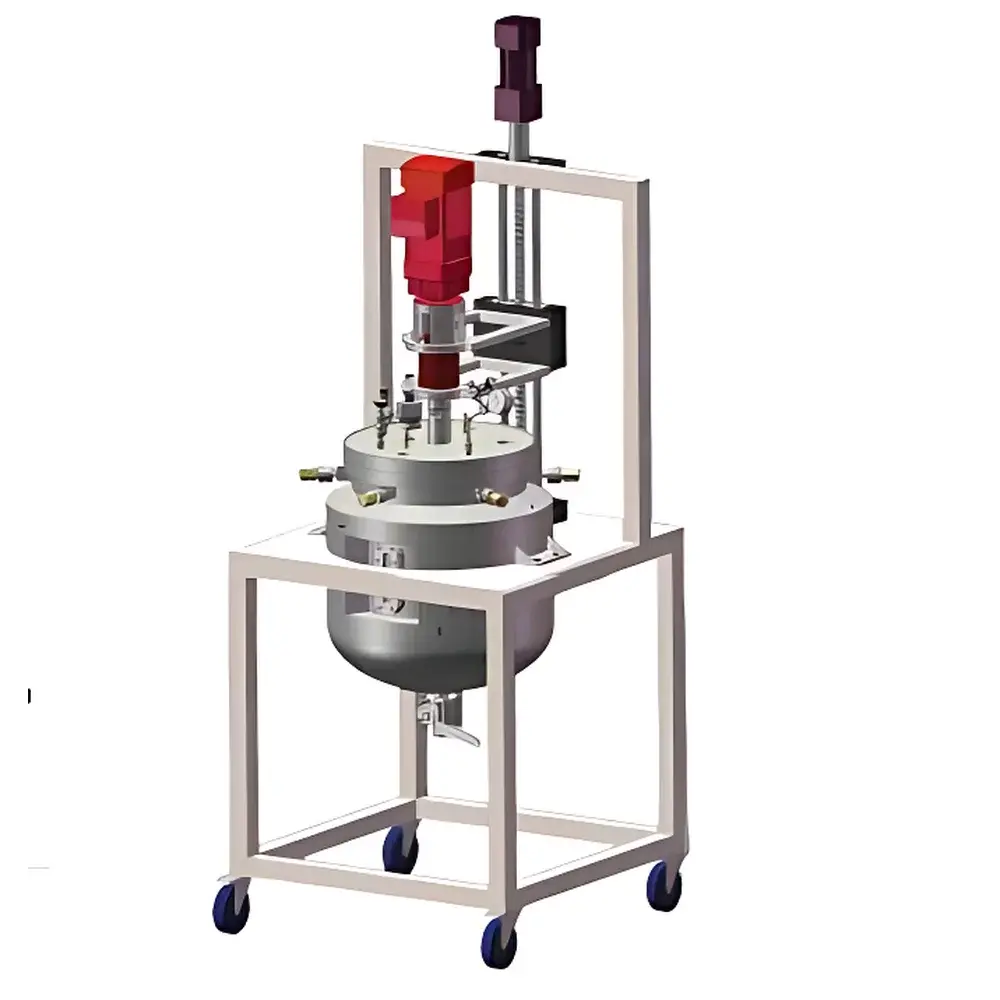
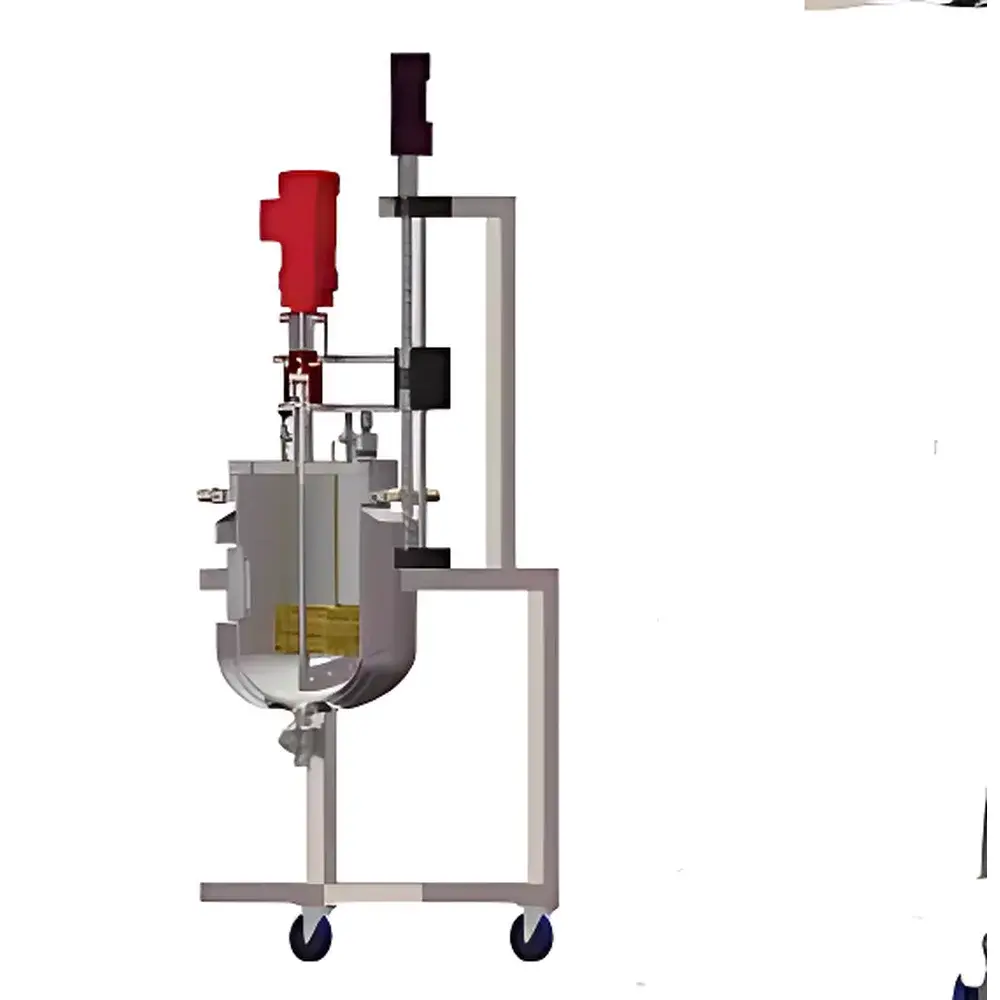
ChemTron Pilot-Scale Stainless Steel Atmospheric Reactor
| Brand | ChemTron |
|---|---|
| Origin | Germany |
| Manufacturer Type | Authorized Distributor |
| Origin Category | Imported |
| Model | Pilot-Scale Stainless Steel Atmospheric Reactor |
| Vessel Material | AISI 316 Stainless Steel |
| Operating Pressure | Atmospheric (0.1 MPa g) |
| Working Volume | Small-scale (Typical Range: 1–20 L) |
| Temperature Control Range | –80 to +250 °C (Continuous), up to +350 °C (Intermittent) |
| Temperature Stability | ±0.01 °C |
| Sealing Options | Mechanical Seal or Magnetic Coupling Seal |
| Agitator Options | Standard, Pneumatic Explosion-Proof, or Heavy-Duty Impeller Drive |
| Surface Finish | Internal Mirror Polish (Ra ≤ 0.4 µm), CIP-Compatible |
| Compliance | Meets DIN 11850 / EHEDG for Hygienic Design, ASME BPVC Section VIII Div. 1 (for optional pressure-rated variants) |
Overview
The ChemTron Pilot-Scale Stainless Steel Atmospheric Reactor is an engineered bench-to-pilot transition platform designed for controlled chemical synthesis, catalytic screening, and process development under ambient pressure conditions. Built on the principles of hygienic reactor design and thermal process fidelity, it employs a robust AISI 316 stainless steel vessel with mirror-polished internal surfaces (Ra ≤ 0.4 µm) to ensure batch-to-batch reproducibility, minimize product adhesion, and support validated Clean-in-Place (CIP) protocols. Unlike pressurized autoclaves, this reactor operates at atmospheric pressure (0.1 MPa gauge), eliminating the need for pressure vessel certification while maintaining full compatibility with exothermic/endothermic reaction profiling, gas sparging (e.g., H₂, O₂, CO), and multi-phase mixing (solid–liquid–gas). Its core architecture integrates precision temperature control, scalable agitation, and modular sealing—enabling researchers and process engineers to de-risk scale-up pathways from lab discovery to kilo-lab validation.
Key Features
- High-integrity AISI 316 stainless steel construction, conforming to DIN 11850 and EHEDG hygienic design guidelines for pharmaceutical and food-grade applications.
- Internally mirror-polished vessel surface (Ra ≤ 0.4 µm) with electropolished welds and zero dead-leg geometry—validated for CIP/SIP compatibility and residue-free operation.
- Dual-seal architecture: choice between maintenance-optimized magnetic coupling seals (leak-tight, no shaft packing) or high-load mechanical seals with cooling jackets for viscous or abrasive media.
- Modular agitator system supporting interchangeable impellers—including Rushton turbines, pitched-blade hydrofoils, and anchor types—with torque monitoring capability and optional explosion-proof pneumatic drive (ATEX Zone 1 compliant).
- Integrated JULABO high-precision temperature control unit delivering stable thermal profiles from –80 °C to +250 °C continuously, with intermittent capability up to +350 °C; temperature stability maintained at ±0.01 °C via PID-controlled circulation of thermo-fluid through jacketed vessel walls.
- Ergonomic reactor frame with motorized lift-and-tilt functionality for safe lid access, vessel emptying, and catalyst recovery—reducing manual handling risk and improving workflow efficiency in GMP-aligned environments.
Sample Compatibility & Compliance
This reactor accommodates heterogeneous and homogeneous reaction systems involving solids (catalysts, powders), liquids (solvents, monomers), and gases (H₂, N₂, O₂, Cl₂, NH₃) under atmospheric conditions. Its material compatibility extends across organic solvents, acidic/alkaline aqueous media, and halogenated compounds—leveraging the corrosion resistance of AISI 316 stainless steel per ASTM A240. The system meets structural and surface hygiene requirements of DIN 11850, EHEDG Doc. 8, and FDA 21 CFR Part 11–compliant data logging when paired with optional audit-trail-enabled controllers. Optional documentation packages include Factory Acceptance Test (FAT) reports, material traceability certificates (EN 10204 3.1), and IQ/OQ protocol templates aligned with ISO/IEC 17025 and ICH Q5A/Q5D guidance.
Software & Data Management
The reactor supports integration with third-party SCADA and LIMS platforms via Modbus RTU/TCP or OPC UA protocols. When configured with the optional ChemTron ProcessLogger™ module, real-time acquisition of temperature, agitation speed, torque, and pH (via external probe) is archived with electronic signatures, time-stamped audit trails, and user-access-level permissions—fully satisfying ALCOA+ (Attributable, Legible, Contemporaneous, Original, Accurate, Complete, Consistent, Enduring, Available) data integrity criteria. All calibration events and maintenance logs are retained for regulatory review cycles, including GLP audits and FDA pre-approval inspections.
Applications
- Catalyst evaluation and kinetic studies under ambient-pressure hydrogenation, oxidation, or polymerization conditions.
- API intermediate synthesis requiring strict thermal control and contamination-free environment (e.g., sulfonation, nitration, esterification).
- Food-grade emulsion and flavor compound development compliant with EC No. 1935/2004 and FDA 21 CFR 170–199.
- Biochemical reaction optimization—including enzymatic hydrolysis and microbial fermentation support—when combined with sterile inlet/outlet filters and sparging manifolds.
- Materials science applications such as nanoparticle precipitation, MOF synthesis, and battery electrolyte formulation where trace metal leaching must be minimized.
FAQ
Is this reactor suitable for exothermic reactions requiring rapid cooling?
Yes—the double-jacketed design enables simultaneous heating (via thermo-oil) and active cooling (using chilled glycol or liquid nitrogen circuits), achieving ramp rates up to 5 °C/min depending on volume and thermal load.
Can the system be validated for GMP manufacturing use?
While classified as a pilot-scale R&D tool, its hygienic construction, CIP capability, and optional 21 CFR Part 11-compliant software enable qualification per ISPE GAMP5 categories 3–4 when deployed in tech-transfer labs supporting clinical batch production.
What documentation is provided with shipment?
Standard delivery includes CE Declaration of Conformity, material test reports (MTRs), vessel dimensional drawings, FAT summary, and operating manual in English. Full DQ/IQ/OQ documentation packages are available upon request.
Is remote monitoring supported?
Yes—via Ethernet-connected controller with web-based HMI interface, enabling secure remote viewing of setpoints, alarms, and historical trends using standard browsers without proprietary client software.



