
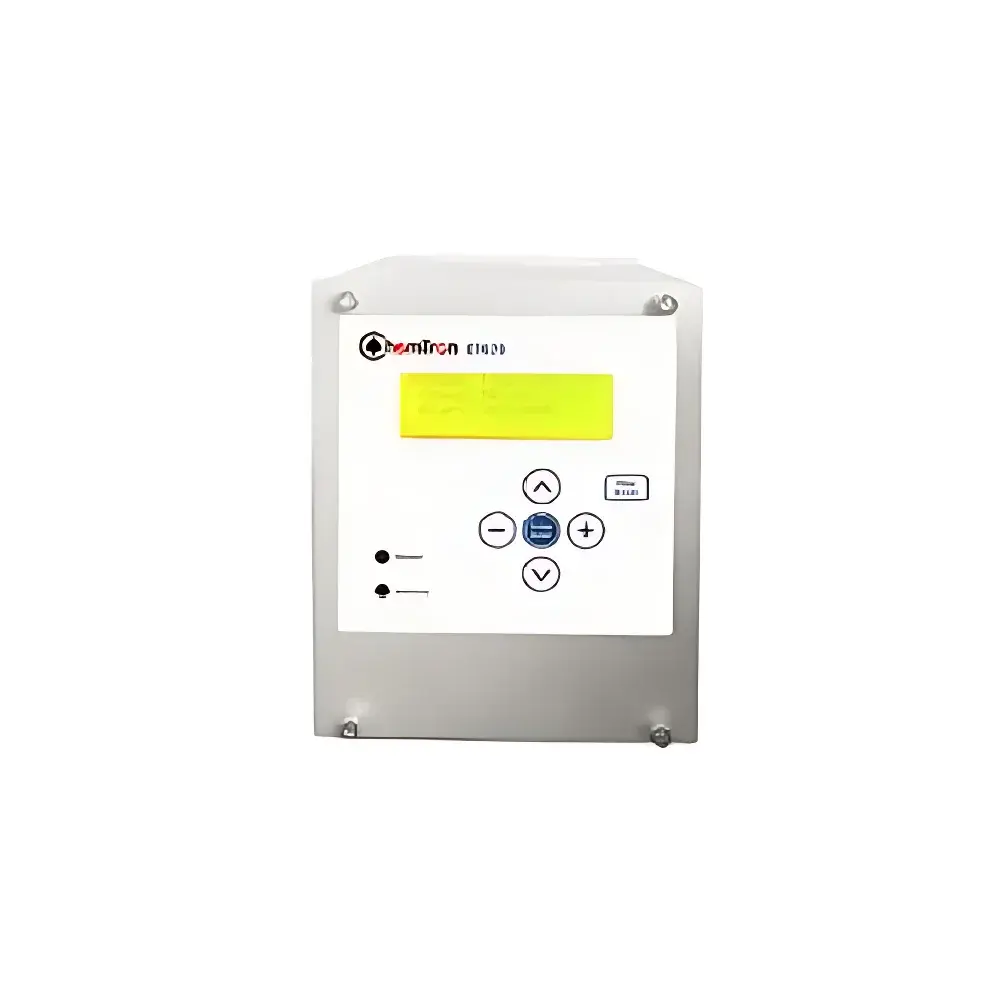
ChemTron ET620 Micro-Flow Mobile Phase Leak Detector for HPLC Systems
| Brand | ChemTron |
|---|---|
| Origin | Germany |
| Model | ET620 |
| Detection Principle | Thermal Flow Sensing via Heated Capillary Tube |
| Power Consumption (Standby) | <5 W |
| Alarm Output | Relay Contact (NO/NC), 24 V DC Compatible |
| Compliance | CE Marked, Designed for Integration into ISO/IEC 17025 and GLP-Compliant HPLC Environments |
| Operating Temperature Range | 5–40 °C |
| Enclosure Rating | IP54 |
| Signal Interface | Dry Contact Output for PLC/SCADA/LIMS Integration |
| Heater Control Precision | ±0.5 °C |
Overview
The ChemTron ET620 Micro-Flow Mobile Phase Leak Detector is an engineered safety and diagnostic module designed specifically for high-performance liquid chromatography (HPLC) and ultra-high-performance liquid chromatography (UHPLC) systems. It operates on the principle of thermal flow sensing—utilizing a precisely heated capillary detection path installed at the waste outlet of the HPLC pump or autosampler wash station. Unlike optical or pressure-based leak monitors, the ET620 detects minute, intermittent, or low-rate mobile phase leakage by continuously monitoring dynamic thermal transients in the effluent line. When solvent flows through the heated zone, convective heat transfer lowers the local temperature; when flow ceases, rapid conductive reheating occurs. The device quantifies these thermal events—specifically cumulative low-temperature duration (“waste flow time”) and cumulative high-temperature duration (“no-flow dwell time”)—against user-configurable Check Time thresholds to determine system operational integrity.
Key Features
- Thermally calibrated detection architecture optimized for aqueous and organic mobile phases (including acetonitrile, methanol, water, and buffer solutions) without cross-sensitivity to vapor or ambient humidity.
- Fail-safe heater control circuitry with redundant thermal cutoff and surface temperature limiting (<85 °C), compliant with IEC 61000-6-4 electromagnetic immunity requirements.
- Ultra-low standby power draw (<5 W), enabling continuous 24/7 operation without thermal load impact on instrument enclosures or laboratory HVAC systems.
- Galvanically isolated dry-contact alarm output (SPST relay, 24 V DC rated) supporting direct integration with building management systems (BMS), chromatography data systems (CDS), or emergency shutdown logic.
- Configurable Check Time parameter (default 60–300 seconds, field-adjustable via DIP switch) enabling adaptation to diverse pump idle protocols and method cycle durations.
- Robust aluminum housing with IP54 ingress protection, suitable for placement in analytical labs, QC suites, and regulated GMP manufacturing environments.
Sample Compatibility & Compliance
The ET620 is compatible with all standard HPLC/UHPLC waste tubing configurations (1/16″ OD PEEK, stainless steel, or fluoropolymer). It does not require chemical contact with the mobile phase—detection occurs externally via thermal coupling—eliminating risk of corrosion, clogging, or calibration drift. The device is CE-marked and constructed in accordance with EN 61326-1 (electrical equipment for measurement, control, and laboratory use). Its relay output meets SIL 1 capability per IEC 61508 when integrated into safety-related subsystems. For laboratories operating under FDA 21 CFR Part 11, the ET620 supports audit-trail-ready alarm logging when connected to validated CDS platforms (e.g., Waters Empower, Thermo Chromeleon) via discrete I/O modules.
Software & Data Management
The ET620 is a hardware-only detector with no embedded firmware or USB/serial interface. Alarm status is communicated solely via hardwired relay output, ensuring deterministic response time (<100 ms) and eliminating software dependency or cybersecurity exposure. This design aligns with ALCOA+ (Attributable, Legible, Contemporaneous, Original, Accurate, Complete, Consistent, Enduring, Available) data integrity principles for regulated environments. Users may log event timestamps and correlate them with pump runtime logs, method execution records, or maintenance entries using external SCADA or LIMS systems. No driver installation, cloud connectivity, or periodic firmware updates are required—supporting long-term validation stability.
Applications
- Continuous monitoring of reciprocating piston pumps for seal wear, check valve failure, or gasket degradation in pharmaceutical QC labs.
- Early-stage detection of micro-leaks in gradient mixer manifolds or purge valve assemblies during method development.
- Verification of autosampler needle wash efficiency and waste line integrity prior to sequence start in clinical toxicology workflows.
- Integration into automated system suitability test (SST) protocols where uninterrupted pump operation is critical for retention time precision.
- Supplemental safety layer in unattended overnight runs, reducing risk of solvent accumulation, fire hazard, or environmental release in centralized core facilities.
FAQ
Does the ET620 require calibration or routine maintenance?
No. The device contains no consumables, fluidic pathways, or optical components. Thermal sensor drift is mitigated by differential measurement architecture and factory characterization; no user calibration is specified or supported.
Can it detect leaks in high-pressure lines upstream of the pump?
No. The ET620 monitors only the waste effluent stream. It identifies pump-related leakage or failed purge cycles—not high-pressure seal failures in the column or injector manifold.
Is it compatible with corrosive mobile phases such as TFA or HFBA?
Yes—indirectly. Since detection is thermal and non-invasive, compatibility depends solely on the chemical resistance of the waste tubing installed upstream of the detector, not the ET620 itself.
What happens if ambient temperature fluctuates significantly?
The unit employs adaptive baseline tracking and hysteresis filtering to suppress false alarms from slow ambient shifts. Only rapid thermal transients consistent with liquid flow onset/cessation trigger state transitions.
Can multiple ET620 units be daisy-chained to monitor different waste streams?
Yes—each unit operates independently with isolated relay outputs. They may be wired in parallel to a single alarm input or assigned unique identifiers via external PLC logic.





