
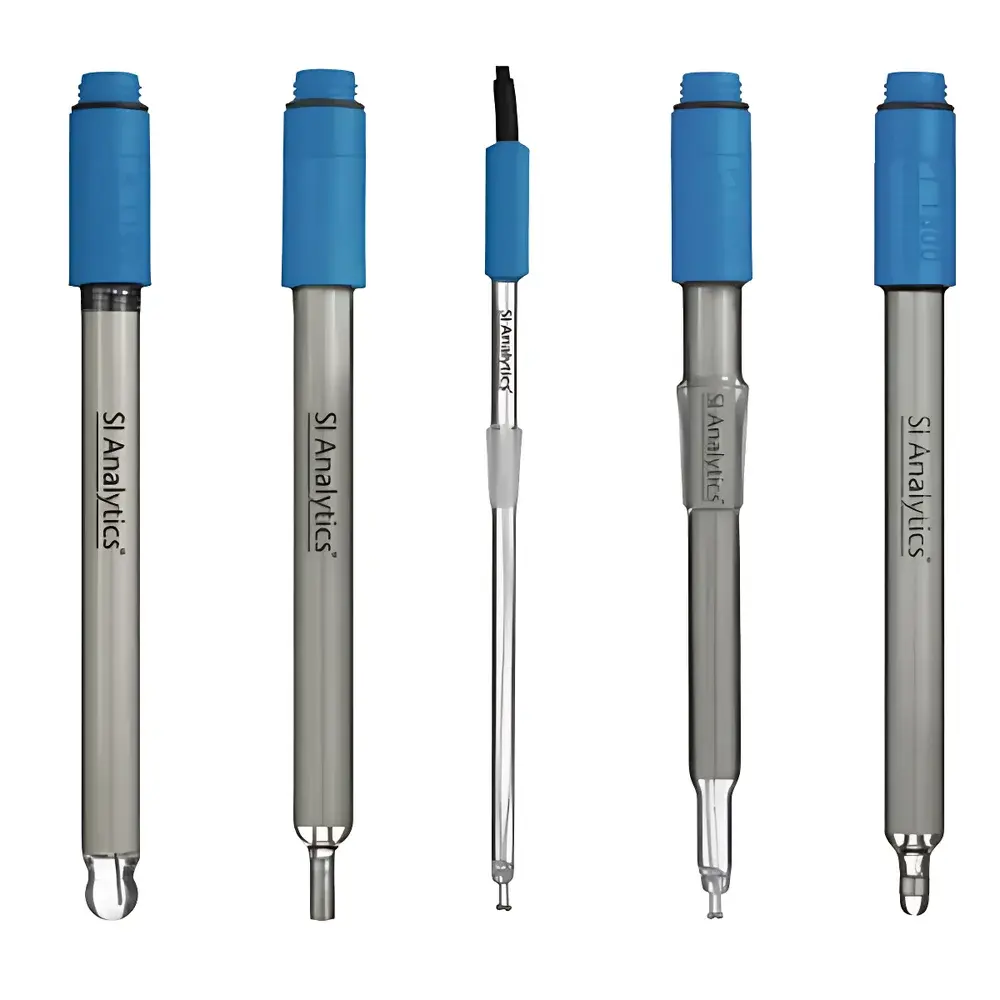
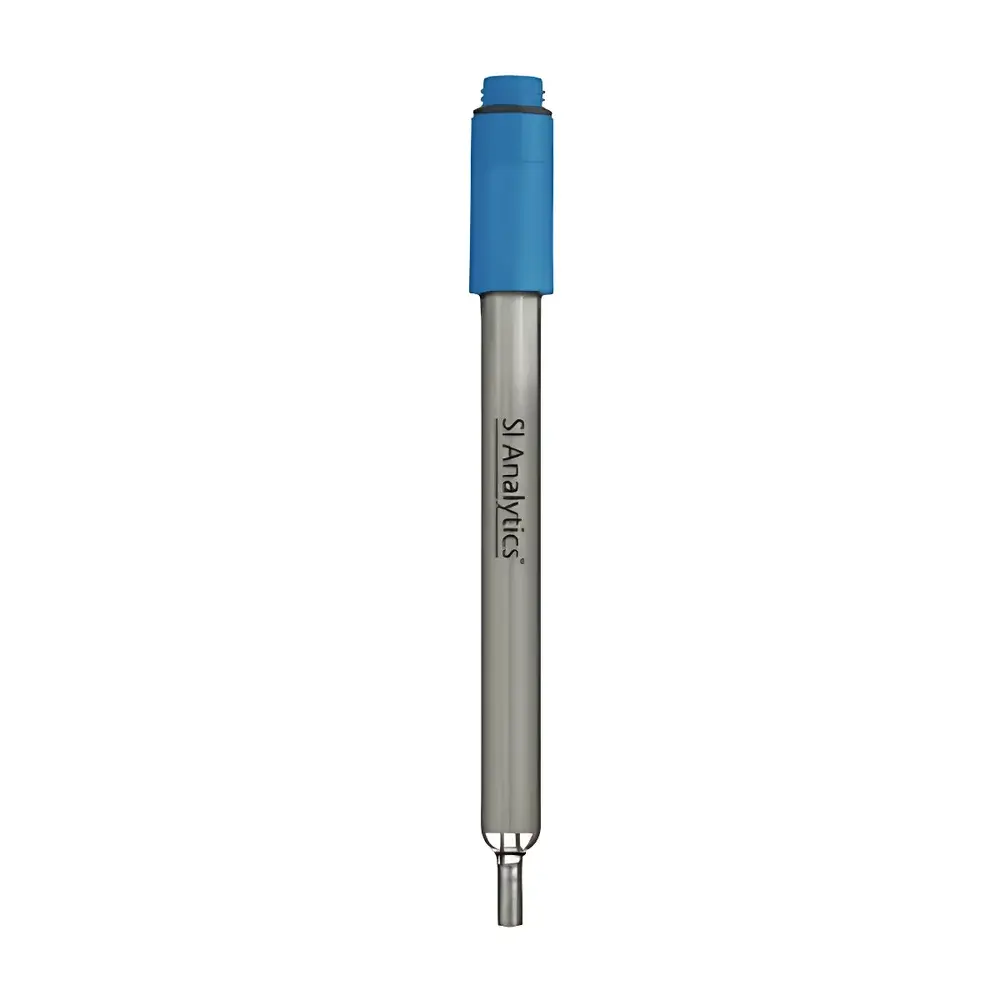
ChemTron ScienceLine A 1180 Single-Indicator Electrode
| Brand | ChemTron |
|---|---|
| Origin | Germany |
| Model | ScienceLine A 1180 |
| Electrode Type | pH Glass Indicator Electrode |
| Body Material | Borosilicate Glass (Ø12 mm) |
| Sensing Membrane | Spherical Bulb |
| Zero Point | pH 7.0 ± 0.3 |
| pH Range | 0–14 |
| Temperature Range | 0–80 °C |
| Connection | L 1 A Cable |
| Interface | Standard Threaded Connector (DIN 19217) |
| Compliance | ISO 3696 Class 3 water compatibility, ASTM E70, DIN 19265 |
Overview
The ChemTron ScienceLine A 1180 is a high-stability, single-function glass pH indicator electrode engineered for precision potentiometric pH measurement in routine laboratory, quality control, and educational applications. Based on the Nernstian response of a hydrated silicate gel membrane to hydrogen ion activity, the electrode delivers reproducible mV output across the full aqueous pH range (0–14) under controlled temperature conditions (0–80 °C). Its spherical sensing bulb ensures rapid equilibration and minimized junction potential drift, while the robust borosilicate glass body (Ø12 mm) provides mechanical durability and chemical resistance to common buffers, acids, and bases. Designed for integration with standard benchtop pH meters equipped with BNC or DIN input sockets, the A 1180 operates as part of a two-electrode system—requiring pairing with a compatible reference electrode (e.g., ChemTron Silamid® double-junction reference) to complete the electrochemical cell.
Key Features
- Spherical pH-sensitive glass membrane optimized for fast response time (<30 s to ±0.02 pH units) and low hysteresis
- Borosilicate glass shaft (12 mm diameter) with high thermal shock resistance and dimensional stability
- Integrated L 1 A cable assembly with molded strain relief and standardized DIN 19217 threaded connector
- Factory-calibrated zero point at pH 7.0 ± 0.3 (25 °C), traceable to NIST-traceable buffer standards
- Optimized internal electrolyte composition for stable asymmetry potential and reduced liquid junction drift
- Designed for use with conventional pH meters supporting high-impedance (>1012 Ω) input circuits
Sample Compatibility & Compliance
The A 1180 electrode is validated for aqueous and mildly aggressive media including buffered solutions, tap water, wastewater effluents, food extracts, pharmaceutical formulations, and cosmetic emulsions. It is not recommended for non-aqueous solvents, strong hydrofluoric acid, or highly viscous suspensions without dilution or conditioning. The electrode complies with key international standards governing pH measurement practice: ISO 3696 (Grade 3 water specifications), ASTM E70 (Standard Test Method for pH of Aqueous Solutions), and DIN 19265 (Electrochemical sensors for water analysis). When used within defined operational limits and maintained per manufacturer guidelines, it supports GLP-compliant documentation workflows—including calibration log retention and electrode performance verification per USP and EP 2.2.3.
Software & Data Management
While the A 1180 is an analog sensor requiring external instrumentation, it is fully compatible with ChemTron’s ScienceLine-compatible pH meters (e.g., pH 330i, pH 530i) and third-party systems supporting DIN/BNC inputs. These instruments provide automated calibration routines (2- or 3-point), slope and offset diagnostics, temperature compensation (ATC via Pt1000 probe), and audit-trail-capable data logging aligned with FDA 21 CFR Part 11 requirements when deployed with validated software platforms. Raw mV output can be exported in CSV format for post-acquisition statistical analysis (e.g., RSD calculation, trend monitoring) in compliance with ISO/IEC 17025 clause 7.7.
Applications
- Quality assurance testing of purified water and WFI (Water for Injection) in pharmaceutical manufacturing
- pH monitoring during fermentation process development and bioreactor inoculation
- Acid-base titration endpoint detection in analytical chemistry teaching labs
- Stability-indicating assays for buffer capacity evaluation in formulation development
- Environmental compliance testing of surface water, soil leachates, and industrial effluents
- Calibration verification of multi-parameter probes in municipal water treatment facilities
FAQ
What reference electrode is required for use with the A 1180?
The A 1180 must be paired with a separate reference electrode—typically the ChemTron Silamid® double-junction reference (e.g., model R 1180)—to form a complete measuring cell. Direct combination electrodes are not supported.
Can the A 1180 be used above 80 °C?
No. Prolonged exposure above 80 °C accelerates glass membrane dehydration and increases asymmetry potential drift. For elevated-temperature applications, consider the H 1180 variant (rated to 100 °C).
Is the L 1 A cable replaceable in the field?
The L 1 A cable is permanently sealed and not user-replaceable; replacement requires return to authorized service centers to maintain electrical integrity and IP67-rated connector sealing.
How often should the electrode be recalibrated?
Daily calibration is recommended for critical measurements; otherwise, calibration before each analytical batch—and after prolonged storage or exposure to extreme pH—is advised per ISO/IEC 17025 clause 7.7.2.
Does the A 1180 support automatic temperature compensation (ATC)?
No. ATC requires a separate temperature probe (e.g., Pt1000 sensor); the A 1180 provides only pH potential output.




