
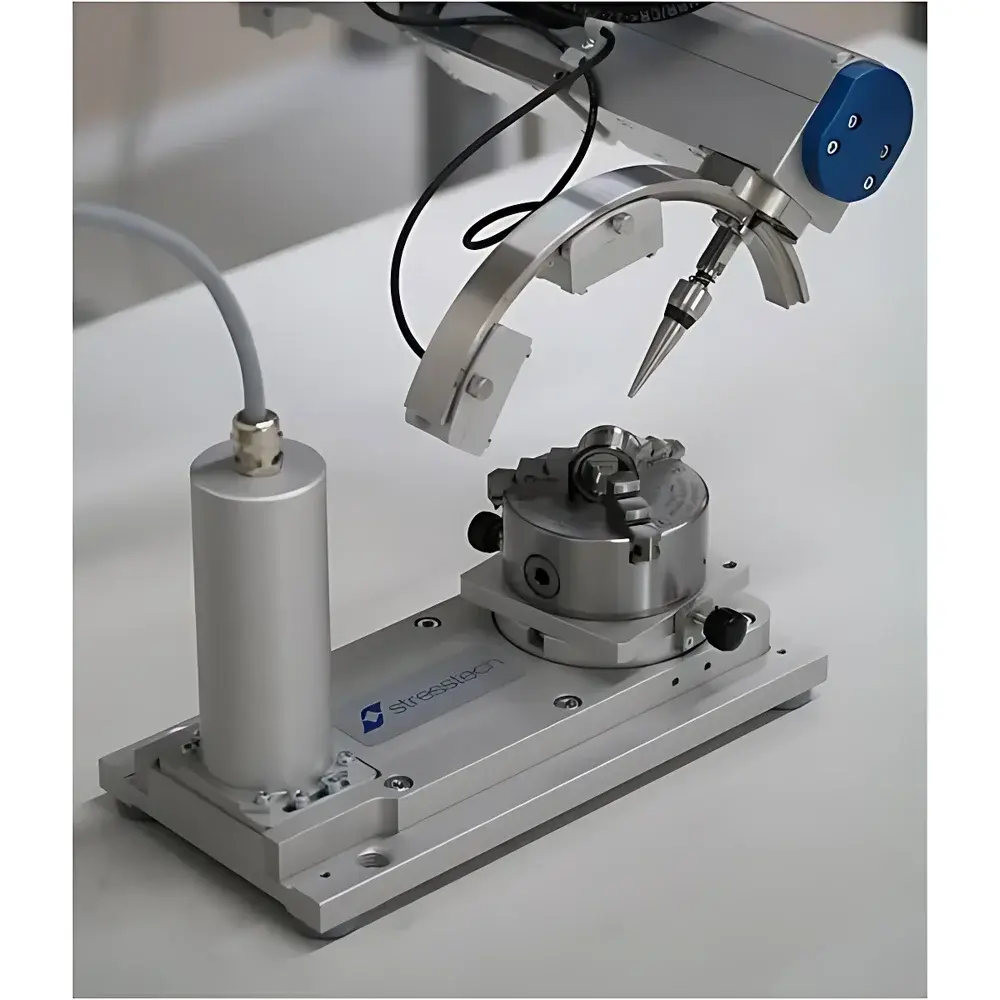
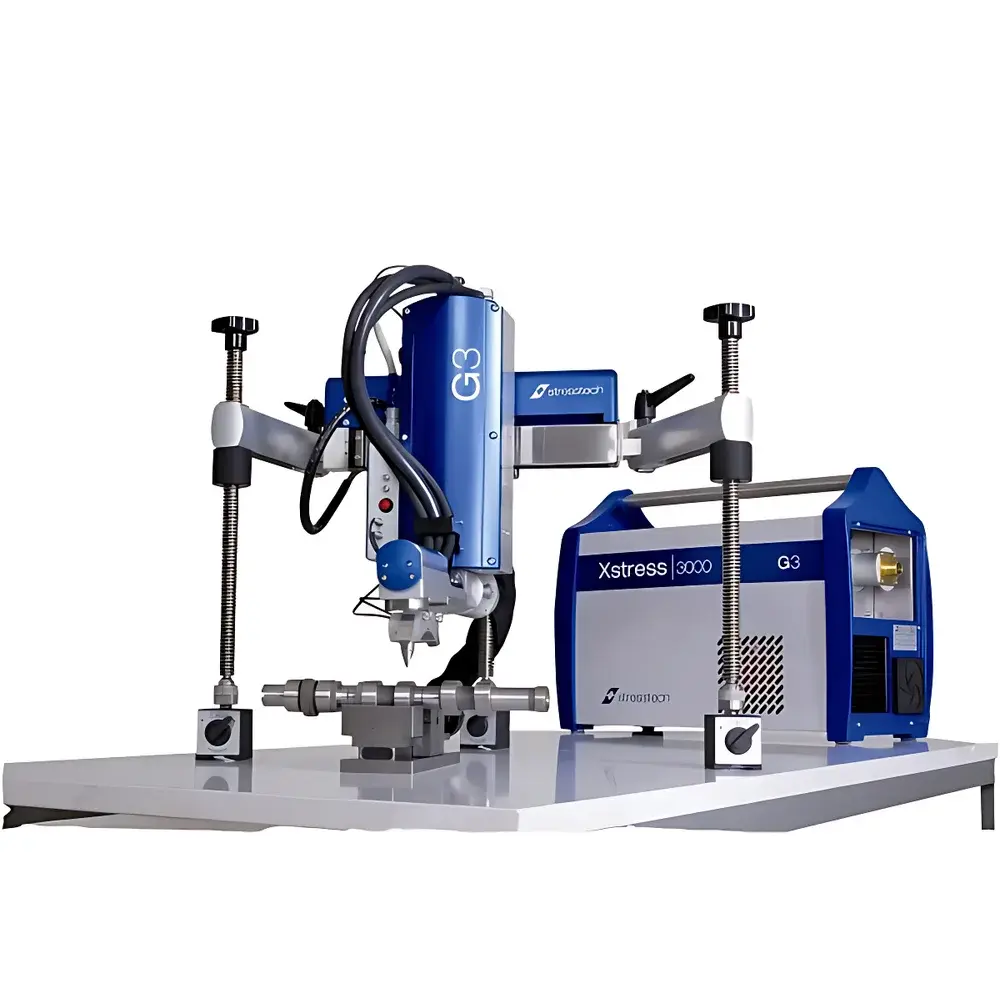
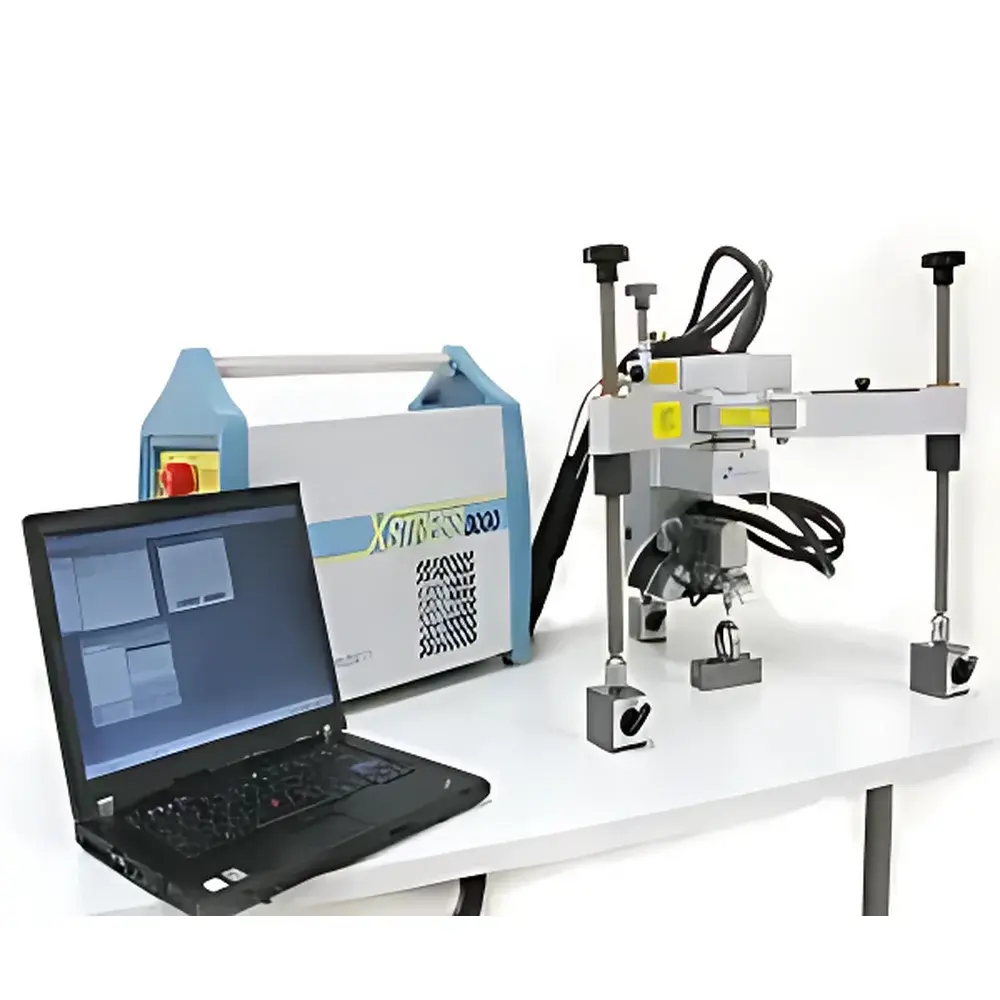
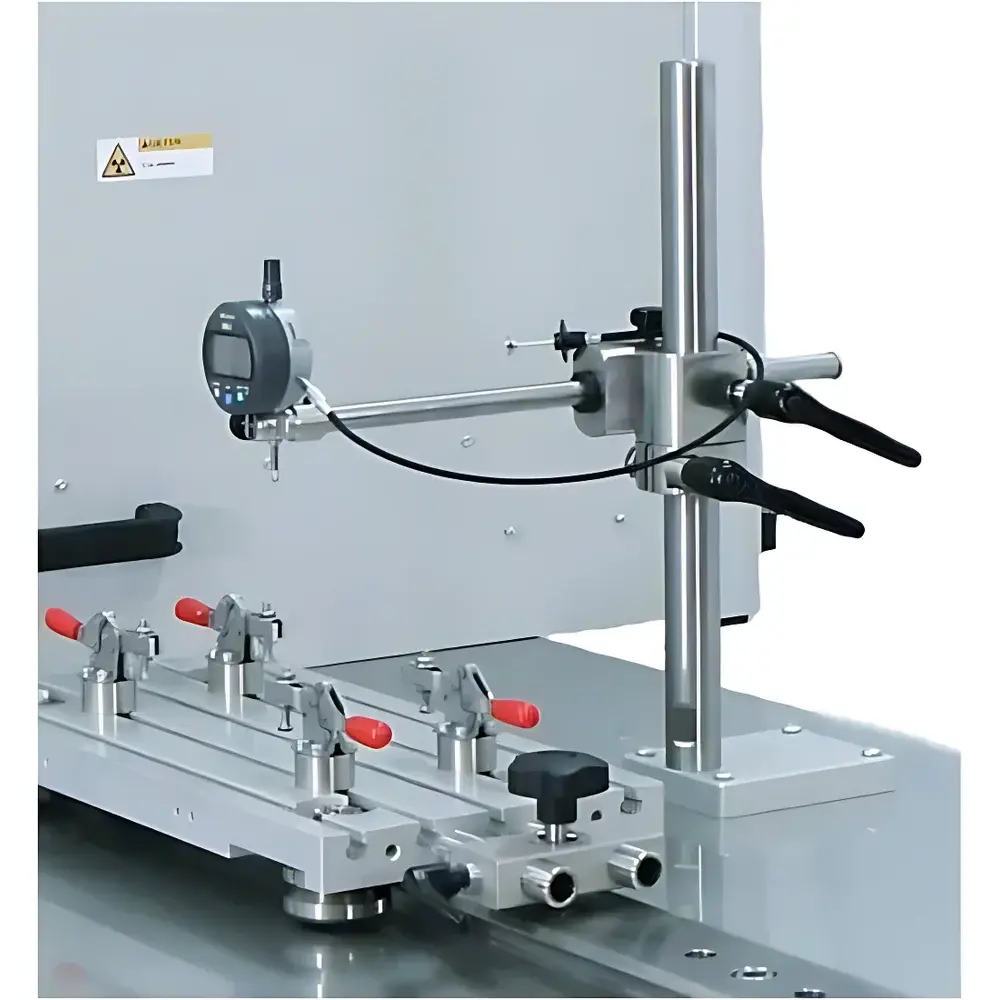
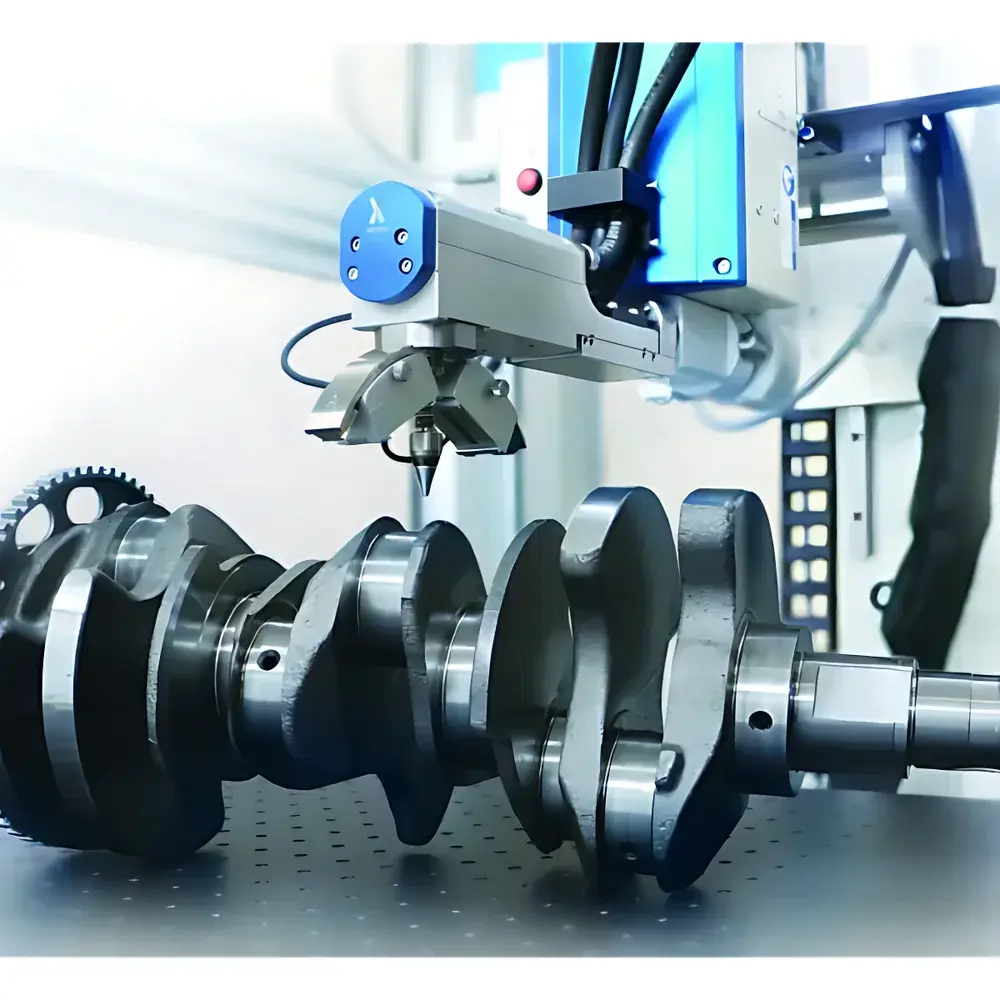
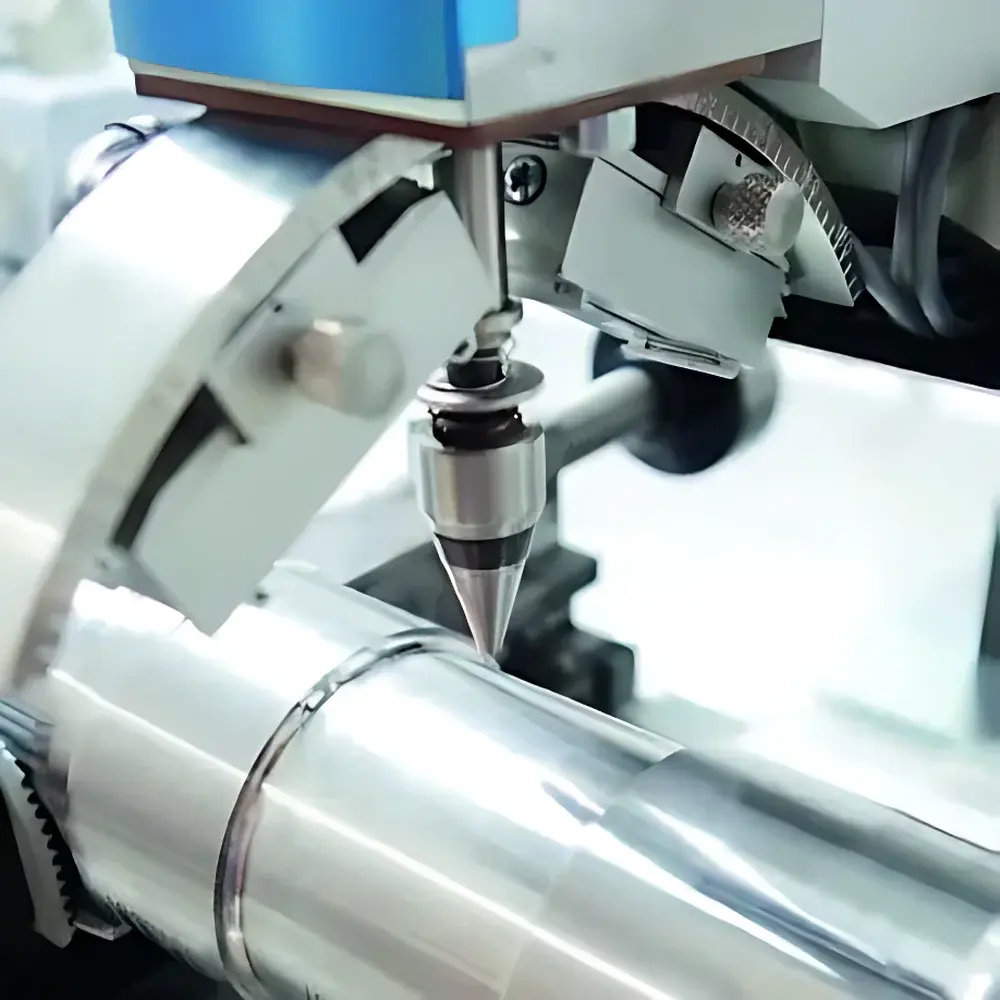
Stresstech XStress3000 Portable X-Ray Residual Stress Analyzer
| Key | Brand: Stresstech Oy |
|---|---|
| Origin | Finland |
| Model | XStress3000 |
| X-ray Tube Power | 300 W |
| 2θ Angular Range | 110°–170° (continuously adjustable) |
| ψ Angular Range | −60° to +60° |
| Target Material | Chromium (Cr) |
| Tube Voltage/Current | 5–30 kV / 0–10 mA (adjustable) |
| Weight Class | Portable benchtop system |
| Cooling | Closed-loop recirculating cooling with active forced-air assist |
| Compliance | Designed per IEC 61000-6-3, IEC 61000-6-4, and EN 62471 for radiation safety and EMC |
Overview
The Stresstech XStress3000 is a portable, high-precision X-ray diffraction (XRD)-based residual stress analyzer engineered for non-destructive, quantitative measurement of near-surface residual stresses in metallic components. It operates on the sin²ψ method—leveraging lattice strain-induced peak shift analysis in Bragg diffraction patterns—to determine biaxial residual stress states with metrological traceability. Unlike laboratory-bound diffractometers, the XStress3000 integrates a micro-focus Cr-target X-ray tube (300 W nominal power), motorized goniometry, and real-time detector control into a compact, field-deployable architecture. Its design targets industrial environments where in-situ or near-line assessment is critical: heat-treated gears, welded pressure vessels, ground bearing races, shot-peened turbine blades, and machined crankshafts. The instrument complies with fundamental principles outlined in ASTM E915-22 (“Standard Test Method for Verifying the Alignment of X-Ray Diffraction Instrumentation for Residual Stress Measurement”) and supports alignment verification using certified stress-free iron powder standards (measurement uncertainty ≤ ±6.9 MPa).
Key Features
- Field-portable form factor (≤25 kg main unit) with integrated battery-ready power management for indoor/outdoor deployment
- Motorized, fully computer-controlled θ–2θ–ψ goniometer with precision angular resolution of 0.01° over 2θ = 110°–170° and ψ = −60° to +60°
- Micro-focus Cr-anode X-ray tube (5–30 kV, 0–10 mA, 300 W max), enabling optimized Kα radiation for ferritic steels, nickel alloys, and titanium without requiring vacuum
- Modular target compatibility (Cr, Cu, Co, Ti, Mn) via tool-free X-ray tube swap—completed in under 3 minutes
- Closed-loop recirculating coolant system with thermoelectric and forced-air hybrid cooling, maintaining stable tube thermal load during extended exposure sequences
- Comprehensive hardware interlocks: beam shutter monitoring, door safety switches, real-time HV status feedback, and dose-rate logging per IEC 61547
Sample Compatibility & Compliance
The XStress3000 accommodates flat, curved, or contoured metallic surfaces with radii ≥15 mm and minimum sample area ≥10 × 10 mm². Surface preparation requirements follow ISO 21943:2020 guidelines—electropolishing or fine grit blasting recommended for reproducible diffraction intensity. It supports direct measurement on production parts without sectioning, satisfying ASME BPVC Section V, Article 2 requirements for in-service NDT validation. All firmware and operational logic are structured to support GLP/GMP-aligned audit trails: user authentication, electronic signatures, and immutable measurement logs with timestamps, operator ID, and calibration certificate references. System-level radiation safety conforms to national regulations implementing EURATOM Directive 2013/59 and is certified for Class II B radiation device operation under Finnish STUK oversight.
Software & Data Management
XStress3000 operates exclusively on Windows 10/11 (64-bit) via Stresstech’s proprietary XStress Studio v5.x software suite. The interface provides synchronized control of X-ray generation, goniometer motion, detector acquisition, and real-time peak fitting—all within a single workflow window. Key capabilities include multi-point d–sin²ψ acquisition with auto-peak search using cross-correlation algorithms; stress tensor calculation per ISO 21187:2012 Annex B; and automated phase identification against an embedded database of >120 crystalline metal alloys (including AISI, DIN, and UNS designations). Raw data (χ, 2θ, intensity) is stored in vendor-neutral HDF5 format; processed reports export to PDF/XLS with embedded metadata for FDA 21 CFR Part 11 compliance when configured with digital signature modules.
Applications
- Verification of compressive stress profiles post-shot peening in aerospace landing gear and compressor disks
- Quantification of tensile stress gradients in laser-welded stainless steel piping joints per EN 13445-5
- Process validation of induction-hardened gear teeth—correlating surface stress state with pitting resistance (ISO 6336-5)
- In-field screening of grinding burn in railway axle journals using combined stress + microstructure sensitivity
- Root cause analysis of premature fatigue failure in forged crankshafts by mapping axial vs. circumferential stress asymmetry
FAQ
What standards does the XStress3000 comply with for residual stress measurement accuracy?
It adheres to ASTM E915-22, ISO 21187:2012, and EN 15305:2008 for methodology, and its factory calibration is traceable to NIST SRM 1977 (stress-free iron powder).
Can the instrument measure residual stress through coatings or platings?
No—it requires direct access to the base metal lattice; coatings thicker than ~5 µm must be mechanically removed prior to measurement.
Is remote operation supported for hazardous or confined-space environments?
Yes—via Ethernet-connected PC with full GUI mirroring; optional fiber-optic shutter trigger and wireless environmental sensor integration available.
How often does the Cr X-ray tube require recalibration or replacement?
Tube lifetime exceeds 5,000 operating hours; intensity drift compensation is performed automatically during daily startup via internal reference detector.
Does the system support third-party spectral analysis tools?
Raw .h5 files contain unprocessed detector frames and geometry metadata, enabling import into MAUD, GSAS-II, or custom Python/Matlab pipelines.





