
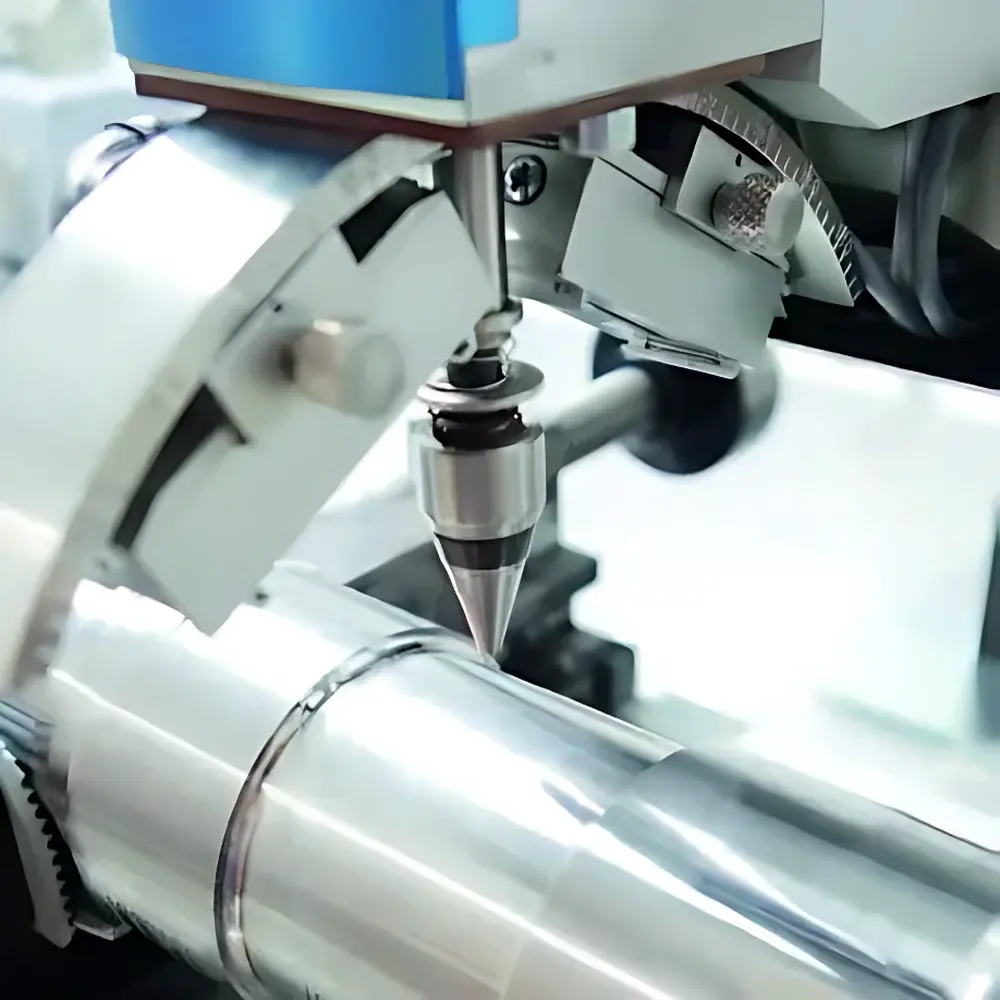
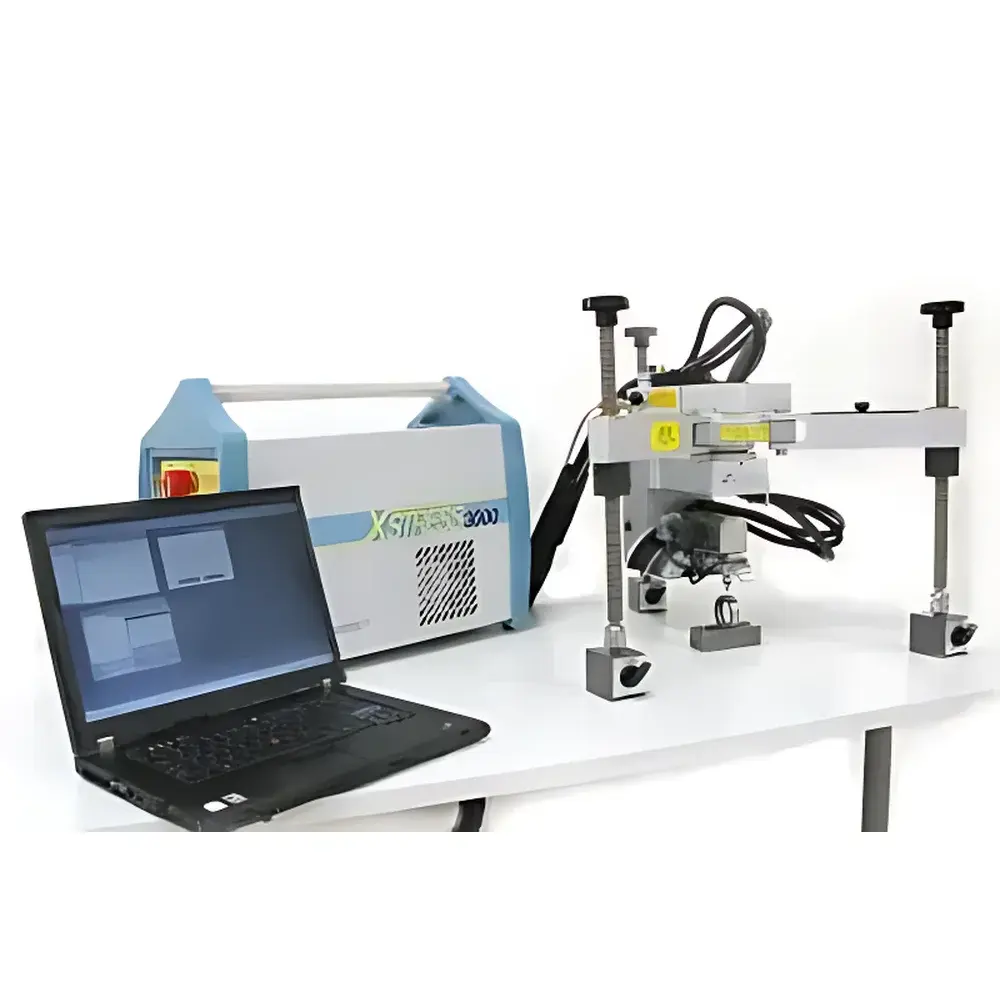
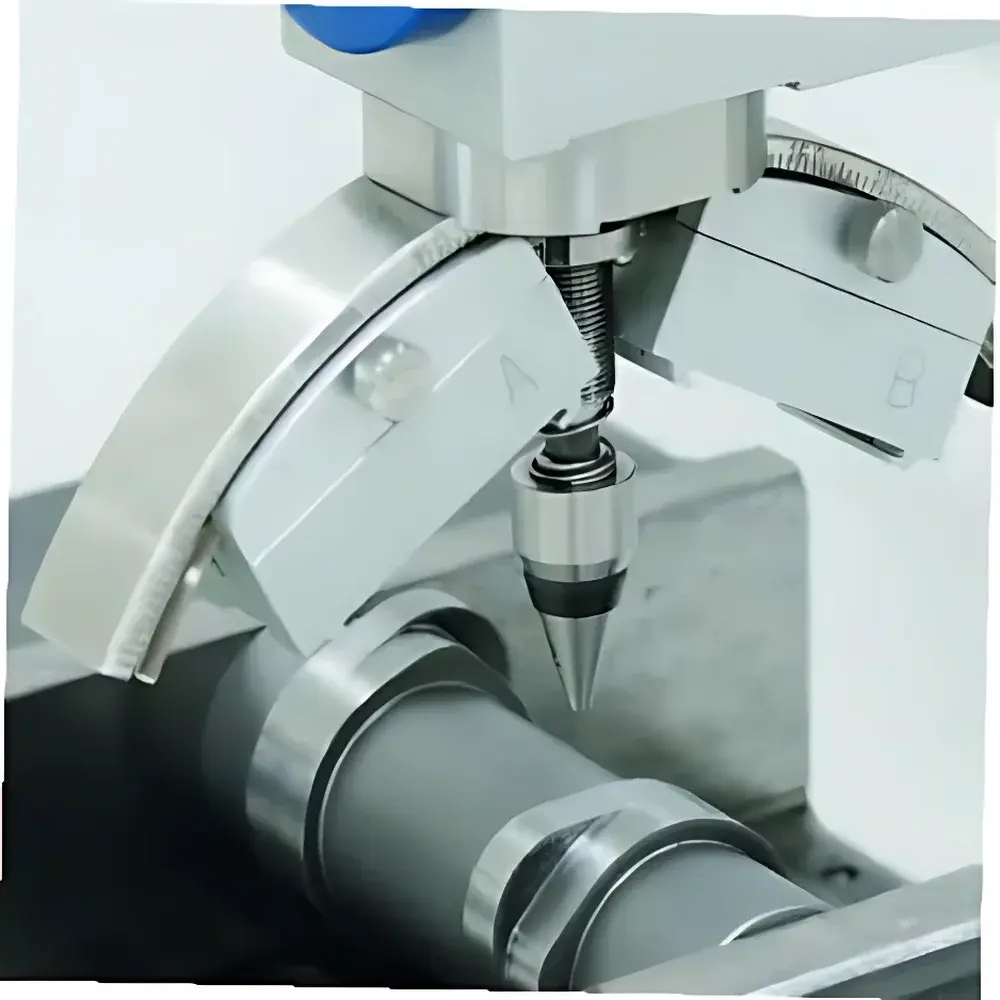
Stresstech xstress 3000 X-Ray Residual Stress Analyzer
| Brand | Stresstech Oy |
|---|---|
| Origin | Finland |
| Model | xstress 3000 |
| X-ray Tube | 5–30 kV / 0–10 mA, 300 W max |
| Target Materials | Cr, Cu, Co, Ti, Mn |
| Detector | MOS linear position-sensitive proportional counter (512 pixels, angular resolution 0.029°/pixel) |
| 2θ Range | 117–170° continuous adjustment |
| Geometry | Modified y-geometry (side-inclination method) with dual symmetric detectors |
| Cooling | Sealed recirculating system with active cooling |
| Power Supply | 100–240 VAC, 50/60 Hz |
| Software Platform | Windows-based, real-time HV monitoring, multi-exposure modes, concurrent measurement & calculation |
Overview
The Stresstech xstress 3000 is a high-precision, laboratory-grade and field-deployable X-ray residual stress analyzer engineered for non-destructive evaluation of crystalline lattice strain in polycrystalline metallic components. It operates on the principle of X-ray diffraction (XRD) using the sin²ψ method—specifically optimized for side-inclination (y-geometry) measurements—to determine macroscopic residual stress states from interplanar spacing shifts in Bragg reflections. Designed for industrial metrology and materials R&D environments, the system delivers traceable, reproducible stress quantification without requiring water-cooling infrastructure or fixed installation. Its compact architecture, integrated safety interlocks, and modular X-ray tube design enable rapid deployment across diverse settings—from QC labs to production floors and outdoor inspection sites.
Key Features
- Modular micro-focus X-ray tube (5–30 kV, 0–10 mA, 300 W) with quick-swap capability for Cr, Cu, Co, Ti, or Mn anodes—no tools required, replacement completed in under 5 minutes
- Dual symmetric solid-state position-sensitive detector (MOS linear imaging counter), 512-pixel resolution, angular precision of 0.029° per pixel, low power consumption (1 mW), no external HV supply needed
- Continuous 2θ angular range from 117° to 170°, enabling optimal peak selection across multiple material systems and diffraction orders
- Enhanced y-geometry configuration with precise ψ-tilt and ω-rotation control, minimizing texture-induced bias and improving measurement robustness on anisotropic or textured surfaces
- Sealed recirculating cooling system with forced-air heat dissipation—eliminates dependency on external chillers or tap water, ensuring stable thermal performance during extended acquisition
- Full PC-based operation with real-time high-voltage monitoring, synchronized exposure control, and concurrent data acquisition, peak fitting, and stress calculation
Sample Compatibility & Compliance
The xstress 3000 supports residual stress analysis on ferrous and non-ferrous alloys—including steels, aluminum, titanium, nickel superalloys, and cast irons—as well as quantitative residual austenite determination in hardened steels. Sample preparation is compatible with standard electropolishing units for depth-profiling (layer-by-layer stress mapping down to ~10 µm increments). The instrument conforms to ISO 21942:2020 (Metallic materials — Standard test method for determination of residual stresses by X-ray diffraction), ASTM E915-22 (Standard Test Method for Verifying the Alignment of X-Ray Diffraction Instrumentation for Residual Stress Measurement), and EN 15305:2022. All operational parameters, calibration logs, and measurement reports are timestamped and user-annotated to support GLP/GMP documentation requirements and FDA 21 CFR Part 11-compliant audit trails when deployed with validated software configurations.
Software & Data Management
The proprietary xstress software suite runs natively on Windows OS (Windows 10/11 64-bit) and provides full instrument orchestration: X-ray tube parameterization, goniometer motion sequencing, detector readout synchronization, and automated peak search via centroid and profile-fitting algorithms (Pseudo-Voigt, Pearson VII). Real-time feedback includes live diffractogram display, HV stability indicators, and dynamic signal-to-noise ratio estimation. Measurement data are stored in structured binary archives (.xrd) with embedded metadata (sample ID, operator, date/time, geometry, exposure settings), exportable to CSV, XML, or industry-standard .udf formats. Batch processing, statistical reporting (mean, SD, CV%), and overlay comparison across multiple samples or depths are supported. Software updates follow a documented version control protocol aligned with IEC 62304 for medical-grade device software lifecycle management.
Applications
- Verification of stress relief effectiveness after heat treatment (annealing, tempering, normalizing) in aerospace turbine disks and landing gear components
- Process validation of surface enhancement techniques—shot peening, laser shock peening, roller burnishing—by quantifying compressive stress magnitude and depth distribution
- Weld integrity assessment in pressure vessels, pipelines, and nuclear containment structures per ASME BPVC Section VIII and API RP 579
- Residual austenite quantification in case-hardened gears and bearing races to predict dimensional stability and rolling contact fatigue life
- In-service inspection of railcar axles, crankshafts, and forging dies where stress-driven cracking poses critical failure risk
- Materials development workflows involving additive manufacturing (LPBF, DED), where thermal gradient-induced stresses directly influence part density and mechanical anisotropy
FAQ
What X-ray diffraction geometry does the xstress 3000 use, and why is it preferred for industrial stress analysis?
It employs a modified side-inclination (y-geometry) setup with dual symmetric detectors, which minimizes systematic errors from specimen surface curvature, tilt misalignment, and preferred orientation—making it especially suitable for complex-shaped engineering parts.
Can the system perform depth-resolved stress measurements?
Yes—when coupled with an electrolytic polishing unit, it enables controlled layer removal and sequential stress profiling with sub-20 µm depth resolution, supporting ASTM E2860-21 compliant procedures.
Is the xstress 3000 suitable for regulatory-compliant quality documentation?
Yes—the software supports electronic signatures, change-controlled configuration management, and immutable audit logs, fulfilling foundational requirements for ISO 17025-accredited testing laboratories and FDA-regulated manufacturing environments.
Does the system require external cooling or dedicated power conditioning?
No—it integrates a sealed, air-assisted recirculating coolant loop and accepts universal AC input (100–240 V, 50/60 Hz), eliminating need for chilled water lines or voltage stabilizers.
How is detector calibration maintained over time?
The MOS detector features built-in reference channel monitoring and automatic gain stabilization; periodic verification against NIST-traceable Si or Fe standards is recommended every 6 months per ISO/IEC 17025 calibration schedules.
Related Products




