
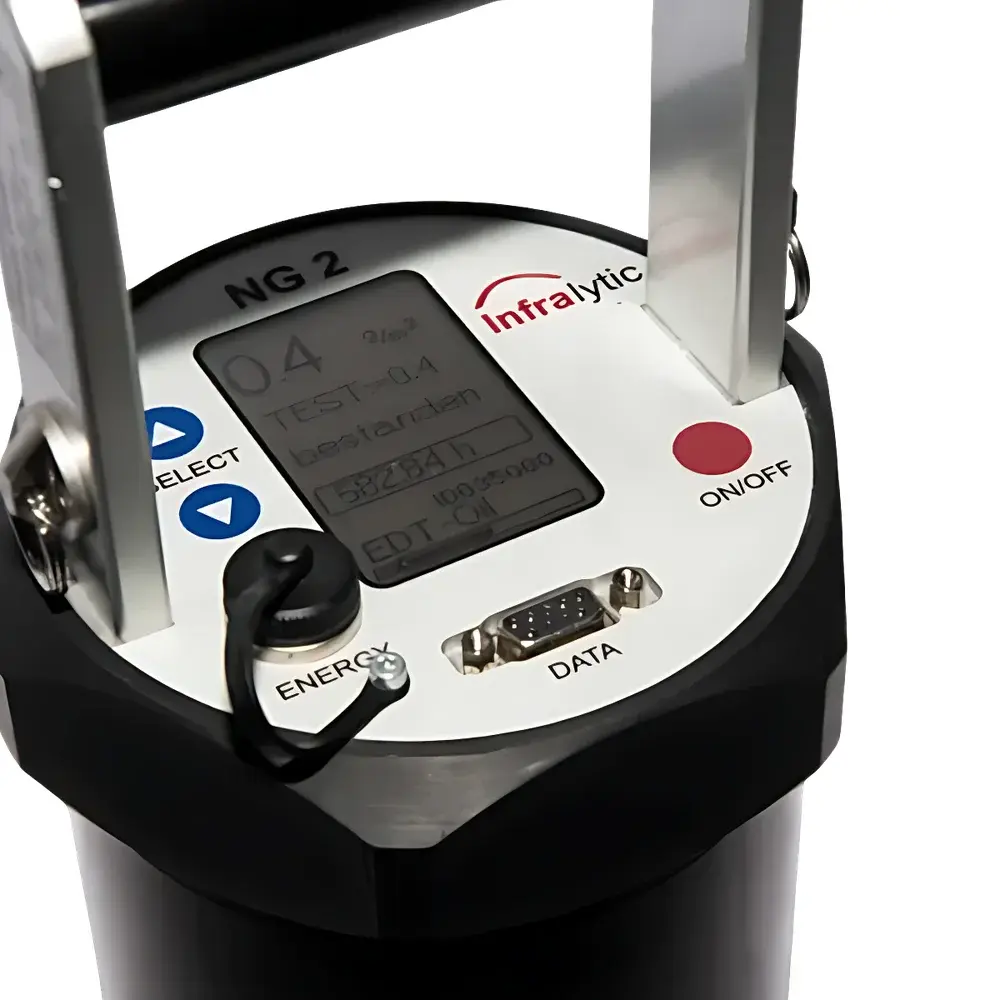
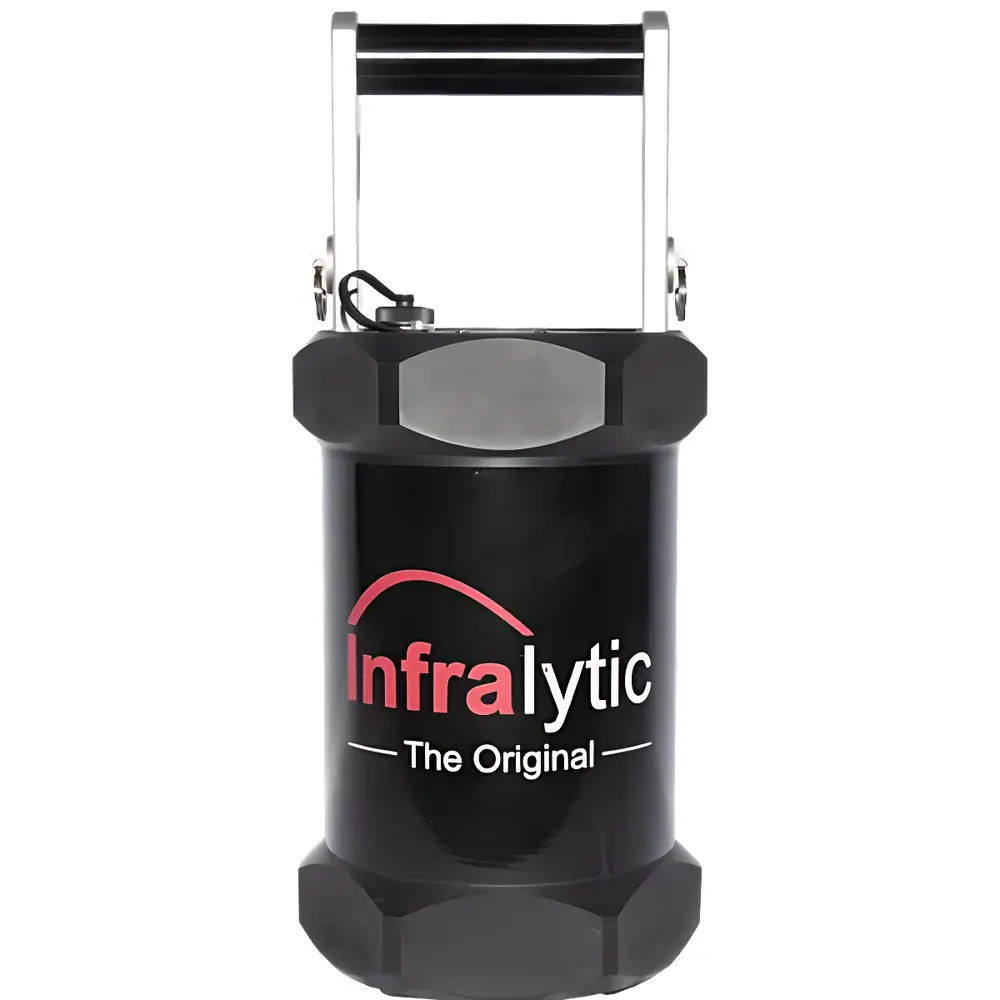
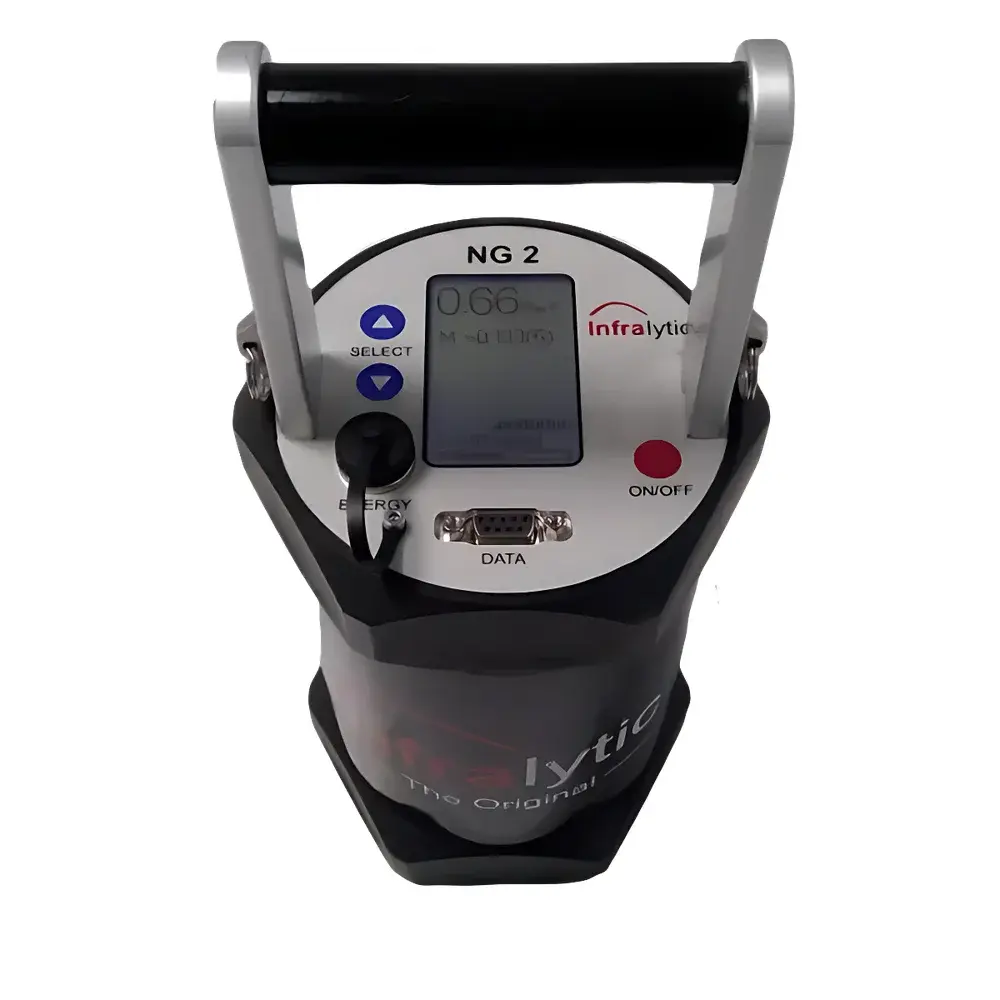
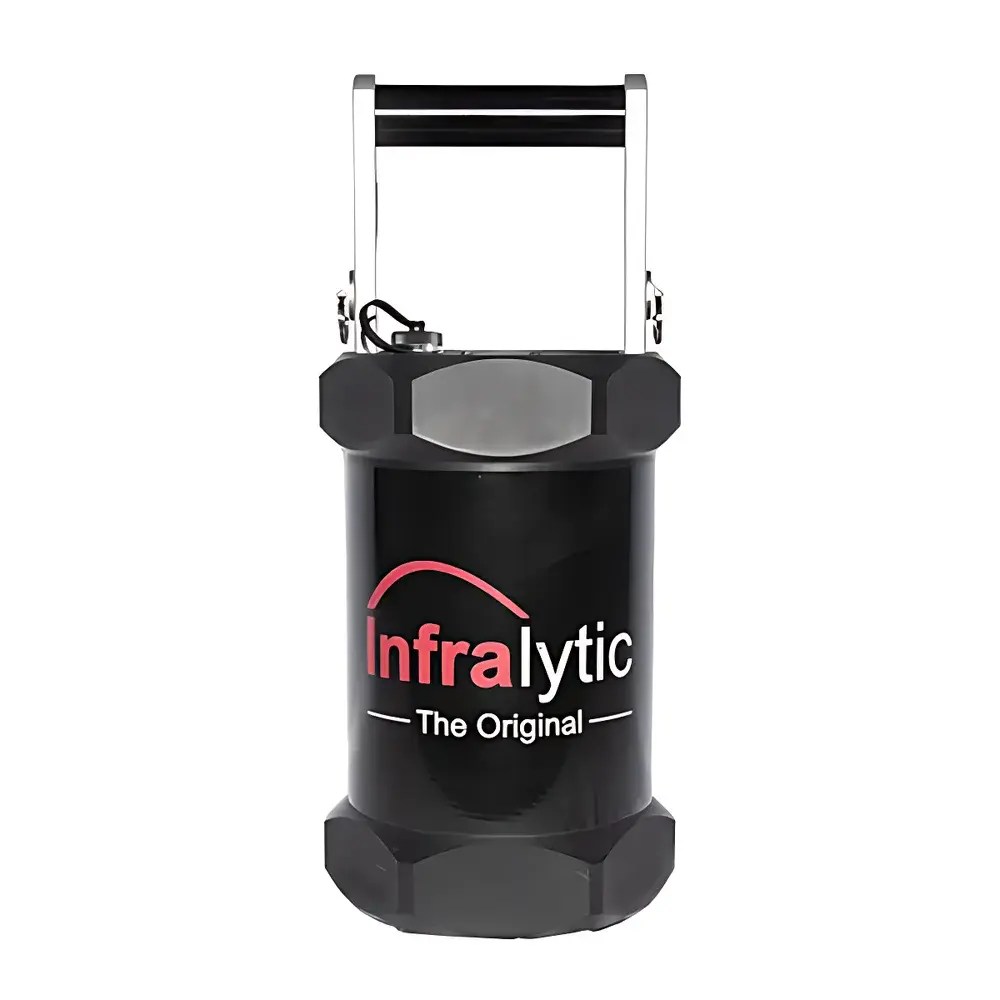
Infralytic NG2/NG3 Non-Contact Infrared Oil Film Thickness Gauge for Oriented Electrical Steel
| Brand | Infralytic |
|---|---|
| Origin | Germany |
| Model | NG2 / NG3 |
| Measurement Principle | Near-Infrared (NIR) Absorption Spectroscopy |
| Range | 0.05–6 g/m² |
| Accuracy | ±0.015 g/m² (0.02–0.3 g/m²), ±0.2 g/m² (0.3–2 g/m²), ±10% of reading (>2 g/m²) |
| Repeatability | <0.0010 g/m² |
| Resolution | 0.001 g/m² |
| Measurement Distance | 8 mm (+5/−2 mm) |
| IP Rating | IP65 |
| Operating Temperature | 0–45 °C |
| Substrate Compatibility | Cold-rolled steel, hot-dip galvanized (HDG), electrogalvanized (EG), phosphated EG, annealed galvannealed (GA), aluminized (Al, ZnMg), bare aluminum (polished & EDT) |
| Lubricant Compatibility | Mineral oils, thixotropic mineral oils, hot-melt adhesives, waxes, other organics (with custom calibration) |
| Power | Battery-operated (≥12 h runtime) |
| Compliance | Designed for ISO/IEC 17025-aligned QA workflows, supports GLP/GMP audit trails via optional software logging |
Overview
The Infralytic NG2 and NG3 are industrial-grade, non-contact infrared oil film thickness gauges engineered specifically for precision metrology of lubricant layers on oriented electrical steel (OES) and other coated metal substrates used in transformer core manufacturing. Unlike contact-based or beta-backscatter methods, the NG series employs calibrated near-infrared (NIR) absorption spectroscopy—measuring characteristic vibrational overtones of C–H bonds in organic lubricants—to quantify mass per unit area (g/m²) without physical interaction, surface damage, or sample preparation. This principle ensures high reproducibility across production lines where rapid, inline-capable verification is required prior to slitting, stacking, or insulation coating. The instrument’s optical architecture is optimized for low-emissivity, highly reflective surfaces typical of grain-oriented silicon steel, minimizing interference from substrate topography or oxide layer variability. Its fixed-focus design with 8 mm nominal working distance (±2 mm tolerance) enables stable integration into roll-to-roll environments, including tension stands, recoilers, and offline QC stations.
Key Features
- True non-contact measurement using NIR absorption—no mechanical wear, zero risk of surface contamination or micro-scratching on delicate insulating coatings.
- Automatic real-time substrate recognition: distinguishes between cold-rolled, hot-dip galvanized, electrogalvanized, phosphated EG, galvannealed, and aluminized surfaces—enabling context-aware calibration selection and automatic correction for substrate-specific spectral baseline shifts.
- Onboard material direction detection: identifies rolling direction via anisotropic reflectance analysis, critical for evaluating directional lubricant distribution uniformity in OES strips.
- Integrated high-resolution imaging module: captures geotagged, timestamped photographic documentation of each measurement point—synchronizable with smartphone via Bluetooth for traceable reporting and audit-ready records.
- Field-deployable battery operation: >12 hours continuous use per charge; ruggedized housing rated IP65 for resistance to dust ingress and low-pressure water jets—suitable for hot-dip galvanizing line peripheries or coil processing areas with ambient humidity and oil mist.
- Factory-calibrated traceability: each unit ships with NIST-traceable calibration certificates for primary standards (e.g., certified reference foils); optional annual recalibration service available through Infralytic’s DIN EN ISO/IEC 17025-accredited lab.
Sample Compatibility & Compliance
The NG2/NG3 is validated for quantitative oil film assessment on industrially relevant electrical steel substrates—including fully processed grain-oriented (GOES) and non-oriented (NOES) grades—as well as supporting metallurgical forms: bare cold-rolled steel, hot-dip galvanized (Zn), electrogalvanized (Zn), phosphated EG (for post-phosphating oil retention verification), galvannealed (GA), and aluminized (Al, ZnMg) sheets. Lubricants covered include standard mineral oils, thixotropic formulations, synthetic esters, waxes, and hot-melt adhesives—provided appropriate substrate-lubricant calibration sets are loaded. The system complies with foundational metrological requirements of ISO 9001:2015 and supports implementation within GLP and GMP frameworks. While not FDA 21 CFR Part 11-certified out-of-the-box, its data export protocols (CSV, XML) and optional secure logging module enable integration into validated LIMS or MES platforms meeting regulatory audit expectations for electronic records integrity.
Software & Data Management
The NG series operates via embedded firmware with intuitive touchscreen interface and supports wireless data synchronization through the Infralytic Connect mobile application (iOS/Android). All measurements are time-stamped, location-tagged (via optional GNSS), and annotated with substrate ID, lubricant type, operator code, and environmental metadata (ambient temperature, relative humidity if external sensor linked). Raw spectral data, processed absorbance curves, and calibration logs are exportable in vendor-neutral formats compatible with third-party statistical process control (SPC) software such as Minitab or JMP. For enterprise deployment, the optional Infralytic DataHub server solution provides centralized database management, role-based access control, automated report generation (PDF/Excel), and full audit trail functionality—including user action logging, calibration history, and firmware revision tracking—aligned with ISO/IEC 17025 clause 7.7 and ICH Q7 Annex 19 requirements.
Applications
- Pre-stack QC of oriented silicon steel: verifying uniform oil coverage (0.3–2.5 g/m² typical) to prevent interlaminar friction during core assembly and ensure dielectric integrity under thermal cycling.
- In-process monitoring at temper mill exit or skin-pass line: detecting localized depletion zones or over-application that could cause slippage in subsequent stamping or laser welding operations.
- Validation of phosphating efficiency on electrogalvanized electrical steels: correlating oil retention capacity with phosphate crystal density and morphology.
- R&D of novel lubricant formulations: quantifying adsorption kinetics and thermal stability of bio-based or low-VOC alternatives on high-permeability GOES grades.
- Supplier qualification audits: generating objective, repeatable g/m² data to enforce contractual lubrication specifications across global Tier-1 steel suppliers.
FAQ
Can the NG2/NG3 measure oil films on insulated or varnish-coated electrical steel?
No—the instrument requires direct optical access to the lubricant-substrate interface. Insulating coatings (e.g., C5, epoxy, or polyimide layers) attenuate the NIR signal and invalidate calibration. It is intended for bare or metallurgically coated (Zn, Al, etc.) base metals only.
Is it possible to perform multi-point mapping across a strip width?
Yes—using the optional motorized traverse mount (NG-TRV-200), the gauge can be programmed for automated lateral scanning at user-defined intervals (e.g., every 50 mm), generating cross-web thickness profiles compatible with ASTM A928-22 Annex A4 reporting templates.
Does the device require periodic recalibration in the field?
While factory calibrations remain stable for ≥12 months under normal operating conditions, Infralytic recommends annual verification against certified reference standards. Field recalibration is not user-performed; it must be conducted by authorized service centers using traceable reference foils and spectral reference libraries.
How does ambient lighting affect measurement accuracy?
The NG series incorporates active background light compensation and narrow-band NIR filtering (1650–1750 nm), rendering it immune to fluorescent, LED, or daylight interference—validated per IEC 61000-4-3 radiated immunity testing.
Can measurement data be integrated into Siemens SIMATIC or Rockwell FactoryTalk systems?
Yes—via Modbus TCP or OPC UA protocol support (firmware v3.2+), enabling real-time g/m² values to feed directly into PLC-controlled process dashboards or predictive maintenance algorithms.



