
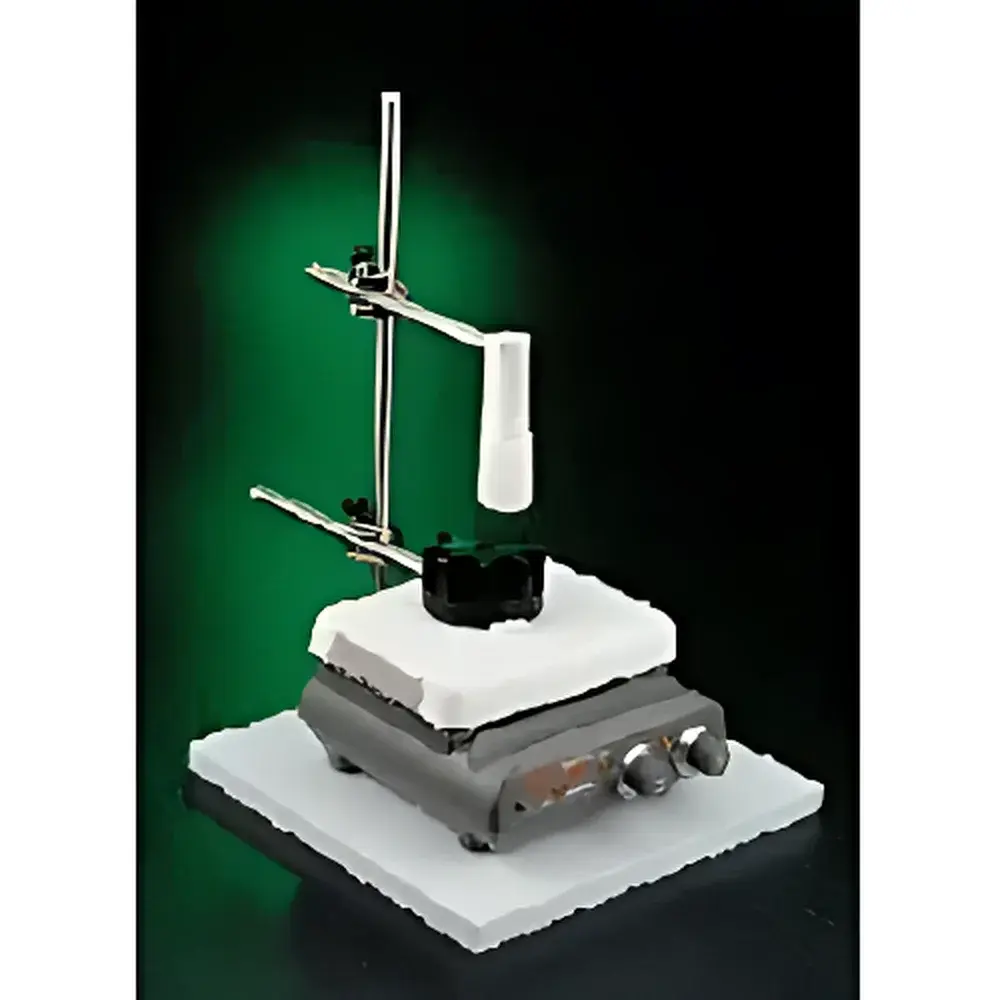
Supelco SPME Solid Phase Microextraction Device
| Brand | Supelco |
|---|---|
| Origin | USA |
| Model | SPME |
| Type | Manual or Automated Solid Phase Microextraction System |
| Compliance | Designed for GC, GC-MS, LC, and LC-MS interfacing |
| Regulatory Context | Compatible with EPA Methods 525.3, 8260, 8270 |
Overview
The Supelco SPME Solid Phase Microextraction Device is a patented sample preparation platform developed by Sigma-Aldrich (formerly Supelco), first introduced in 1994 and recognized with the R&D 100 Award at Pittcon—the premier global conference for analytical instrumentation. SPME operates on the principle of equilibrium-based sorptive extraction, where analytes partition from a liquid, gaseous, or solid-phase matrix onto a coated fused-silica fiber under controlled time, temperature, and agitation conditions. Unlike conventional liquid–liquid extraction or solid-phase extraction (SPE), SPME eliminates solvent use, reduces procedural steps, and integrates sampling, extraction, concentration, and direct instrumental introduction into a single, miniaturized workflow. Its design—resembling a gas chromatographic syringe—comprises a reusable holder and disposable fiber assemblies, enabling field-deployable, contamination-minimized analysis without derivatization or cleanup.
Key Features
- Miniaturized, solvent-free extraction system with no centrifugation, filtration, or evaporation steps
- Fiber geometry: 1 cm active length fused-silica core, protected within a stainless-steel sheath; retractable mechanism ensures mechanical protection and reproducible exposure
- Multiple stationary phase chemistries available—including polydimethylsiloxane (PDMS), carboxen/PDMS, divinylbenzene/CAR/PDMS, polyacrylate (PA), and PDMS/DVB—to match analyte polarity, volatility, and molecular weight
- Film thickness options: 7 µm (for high-volatility compounds), 30 µm, 65 µm, 75 µm, 85 µm, and 100 µm (for semi-volatile and less volatile analytes)
- Compatible with manual and automated SPME platforms, including CTC Analytics PAL, Gerstel MPS, and Thermo Scientific TriPlus RSH autosamplers
- Thermally stable fibers rated for desorption temperatures up to 280 °C (fiber-dependent), ensuring compatibility with standard GC inlet conditions
- Reusable holder designed for >1000 extractions when maintained per manufacturer guidelines
Sample Compatibility & Compliance
SPME demonstrates broad applicability across heterogeneous matrices: aqueous environmental samples (e.g., drinking water, wastewater, groundwater), biological fluids (urine, plasma, serum), headspace volatiles from polymers and pharmaceuticals, food and flavor volatiles, forensic evidence (fire debris, clothing swabs), and air/gas-phase VOCs. It meets method validation requirements outlined in EPA Method 525.3 (GC-MS analysis of pesticides and PCBs in water), ASTM D7163 (determination of volatile organic compounds in soil via headspace SPME-GC/MS), and ISO 17993 (water quality—determination of organic micro-pollutants using SPME–GC–MS). The system supports audit-ready workflows compliant with 21 CFR Part 11 when integrated with validated LIMS or chromatography data systems featuring electronic signatures and full audit trails.
Software & Data Management
While the SPME device itself is hardware-based and does not include embedded firmware or onboard software, its operation is fully supported through vendor-neutral instrument control environments. When used with automated samplers, method parameters—including fiber equilibration time, extraction duration, agitation speed, desorption temperature/time, and GC/MS sequence integration—are programmable via native autosampler software (e.g., Gerstel Maestro, CTC CombiPAL). Chromatographic data systems such as Thermo Fisher Chromeleon, Agilent OpenLab CDS, or Waters Empower log all SPME-related acquisition metadata, enabling traceable correlation between fiber lot number, extraction conditions, and analytical results—critical for GLP and regulated QA/QC laboratories.
Applications
- Environmental monitoring: quantification of PAHs, phthalates, chlorinated hydrocarbons, and emerging contaminants (e.g., PFAS precursors) in surface water and sediment pore water
- Clinical toxicology: rapid screening of benzodiazepines, opioids, and amphetamines in urine and blood using headspace or direct immersion SPME–LC-MS/MS
- Pharmaceutical quality control: residual solvent analysis (ICH Q3C) in APIs and final dosage forms
- Food safety: detection of mycotoxins, pesticide residues, and off-flavor compounds (e.g., geosmin, 2-methylisoborneol) in beverages and dairy products
- Forensic science: analysis of ignitable liquids in arson investigations and drug metabolites in biological matrices
- Materials science: outgassing profiling of packaging polymers and electronic components using static headspace SPME–GC-MS
FAQ
Can SPME fibers be reused?
Yes—fibers may be reused multiple times if cleaned properly between injections (e.g., thermal desorption in GC inlet or solvent rinsing for non-volatile residues), though lifetime depends on matrix cleanliness and thermal stress.
How do I select the optimal fiber coating?
Selection is governed by analyte polarity and volatility: non-polar coatings (e.g., PDMS) suit non-polar VOCs; polar coatings (e.g., PA) enhance recovery of phenols or carboxylic acids; mixed-phase coatings (e.g., DVB/CAR/PDMS) improve sensitivity for low-concentration SVOCs.
Is SPME compatible with LC-MS?
Yes—direct desorption is not feasible, but elution-based SPME-LC interfaces (e.g., in-line fiber desorption loops or micro-elution devices) enable coupling with electrospray ionization sources while preserving quantitative reproducibility.
Does SPME require method validation?
Yes—regulatory applications demand full validation per ICH Q2(R2) guidelines, including assessment of precision, accuracy, linearity, LOD/LOQ, carryover, and matrix effects—particularly critical for bioanalytical and environmental compliance testing.



