
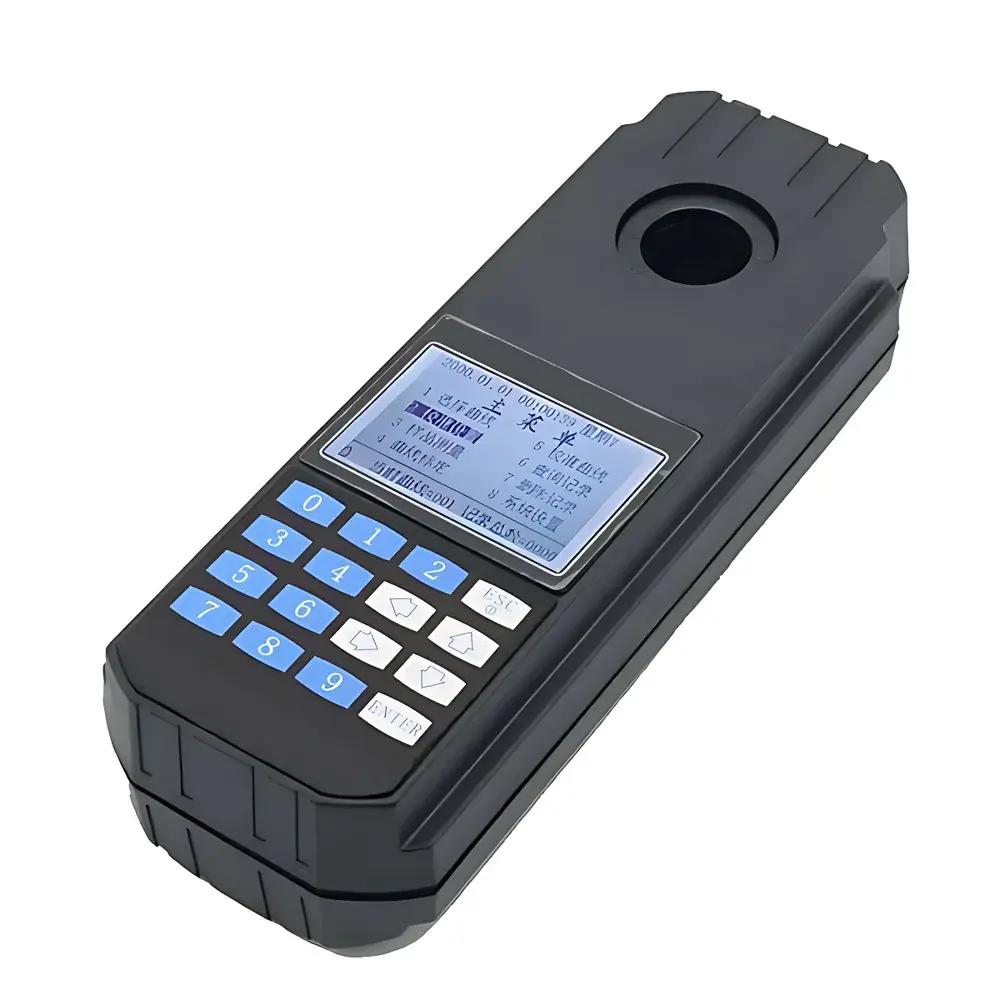
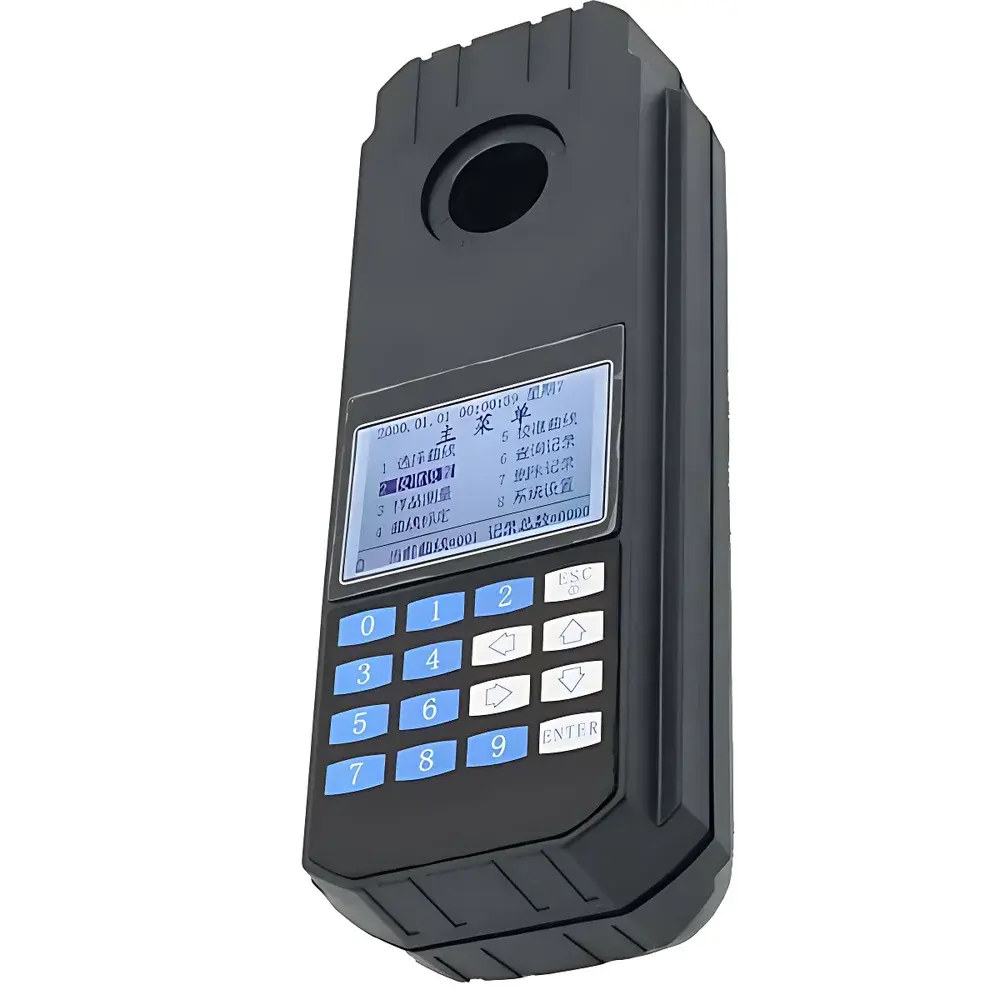
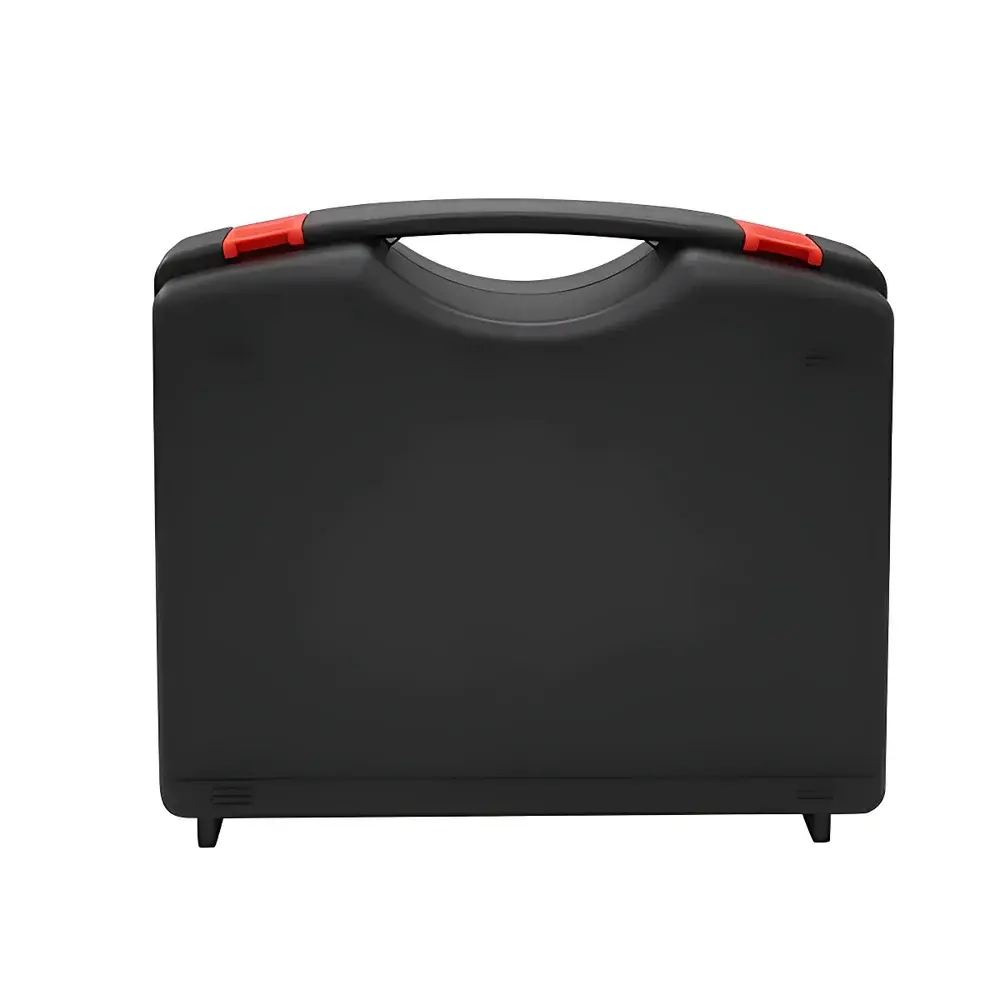
Shenchanghong PCHCL-225 Portable Chloride Ion Analyzer
| Brand | Shenchanghong |
|---|---|
| Origin | Guangdong, China |
| Manufacturer Type | Direct Manufacturer |
| Instrument Category | Domestic |
| Model | PCHCL-225 |
| Instrument Type | Portable |
| Measurement Range | 0.20–10.00 mg/L |
| Detection Limit | 0.20 mg/L |
| Response Time | 20 min |
| Accuracy | ≤ ±5% |
| Repeatability | ≤ 3% |
| Optical Drift | < 0.002 A within 20 min |
| Operating Temperature | 5–40 °C |
| Relative Humidity | ≤ 85% |
| Power Supply | 4 × AA batteries |
| Dimensions | 80 mm × 230 mm × 55 mm |
| Weight | 500 g |
| IP Rating | IP65 |
| Data Storage | 20 calibration curves + 199 timestamped measurements (including absorbance, transmittance, and concentration with yyyy-mm-dd hh:mm:ss) |
Overview
The Shenchanghong PCHCL-225 Portable Chloride Ion Analyzer is a field-deployable photometric instrument engineered for rapid, reliable quantification of chloride ion (Cl⁻) concentration in aqueous samples using the colorimetric mercuric thiocyanate method—standardized under ISO 9297 and ASTM D511. It employs a narrow-band cold light source and fixed-wavelength optical detection at 460 nm to minimize spectral interference and ensure high photometric stability. Unlike electrochemical or ion-selective electrode (ISE) systems, this analyzer eliminates drift-related calibration drift and membrane fouling concerns by relying on a stable, reagent-based chromogenic reaction. Its microprocessor-controlled photometric engine automatically corrects for background absorbance and applies pre-stored calibration functions, delivering direct readout of Cl⁻ concentration in mg/L without manual calculation. Designed for compliance with routine environmental monitoring workflows, the PCHCL-225 meets core functional requirements for field-level screening under China’s HJ 502–2009 and supports data traceability aligned with GLP principles.
Key Features
- Compact, handheld form factor (80 × 230 × 55 mm; 500 g) optimized for unattended field deployment and mobile laboratory use.
- IP65-rated ABS housing provides dust-tight, water-resistant, and corrosion-resistant operation in humid, outdoor, or industrial environments.
- Low-power 16-bit MCU architecture enables continuous operation for >15 hours on four standard AA alkaline batteries—no external power supply required.
- High-contrast LCD display with backlight supports intuitive menu navigation and real-time visualization of absorbance, transmittance, and concentration values.
- Integrated data logger stores up to 20 user-defined calibration curves and 199 full measurement records—including timestamp (yyyy-mm-dd hh:mm:ss), absorbance (A), transmittance (%T), and calculated Cl⁻ concentration (mg/L).
- Optical system features a thermally stabilized cold LED source and precision interference filter, ensuring absorbance drift < 0.002 A over 20 minutes—critical for batch analysis reproducibility.
- Automatic zeroing and blank compensation reduce operator dependency and improve inter-user consistency across multi-shift or multi-site operations.
Sample Compatibility & Compliance
The PCHCL-225 is validated for use with clarified, low-turbidity aqueous matrices including potable water, surface water, groundwater, municipal wastewater, and pretreated industrial effluents. Samples requiring filtration (e.g., >1 NTU turbidity) must be passed through a 0.45 µm membrane prior to analysis to prevent scattering artifacts. The instrument conforms to key performance criteria outlined in ISO 9297 (water quality — determination of chloride), ASTM D511 (standard test method for chloride ions in water), and China’s HJ 502–2009 (environmental monitoring technical specification for water and wastewater). While not certified for regulated reporting under EPA Method 325.2 or ISO/IEC 17025, its ≤±5% accuracy and ≤3% repeatability meet internal QA/QC thresholds for Tier-2 surveillance and trend monitoring per ISO 5725-2. No regulatory claim is made for clinical, pharmaceutical, or food-grade applications.
Software & Data Management
Data acquisition and storage are fully embedded—no PC software or proprietary drivers required. All measurements include automatic time/date stamping compliant with ALCOA+ principles (Attributable, Legible, Contemporaneous, Original, Accurate). Internal memory retains data during battery replacement (non-volatile EEPROM), satisfying basic data integrity requirements for field logbooks. Export is limited to manual transcription; the device does not support USB, Bluetooth, or RS-232 output. For laboratories requiring electronic audit trails or 21 CFR Part 11 compliance, external documentation via printed reports or secondary logging into LIMS is recommended. Calibration curve management allows users to store and recall up to 20 unique curves—supporting method flexibility across varying sample matrices or reagent lots.
Applications
- Routine chloride monitoring in drinking water distribution networks to verify compliance with WHO (250 mg/L) and GB 5749–2022 (250 mg/L) limits.
- Field assessment of chloride intrusion in coastal aquifers and estuarine mixing zones.
- Process control in wastewater treatment plants—especially after dechlorination or reverse osmosis stages.
- Industrial effluent screening for electroplating, textile dyeing, and chemical manufacturing facilities subject to local discharge permits.
- Educational use in environmental science labs for teaching photometric analysis fundamentals and water quality parameter interrelationships.
FAQ
What chloride detection method does the PCHCL-225 employ?
It uses the mercuric thiocyanate spectrophotometric method (absorbance measured at 460 nm), referenced in ISO 9297 and ASTM D511.
Can the instrument measure seawater or brackish samples?
No—its upper limit is 10.00 mg/L; undiluted seawater (~19,000 mg/L Cl⁻) exceeds range and requires lab-based dilution and verification.
Is the device suitable for regulatory reporting?
It supports field screening and internal QA but lacks electronic audit trail, connectivity, or third-party certification required for formal regulatory submission.
How often must calibration curves be renewed?
Calibration should be verified daily with at least one standard before sample analysis; curves may be retained for up to 7 days if reagents and ambient conditions remain stable.
Does the unit require annual factory recalibration?
No scheduled recalibration is mandated; optical stability and electronic linearity are verified by user-performed blank and standard checks per operational protocol.
Related Products







