
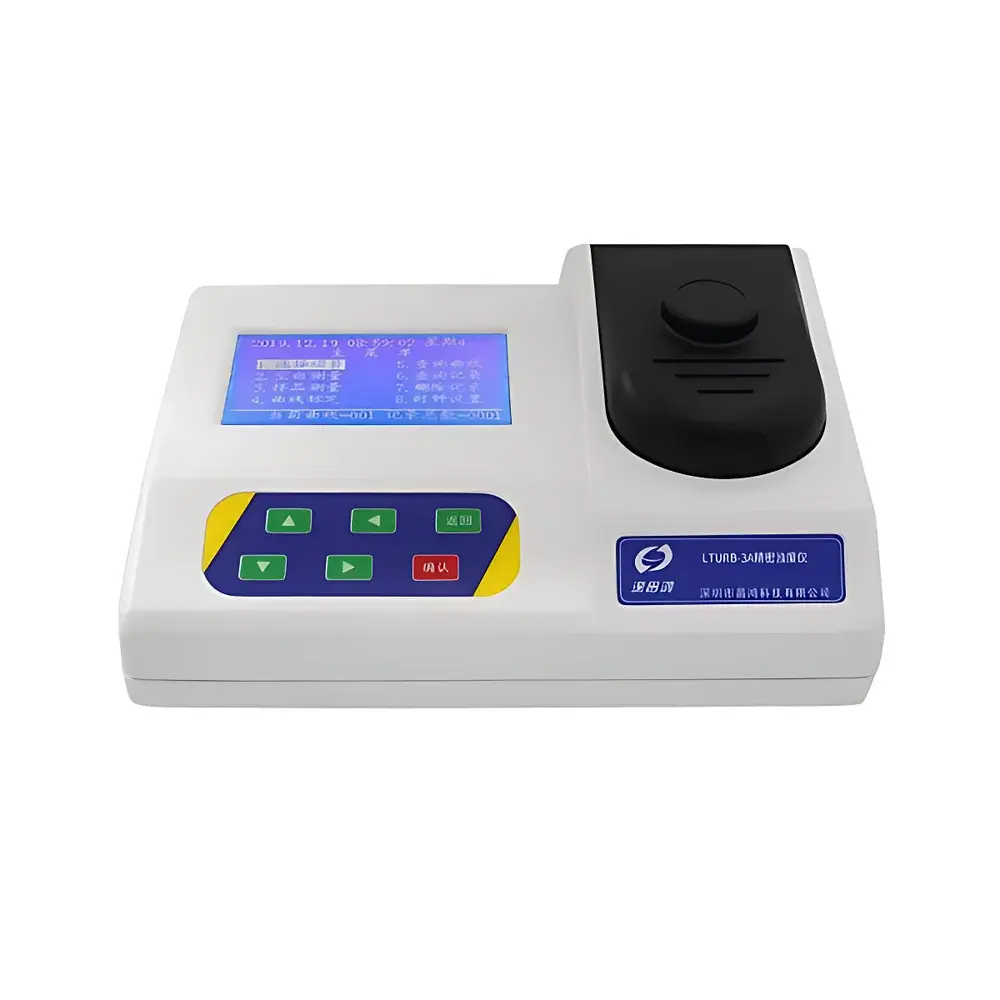
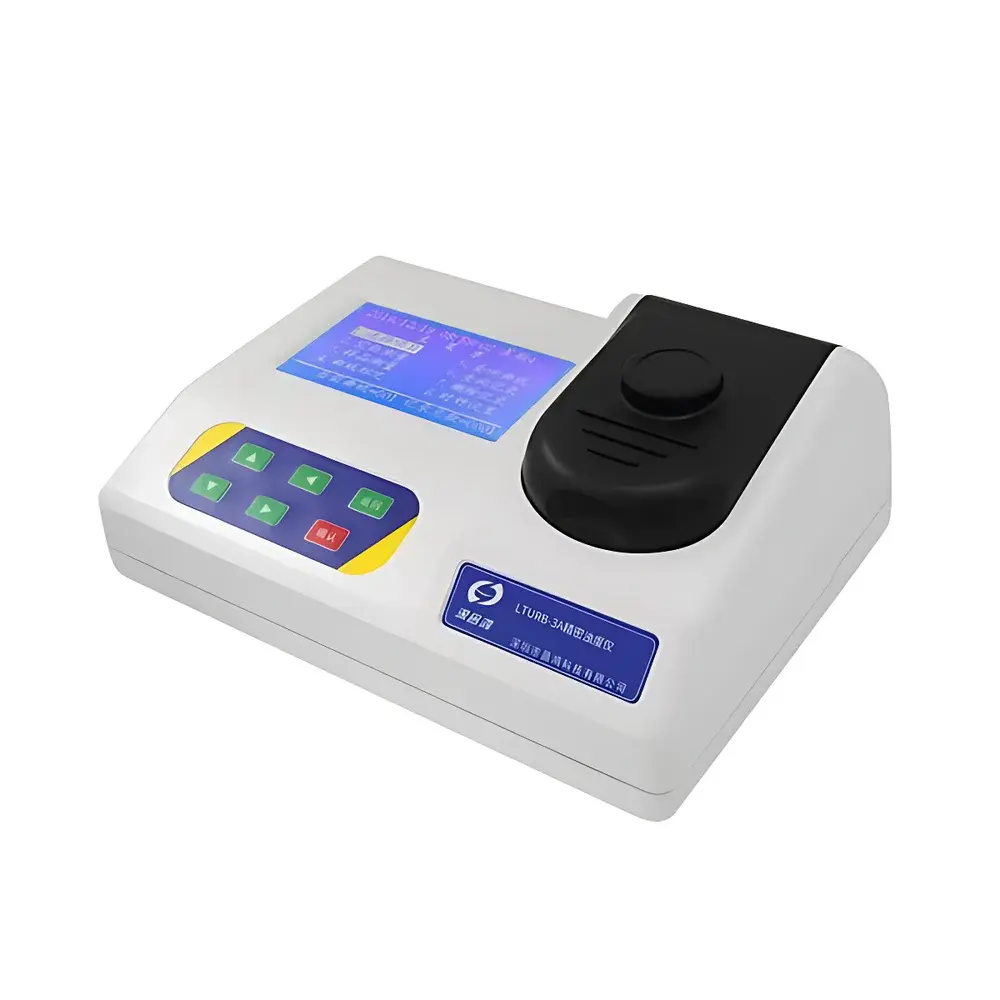
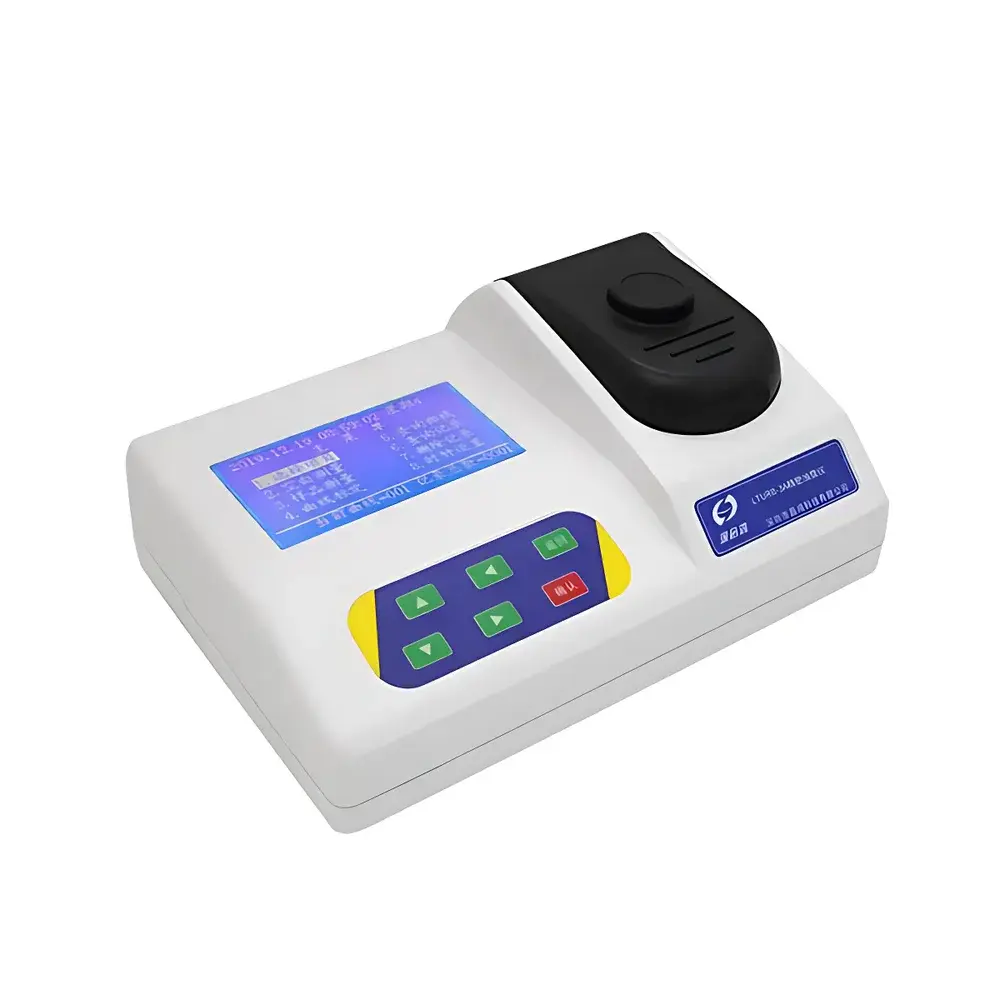
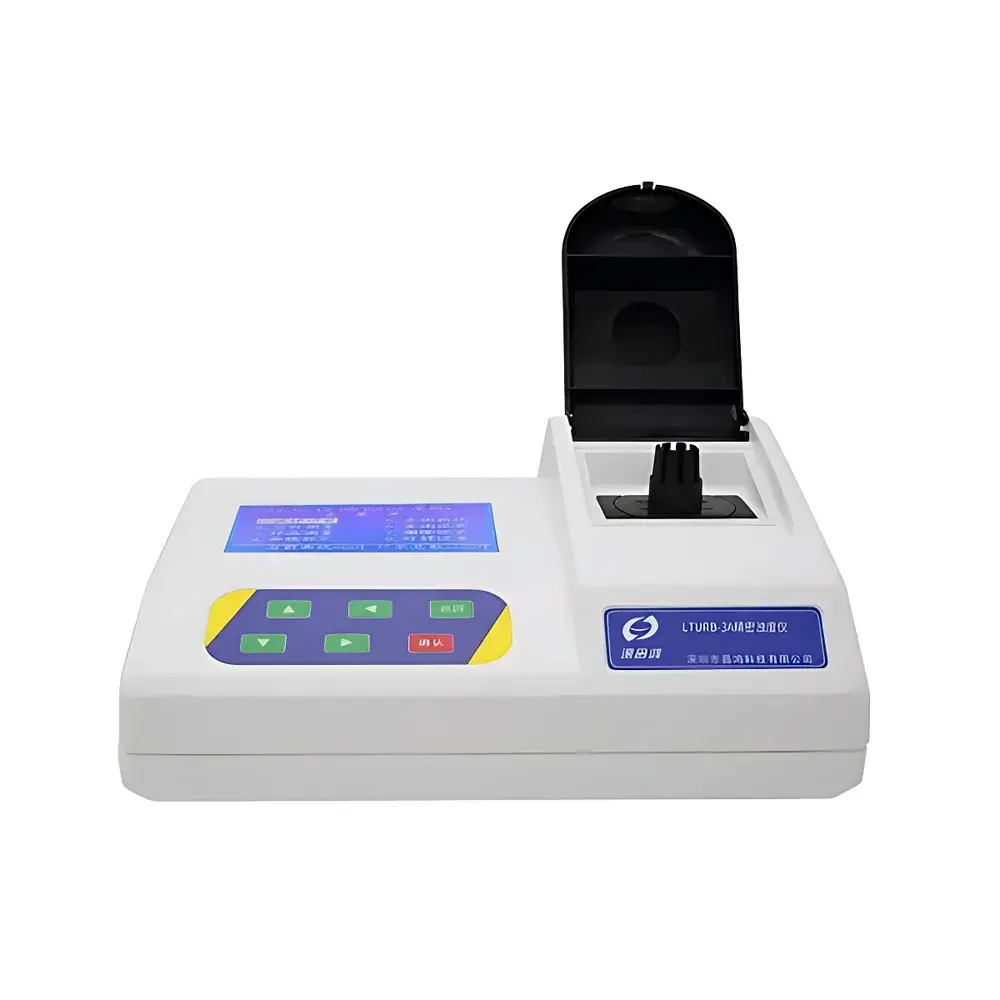
Shenchanghong LTURB-3A Precision Turbidimeter
| Brand | Shenchanghong |
|---|---|
| Origin | Guangdong, China |
| Manufacturer Type | Direct Manufacturer |
| Product Origin | Domestic (China) |
| Model | LTURB-3A |
| Form Factor | Benchtop / Laboratory |
| Measurement Range | 0–400 NTU |
| Resolution | 0.1 NTU |
| Operating Temperature | 5–40 °C |
| Accuracy | ≤ ±2 % FS |
| Repeatability | ≤ ±2 % FS |
| Drift | < 0.1 NTU/h |
| Display | Backlit LCD with Chinese UI |
| Data Storage | 10 calibration curves + 500 measurement records (non-volatile memory) |
| Housing Material | ABS plastic |
| Power Supply | AC 220 V ±10 %, 50 Hz |
| Dimensions | 266 × 200 × 130 mm |
| Weight | < 1 kg |
Overview
The Shenchanghong LTURB-3A Precision Turbidimeter is a benchtop optical instrument engineered for reliable, repeatable turbidity measurement in laboratory and quality control environments. It operates on the principle of nephelometry—measuring the intensity of light scattered at 90° by suspended particles in a liquid sample—conforming to ISO 7027 (infrared LED, 860 nm) and USP turbidity standards. Designed for compliance with routine water quality analysis, pharmaceutical process monitoring, and beverage QC workflows, the LTURB-3A delivers traceable, stable readings across its full 0–400 NTU range. Its optical architecture integrates a high-luminance, long-life (rated >100,000 h) infrared LED source and a narrow-band interference filter, minimizing spectral drift and ambient light interference. The system achieves thermal and mechanical stability through passive thermal management and rigid optical alignment—critical for maintaining repeatability over extended operation periods.
Key Features
- Stable nephelometric detection using an 860 nm infrared LED source, compliant with ISO 7027 optical geometry and spectral requirements.
- High-resolution readout with 0.1 NTU resolution and ≤ ±2 % full-scale accuracy, verified per ASTM D6508 and ISO 7027 calibration protocols.
- Robust optical path design featuring temperature-compensated photodetector and precision-aperture collimation, ensuring low signal drift (< 0.1 NTU/h after 30 min warm-up).
- Backlit monochrome LCD display with intuitive Chinese-language menu navigation—optimized for operator efficiency in bilingual lab settings.
- Onboard non-volatile memory stores up to 10 user-defined calibration curves and 500 timestamped measurement records, retained during power loss.
- Lightweight ABS housing with chemical-resistant surface finish, suitable for humid or mildly corrosive laboratory environments (IEC 60529 IP20 rating).
- Low-power 16-bit microcontroller architecture ensures consistent timing control, minimal self-heating, and EMC resilience per IEC 61326-1 Class B specifications.
Sample Compatibility & Compliance
The LTURB-3A accepts standard 25 mm round glass or quartz cuvettes (10 mm path length), compatible with aqueous samples including drinking water, wastewater effluents, pharmaceutical suspensions, and clarified beverages. It supports both formazin-based (FTU) and silica-based (mg/L SiO₂) reference standards for method-specific calibration. Instrument validation aligns with GLP documentation requirements: all calibrations include date/time stamping, operator ID field (manual entry), and automatic logging of zero and span verification points. While not pre-certified for FDA 21 CFR Part 11, its audit-ready data structure—including immutable record timestamps and non-editable storage—facilitates integration into validated QC systems under GMP or ISO/IEC 17025 frameworks.
Software & Data Management
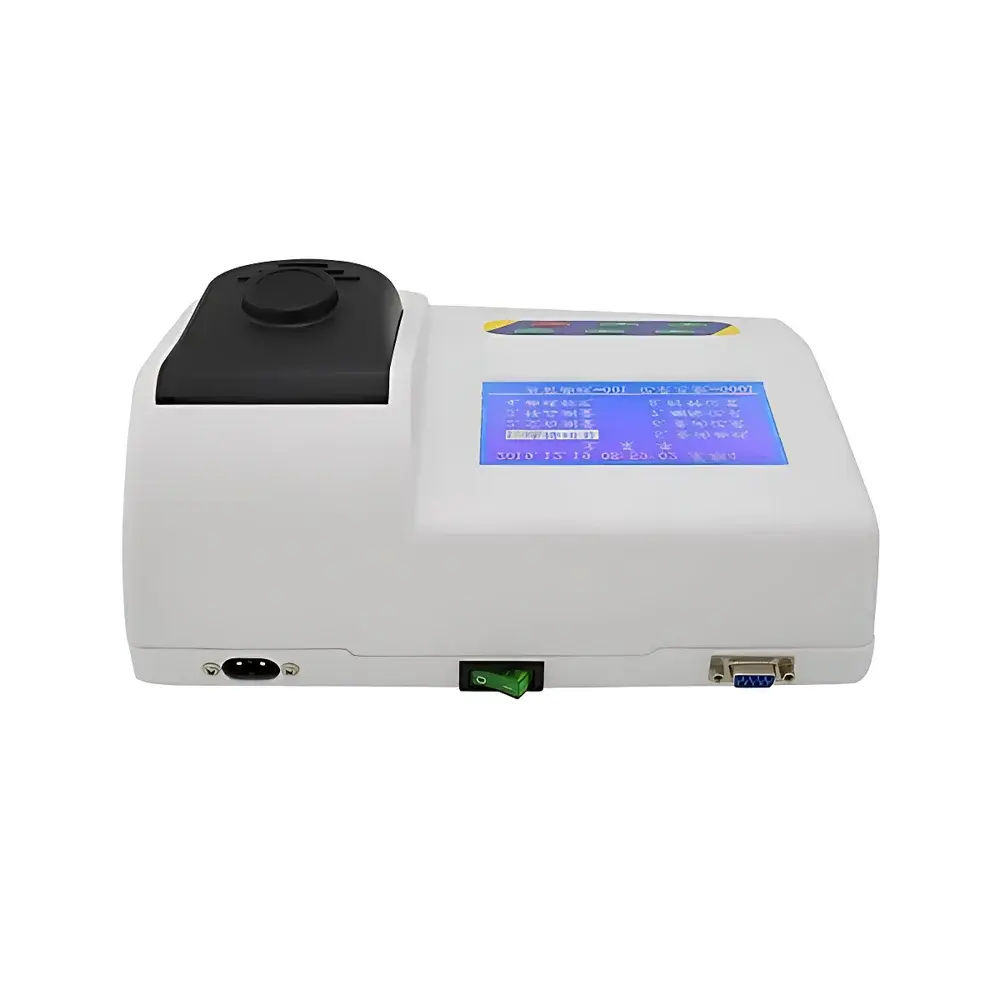
Data export is supported via RS-232 serial interface (DB9 connector) to PC-based terminal software or LIMS-compatible ASCII loggers. The instrument outputs NMEA-style formatted strings containing measurement value, unit (NTU), timestamp, and calibration status flag. No proprietary driver or cloud service is required; raw output is parseable using Python, LabVIEW, or Excel Power Query. Internal memory retains calibration history and last-used curve ID, enabling rapid reconfiguration between multi-method workflows (e.g., low-range drinking water vs. high-turbidity slurry screening). Firmware updates are performed offline via UART bootloader—no internet dependency.
Applications
- Drinking water treatment plants: Routine monitoring of filtration efficiency and coagulation performance.
- Pharmaceutical manufacturing: USP turbidity testing of parenteral solutions, ophthalmic preparations, and sterile filtrates.
- Food & beverage labs: Quantification of haze in beer, wine, fruit juices, and dairy emulsions per AOAC 971.22 and ISO 7027-2.
- Environmental testing labs: EPA Method 180.1-compliant field-deployable verification (when used with portable power adapter).
- Educational laboratories: Teaching core principles of light scattering, calibration traceability, and instrument validation protocols.
FAQ
What calibration standards are recommended for daily verification?
Formazin suspension (400 NTU stock, diluted as needed) or primary-grade StablCal® standards traceable to NIST SRM 2102 are recommended. Calibration intervals should follow internal SOPs—typically before first use, after maintenance, and every 8 hours of continuous operation.
Does the LTURB-3A support automatic temperature compensation?
No. The instrument assumes sample temperature is stabilized within 5–40 °C prior to measurement. For applications requiring thermal correction (e.g., cold-water distribution systems), external PT100 probe integration is not supported; manual correction per ISO 7027 Annex B is advised.
Can measurement data be exported directly to Excel without third-party software?
Yes—via RS-232 terminal emulation (e.g., Tera Term or PuTTY), ASCII-formatted readings can be captured as .csv-compatible text files and imported directly into Excel using “Text Import Wizard.”
Is the optical path accessible for cleaning or maintenance by the user?
No. The optical module is factory-sealed and calibrated. Cleaning is limited to exterior cuvette chamber surfaces and lens windows using lint-free tissue and isopropyl alcohol; internal optics require authorized service.
What is the warm-up time required to achieve specified accuracy?
Minimum 30 minutes from power-on. Optical and electronic stabilization is complete when the displayed zero reading remains constant within ±0.05 NTU over three consecutive 1-minute intervals.




