
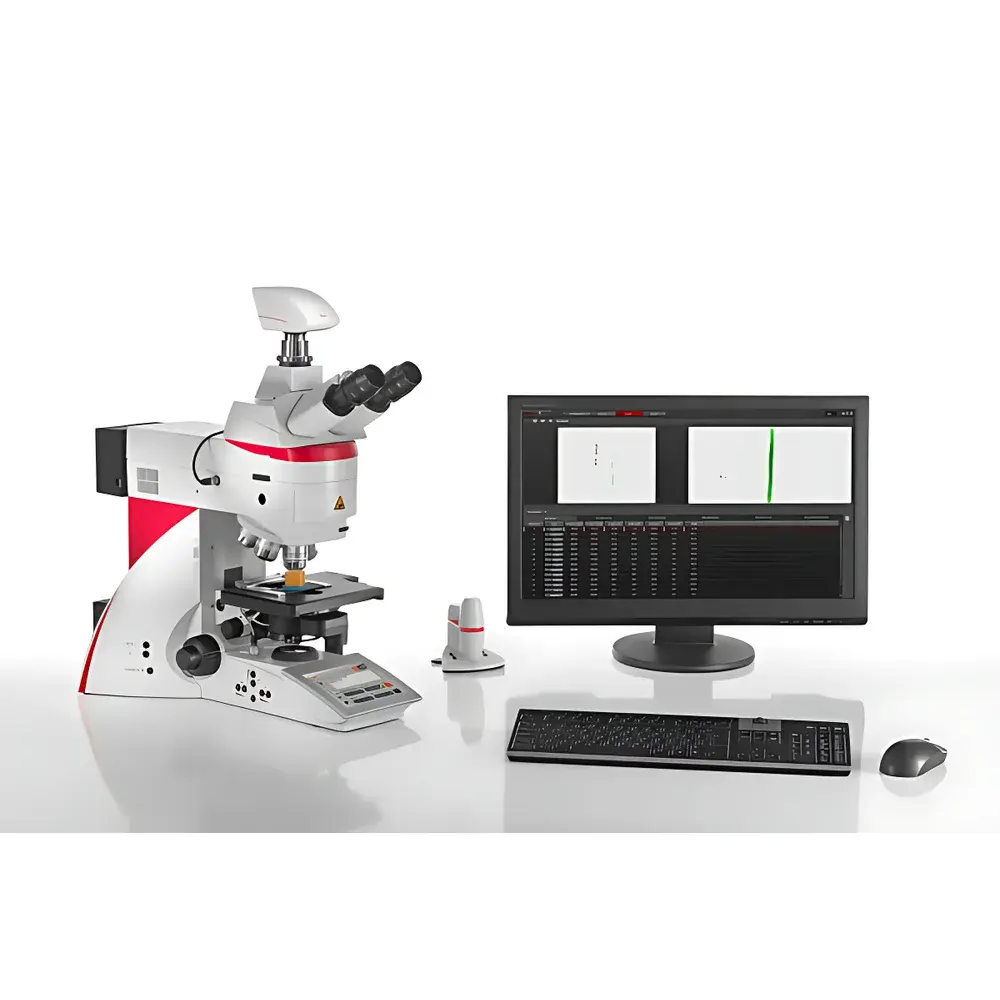
Leica LAS X Steel Expert Microscopic Image Analysis Software for Steel Quality Assessment
| Brand | Leica |
|---|---|
| Origin | Germany |
| Model | LAS X Steel Expert |
| Compliance Standards | ISO 4967, EN 10247, ASTM E45, DIN 50602, GB/T 10561, JIS G0555, SEP 1571 |
| Export Classification | Imported Instrument Software |
| Licensing | Modular standard-specific licensing |
| Data Export Formats | Excel (.xlsx), CSV (.csv), PDF (.pdf) |
| Interface | Dual-View synchronized microscopy workspace |
| Workflow Support | Multi-sample batch analysis, region-of-interest (ROI) mapping, manual & semi-automated inclusion classification |
Overview
Leica LAS X Steel Expert is a purpose-built microscopic image analysis software module engineered for quantitative assessment of non-metallic inclusions in steel microstructures. Designed exclusively for integration with Leica DM series upright metallurgical microscopes and Leica DMC/DFC digital camera systems, it implements standardized light microscopy-based evaluation protocols defined by international metallurgical testing standards. The software operates on the principle of brightfield and differential interference contrast (DIC) image acquisition followed by pixel-level morphometric segmentation, enabling objective classification and statistical quantification of oxide, sulfide, silicate, and globular inclusions according to their shape, size, aspect ratio, area fraction, and spatial distribution. Its architecture is aligned with GLP-compliant laboratory environments, supporting traceable measurement workflows required for certification under ISO/IEC 17025-accredited testing laboratories and production QA/QC departments in automotive, aerospace, heavy machinery, and structural steel manufacturing.
Key Features
- Dual-View Synchronized Workspace: Simultaneously displays a low-magnification overview map of the entire polished steel sample and a high-resolution magnified view of selected inclusion clusters — enabling rapid navigation and contextual correlation between macro-distribution and micro-morphology.
- Standard-Compliant Inclusion Classification Engine: Pre-configured rule sets for ISO 4967 (micrographic method), ASTM E45 (Type A–D system), EN 10247 (inclusion rating by category and severity), and regional specifications including DIN 50602, JIS G0555, and GB/T 10561 — all enforceable via modular license activation.
- Semi-Automated Inclusion Detection & Segmentation: Adaptive thresholding and edge-aware contour detection algorithms identify inclusions even under low-contrast conditions (e.g., MnS vs. ferrite matrix); users may refine boundaries manually or apply batch correction rules across multiple fields.
- Custom Standard Definition Framework: Engineers can define proprietary inclusion categories, rating scales, and acceptance thresholds using XML-based configuration templates — ensuring alignment with internal material specifications or customer-facing quality agreements.
- Batch ROI Processing & Sample Mapping: Supports automated stage scanning with coordinate-tagged field acquisition; enables consistent multi-sample comparison, statistical summarization per heat lot, and generation of inclusion density heatmaps.
- Audit-Ready Data Management: All analysis parameters, user actions, timestamped image captures, and final ratings are logged in an immutable audit trail compliant with FDA 21 CFR Part 11 requirements when deployed on validated Windows OS platforms with electronic signature support.
Sample Compatibility & Compliance
LAS X Steel Expert is validated for use with standard metallographically prepared steel specimens conforming to ASTM E3, ISO 643, and EN ISO 6892-1 surface finish requirements. It accepts input from Leica DMC6200, DFC7000 T, and DFC450 C cameras operating at resolutions up to 20 MP, with full support for color and monochrome imaging modes. The software complies with ISO/IEC 17025 clause 7.2.2 (method validation), supports calibration traceability to NIST-traceable reference micrographs, and facilitates reporting structures required for third-party certification audits under IATF 16949 and EN 10027. All standard modules undergo annual revision cycles synchronized with updates published by ISO/TC 17/SC 1 and ASTM Committee E04 on Metallography.
Software & Data Management
Built on the Leica LAS X platform core, Steel Expert inherits enterprise-grade data handling capabilities: encrypted project files (.lasx), DICOM-compatible metadata embedding, and role-based access control (RBAC) for multi-user lab deployments. Analytical outputs include statistically weighted inclusion counts per mm², cumulative length distributions, maximum inclusion dimensions, and category-specific severity indices. Reports export natively to Excel for further statistical processing (e.g., Weibull analysis), CSV for LIMS integration, and PDF/A-1b for archival compliance. Version-controlled configuration backups and automated update notifications ensure continuous alignment with evolving regulatory revisions — e.g., ISO 4967:2013/Amd 1:2022.
Applications
- Automotive OEM Supplier Certification: Validation of clean steel grades used in crankshafts, gears, and suspension components per VDA 5 and AIAG CQI-9 requirements.
- Rolling Mill Process Optimization: Real-time feedback loop between inclusion analysis results and ladle refining parameters (e.g., Ca treatment, argon stirring time).
- Failure Analysis Laboratories: Correlation of inclusion type/distribution with fatigue crack initiation sites observed via SEM fractography.
- Research & Development: Quantitative comparison of novel alloying strategies (e.g., REM addition, TiN nucleation control) on inclusion modification efficacy.
- Third-Party Inspection Agencies: Generation of auditable, standards-referenced test reports accepted by TÜV, SGS, and Bureau Veritas for export documentation.
FAQ
Does LAS X Steel Expert require a dedicated Leica microscope?
Yes — it is only compatible with Leica DM2700 M, DM4 M, DM6 M, and DM2500 M metallurgical microscopes equipped with motorized stage, Z-drive, and Leica-certified digital cameras.
Can historical inclusion data be migrated from older Leica QWin or IMAGIC software?
Legacy datasets in TIFF + ASCII annotation format can be imported via batch conversion tools included in LAS X v4.13+; metadata mapping must be validated prior to regulatory submission.
Is cloud-based deployment supported?
No — due to data sovereignty and cybersecurity requirements in metallurgical QA environments, LAS X Steel Expert operates exclusively in on-premise Windows 10/11 Pro installations with local database storage.
How frequently are standard updates released?
Leica releases biannual minor updates (Q2 and Q4) incorporating changes from ISO, ASTM, and national standard bodies; major version upgrades occur every 3 years with full re-validation documentation.
What training resources are available for new users?
Leica provides certified instructor-led workshops (2-day onsite or virtual), ISO/IEC 17025-aligned SOP templates, and a comprehensive digital knowledge base with video-guided workflows for ASTM E45 Type D sulfide stringer analysis and EN 10247 Category B oxide cluster quantification.





