
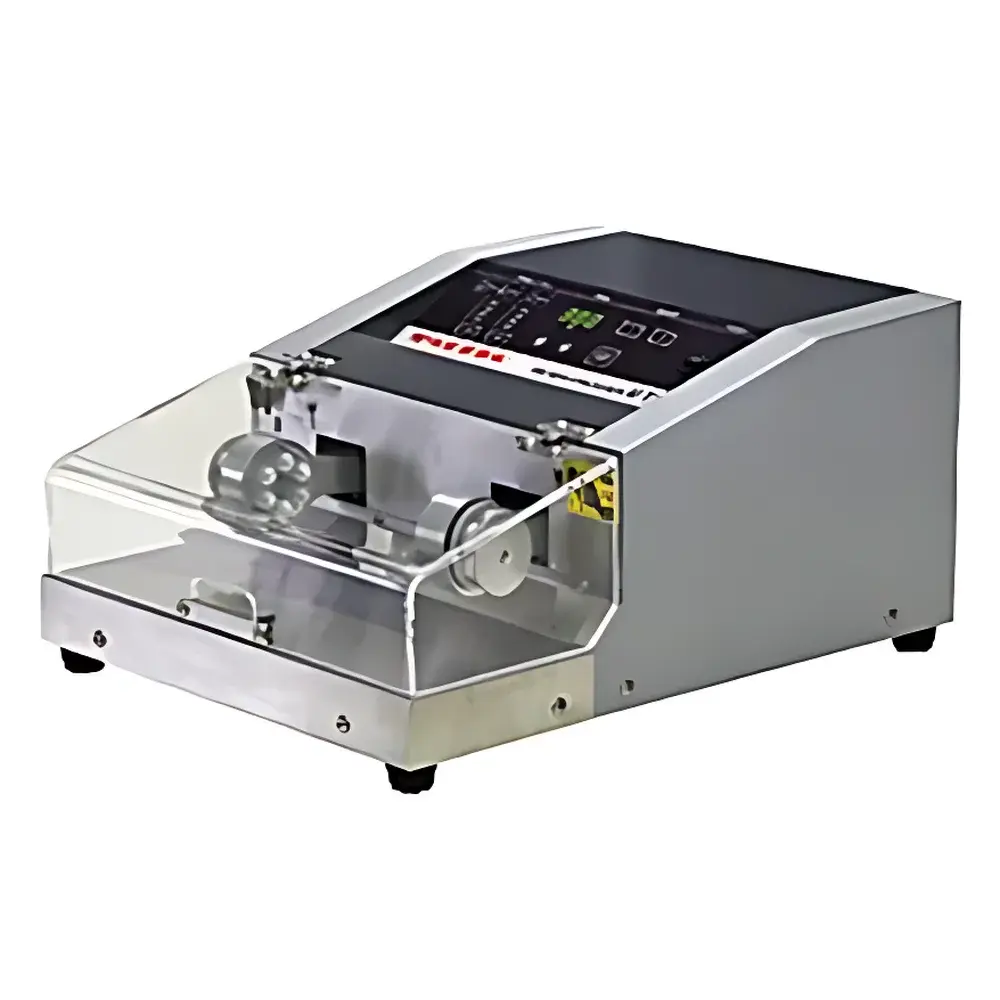
TAITEC μT-12 Horizontal Orbital Cell Disruptor
| Brand | TAITEC |
|---|---|
| Origin | Japan |
| Model | μT-12 |
| Instrument Type | Bead Mill Cell Disruptor |
| Operating Frequency | 53 Hz |
| Sample Capacity | 12 × 5.0 mL tubes |
| Throughput | 12 samples per run |
| Speed Range | 1,800–3,200 rpm (8-step digital adjustment) |
| Timer | 1–300 s (1-s increment, memory for 2 speed/time presets) |
| Safety Features | Lid-interlock shutdown, overload current protection |
| Dimensions | 310 × 400 × 200 mm (W × D × H) |
| Weight | ~15 kg |
| Power Supply | AC 100 V, 4 A |
| Ambient Operating Range | +5 °C to +35 °C |
| Tube Compatibility | Standard threaded 1.5/2.0 mL and 5.0 mL microtubes (e.g., Watson 1392-200, 2332-105) |
| Bead Compatibility | Stainless steel (SUS), zirconia, glass beads |
Overview
The TAITEC μT-12 Horizontal Orbital Cell Disruptor is an engineered solution for high-efficiency, low-thermal-load mechanical lysis of biological samples. Unlike conventional vertical vortex or ultrasonic disruptors, the μT-12 employs a patented horizontal orbital oscillation mechanism—often described as “umbrella-shaped lateral swinging”—to generate controlled, high-amplitude kinetic energy transfer directly to sample-containing tubes. This motion mimics optimized manual agitation while eliminating operator variability and fatigue. The system operates at a fixed mechanical frequency of 53 Hz, corresponding to rotational speeds between 1,800 and 3,200 rpm across eight discrete settings. Crucially, its enlarged oscillation amplitude—1.5× greater than that of the μT-01 platform at equivalent speeds—ensures robust shear and impact forces without requiring excessive rotational velocity. As a result, effective cell disruption is achieved with minimal frictional heating, enabling reproducible lysis of thermolabile samples (e.g., native protein complexes, RNA, or enzymatically active lysates) under ambient conditions.
Key Features
- Horizontal orbital oscillation with enhanced amplitude: Delivers uniform, high-energy mechanical stress across all 12 tube positions simultaneously—ideal for comparative or replicate-based workflows.
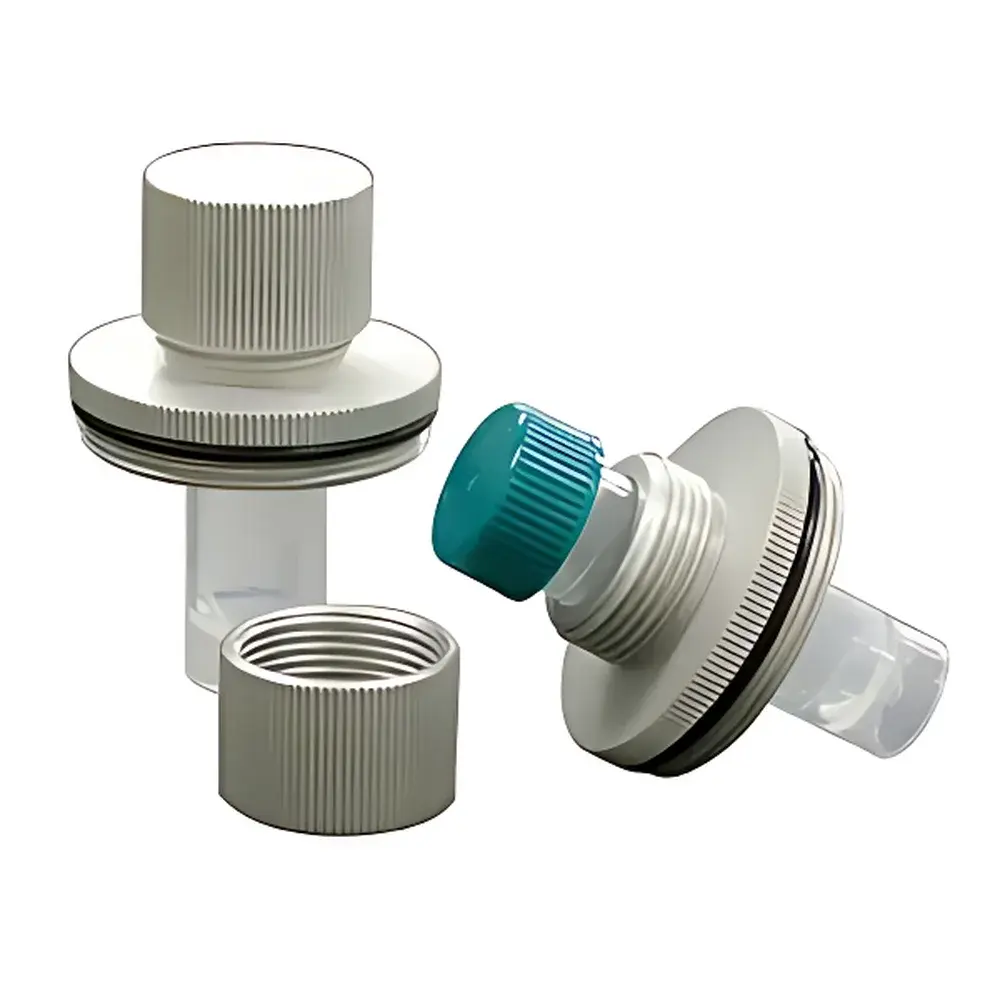
- Dual-scale throughput flexibility: Supports up to twelve 1.5/2.0 mL tubes or two 5.0 mL tubes per run, accommodating both high-throughput screening and larger-volume tissue homogenization (e.g., ≥1 g animal organ fragments).
- Thermal management by design: Reduced reliance on ultra-high rpm minimizes bead–tube and bead–bead friction. Temperature rise in room-temperature samples remains ≤4 °C after 60 s of operation—compatible with downstream applications requiring cold-chain integrity.
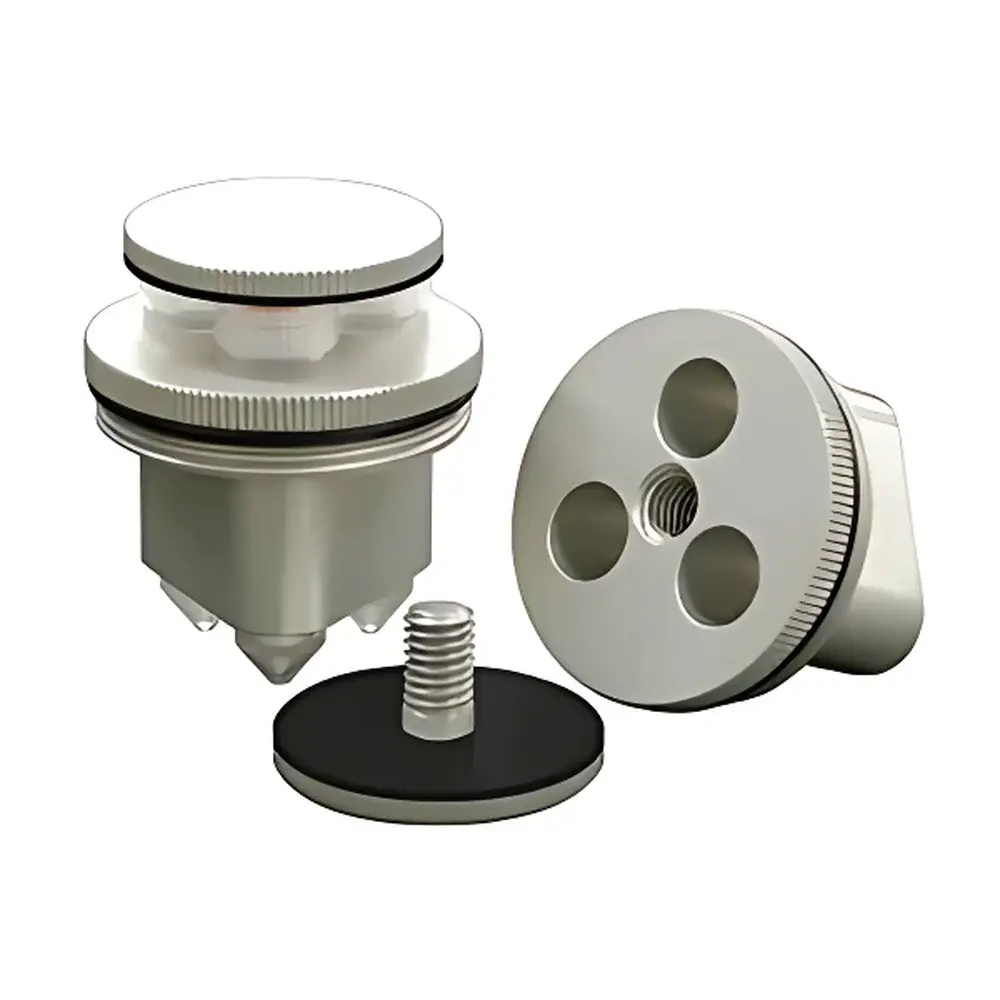
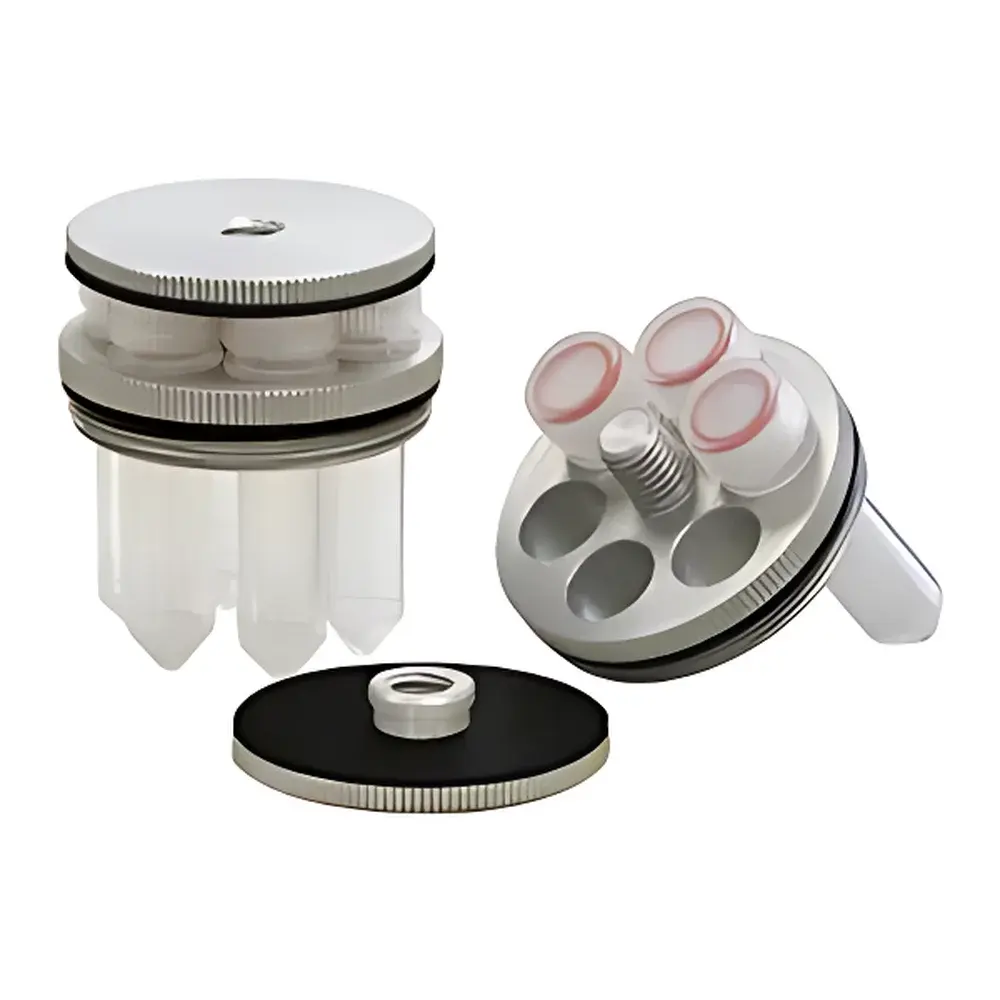
- Modular fixture system: Interchangeable clamping assemblies enable rapid reconfiguration for different tube formats (6×1.5/2.0 mL, 3×1.5/2.0 mL with thermal insulation, or 2×5.0 mL). All fixtures are sold separately to support lab-specific optimization.
- Digital precision control: Backlit LCD interface allows exact time (1–300 s, 1-s resolution) and speed selection. Two user-defined protocols are stored in non-volatile memory for repeatable execution.
- Integrated safety architecture: Automatic vibration halt upon lid opening and real-time motor current monitoring prevent mechanical overloading and ensure operator compliance with ISO 13857 and IEC 61000-6-2 requirements.
Sample Compatibility & Compliance
The μT-12 is validated for disruption of diverse biological matrices including mammalian and avian tissues, plant leaves and roots, bacterial pellets (E. coli, Bacillus spp.), yeast cells (S. cerevisiae), and solid dosage forms (e.g., pharmaceutical tablets). Its mechanical lysis approach avoids chemical or enzymatic bias, supporting unbiased proteomic, metabolomic, and nucleic acid isolation workflows. The instrument complies with CE marking directives (2014/30/EU EMC, 2014/35/EU LVD) and meets key laboratory infrastructure standards for noise emission (<65 dB(A) at 1 m), electrical safety, and electromagnetic compatibility. While not certified for GMP manufacturing environments, it supports GLP-aligned documentation through timestamped protocol recall and manual logbook integration. For regulated bioprocessing labs, the device can be incorporated into SOPs aligned with USP , ISO 15189, and ASTM E2915–22 (standard practice for mechanical disruption validation).
Software & Data Management
The μT-12 operates as a standalone hardware platform with no proprietary software dependency. All operational parameters—including speed setting, elapsed time, and preset recall—are managed via embedded firmware with EEPROM-backed memory. No USB, Bluetooth, or network connectivity is provided, ensuring data integrity and cybersecurity compliance in air-gapped analytical environments. Protocol logs must be manually recorded per GLP requirement; however, the device’s deterministic behavior (repeatable rpm/timer performance within ±1% tolerance) enables full traceability when paired with electronic lab notebooks (ELNs) such as LabArchives or Benchling. Optional third-party integration via external programmable logic controllers (PLCs) is feasible for automated batch processing in pilot-scale biomanufacturing settings.
Applications
- High-yield extraction of intracellular proteins from fibrous tissues (e.g., liver, muscle) using stainless steel or zirconia beads in 5.0 mL tubes.
- RNA stabilization workflows where rapid lysis at ≤25 °C prevents RNase activation—particularly relevant for single-cell RNA-seq sample prep.
- Microbial strain library processing: simultaneous lysis of 12 bacterial clones in 2.0 mL tubes for plasmid miniprep or genomic DNA isolation.
- Pharmaceutical excipient homogenization: mechanical breakdown of tablet matrices prior to dissolution testing per USP .
- Preparation of antigenic lysates for immunoassay development, avoiding denaturation risks associated with sonication or freeze-thaw cycles.
FAQ
What tube types are compatible with the μT-12?
Standard threaded polypropylene microtubes (1.5 mL, 2.0 mL, and 5.0 mL) from major suppliers—including Watson (cat. nos. 1392-200 and 2332-105)—are fully supported. Non-threaded or conical-bottom tubes are not recommended due to clamping interface constraints.
Is temperature control integrated into the instrument?
No. The μT-12 does not include active cooling or heating. However, its low-heat-generation design permits use with pre-chilled tubes or insulated fixtures (sold separately) to maintain sub-ambient temperatures during lysis.
Can metal mortars be used with this model?
Yes—up to six stainless steel mortars may be mounted concurrently. Maximum speed is reduced to 2500 rpm in mortar mode to preserve mechanical longevity and minimize acoustic emission.
Are bead sets included with purchase?
No. Beads (stainless steel, zirconia, glass) and metal mortars are optional accessories. Recommended bead diameters range from φ2 mm to φ5 mm for standard applications; φ6 mm and φ10 mm variants require consultation with TAITEC technical support.
Does the μT-12 meet FDA 21 CFR Part 11 requirements?
As a Class I standalone laboratory device without electronic audit trail generation, the μT-12 does not inherently comply with Part 11. However, it can be operated within a validated environment where procedural controls (e.g., dual-operator verification, bound logbooks, ELN-linked metadata capture) satisfy ALCOA+ principles.





