
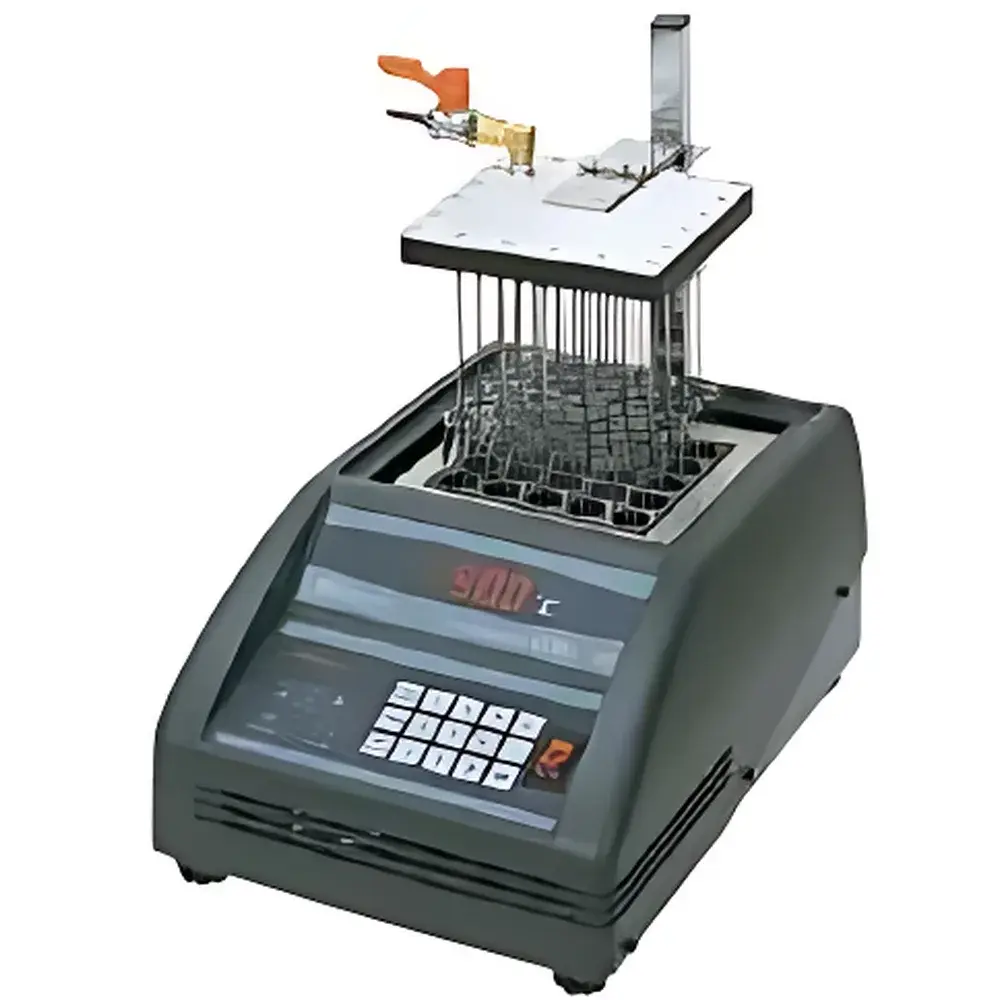
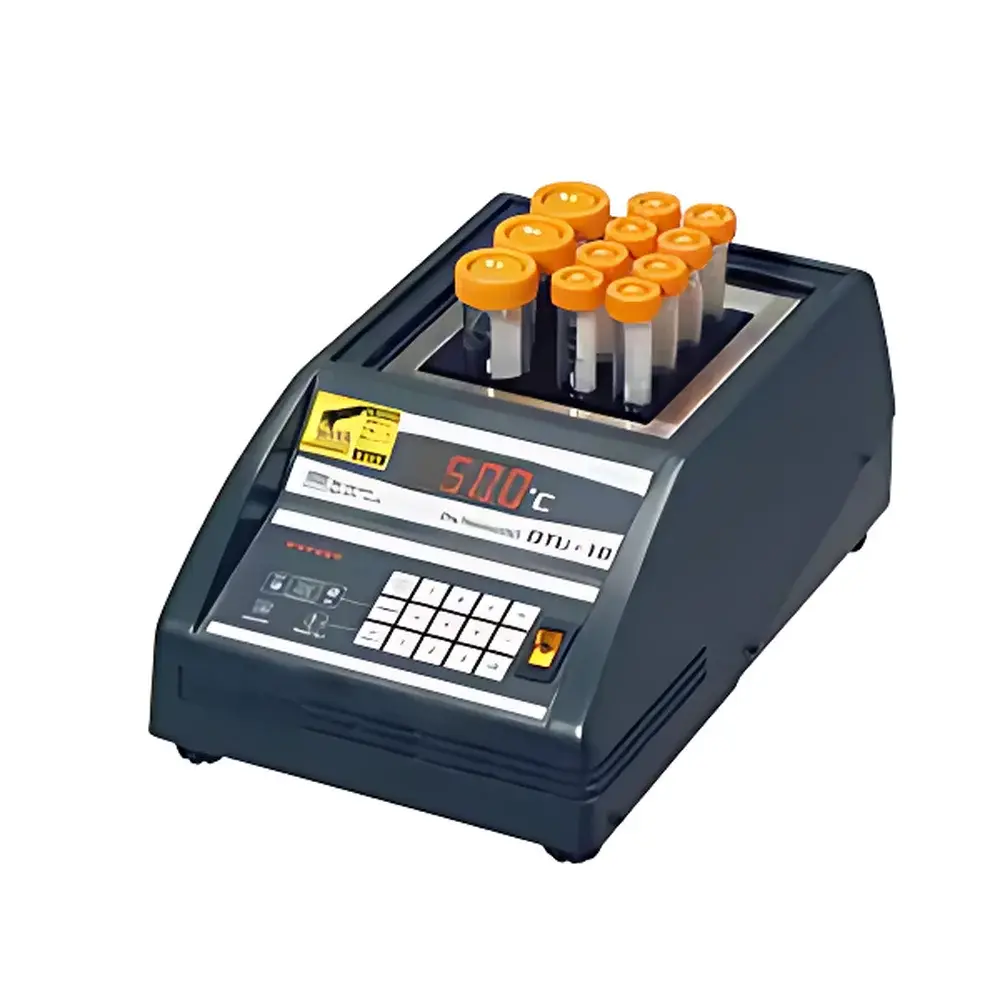
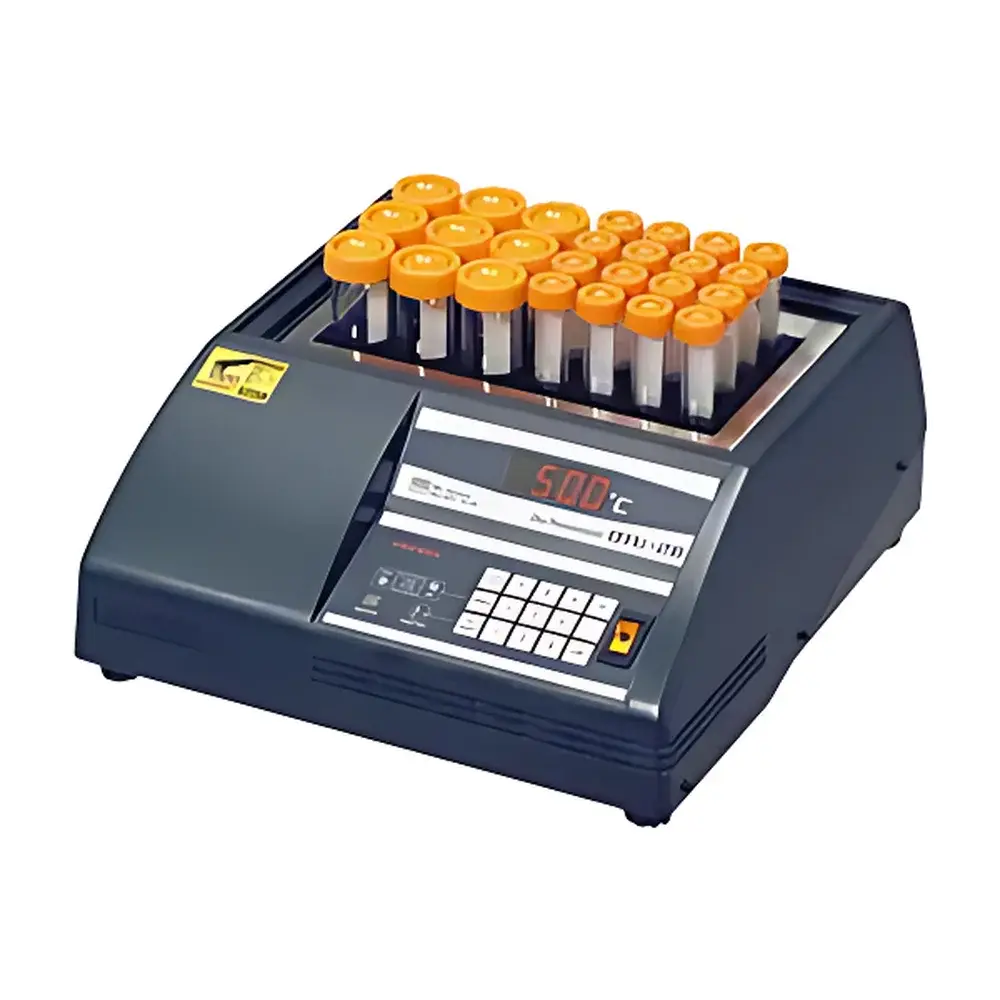
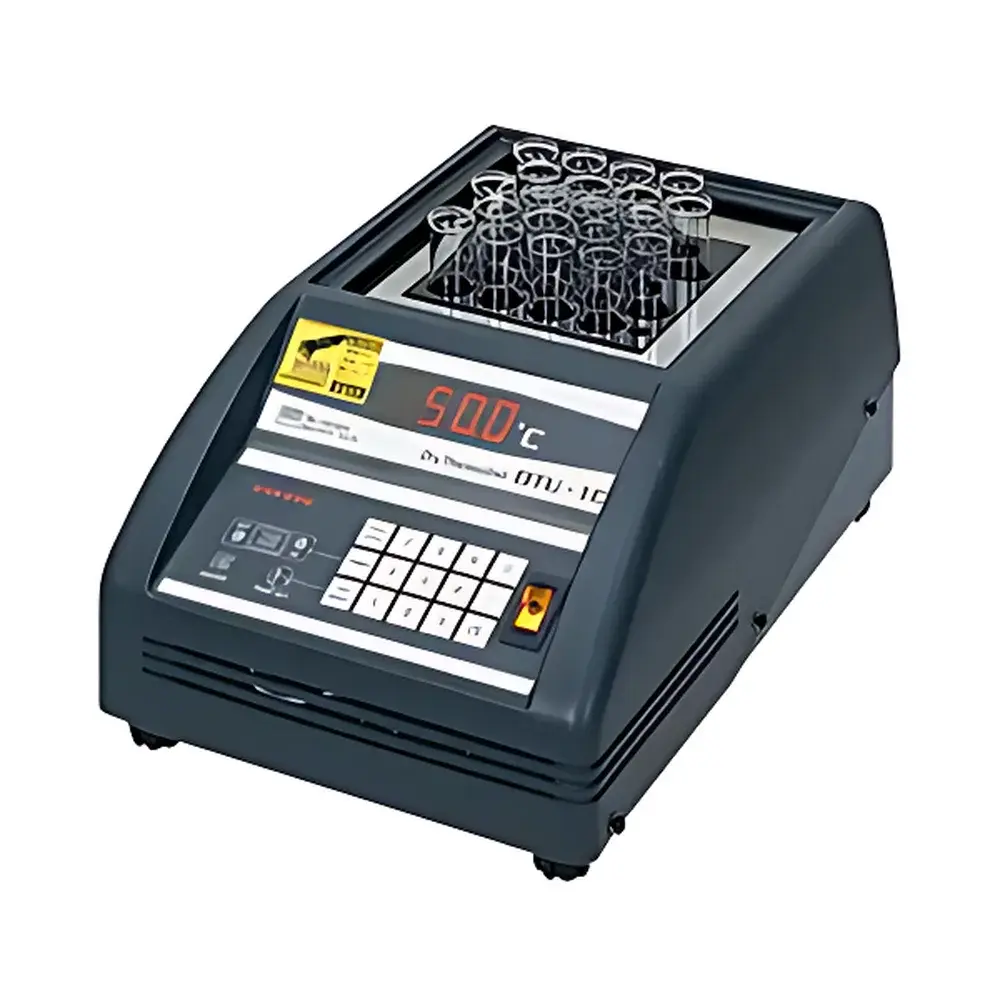
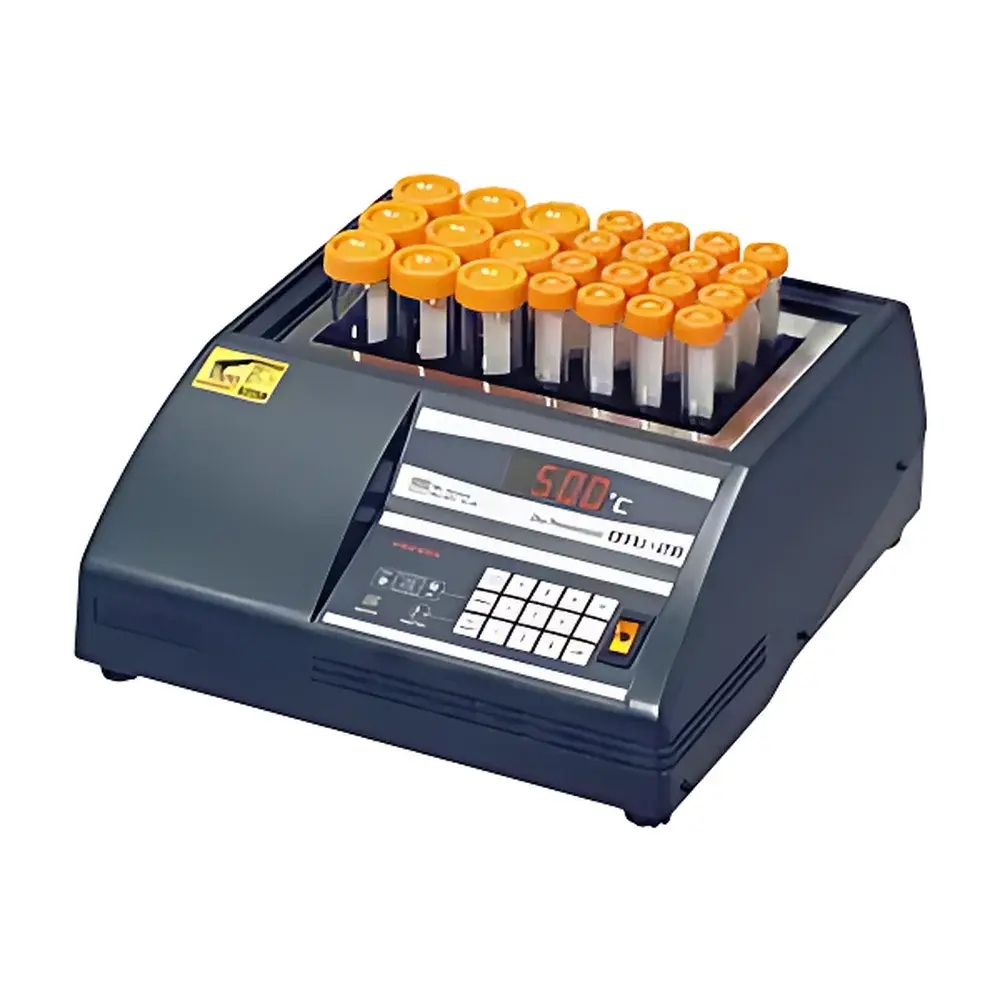
TAITEC DTU-2BN Dry-Block Nitrogen Evaporator
| Brand | TAITEC |
|---|---|
| Origin | Japan |
| Model | DTU-2BN |
| Heating Method | Dry-block heating |
| Temperature Range | Ambient +5°C to 200°C |
| Temperature Stability | ≤ ±0.1°C |
| Tube Diameter Compatibility | 8–35 mm |
| Nitrogen Flow Rate | 0–15 L/min |
| Sample Positions | 40 |
| Heating Power | 100–250 W |
Overview
The TAITEC DTU-2BN is a precision-engineered dry-block nitrogen evaporator designed for reproducible, solvent-free concentration and gentle sample drying in analytical, biochemical, and pharmaceutical laboratories. Unlike traditional water bath evaporators, the DTU-2BN employs TAITEC’s proprietary PAT.P (Precision Aluminum Temperature–Proportional) sensor-block control system—a closed-loop thermal architecture that integrates high-resolution RTD sensors directly into the aluminum heating block. This enables real-time, position-independent temperature monitoring and dynamic PID compensation, delivering sub-0.1°C stability across all 40 sample wells—even under variable nitrogen flow or ambient load conditions. The unit operates on dry-block heating, eliminating water contamination risks, condensation issues, and maintenance associated with liquid baths. Its dual-zone capability (via optional interchangeable blocks) supports simultaneous processing of heterogeneous tube formats—from 0.5 mL microcentrifuge tubes to 50 mL conical centrifuge tubes—making it suitable for DNA/RNA denaturation, enzymatic hydrolysis, fatty acid methylation, and small-molecule synthesis workflows requiring precise thermal management.
Key Features
- PAT.P sensor-block thermal control system ensures ≤ ±0.1°C temperature uniformity and stability across the entire heating surface, validated per ISO/IEC 17025 traceable calibration protocols.
- Dry-block architecture with corrosion-resistant anodized aluminum heating module—no water refills, no microbial growth, no evaporation loss, and full compatibility with organic solvents including acetonitrile, chloroform, and ethyl acetate.
- Independent digital display showing both setpoint and real-time block temperature with 0.1°C resolution; UP/DOWN keypad interface for intuitive parameter adjustment.
- Programmable ON/OFF timer (1 minute to 99 hours) enabling unattended overnight evaporation and timed endpoint termination—critical for GLP-compliant sample preparation.
- Integrated safety suite: auto-reset overtemperature cutoff (≥210°C), overcurrent protection, open-circuit/short-circuit sensor fault detection, and thermal fuse redundancy.
- Modular block design supports rapid interchange of deep-well blocks (standard DTU-2BN includes one 40-position block; optional 9×50 mL deep blocks available for high-volume biological samples).
Sample Compatibility & Compliance
The DTU-2BN accommodates tubes ranging from 8 mm to 35 mm in outer diameter—including 0.5 mL PCR tubes, 1.5 mL microcentrifuge tubes, 15 mL and 50 mL conical centrifuge tubes, and custom vials with flat-bottom or conical geometry. All aluminum blocks are CNC-machined to ISO 8573-1 Class 3 surface finish standards to prevent sample adhesion and ensure cleanability. The instrument complies with IEC 61010-1:2010 for laboratory electrical safety and meets electromagnetic compatibility requirements per EN 61326-1. For regulated environments, the DTU-2BN supports audit-ready operation when paired with TAITEC’s optional GLP-compliant software (sold separately), which logs timestamped temperature profiles, operator ID, method parameters, and alarm events—fully compliant with FDA 21 CFR Part 11 data integrity requirements.
Software & Data Management
While the DTU-2BN operates as a standalone benchtop instrument, it is compatible with TAITEC’s optional PC-based EvapControl™ software (v3.2+), which provides remote monitoring, multi-unit synchronization, and automated report generation in PDF or CSV format. The software implements electronic signature capture, role-based user access control (admin/operator/auditor), and immutable audit trails—including modification history for all temperature setpoints and timer configurations. Raw thermal data is stored with millisecond timestamp resolution and can be exported for statistical process control (SPC) analysis or integration into LIMS platforms via ODBC or REST API. All firmware updates are digitally signed and verified prior to installation to maintain regulatory compliance integrity.
Applications
- Nucleic acid purification: Controlled denaturation of DNA/RNA during enzymatic digestion or ligation setup, avoiding thermal shock-induced strand breakage.
- Metabolomics & lipidomics: Gentle concentration of polar and non-polar extracts (e.g., plasma, urine, tissue homogenates) without analyte degradation or oxidation.
- Pharmaceutical QC: Residual solvent removal from active pharmaceutical ingredients (APIs) per USP and ICH Q3C guidelines.
- Environmental analysis: Pre-concentration of pesticide residues, PAHs, and PCBs from aqueous extracts prior to GC-MS or LC-MS/MS injection.
- Proteomics sample prep: Removal of urea, SDS, and ammonium bicarbonate following in-solution digestion—preserving peptide integrity and minimizing carbamylation.
FAQ
What distinguishes the DTU-2BN’s PAT.P control system from conventional dry-block heaters?
The PAT.P system embeds multiple calibrated Pt100 RTD sensors directly within the aluminum block matrix—not just at the base—and uses proportional-integral-derivative (PID) feedback to dynamically adjust power delivery to individual heating zones. This eliminates cold spots and ensures ±0.1°C uniformity across all 40 positions, unlike single-sensor designs where edge wells deviate by >0.5°C.
Can the DTU-2BN be used for applications requiring temperatures above 110°C?
Yes—the DTU-2BN model supports up to 200°C, making it suitable for high-boiling-point solvent removal (e.g., DMSO, DMF, ethylene glycol) and thermal-assisted derivatization reactions commonly used in carbohydrate and steroid analysis.
Is nitrogen gas supply pressure regulated internally?
No—the unit accepts externally regulated nitrogen (0–15 L/min) via standard 1/8″ NPT inlet; users must install an inline pressure regulator and particulate filter upstream to ensure consistent laminar flow and avoid nozzle clogging.
Are replacement heating blocks certified for trace metal analysis?
Yes—optional ultra-clean anodized blocks (certified per ASTM E1217 for ≤10 pg/cm² extractable metals) are available for ICP-MS and HR-ICP-MS sample preparation workflows.
Does the DTU-2BN support 24/7 continuous operation?
It is rated for continuous duty at ≤180°C; sustained operation at 200°C requires periodic cooling intervals (≥15 min every 4 hours) to maintain long-term thermal stability and sensor longevity.



