
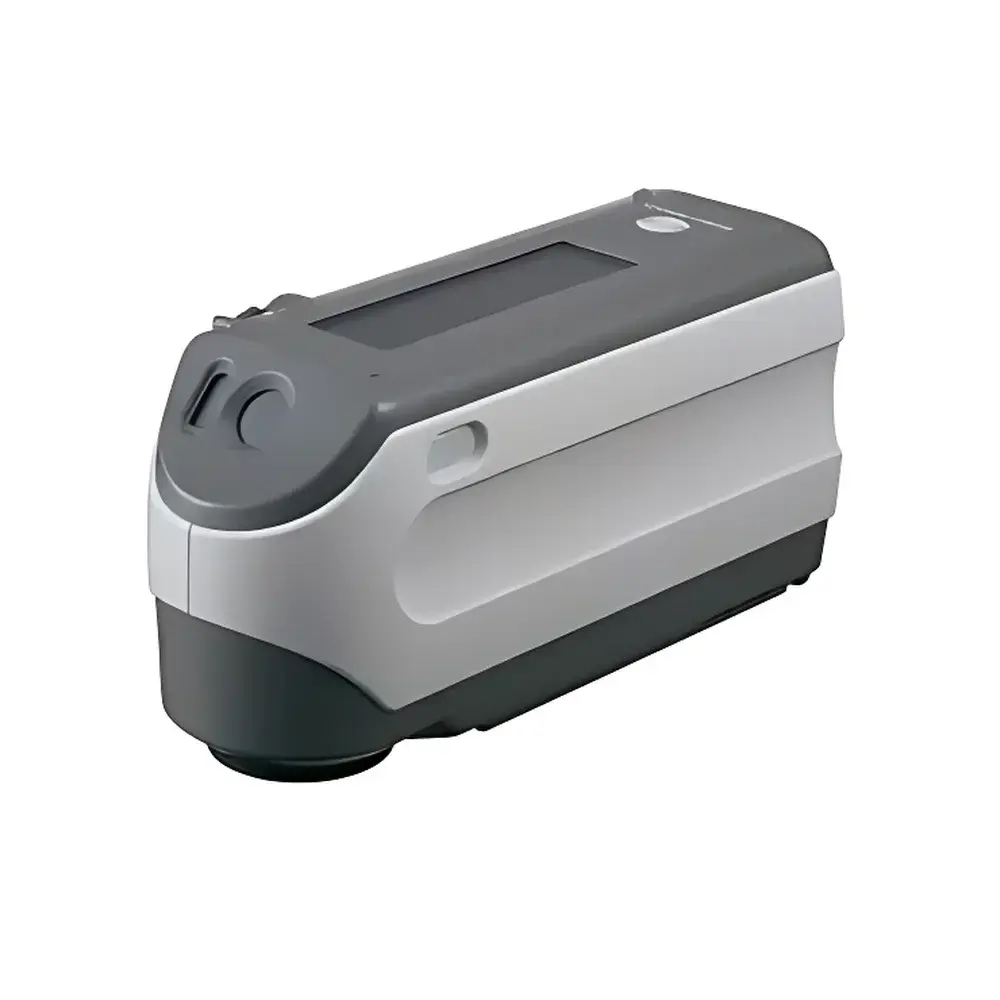
Konica Minolta CM-2500c Portable Spectrophotometer with 45°/0° Optical Geometry
| Brand | Konica Minolta |
|---|---|
| Origin | Japan |
| Model | CM-2500c |
| Type | Portable Spectrophotometer |
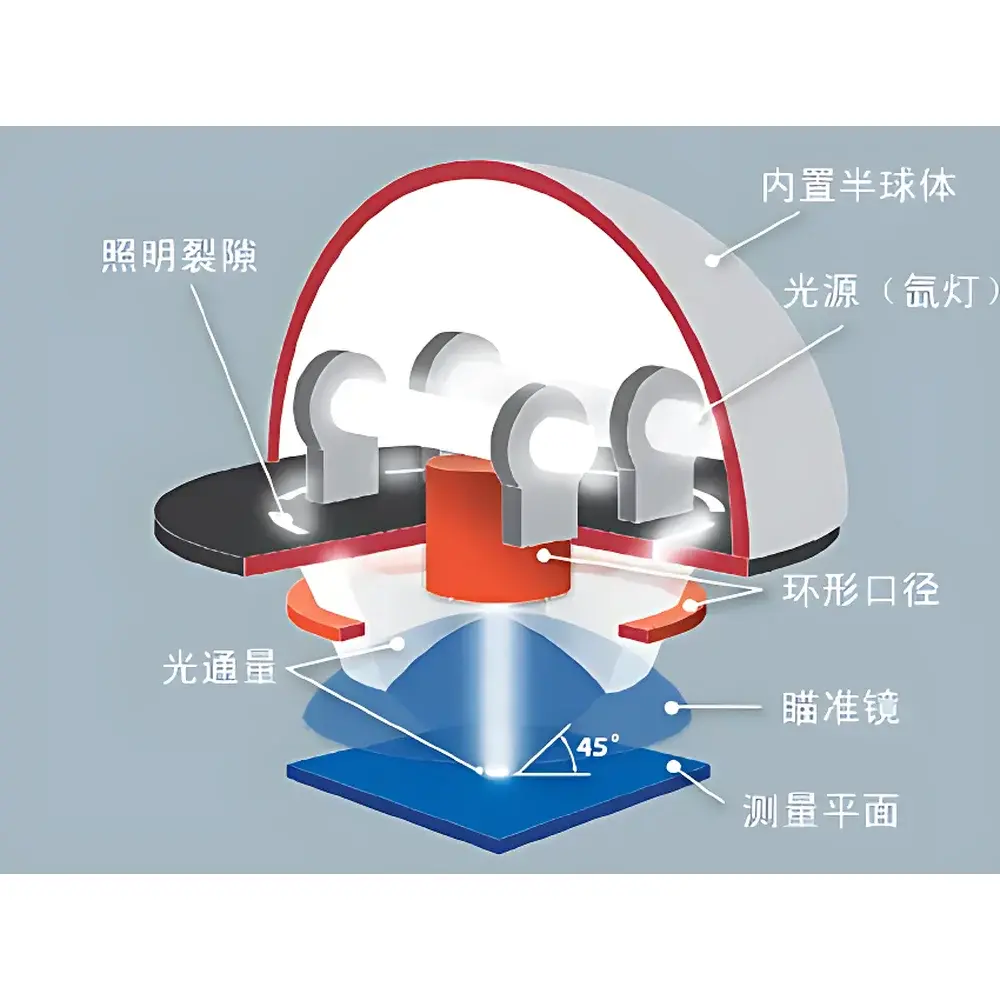
| Optical Geometry | 45°/0° (45° annular illumination, perpendicular viewing) |
| Light Source | Dual pulsed xenon lamps |
| Spectral Range | 360 nm – 740 nm |
| Spectral Interval | 10 nm |
| FWHM | ~10 nm |
| Reflectance Range | 0–175% (0.01% resolution) |
| Repeatability | ΔE*ab ≤ 0.05 (after white calibration plate measurement, 30 readings at 10 s intervals) |
| Inter-instrument Agreement | ΔE*ab ≤ 0.25 |
| Measurement Aperture | Ø7 mm / Ø11 mm |
| Measurement Time | ~1.5 s |
| Minimum Measurement Interval | 4 s |
| Detector | Dual-row silicon photodiode array (40 elements) |
| Dispersion | Planar holographic grating |
| Observer Angles | 2° and 10° standard |
| Illuminants | A, C, D50, D65, F2, F6, F7, F8, F10, F11, F12 (dual illuminant display supported) |
| Color Spaces | CIE L*a*b*, L*C*h, CMC (1:1 & 2:1), CIE94, Hunter Lab, Yxy, XYZ, Munsell, DIN 99 Lab, CIEDE2000 |
| Indices | WI (ASTM E313, CIE), YI (ASTM E313/D1925), ISO Brightness (ISO 2470), MI, Density (A/T), Tint |
| Memory Capacity | 1,700 measurements |
| Interface | RS-232C (RJ-45), USB 2.0 via IF-A24 adapter |
| Power | Four AA batteries or AC adapter |
| Operating Temp. | 5–40 °C, ≤80% RH (non-condensing) |
| Dimensions | 193 × 69 × 96 mm |
| Weight | ~670 g (including calibration tile, excluding batteries) |
Overview
The Konica Minolta CM-2500c is a portable spectrophotometer engineered for high-precision color measurement in industrial quality control environments where geometric consistency and visual correlation are critical. It employs a rigorously validated 45°/0° optical geometry—featuring annular 45° illumination and perpendicular viewing—which closely emulates human visual perception under standardized lighting conditions. This configuration minimizes directional sensitivity to surface texture, gloss, and orientation, making it particularly suitable for measuring textured, curved, or anisotropic surfaces such as automotive interior trims, coated metal coils, woven textiles, and flexible packaging substrates. Unlike diffuse d/8° instruments, the CM-2500c’s optical design eliminates the influence of specular component exclusion (SCE) or inclusion (SCI) selection ambiguity by inherently suppressing specular reflectance through its fixed-angle illumination path. The system utilizes dual pulsed xenon lamps to ensure stable, flash-based illumination across the full 360–740 nm spectral range, with 10 nm data interval and ~10 nm full-width half-maximum (FWHM) resolution—meeting the spectral fidelity requirements defined in ASTM E308 and ISO/CIE 11664-4 for accurate tristimulus computation.
Key Features
- Optimized 45°/0° optical architecture with integrated collimating optics and hemispherical light mixing chamber for uniform annular illumination and minimized spatial non-uniformity
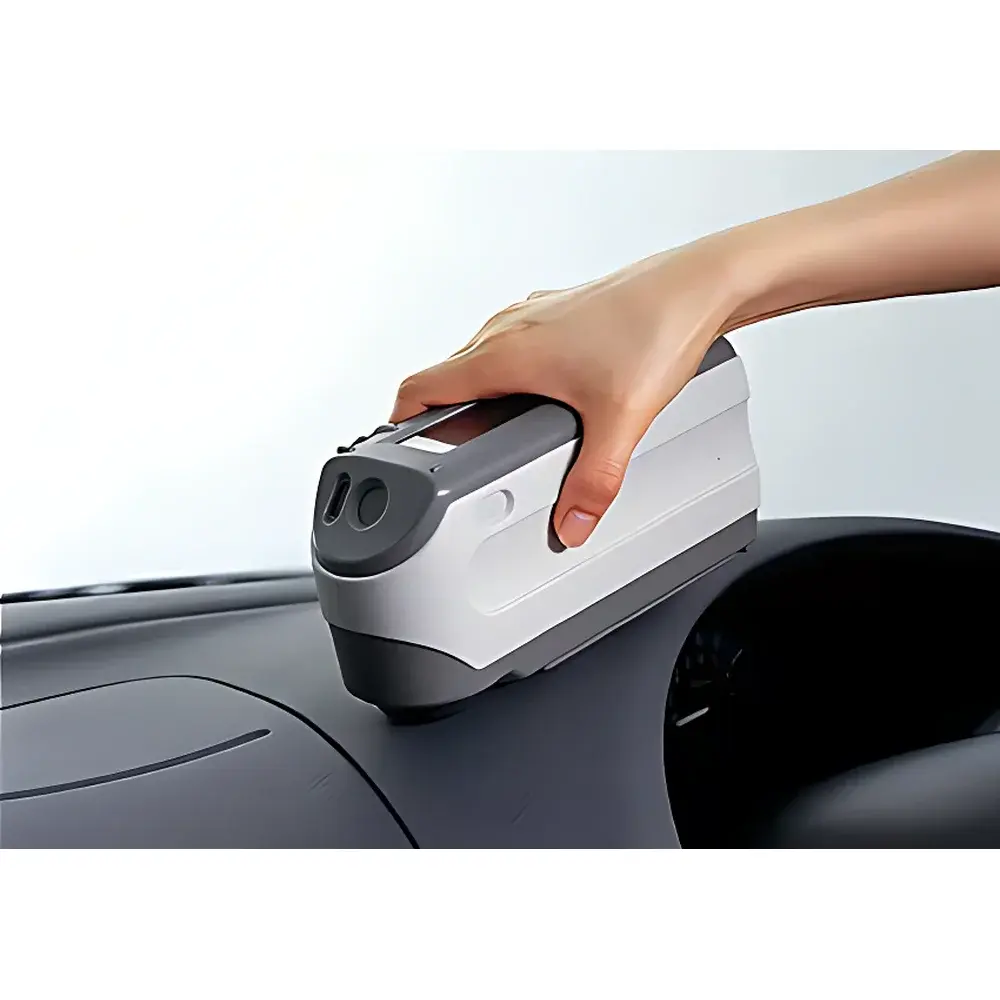
- Compact, ergonomic form factor (193 × 69 × 96 mm; ~670 g) enabling one-handed operation and repeatable contact on complex geometries including contoured automotive parts and soft materials
- Large backlit LCD display with intuitive navigation interface centered on a precision rotary dial (“Navigation Roller”)—eliminating reliance on multiple function keys and reducing operator training time
- Dual measurement apertures (Ø7 mm and Ø11 mm) supporting both fine-detail and area-averaged assessments without mechanical recalibration
- High-stability spectral acquisition: ≤0.05 ΔE*ab repeatability (white calibration tile, n=30, 10 s interval) and ≤0.25 ΔE*ab inter-instrument agreement—validated per ISO 13655 and ASTM D2244
- Comprehensive colorimetric reporting: simultaneous calculation of CIE L*a*b*, CIEDE2000, CMC, CIE94, DIN 99, and industry-specific indices including WI (ASTM E313), YI (ASTM D1925), and ISO Brightness (ISO 2470)
Sample Compatibility & Compliance
The CM-2500c accommodates diverse sample types—including rigid plastics, painted metal panels, laminated films, printed cartons, dyed fabrics, and elastomeric components—without requiring sample repositioning or auxiliary fixtures. Its large contact area ensures stable coupling on curved or irregular surfaces, mitigating pressure-induced spectral shift. The instrument conforms to international color measurement standards including ISO 7724-1 (instrumental colorimetry), ISO 13655 (spectral measurement geometry), and ASTM D2244 (color difference calculation). Data integrity is maintained in regulated environments through optional SpectraMagic NX software, which supports audit trails, user access levels, and electronic signatures compliant with FDA 21 CFR Part 11 when deployed with appropriate IT infrastructure. Calibration traceability is established via NIST-traceable white calibration tile (CM-A153) and optional zero-calibration kit (CM-A32).
Software & Data Management
SpectraMagic NX (CM-S100w) serves as the primary data management platform, offering real-time spectral visualization, batch statistical analysis, tolerance mapping (pass/fail logic based on ΔL*, Δa*, Δb*, or ΔE* thresholds), and automated report generation in PDF or CSV format. The software enables multi-instrument fleet synchronization, historical trend tracking, and integration into enterprise quality management systems (QMS) via ODBC-compliant database export. All measurement metadata—including observer angle, illuminant, aperture size, date/time stamp, operator ID, and instrument serial number—is embedded in each dataset. Raw spectral data (31-point or 101-point mode) is stored alongside calculated color values, facilitating retrospective re-evaluation using updated color difference formulas (e.g., migration from CIE94 to CIEDE2000) without re-measurement.
Applications
The CM-2500c is routinely deployed in Tier-1 automotive supplier labs for validating color consistency of injection-molded dashboards, seat fabrics, and door panel coatings against OEM master standards. In coil coating facilities, it verifies batch-to-batch hue stability across continuous production lines operating at speeds exceeding 100 m/min. Packaging converters rely on its portability to conduct in-line checks of flexographic and gravure prints on corrugated board and metallized film. Textile mills use it to monitor dye lot conformity across fiber blends and finishing treatments. Additional validated use cases include quality assurance of medical device housings (ISO 10993-10 compatibility), food-grade plastic containers (FDA colorant compliance), and architectural coatings (AAMA 2603/2604 certification support).
FAQ
What distinguishes 45°/0° geometry from d/8° in practical measurement?
The 45°/0° configuration isolates the diffuse reflectance component more consistently across varying surface finishes, eliminating ambiguity associated with SCE/SCI mode selection and delivering superior correlation with visual assessment under directional lighting.
Can the CM-2500c measure transparent or translucent samples?
No—it is designed exclusively for opaque, reflective samples. Transmittance measurement requires a dedicated transmission spectrophotometer with integrating sphere geometry.
Is GLP/GMP-compliant data handling supported?
Yes, when used with SpectraMagic NX v2.9+ and configured with password-protected user roles, electronic signatures, and immutable audit logs, the system meets fundamental GLP and GMP documentation requirements.
How frequently must the instrument be calibrated?
White calibration is recommended before each measurement session and after ambient temperature shifts exceeding ±5°C; zero calibration is performed semi-annually or following physical impact.
Does the device support custom illuminants or user-defined color tolerances?
Custom illuminants are not supported; however, up to two standard illuminants may be displayed simultaneously. User-defined tolerance ellipses (ΔL*, Δa*, Δb*) and pass/fail criteria are fully configurable within SpectraMagic NX.






