
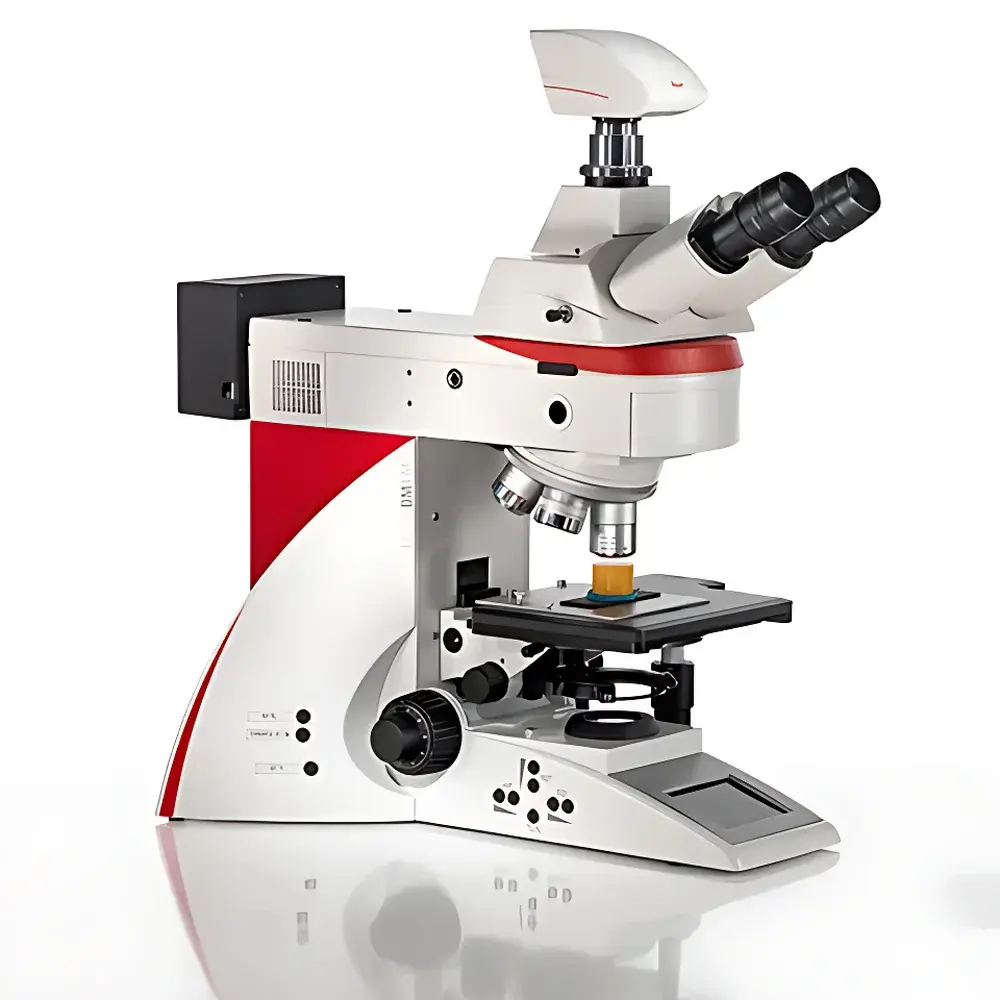
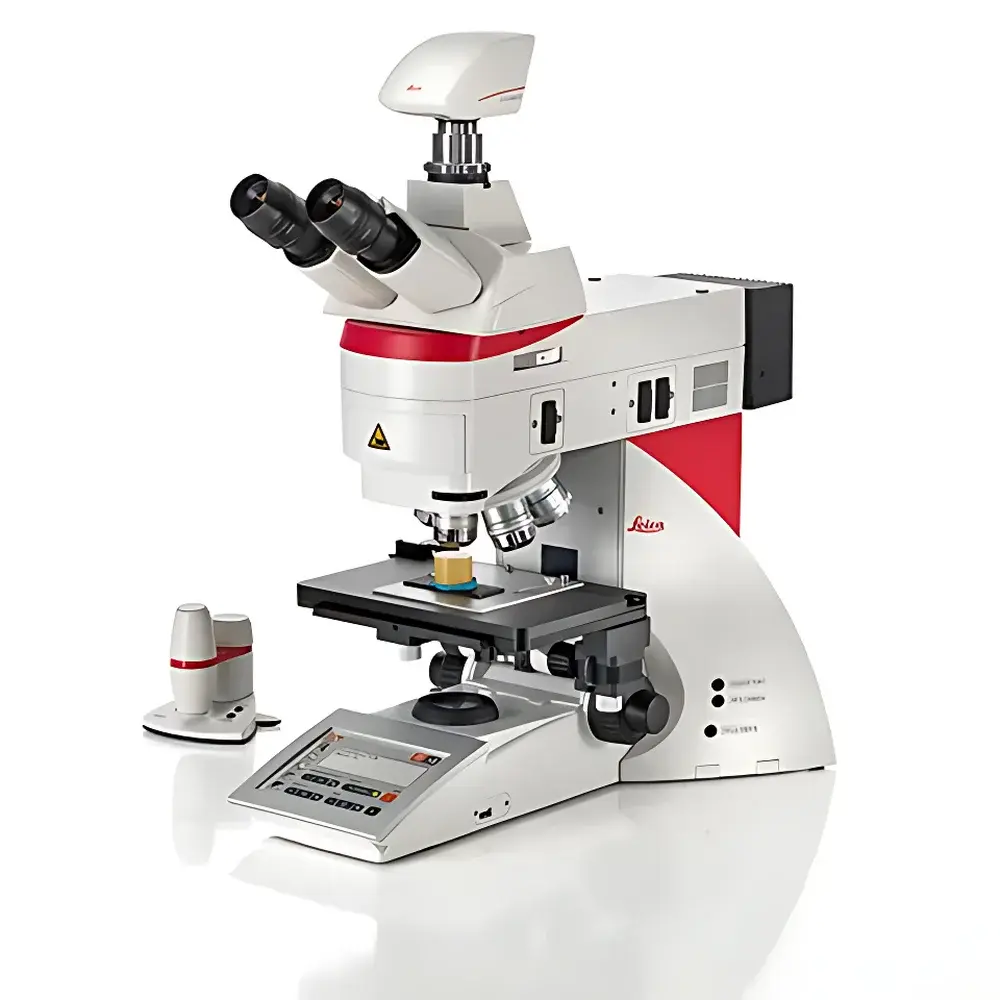
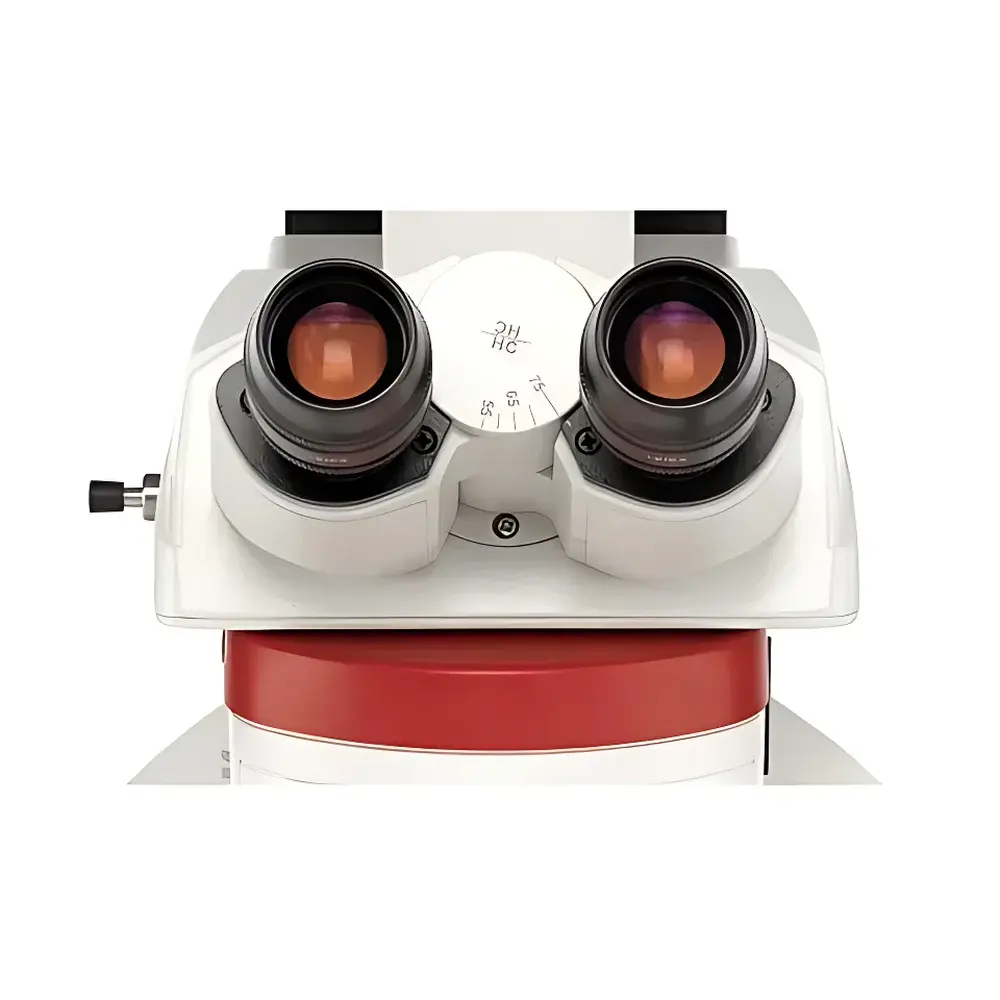
Leica DM4 M & DM6 M Upright Metallurgical Microscopes
| Brand | Leica |
|---|---|
| Origin | Germany |
| Microscope Type | Upright |
| Automation Level | Manual (DM4 M) / Fully Automated (DM6 M) |
| Illumination | LED with Constant Color Temperature |
| Contrast Methods | Brightfield (BF), High-Dynamic Darkfield (HDF), Differential Interference Contrast (DIC), Polarization (POL), Fluorescence (FL) |
| Software Platform | Leica Application Suite (LAS) with Expert Modules (Steel Expert, Cleanliness Expert, Grain Expert, Phase Expert) |
| Imaging System | Integrated HD Camera with Save-and-Recall Functionality |
| Optical Architecture | Infinity-Corrected, Modular Design |
| Compliance | Designed for GLP/GMP environments |
| Lifetime LED Source | ≥25,000 hours |
Overview
The Leica DM4 M and DM6 M upright metallurgical microscopes are precision-engineered optical systems designed for rigorous materials characterization in industrial quality control, failure analysis, and R&D laboratories. Built on Leica’s proven infinity-corrected optical platform, these microscopes employ Köhler illumination principles and high-numerical-aperture (NA) objective optics to deliver consistent, high-fidelity imaging across multiple contrast modalities—including brightfield, high-dynamic darkfield, differential interference contrast (DIC), polarization, and fluorescence. Unlike inverted or stereo configurations, the upright design enables direct access to large, flat, or sectioned metallographic specimens mounted on standard 25 × 75 mm glass slides or metallographic mounts—ideal for routine inspection of polished cross-sections, heat-treated alloys, weld zones, and coated substrates. The DM4 M serves as a robust manual platform optimized for reproducible daily inspections, while the DM6 M integrates motorized components, smart hardware recognition, and advanced software-driven workflows to support standardized, auditable material analysis protocols.
Key Features
- Intelligent Illumination Management: The Illumination Manager automatically detects selected contrast mode and objective magnification, dynamically adjusting aperture and field diaphragms while maintaining constant color temperature (6,000 K) across all brightness levels—eliminating repeated white balance recalibration.
- Automated DIC Workflow: On the DM6 M, one-button activation engages the full DIC optical train—including polarizer, analyzer, and matched Wollaston prisms—while preserving objective-specific alignment parameters and focus offsets.
- Modular Contrast Flexibility: Supports simultaneous installation of up to four contrast modules (e.g., BF/HDF/POL/DIC), enabling rapid switching without mechanical realignment or optical recalibration.
- SmartTouch Interface & Programmable Controls: The DM6 M features an integrated 7-inch capacitive touchscreen with context-sensitive menus; both models support customizable function keys and optional Leica Smart Move remote for ergonomic, hands-free operation.
- Durable LED Light Engine: Rated for ≥25,000 hours, the solid-state illumination source delivers stable intensity and spectral output—reducing maintenance downtime and eliminating filament drift-related measurement variability.
- 1.25× Panoramic Objective: Provides wide-field overview imaging at low magnification with exceptional depth of field and edge-to-edge resolution—critical for locating regions of interest prior to high-magnification analysis.
Sample Compatibility & Compliance
These microscopes accommodate standard metallographic specimens up to 75 mm in diameter and 50 mm in height, including embedded resin mounts, bulk castings, rolled sheet sections, and thin-film-coated substrates. Specimen stages feature coarse/fine coaxial focusing, mechanical stage translation (76 × 52 mm travel), and optional motorized XYZ positioning for automated tile scanning. Both systems comply with ISO 9001-aligned calibration traceability frameworks and support integration into GLP/GMP-regulated environments when paired with Leica LAS X software configured with electronic signatures, role-based access control, and full audit trail logging—meeting core requirements of FDA 21 CFR Part 11 and EU Annex 11 for regulated image-based material certification.
Software & Data Management
Leica Application Suite (LAS) serves as the unified software backbone, unifying microscope control, camera acquisition, annotation, measurement, and reporting. The LAS platform supports DIC vector analysis, grain boundary detection, inclusion classification (per ASTM E45, ISO 4967), cleanliness assessment (ISO 16232, VDA 19), and phase quantification (ASTM E112). Optional expert modules—including Steel Expert (automated nonmetallic inclusion rating), Cleanliness Expert (particle counting and size distribution), Grain Expert (ASTM E112-compliant grain size determination), and Phase Expert (multi-phase segmentation)—enable standardized, repeatable reporting aligned with international metallurgical testing standards. All microscope settings—including lamp intensity, diaphragm positions, filter cubes, and camera exposure—are saved with each image file in TIFF or proprietary LIF format, ensuring full experimental traceability and inter-laboratory comparability.
Applications
- Quantitative metallography: Grain size measurement, phase fraction analysis, and second-phase particle sizing per ASTM E112, E384, and ISO 643.
- Nonmetallic inclusion evaluation in steels and aluminum alloys per ASTM E45, ISO 4967, and JIS G 0555.
- Surface defect identification: Porosity mapping, crack propagation analysis, coating delamination, and solder joint integrity assessment.
- Cleanliness validation for automotive and aerospace components per ISO 16232, VDA 19.1, and SAE AS4059.
- Failure analysis: Fractography, fatigue striation measurement, and thermal damage zone delineation in turbine blades, bearings, and welded joints.
- Research-grade microstructural correlation: Correlating SEM/EDS data with optical contrast behavior for multi-scale materials modeling.
FAQ
What distinguishes the DM4 M from the DM6 M in terms of automation capability?
The DM4 M is a manually operated system with motor-assisted illumination management and preset recall functions, whereas the DM6 M integrates fully motorized objectives, focus, stage, filter turrets, and DIC components—enabling scripted, repeatable workflows and seamless integration with LAS X automated analysis routines.
Can the system be validated for use in regulated pharmaceutical or medical device manufacturing environments?
Yes—when deployed with LAS X software, IQ/OQ documentation packages, and appropriate network architecture, the DM6 M supports 21 CFR Part 11 compliance through electronic signatures, audit trails, and user permission hierarchies.
Is DIC available on both models, and does it require manual alignment?
DIC is supported on both platforms; however, only the DM6 M provides fully automated DIC component insertion and alignment—preserving calibration per objective—while the DM4 M requires manual prism selection and fine-tuning.
How is image metadata preserved during acquisition and archiving?
All optical parameters (objective ID, contrast mode, lamp intensity, diaphragm settings), camera configuration (gain, exposure, binning), and user-defined annotations are embedded directly into the image file header (TIFF/OME-TIFF) and synchronized with database entries in LAS X.
Does Leica provide application-specific training and method development support?
Yes—Leica offers on-site and virtual application workshops covering ASTM/ISO-compliant workflows, custom module configuration, and integration with LIMS or MES systems for enterprise-scale deployment.





