
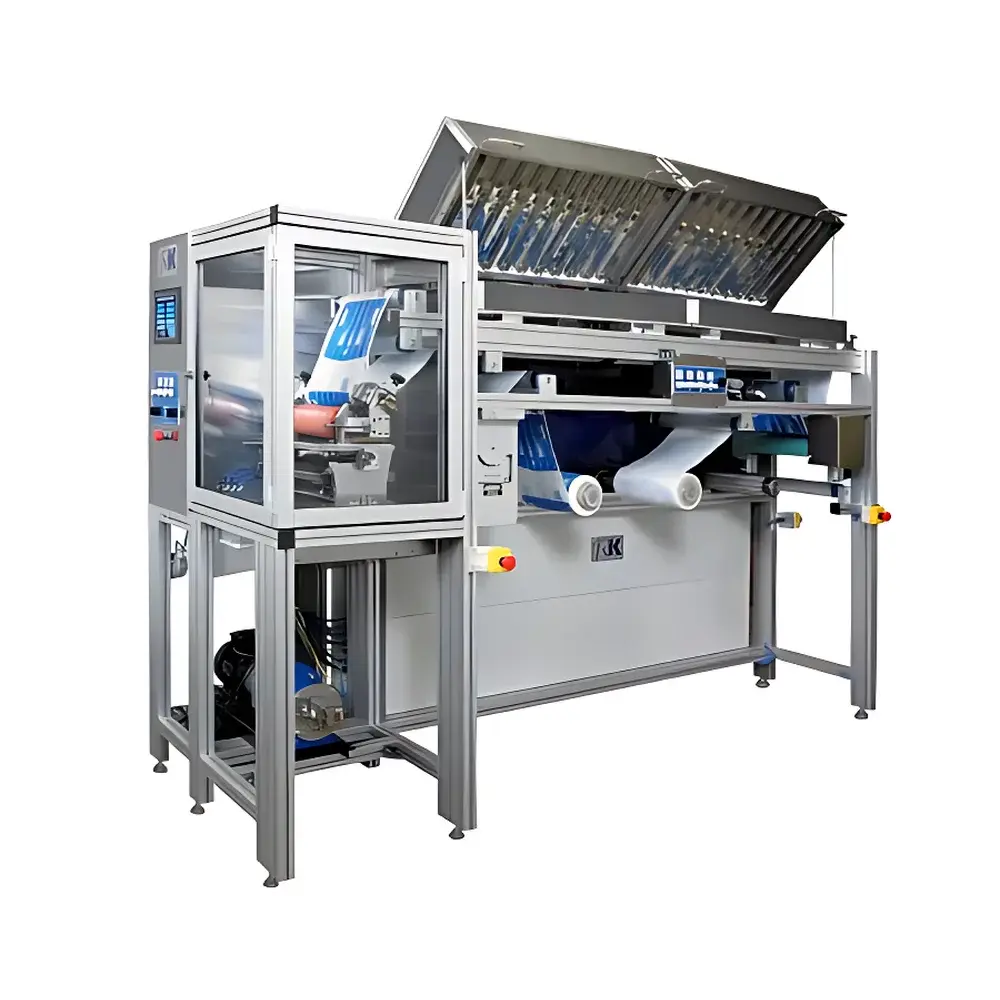
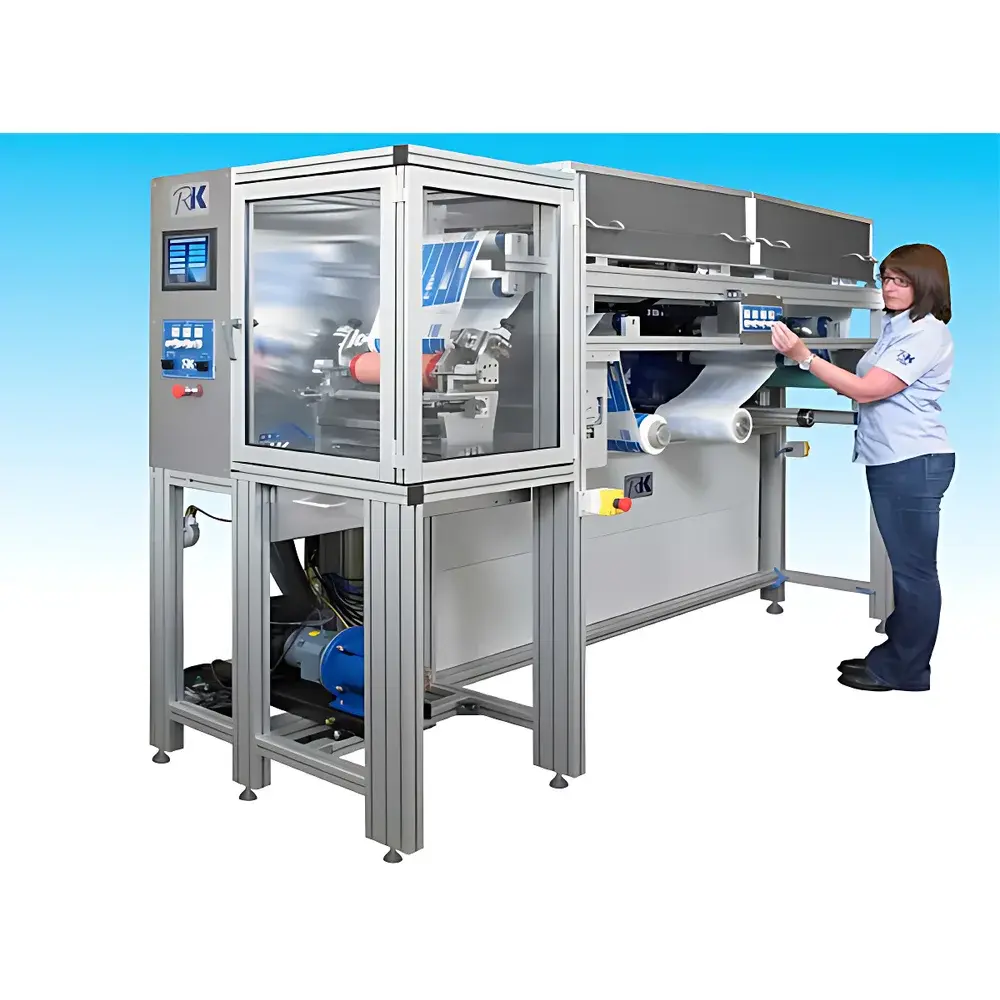
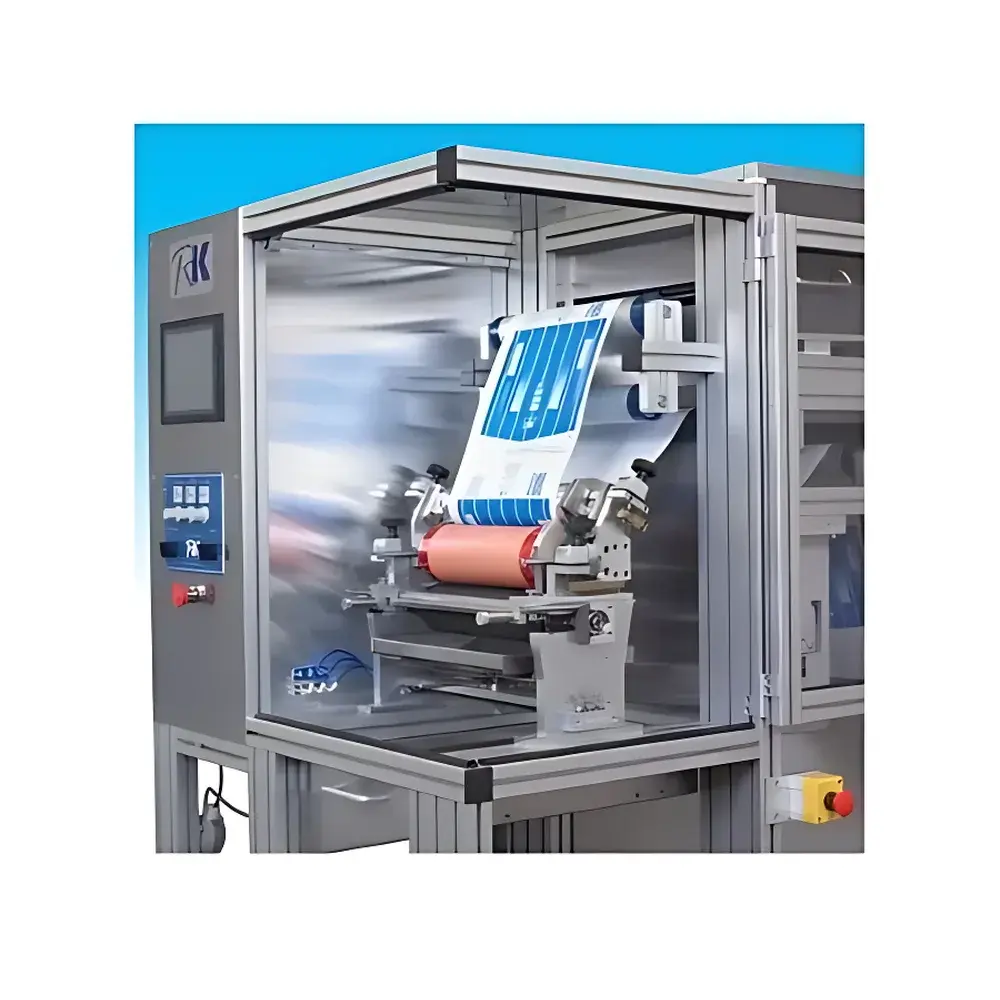
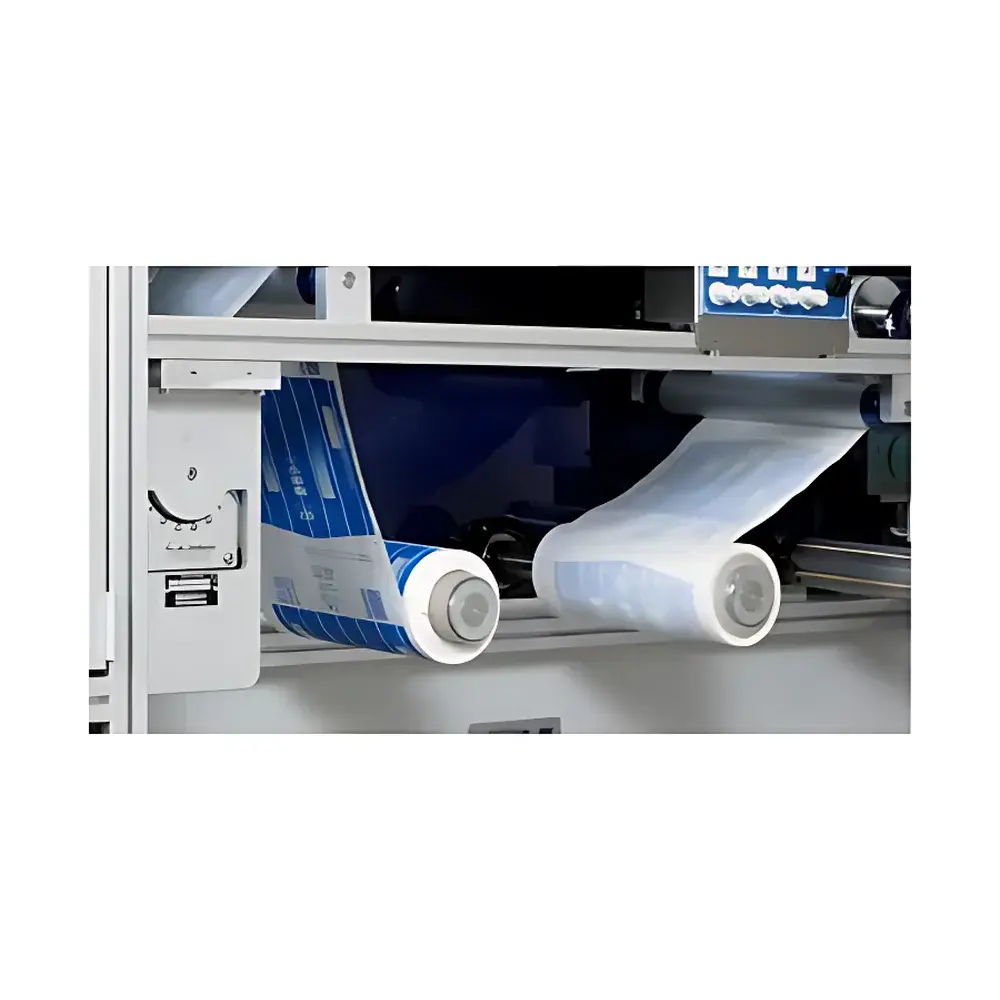
RK VCML Laboratory & Pilot-Scale Coating and Printing Machine
| Brand | RK |
|---|---|
| Origin | United Kingdom |
| Model | VCML |
| Speed Range | 1–70 m/min |
| Web Width | Up to 300 mm |
| Frame Material | Rigid Aluminum |
| Drive System | Dual Servo Motors |
| Control Interface | Color Touchscreen HMI (Multilingual) |
| Tension Control | Manual or Optional Closed-Loop Load Cell |
| Drying Tunnel | 900 mm Length, 12 mm Silicone Foam Insulation, ATEX-Certified Coating Zone |
| Standard Coating/Printing Methods | Gravure (Direct/Reverse/Offset), Flexographic, Rod Coating, Slot Die, Knife-over-Roll, Air Knife, Spin Coating, Hot-Melt Adhesive Application |
| Compliance | ATEX, NFPA, CE |
Overview
The RK VCML Laboratory & Pilot-Scale Coating and Printing Machine is an engineered platform for precision web-based coating, printing, and laminating of flexible substrates—including paper, polymer films, metal foils, and nonwovens. Designed for rigorous R&D, formulation validation, QC testing, and small-batch production, the VCML operates on a robust aluminum frame with dual servo-driven unwind and rewind stations, enabling high-reproducibility process transfer from lab to pilot line. Its core architecture supports multiple coating and printing mechanisms—each mechanically interchangeable without tooling change—based on established fluid deposition physics (e.g., meniscus-controlled gravure transfer, shear-thinning rod metering, pressure-driven slot die extrusion). The system complies with international safety and operational standards for industrial coating environments, including ATEX Directive 2014/34/EU for explosive atmospheres and NFPA 86 for industrial ovens.
Key Features
- Dual servo motor drive system delivering precise, repeatable speed control from 1 to 70 m/min—no mechanical gearbox changes required
- Modular, tool-free interchangeability of coating and printing modules: gravure (direct, reverse, offset), flexographic, rod, slot die, knife-over-roll, air knife, spin, and hot-melt applicators
- Integrated touchscreen HMI with multilingual interface (English, German, French, Spanish, Chinese), real-time parameter logging, and on-screen setup guidance
- Rigid aluminum structural frame (2.4 × 1.0 × 1.8 m) ensuring dimensional stability under thermal and mechanical load
- ATEX-certified enclosed coating zone with integrated exhaust ducting, 12 mm silicone foam-insulated drying tunnel (900 mm length), and 100 mm flexible silicone ducting
- Optional closed-loop tension control via load cell feedback, compatible with GLP-compliant audit trails when paired with validated software
- Standard pneumatic cantilever chucks with self-locking mechanism; optional air-actuated chucks and edge-guidance systems available
Sample Compatibility & Compliance
The VCML accommodates a broad spectrum of substrate types and rheological formulations: solvent-borne, water-based, UV-curable, and thermoplastic coatings—including inks, varnishes, adhesives, battery slurries, pharmaceutical film coatings, and functional barrier dispersions. Substrate width is configurable up to 300 mm, with maximum roll diameter of 300 mm and weight capacity of 60 kg per station. All electrical cabinets meet CE marking requirements; the drying tunnel conforms to EN 60079-0 (explosive atmospheres) and NFPA 86 Class A specifications. Exhaust configurations support VOC abatement integration, and optional corona treatment and IR/UV curing stations comply with IEC 62471 photobiological safety standards.
Software & Data Management
The embedded HMI firmware records all operational parameters—including line speed, temperature profiles, tension setpoints, and actuator positions—at user-defined intervals (100 ms to 5 s resolution). Data export is supported via USB and Ethernet (Modbus TCP), enabling direct ingestion into LIMS or MES platforms. When configured with optional remote diagnostics, the system supports secure SSH-based firmware updates and live parameter monitoring—fully traceable per FDA 21 CFR Part 11 requirements when deployed in regulated pharmaceutical or medical device manufacturing environments. Audit trail functionality includes operator ID, timestamp, parameter change history, and reason-for-change annotation.
Applications
The VCML serves as a critical development tool across industries requiring controlled thin-film deposition on flexible webs. In battery manufacturing, it enables electrode slurry coating validation for lithium-ion and solid-state cells. In packaging R&D, it supports barrier layer optimization (e.g., AlOx, SiOx, PVDC) and print fidelity testing under variable dwell times. Pharmaceutical applications include controlled-release film coating trials compliant with USP and ICH Q5C guidelines. Additional use cases span conductive ink patterning for flexible electronics, anti-reflective layer deposition for optical films, and functional textile finishing (e.g., flame retardancy, hydrophobicity). Its ability to replicate production-scale shear, residence time, and drying kinetics makes it ideal for scale-up studies aligned with ASTM D7299 and ISO 2137 standards.
FAQ
What coating methods are natively supported without modification?
Gravure (direct, reverse, offset), flexographic, rod, slot die, knife-over-roll, air knife, spin, and hot-melt adhesive application—all with standardized mounting interfaces.
Is the drying tunnel suitable for solvent-based coatings?
Yes—the ATEX- and NFPA-certified enclosure, coupled with integrated exhaust and 100 mm ducting, supports safe handling of flammable solvents per OSHA 1910.107 and EU Directive 1999/92/EC.
Can the VCML be integrated into a GMP-compliant environment?
With optional electronic tension control, audit-trail-enabled HMI firmware, and 21 CFR Part 11-compliant data export, it meets baseline requirements for equipment qualification (IQ/OQ/PQ) in pharmaceutical and biotech settings.
What is the minimum web speed for stable gravure printing?
Stable meniscus formation is achievable down to 2 m/min for standard gravure cylinders (81–100 mm diameter); lower speeds require custom cylinder geometry or viscosity adjustment.
Are calibration certificates provided for load cell or temperature sensors?
Factory calibration certificates (traceable to UKAS-accredited labs) are available upon request for optional tension and thermal sensors, supporting ISO/IEC 17025 compliance.
Related Products






